
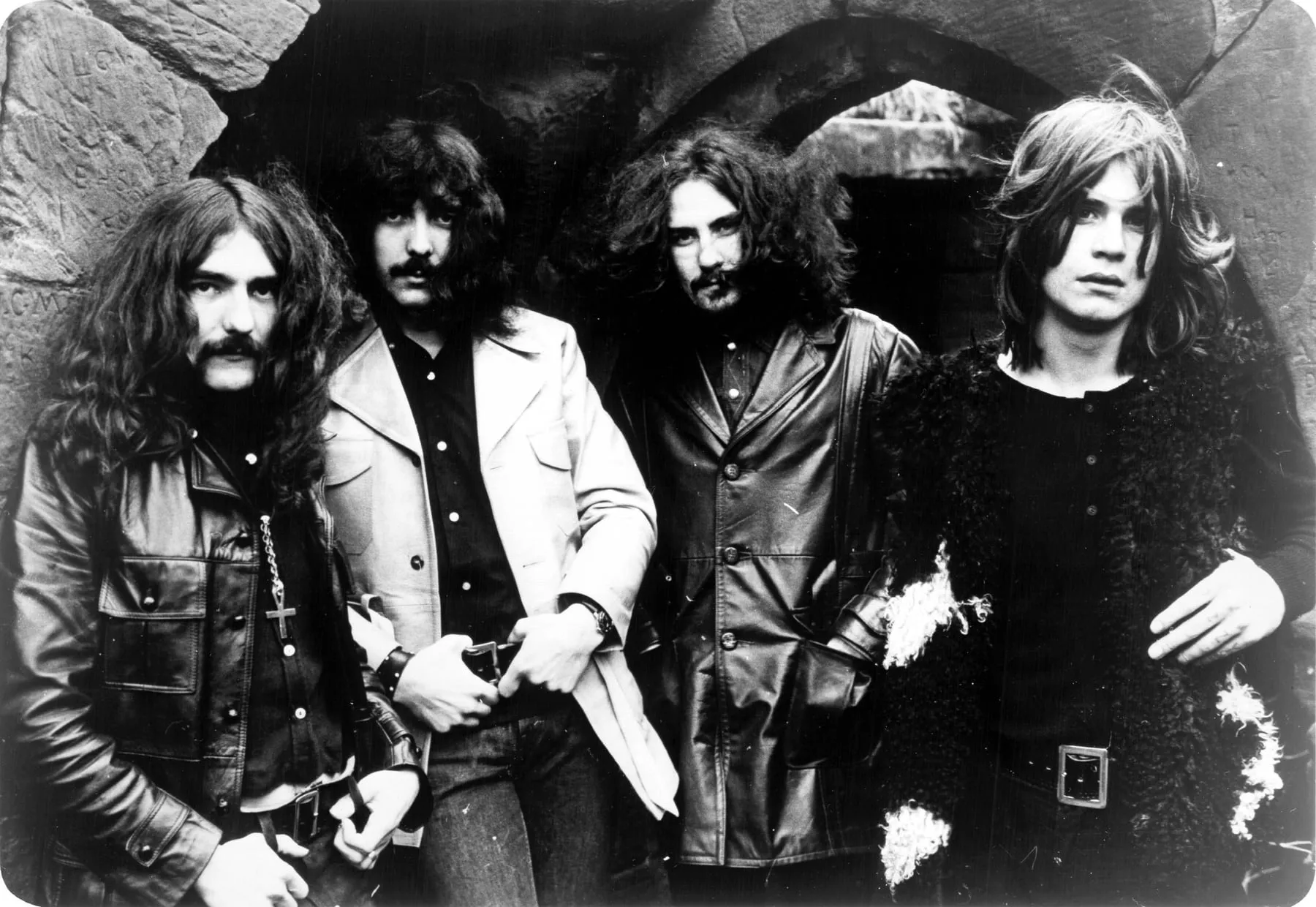
Photo by Warner Bros. Records , licensed under Public domain · Wikimedia Commons
Rank #10
Black Sabbath
The Birmingham band credited with inventing heavy metal.
From Wikipedia
Black Sabbath were an English heavy metal band formed in Birmingham in 1968 by guitarist Tony Iommi, drummer Bill Ward, bassist Geezer Butler and vocalist Ozzy Osbourne. After adopting the Black Sabbath name in 1969, they distinguished themselves through occult themes with horror-inspired lyrics and down-tuned guitars. Their first three albums, Black Sabbath, Paranoid, and Master of Reality (1971), were commercially successful, and are cited as pioneering albums in the development of heavy metal. Subsequent albums Vol. 4 (1972), Sabbath Bloody Sabbath (1973), Sabotage (1975), Technical Ecstasy (1976), and Never Say Die! (1978) saw the band explore more experimental and progressive styles.
Members
- Bill Ward
- Geezer Butler
- Ronnie James Dio
- Tony Iommi
Studio Albums
- 1970 Black Sabbath
- 1970 Paranoid
- 1971 Master of Reality
- 1972 Vol 4
- 1973 Sabbath Bloody Sabbath
- 1975 Sabotage
- 1976 Technical Ecstasy
- 1978 Never Say Die!
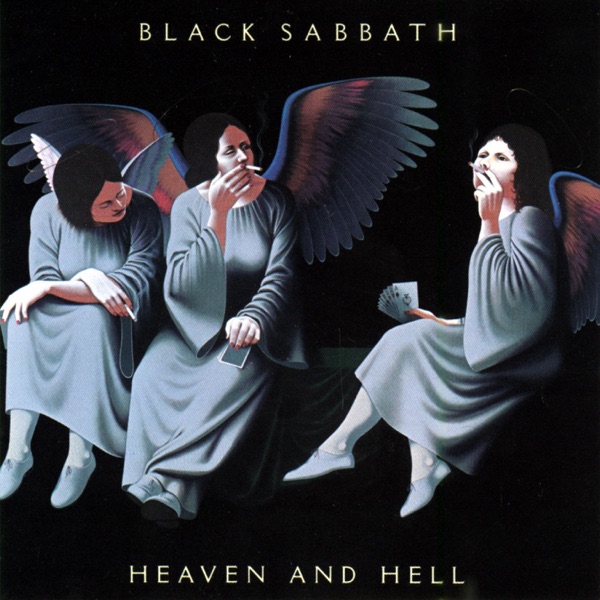
- 1980 Heaven and Hell
- 1981 Mob Rules
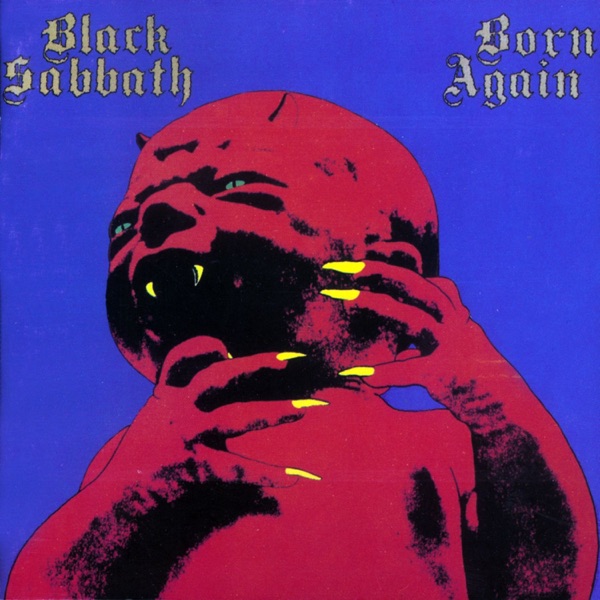
- 1983 Born Again
- 1986 Seventh Star
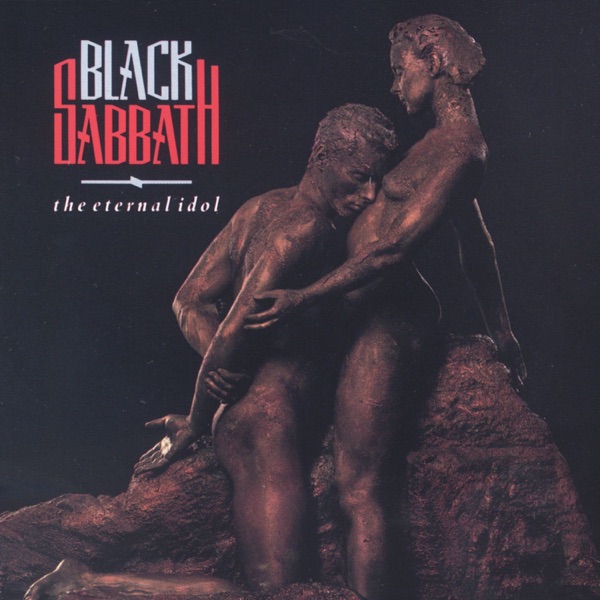
- 1987 The Eternal Idol
- 1989 Headless Cross
- 1990 TYR
- 1992 Dehumanizer
- 1994 Cross Purposes
- 1995 Forbidden
- 2013 13
- 2024 Studio Outtakes 1969
Source: MusicBrainz
Deep Dive
Overview
Black Sabbath stand as the foundational architects of heavy metal itself. Formed in Birmingham in 1968 and taking their definitive name in 1969, the band—guitarist Tony Iommi, vocalist Ozzy Osbourne, bassist Geezer Butler, and drummer Bill Ward—created a sonic template that would define the genre for decades to come. Their early albums did not simply build on hard rock tradition; they established an entirely new vocabulary of down-tuned guitars, occult imagery, and horror-inspired lyricism that became synonymous with metal’s identity. For nearly half a century, through lineups spanning multiple vocalists and stylistic shifts, Black Sabbath remained the genre’s most towering reference point until their final show in 2017.
Formation Story
Black Sabbath coalesced in Birmingham in 1968 from the remnants of a blues rock outfit. Tony Iommi arrived as guitarist, Bill Ward on drums, and Geezer Butler on bass; Ozzy Osbourne joined as vocalist. The city of Birmingham, an industrial center in England’s Midlands, provided both the gritty cultural backdrop and the raw musical energy that would characterize their sound. In 1969, they adopted the name Black Sabbath, drawn from a horror film and signaling a deliberate turn toward darker, more provocative artistic territory. This shift in nomenclature marked more than a branding exercise—it was a conscious pivot away from the blues-rock orthodoxy of their peers and toward something genuinely novel.
Breakthrough Moment
Black Sabbath’s eponymous debut arrived in 1970 to immediate commercial success, establishing the sonic blueprint they would refine across a trilogy of albums. That same year, they released Paranoid, which became their commercial breakthrough on a global scale and cemented the template of heavy metal as a viable and distinct genre. The band’s ability to marry accessibility with uncompromising darkness—to make songs that were both radio-friendly and genuinely unsettling—proved crucial to their rapid ascent. By 1971, Master of Reality demonstrated that this was no one-album phenomenon; the band had the songwriting depth, instrumental prowess, and thematic coherence to sustain a full artistic vision across multiple releases.
Peak Era
The years from 1970 through the mid-1970s marked Black Sabbath’s creative and commercial zenith. Vol. 4 (1972) and Sabbath Bloody Sabbath (1973) saw the band at their most experimental, pushing into progressive territory while maintaining the crushing heaviness that defined them. Sabotage (1975) and Technical Ecstasy (1976) continued this era of exploration, with the band’s sound becoming increasingly layered and ambitious in its arrangements. By Never Say Die! (1978), the original lineup had begun to strain under the weight of internal tensions and excess, yet the band’s fundamental sonic authority remained intact. These eight years established Black Sabbath not as a novelty act but as a consistently vital creative force capable of both commercial success and serious artistic ambition.
Musical Style
Black Sabbath’s sound rested on a foundation of detuned guitars—Iommi’s primary innovation—which created a heavier, darker timbre than the standard rock tuning of the era. The band’s instrumentation paired this guitar work with Ward’s propulsive, jazz-inflected drumming and Butler’s melodic but weighty bass lines, creating arrangements that were simultaneously heavy and dynamic. Osbourne’s vocal approach, untrained but expressive, brought an operatic quality to even the darkest material, ranging from intimately sung verses to primal screams. The band drew from blues-rock tradition but twisted it through a lens of horror, mythology, and social darkness. Their lyrics frequently invoked occult imagery and supernatural themes, creating a visual and thematic brand that became inseparable from metal aesthetics. As their career progressed, the band incorporated elements of progressive rock, psychedelia, and experimental studio production, yet the core identity—heavy, dark, deliberately provocative—remained constant.
Major Albums
Black Sabbath (1970)
The self-titled debut introduced the world to the band’s foundational sound: down-tuned guitars, occult-horror imagery, and Osbourne’s plaintive vocals cutting through a wall of distortion and riff-based songwriting. The album proved that heavy rock could be genuinely sinister rather than merely loud, establishing a new standard for what metal could express.
Paranoid (1970)
Released the same year as their debut, Paranoid became Black Sabbath’s commercial and critical peak. The album solidified their place in popular culture and demonstrated that the first record was no accident. Its success established heavy metal as a genre capable of sustained commercial viability and artistic credibility.
Master of Reality (1971)
This third album in rapid succession showcased the band’s continued growth, with increased sophistication in arrangement and thematic depth. Master of Reality proved the band’s staying power and cemented the notion that their early output constituted a genuine artistic movement rather than a momentary phenomenon.
Sabbath Bloody Sabbath (1973)
By this album, Black Sabbath had become willing to embrace progressive rock structures and studio experimentation while maintaining their core heaviness. Sabbath Bloody Sabbath marked a turning point where the band explicitly moved beyond simple riff-based rock toward more complex compositional ambitions, influencing how metal could engage with art-rock aesthetics.
Heaven and Hell (1980)
This album marked a dramatic stylistic transition with the introduction of vocalist Ronnie James Dio, whose technically proficient, classically trained voice offered a stark contrast to Osbourne’s approach. Heaven and Hell demonstrated that Black Sabbath could reinvent themselves and remain artistically vital through major personnel changes.
Signature Songs
Black Sabbath’s catalog contains several songs that came to define both the band and the genre itself. “Paranoid,” from the 1970 album of the same name, became their most recognizable work—a distillation of their ethos into a concise, propulsive form. “Iron Man” and “The Wizard,” also from the early period, became metal standards. “War Pigs,” from Paranoid, showcased the band’s ability to address social and political darkness through occult imagery. “Sabbath Bloody Sabbath,” the title track from their 1973 album, exemplified their willingness to build complex, layered arrangements while maintaining crushing heaviness.
Influence on Rock
Black Sabbath did not merely participate in heavy metal’s emergence; they essentially created its foundational vocabulary. Every band that came after them—from Judas Priest to Slayer to contemporary metal acts—inherited a sonic and thematic framework established by Sabbath’s first decade. The down-tuned guitar became synonymous with metal itself. The use of occult and horror imagery as a thematic core became a genre convention. Their influence extended beyond metal into punk and hard rock, with bands across multiple genres adopting the raw, unpolished energy and willingness to embrace darkness that Black Sabbath normalized. The notion that rock music could be heavy, dark, and commercially successful simultaneously originated with them.
Legacy
Black Sabbath’s farewell performances in 2017 marked the end of an era, yet their impact on music and culture remains undiminished. The original 1970–1971 trilogy of albums sits among the most influential rock records ever made, studied and emulated by generations of musicians. The band’s ability to sustain themselves across nearly five decades—through lineup changes, stylistic shifts, and cultural upheaval—speaks to the durability of their foundational artistic vision. Their work across multiple eras, from the Ozzy-fronted classic period through the Ronnie James Dio years and beyond, demonstrates that the Black Sabbath template was sufficiently robust to survive radical changes in vocal approach and creative direction. The band’s consistent presence in streaming catalogs and continued radio play ensure their accessibility to listeners discovering heavy metal for the first time, cementing their role as the genre’s essential entry point.
Fun Facts
- Tony Iommi’s foundational guitar innovation—the use of down-tuned strings and finger modifications (initially using thimbles and later developing his signature approach)—emerged directly from a hand injury and became metal’s most distinctive sonic characteristic.
- The band’s name change from their original moniker to Black Sabbath in 1969 was inspired by a horror film and signaled an intentional departure from blues-rock convention toward deliberately darker artistic territory.
- Black Sabbath’s 1968 formation in Birmingham placed them at the center of a working-class industrial city, which shaped both their aesthetic and their refusal to conform to the more polished rock standards of their era.
- The band released two studio albums in 1970 alone (Black Sabbath and Paranoid), a pace that spoke to their creative momentum and the unprecedented commercial hunger for the sound they had invented.
- Studio Outtakes 1969, released in 2024, provided late-career documentation of early material predating their official debut, offering archival insight into their foundational creative process.
Discography & Previews
Click any album to expand its track list. Each track plays a 30-second preview streamed from Apple Music. Tap the link icon next to a track to open it in Apple Music for full playback.





- 1 The Gates of Hell (2024 Remaster) ↗ 1:06
- 2 Headless Cross (2024 Remaster) ↗ 6:29
- 3 Devil & Daughter (2024 Remaster) ↗ 4:45
- 4 When Death Calls (2024 Remaster) ↗ 6:56
- 5 Kill In the Spirit World (2024 Remaster) ↗ 5:11
- 6 Call of the Wild (2024 Remaster) ↗ 5:19
- 7 Black Moon (2024 Remaster) ↗ 4:06
- 8 Nightwing (2024 Remaster) ↗ 6:36
- 9 Cloak and Dagger (2024 Remaster) ↗ 4:40

- 1 Anno Mundi (2024 Remaster) ↗ 6:12
- 2 The Law Maker (2024 Remaster) ↗ 3:55
- 3 Jerusalem (2024 Remaster) ↗ 4:00
- 4 The Sabbath Stones (2024 Remaster) ↗ 6:48
- 5 The Battle of Tyr (2024 Remaster) ↗ 1:09
- 6 Odin's Court (2024 Remaster) ↗ 2:43
- 7 Valhalla (2024 Remaster) ↗ 4:43
- 8 Feels Good to Me (2024 Remaster) ↗ 5:44
- 9 Heaven in Black (2024 Remaster) ↗ 4:06


- 1 I Witness (2024 Remaster) ↗ 4:56
- 2 Cross of Thorns (2024 Remaster) ↗ 4:34
- 3 Psychophobia (2024 Remaster) ↗ 3:12
- 4 Virtual Death (2024 Remaster) ↗ 5:48
- 5 Immaculate Deception (2024 Remaster) ↗ 4:14
- 6 Dying for Love (2024 Remaster) ↗ 5:50
- 7 Back to Eden (2024 Remaster) ↗ 3:55
- 8 The Hand That Rocks the Cradle (2024 Remaster) ↗ 4:28
- 9 Cardinal Sin (2024 Remaster) ↗ 4:19
- 10 Evil Eye (2024 Remaster) ↗ 6:00
- 11 What's the Use (2024 Remaster) ↗ 3:04

- 1 The Illusion of Power (2024 Tony Iommi Remix) ↗ 4:50
- 2 Get a Grip (2024 Tony Iommi Remix) ↗ 4:02
- 3 Can't Get Close Enough (2024 Tony Iommi Remix) ↗ 4:32
- 4 Shaking Off the Chains (2024 Tony Iommi Remix) ↗ 4:08
- 5 I Won't Cry for You (2024 Tony Iommi Remix) ↗ 5:25
- 6 Guilty as Hell (2024 Tony Iommi Remix) ↗ 3:30
- 7 Sick and Tired (2024 Tony Iommi Remix) ↗ 3:31
- 8 Rusty Angels (2024 Tony Iommi Remix) ↗ 5:14
- 9 Forbidden (2024 Tony Iommi Remix) ↗ 3:47
- 10 Kiss of Death (2024 Tony Iommi Remix) ↗ 6:12
- 11 Loser Gets It All (2024 Tony Iommi Remix) ↗ 2:57
