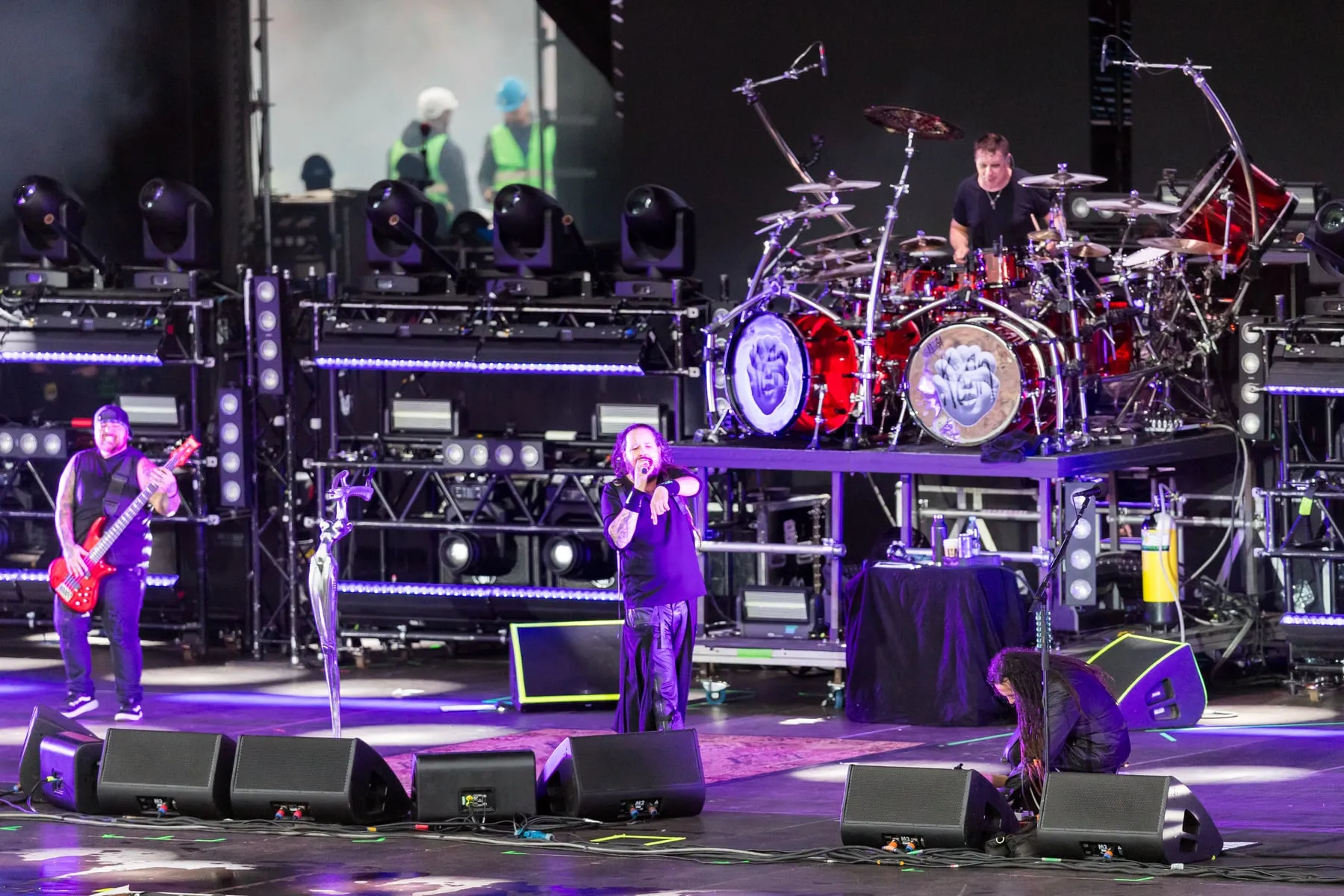
Photo by Sven Mandel , licensed under CC BY-SA 4.0 · Wikimedia Commons
Rank #57
Korn
Bakersfield band that codified the down-tuned, hip-hop-flecked nu metal sound.
From Wikipedia
Korn is an American nu metal band from Bakersfield, California, originally formed in 1993 by James "Munky" Shaffer, Reginald "Fieldy" Arvizu and David Silveria, who were members of the band L.A.P.D. Their current lineup features Shaffer (guitar), Brian "Head" Welch (guitar), Jonathan Davis (vocals), and Ray Luzier (drums), the last of whom replaced Silveria in 2007. The band is notable for pioneering and popularizing the nu metal genre.
Members
- Ray Luzier (2008–present)
- Brian Welch
- David Silveria (?–2006)
- James "Munky" Shaffer
- Jonathan Davis
- Reginald Arvizu
Studio Albums
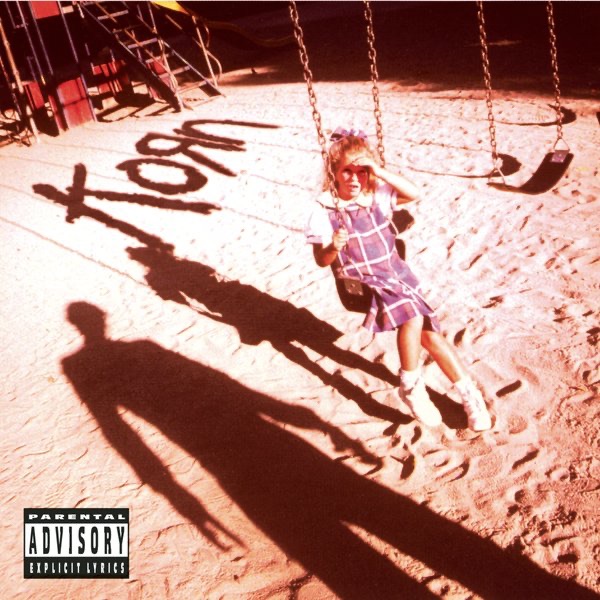
- 1994 Korn
- 1996 Life Is Peachy
- 1998 Follow the Leader
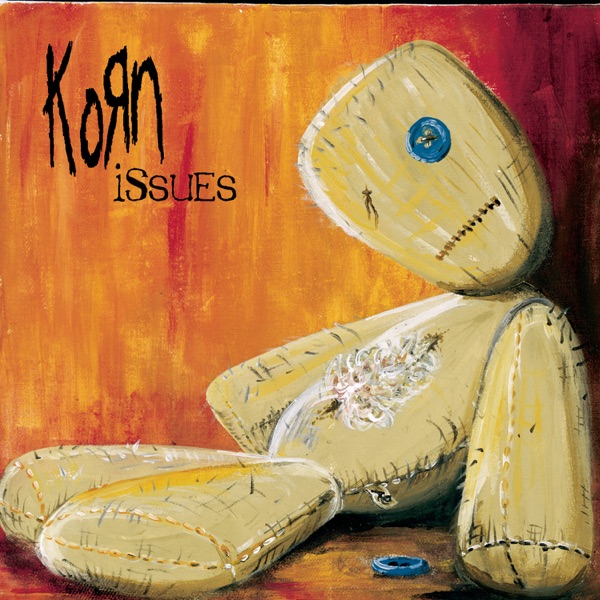
- 1999 Issues
- 2002 Untouchables
- 2003 Take a Look in the Mirror
- 2005 See You on the Other Side
- 2007 [untitled]
- 2010 Korn III: Remember Who You Are
- 2011 The Path of Totality
- 2013 The Paradigm Shift
- 2016 The Serenity of Suffering
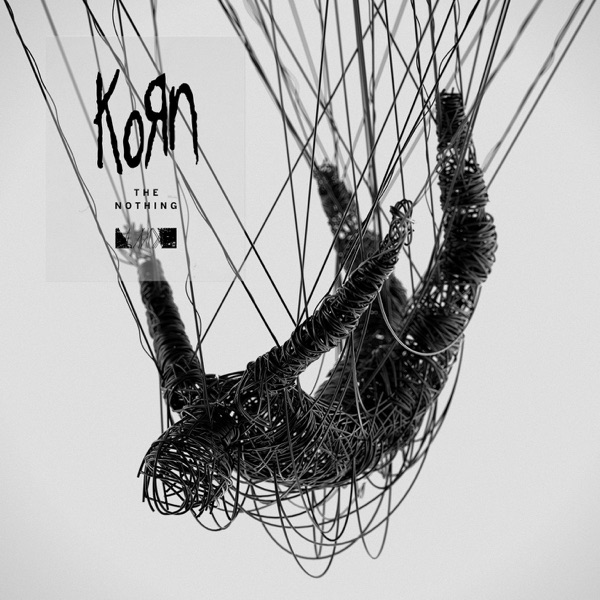
- 2019 The Nothing
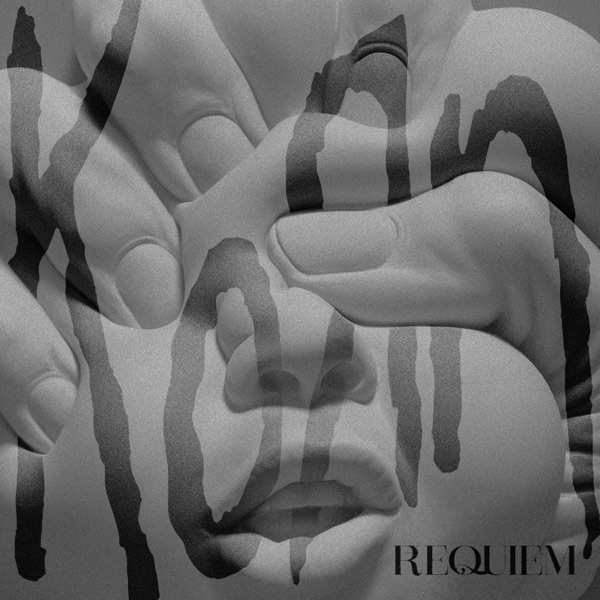
- 2022 Requiem
Source: MusicBrainz
Deep Dive
Overview
Korn is an American nu metal band from Bakersfield, California, formed in 1993. The group emerged from a confluence of heavy metal aggression, funk-inflected bass lines, and hip-hop rhythmic sensibility, becoming the primary architects of nu metal as both a sonic blueprint and a commercial force. Their impact on rock and metal music in the 1990s and 2000s cannot be overstated; they did not invent every element of their sound, but they synthesized and popularized a formula that would define an entire genre and spawn countless imitators.
Formation Story
Korn coalesced in Bakersfield from the ashes of L.A.P.D., a previous project involving founding members James “Munky” Shaffer, Reginald “Fieldy” Arvizu, and David Silveria. Shaffer and Arvizu established the sonic foundation—Shaffer’s heavily down-tuned and distorted guitars paired with Arvizu’s melodic, funk-influenced bass playing—while Silveria provided the propulsive, jazz-informed drumming. Vocalist Jonathan Davis and guitarist Brian “Head” Welch completed the classic lineup. The Bakersfield setting, far from the Los Angeles and San Francisco metal epicenters, allowed the band to develop their identity without immediate major-label pressure, though they would eventually sign to Epic Records and begin their rapid ascent.
Breakthrough Moment
Korn’s self-titled debut album, released in 1994, announced a fully formed musical vision that would reshape heavy music for the next decade. The record’s blend of drop-tuned riffing, unconventional song structures, and Davis’s raw, often anguished vocal delivery set them apart from both traditional heavy metal and the grunge-influenced alternative rock that still dominated the period. While the album did not immediately dominate radio or MTV, it found an audience among younger metal and hard rock listeners hungry for something heavier and more abrasive than the Seattle sound. By the time of their second album, Life Is Peachy (1996), Korn had begun to establish themselves as the de facto leaders of a new underground movement.
Peak Era
Korn’s greatest commercial and critical success occurred between 1998 and 2002, a four-year span anchored by three albums that became pillars of late-1990s and early-2000s rock. Follow the Leader (1998) solidified their mainstream breakthrough, introducing their sound to a far wider audience through radio and MTV exposure. Issues (1999) continued that momentum, proving the band was not a one-album phenomenon. The Untouchables (2002) extended their reign at the top of the metal charts and further refined their approach. During this period, Korn became one of the biggest rock bands in the world, headlining major festivals and selling out arenas globally. Their touring presence was legendary—a chaotic, high-energy affair that became as much a part of their identity as their recordings.
Musical Style
Korn’s sonic identity rests on several defining characteristics. Shaffer’s primary guitar technique involves extreme down-tuning and palm-muted rhythmic chugging, creating a rhythmically complex but massive wall of low-frequency sound. Arvizu’s bass work, by contrast, often operates independently of the guitar riffs, deploying slap and funk techniques that give the heavy music an unexpected rhythmic elasticity. This tension—between the bass player’s jazz and funk vocabulary and the guitarist’s brutalist minimalism—became a Korn trademark. Davis’s vocal approach ranges from melodic sung passages to aggressive shouting and, occasionally, rapping or spoken-word interjections, reflecting the band’s absorption of hip-hop aesthetics at a moment when metal and rap were beginning a cultural dialogue. Lyrically, Davis frequently explored themes of alienation, trauma, and psychological unease, giving emotional weight to the band’s provocative sonic assault.
Major Albums
Korn (1994)
The debut established the band’s core sound: down-tuned guitars, funky bass, angular song structures, and Davis’s distinctive vocal approach. It remains their most raw and unpolished work, and its lack of commercial gloss became part of its appeal and legacy.
Follow the Leader (1998)
Their third album achieved mainstream breakthrough without compromising the band’s aesthetic. The record refined their songwriting and production values while maintaining the aggressive character that defined them, introducing nu metal to a significantly wider audience.
Issues (1999)
Released just over a year after Follow the Leader, Issues proved Korn could sustain their moment with a follow-up that expanded their thematic range and continued to dominate rock radio and MTV rotation during the late 1990s metal boom.
The Untouchables (2002)
This album represented the culmination of Korn’s first major era, delivering radio-friendly tracks while maintaining their heavier instincts. It showed the band at the peak of their commercial powers and creative confidence.
See You on the Other Side (2005)
Released during a period when nu metal’s cultural dominance had begun to recede, this album demonstrated the band’s willingness to experiment and evolve beyond their original formula.
Signature Songs
- “Blind” — One of the band’s most recognizable tracks, a showcase for Davis’s vocal range and the down-tuned riffing that became their signature.
- “Freak on a Leash” — A massive hit that combined the band’s heaviness with more accessible song structure and production, becoming their entry point for mainstream listeners.
- “Here to Stay” — A later single that exemplified their ability to craft catchy, radio-friendly metal hooks.
- “Got the Life” — Demonstrates the funk-metal fusion at the heart of their sound, with Arvizu’s bass work taking particular prominence.
- “Make Me Bad” — An early track that introduced audiences to their approach to melody within aggression.
- “Clown” — A deeper-cut example of their unconventional song structures and thematic darkness.
Influence on Rock
Korn did not invent nu metal—elements of it existed in bands like Faith No More and Prong—but they codified it, commercialized it, and became its most visible ambassadors. The band’s success created a template that countless musicians followed: down-tune the guitars, incorporate rhythmic elements from hip-hop and funk, pair heavy distortion with slap bass, and embrace electronic textures where they served the song. Throughout the late 1990s and 2000s, Korn’s influence could be heard in acts ranging from directly derivative bands to artists working in adjacent heavy genres. Their crossing of the metal and hip-hop divide helped legitimize collaborations between rock and rap artists, a cultural shift that continues to reverberate. Beyond music, Korn’s aesthetic—the band’s visual presentation, Davis’s vulnerability and emotional openness—helped shift metal toward greater introspection and away from the invulnerability that had often characterized the genre.
Legacy
Korn’s status as one of the primary forces in 1990s and 2000s rock music remains uncontested. Though nu metal’s cultural dominance receded in the 2010s and beyond, the band continued to record and tour, releasing Requiem in 2022 and maintaining an active presence in rock music across streaming platforms and live venues. The band’s influence on subsequent generations of metal, hip-hop fusion, and alternative rock artists remains profound, with their catalog continuing to stream in the tens of millions annually. Their evolution from Bakersfield’s L.A.P.D. to global metal superstars reflects both the band’s adaptive musicianship and the industry’s capacity to amplify and commercialize sounds that initially seemed too abrasive or unconventional for mainstream acceptance.
Fun Facts
- Ray Luzier replaced founding drummer David Silveria in 2007 (officially joining in 2008), marking a significant transition in the band’s lineup after Silveria’s departure the previous year.
- The band’s self-titled debut sold slowly at first but eventually achieved platinum status through sustained underground enthusiasm and word-of-mouth, a trajectory typical of many metal releases before the internet era transformed music discovery.
- Korn has been signed to multiple major labels throughout their career, including Virgin Records, Epic Records, and Roadrunner Records, reflecting both industry interest in their back catalog and the changing landscape of record distribution.
Discography & Previews
Click any album to expand its track list. Each track plays a 30-second preview streamed from Apple Music. Tap the link icon next to a track to open it in Apple Music for full playback.


- 1 It's On! ↗ 4:30
- 2 Freak On a Leash ↗ 4:16
- 3 Got the Life ↗ 3:45
- 4 Dead Bodies Everywhere ↗ 4:45
- 5 Children of the Korn (feat. Ice Cube) ↗ 3:53
- 6 B.B.K. ↗ 3:57
- 7 Pretty ↗ 4:13
- 8 All In the Family (feat. Fred Durst) ↗ 4:49
- 9 Reclaim My Place ↗ 4:33
- 10 Justin ↗ 4:18
- 11 Seed ↗ 5:55
- 12 Cameltosis (feat. Slimkid3) ↗ 4:38
- 13 My Gift to You ↗ 7:15
- 14 Earache My Eye ↗ 6:26
- 1 Dead ↗ 1:13
- 2 Falling Away from Me ↗ 4:31
- 3 Trash ↗ 3:27
- 4 4U ↗ 1:42
- 5 Beg for Me ↗ 3:54
- 6 Make Me Bad ↗ 3:56
- 7 It's Gonna Go Away ↗ 1:31
- 8 Wake Up ↗ 4:07
- 9 Am I Going Crazy ↗ 1:02
- 10 Hey Daddy ↗ 3:45
- 11 Somebody Someone ↗ 3:48
- 12 No Way ↗ 4:08
- 13 Let's Get This Party Started ↗ 3:41
- 14 Wish You Could Be Me ↗ 1:07
- 15 Counting ↗ 3:38
- 16 Dirty ↗ 7:50

- 1 Here to Stay ↗ 4:31
- 2 Make Believe ↗ 4:37
- 3 Blame ↗ 3:51
- 4 Hollow Life ↗ 4:09
- 5 Bottled Up Inside ↗ 4:00
- 6 Thoughtless ↗ 4:33
- 7 Hating ↗ 5:10
- 8 One More Time ↗ 4:39
- 9 Alone I Break ↗ 4:17
- 10 Embrace ↗ 4:27
- 11 Beat It Upright ↗ 4:16
- 12 Wake Up Hate ↗ 3:13
- 13 I'm Hiding ↗ 3:57
- 14 No One's There ↗ 9:24

- 1 Right Now ↗ 3:10
- 2 Break Some Off ↗ 2:36
- 3 Counting on Me ↗ 4:49
- 4 Here It Comes Again ↗ 3:34
- 5 Deep Inside ↗ 2:46
- 6 Did My Time ↗ 4:04
- 7 Everything I've Known ↗ 3:35
- 8 Play Me (feat. Nas) ↗ 3:22
- 9 Alive ↗ 4:30
- 10 Let's Do This Now ↗ 3:19
- 11 I'm Done ↗ 3:23
- 12 Y'all Want a Single ↗ 3:18
- 13 When Will This End ↗ 14:24


- 1 Chaos Lives In Everything (feat. Skrillex) ↗ 3:47
- 2 Kill Mercy Within (feat. Noisia) ↗ 3:35
- 3 My Wall (feat. Excision) ↗ 2:55
- 4 Narcissistic Cannibal (feat. Skrillex & Kill the Noise) ↗ 3:11
- 5 Illuminati (feat. Excision & Downlink) ↗ 3:17
- 6 Burn the Obedient (feat. Noisia) ↗ 2:38
- 7 Sanctuary (feat. Downlink) ↗ 3:24
- 8 Let's Go (feat. Noisia) ↗ 2:41
- 9 Get Up! (feat. Skrillex) ↗ 3:43
- 10 Way Too Far (feat. 12th Planet & Flinch) ↗ 3:49
- 11 Bleeding Out (feat. Feed Me) ↗ 4:51


- 1 The End Begins ↗ 1:31
- 2 Cold ↗ 3:46
- 3 You'll Never Find Me ↗ 3:41
- 4 The Darkness Is Revealing ↗ 3:40
- 5 Idiosyncrasy ↗ 4:39
- 6 The Seduction of Indulgence ↗ 1:43
- 7 Finally Free ↗ 3:53
- 8 Can You Hear Me ↗ 2:53
- 9 The Ringmaster ↗ 3:01
- 10 Gravity of Discomfort ↗ 3:35
- 11 H@rd3r ↗ 4:47
- 12 This Loss ↗ 4:41
- 13 Surrender to Failure ↗ 2:21