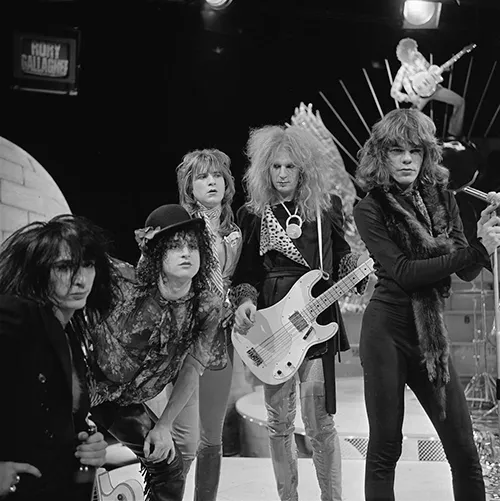
Photo by AVRO , licensed under CC BY-SA 3.0 nl · Wikimedia Commons
Rank #207
New York Dolls
Trashy NYC glam pioneers whose sleaze inspired both punk and metal.
From Wikipedia
The New York Dolls were an American rock band formed in New York City in 1971, who released two albums, New York Dolls (1973) and Too Much Too Soon (1974), before disbanding in 1976. Its classic lineup consisted of vocalist David Johansen, guitarist Johnny Thunders, bassist Arthur Kane, guitarist and pianist Sylvain Sylvain, and drummer Jerry Nolan; the latter two had replaced Rick Rivets and Billy Murcia, respectively, in 1972. In their appearance, they drew from drag fashion, wearing high heels, hats, satin, makeup, spandex, and dresses.
Members
- Johnny Thunders
Studio Albums
- 1973 New York Dolls
- 1974 Too Much Too Soon
- 1991 Endless Party
- 2000 Actress: Birth of The New York Dolls
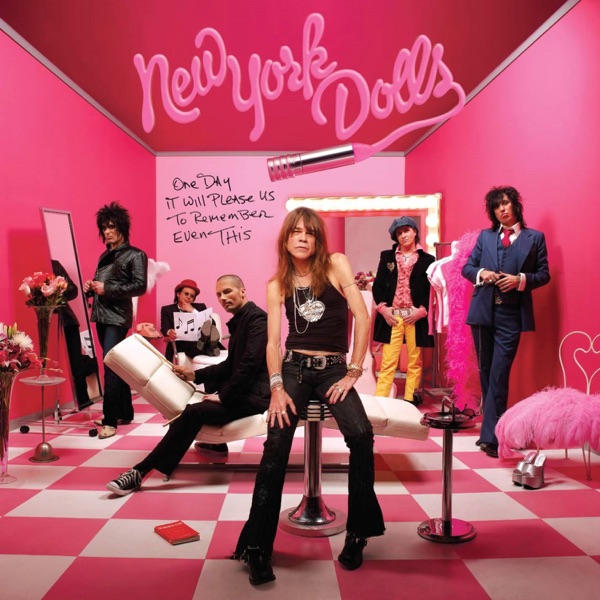
- 2006 One Day It Will Please Us to Remember Even This
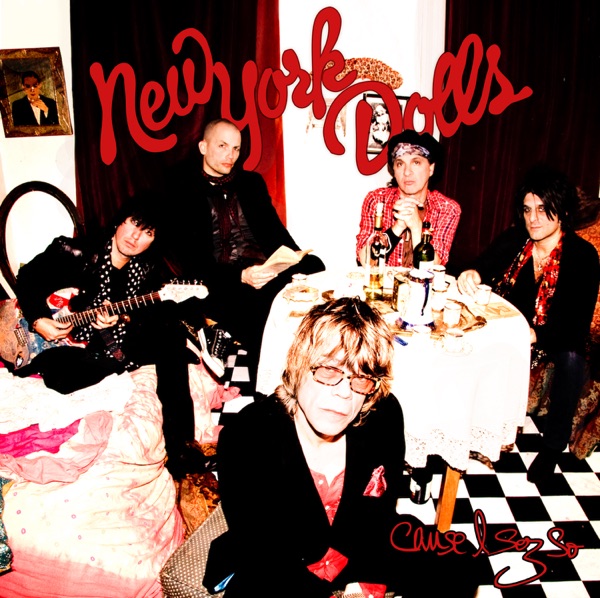
- 2009 ’Cause I Sez So
- 2011 Dancing Backward in High Heels
- 2025 Conspicuous Consumption (live Chicago ’79)
- — Back in the USA
- — New York Dolls
Source: MusicBrainz
Deep Dive
Overview
The New York Dolls emerged from New York City in 1971 as one of rock’s most visually transgressive and musically reckless acts. Their two studio albums—New York Dolls (1973) and Too Much Too Soon (1974)—lasted barely a year before the band fractured, yet their influence proved disproportionate to their commercial lifespan. Operating at the intersection of glam-rock theatricality and proto-punk raw energy, the Dolls created a template for shock rock that reverberated through both punk and metal for decades. They arrived at a moment when rock had begun to calcify into stadium excess and progressive pretension; the Dolls responded by embracing sleaze, gender ambiguity, and the three-minute song.
Formation Story
The New York Dolls coalesced around vocalist David Johansen and guitarist Johnny Thunders in the crucible of early-1970s New York City. The classic lineup solidified in 1972 when Sylvain Sylvain (guitar and keyboards) and Jerry Nolan (drums) replaced founding members Rick Rivets and Billy Murcia, respectively. Bassist Arthur Kane rounded out the core quintet. The five-piece synthesized the theatricality of glam rock—then dominating British charts through David Bowie and T. Rex—with the street-level grit of New York’s downtown rock underground. From their inception, the Dolls rejected the polished, art-school detachment of their British counterparts; instead, they hawked an aesthetic rooted in drag, bisexuality, and the seedy glamour of Times Square hustler culture.
Breakthrough Moment
The Dolls’ eponymous debut, New York Dolls (1973), announced their arrival with a jolt of fuzzy guitars, trash-can production, and songs built on simple, irresistible riffs. Released on Atco Records, the album crystallized the band’s visual and sonic identity: five rockers in heels, makeup, and satin, playing short, explosive rock songs with none of the complexity or earnestness of their contemporaries. Too Much Too Soon followed in 1974, deepening their catalog and bringing even sharper songcraft to their signature sleaze aesthetic. Though neither album achieved substantial chart success at the time, both established the Dolls as the most controversial and talked-about band in New York, attracting fiercely loyal fans and sparking heated dismissals from tastemakers. By 1975–1976, their live reputation had crystallized, and they had begun to influence both the emerging punk scene (who saw in them a template for anti-establishment provocation) and proto-metal acts seeking rawer, more debauched sonic territory.
Peak Era
The period from 1973 to 1975 represented the Dolls at full creative and cultural force. New York Dolls (1973) and Too Much Too Soon (1974) bookended their most fertile songwriting stretch, each album arriving with a distinctive character while maintaining the core visual and musical identity. These were years in which the band’s shock value—their androgynous appearance, their lyrical engagement with transgressive themes, their refusal to conform to rock’s gender and aesthetic norms—translated into mounting influence within the New York underground. Their live shows became legendary for their controlled chaos: Johansen prowled the stage with a glitter-caked swagger while Thunders and Sylvain locked into tight, distorted riffs. However, the very factors that made them creatively vital—substance abuse, internal conflict, the relentless grind of touring—began to fragment the unit. The band dissolved in 1976, having achieved cult status but never the commercial breakthrough that might have sustained them.
Musical Style
The New York Dolls synthesized elements from multiple lineages into a sound that was both primitive and unmistakably their own. Musically, they drew from 1950s rock and roll (particularly its three-chord directness and vocal swagger), the heavy riffing of early hard rock, the costume and presentation of glam rock, and the raw abandon of proto-punk. Johnny Thunders’ guitar work defined their sound: fuzzy, blues-inflected, and driven by a sense of controlled feedback rather than technical precision. Sylvain Sylvain’s rhythm guitar and keyboards provided harmonic grounding and texture without softening the assault. Arthur Kane’s bass and Jerry Nolan’s drumming laid down tight, straightforward grooves that prioritized propulsion over complexity. David Johansen’s vocals ranged from melodic swagger to rasping shout, always pitched between rock and roll braggadocio and punk hostility. Lyrically, the Dolls addressed street life, sexual ambiguity, urban decay, and the romance of living fast and without apology. Their sound evolved only slightly across their two classic albums; Too Much Too Soon refined arrangements and pushed slightly toward harder rock, but the essential formula—trashy, direct, sexually charged, and utterly shameless—remained constant.
Major Albums
New York Dolls (1973)
The debut crystallized the band’s sleaze aesthetic and established them as rock’s most visually and sonically transgressive act. Featuring some of their most enduring songs, the album’s fuzzy production and three-minute song structures aligned glam spectacle with three-chord rock-and-roll fundamentals.
Too Much Too Soon (1974)
The second and final studio album of their original run sharpened their songcraft and showcased a slightly heavier, more guitar-driven approach while maintaining the trashy sensibility of its predecessor.
Endless Party (1991)
A reunion album recorded more than fifteen years after the band’s initial dissolution, documenting the Dolls’ attempt to recapture their chemistry as a working unit in the post-punk and grunge era.
One Day It Will Please Us to Remember Even This (2006)
Another post-reunion project capturing the band’s live and studio work as they continued periodic performances and recordings in the 2000s.
Signature Songs
- “Personality Crisis” — The Dolls’ de facto anthem, a strutting declaration of androgynous swagger and sexual provocation that distilled their entire aesthetic into three minutes.
- “Trash” — A straightforward rock song that doubled as autobiographical commentary, celebrating the band’s embrace of everything polite society rejected.
- “Jet Boy” — A furious blast of fuzzy guitar and Johansen’s sneering vocals, one of the album’s most direct and aggressive moments.
- “Subway Train” — A groove-heavy track built on a simple, hypnotic riff that showcased the Dolls’ ability to sustain a beat across a full track without resorting to complex arrangement.
Influence on Rock
The New York Dolls’ influence fanned out across punk and metal in ways both direct and diffuse. Punk bands of the mid-to-late 1970s—the Ramones, Blondie, Television—operated within a New York underground ecosystem that the Dolls had helped define; their refusal to adopt the grandiosity of stadium rock, their embrace of raw production, and their prioritization of attitude over technical mastery became punk doctrine. Simultaneously, the Dolls’ heavy guitar work, their emphasis on power riffs, and their theatrical presentation influenced the emerging glam-metal scene, particularly acts who sought to combine shock-rock provocation with hard-rock firepower. The Sex Pistols, forming just as the Dolls disbanded, drew directly from their template of using fashion and transgression as weapons within rock music. The band’s androgynous presentation and sexual ambiguity also helped establish the possibility of gender-fluid performance within rock, an opening that would widen with each successive decade.
Legacy
The New York Dolls’ official story ended in 1976, but they never quite disappeared. Reunions and subsequent recordings extending from Endless Party (1991) through Dancing Backward in High Heels (2011) and beyond maintained their presence, even if these later efforts rarely captured the raw necessity of the original work. Their two classic albums remain in print and continue to be discovered by successive waves of rock listeners; streaming platforms and reissue campaigns have made their music far more accessible than it was during their initial run. The Dolls’ visual legacy—their proof that rock could be both trashy and liberatory, crude and artistic—proved more durable than their commercial fortunes. Rock historians consistently cite them as essential to understanding both punk and metal as genres; few bands have managed to be simultaneously influential across such divergent lineages. Their induction into consciousness of rock’s most engaged listeners owes as much to word-of-mouth reverence as to any mainstream validation. In the decades since their dissolution, the Dolls have become a touchstone for any artist seeking to combine rock music with gender transgression, sexual provocation, and the deliberate rejection of mainstream taste.
Fun Facts
- The band’s appearance—including high heels, makeup, satin, spandex, and sometimes dresses—deliberately challenged rock’s masculine presentation at a moment when such gender ambiguity remained genuinely transgressive and widely condemned.
- The Dolls recorded for both Atco Records and Mercury Records during their initial run, reflecting the music industry’s uncertain relationship with the band’s commercial viability despite their cultural impact.
- Jerry Nolan and Sylvain Sylvain’s 1972 arrivals replaced founding drummer Billy Murcia and guitarist Rick Rivets, solidifying the classic lineup that would record both studio albums.
- The band’s New York City origin and street-level aesthetic made them central figures in the downtown Manhattan rock scene that would produce both punk and new wave movements in the mid-to-late 1970s.
Discography & Previews
Click any album to expand its track list. Each track plays a 30-second preview streamed from Apple Music. Tap the link icon next to a track to open it in Apple Music for full playback.


- 1 Introduction (Live at Radio Luxembourg Studios) ↗ 0:59
- 1 That's Poison (Actress Demos) ↗ 5:06
- 2 Personality Crisis (Live at Radio Luxembourg Studios) ↗ 3:49
- 2 I Am Confronted (Actress Demos) ↗ 5:51
- 3 Bad Girl (Live at Radio Luxembourg Studios) ↗ 3:10
- 3 It's Too Late (Actress Demos) ↗ 4:44
- 4 Looking for a Kiss (Live at Radio Luxembourg Studios) ↗ 3:47
- 4 Oh Dot! (Actress Demos) ↗ 4:02
- 5 Give Her a Great Big Kiss (Live at Radio Luxembourg Studios) ↗ 5:12
- 5 I'm a Boy, I'm a Girl (Actress Demos) ↗ 5:26
- 6 Stranded in the Jungle (Live at Radio Luxembourg Studios) ↗ 4:52
- 6 Coconut Grove (Actress Demos) ↗ 4:11
- 7 Pills (Live at Radio Luxembourg Studios) ↗ 3:30
- 7 Take Me to Your Party (Actress Demos) ↗ 4:12
- 8 Vietnamese Baby (Live at Radio Luxembourg Studios) ↗ 4:38
- 8 Oh Dot (Take 2) [Actress Demos] ↗ 3:22
- 9 Trash (Live at Radio Luxembourg Studios) ↗ 3:53
- 9 It's Too Late (Take 2) [Actress Demos] ↗ 3:26
- 10 Chatterbox (Live at Radio Luxembourg Studios) ↗ 3:38
- 10 We Have Been Through This Before (Actress Demos) ↗ 4:14
- 11 Puss N' Boots (Live at Radio Luxembourg Studios) ↗ 5:46
- 11 Why Am I Alone? (Actress Demos) ↗ 3:45
- 12 Hoochie Coochie Man (Live at Radio Luxembourg Studios) ↗ 5:22
- 13 Jet Boy (Live at Radio Luxembourg Studios) ↗ 6:34
- 1 We're All In Love ↗ 4:38
- 2 Runnin' Around ↗ 4:12
- 3 Plenty of Music ↗ 4:00
- 4 Dance Like a Monkey ↗ 3:38
- 5 Punishing World ↗ 2:38
- 6 Maimed Happiness ↗ 3:03
- 7 Fishnets & Cigarettes ↗ 3:13
- 8 Gotta Get Away from Tommy ↗ 2:28
- 9 Dancing On the Lip of a Volcano ↗ 4:18
- 10 I Ain't Got Nothin' ↗ 4:28
- 11 Rainbow Store ↗ 2:59
- 12 Gimme Luv and Turn On the Light ↗ 3:19
- 13 Take a Good Look At My Good Looks ↗ 5:02

- 1 Fool For You Baby ↗ 2:38
- 2 Streetcake ↗ 3:19
- 3 Fabulous Rant ↗ 0:26
- 4 I'm So Fabulous ↗ 2:26
- 5 Talk To Me Baby ↗ 3:03
- 6 Kids Like You ↗ 3:52
- 7 Round and Round She Goes ↗ 3:47
- 8 You Don't Have To Cry ↗ 3:04
- 9 I Sold My Heart To the Junkman ↗ 2:24
- 10 Baby, Tell Me What I'm On ↗ 3:57
- 11 Funky But Chic ↗ 4:02
- 12 End of the Summer ↗ 4:18
- 13 Pills ↗ 4:02
- 14 Funky But Chic ↗ 4:16
- 15 'Cause I Sez So ↗ 3:06
- 16 Hey Bo Diddley ↗ 3:16