
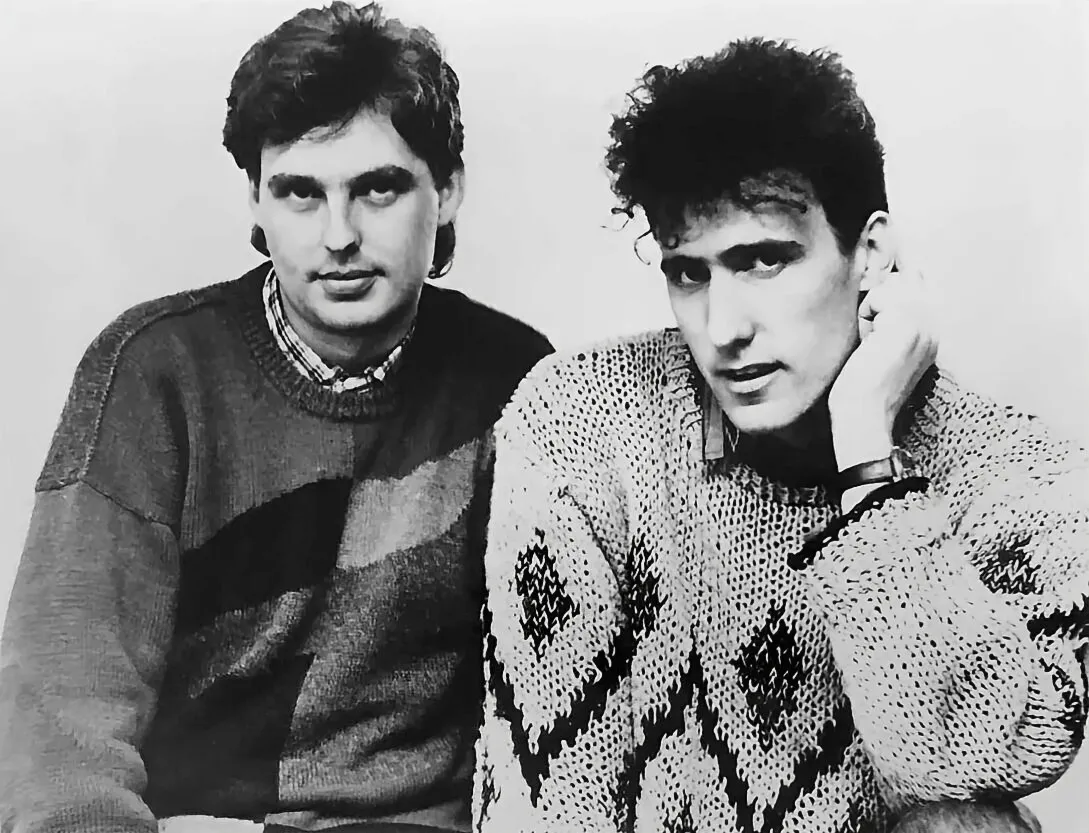
Photo by Distributed by A&M Records , licensed under Public domain · Wikimedia Commons
Rank #228
Orchestral Manoeuvres in the Dark
Wirral synth-pop pioneers whose hits traveled from new wave to MTV staples.
From Wikipedia
Orchestral Manoeuvres in the Dark (OMD) are an English electronic band formed in Meols, Merseyside in 1978 by Andy McCluskey and Paul Humphreys. Regarded as pioneers of electronic music, the group combined an experimental, minimalist ethos with pop sensibilities, becoming key figures in the emergence of synth-pop. OMD were Britain's first performing, synthesized two-piece band and have been described as the "original synth-pop duo"; despite a shifting line-up, the central pairing of McCluskey and Humphreys remains the group's primary identifier. In the United States, the band were an early presence in the MTV-driven Second British Invasion.
Members
- Andy McCluskey
- Paul Humphreys
Studio Albums
- 1980 Orchestral Manoeuvres in the Dark
- 1980 Organisation
- 1981 Architecture & Morality
- 1982 Interchords: A Constructive Conversation with Paul Humphreys and Andy McCluskey
- 1983 Dazzle Ships
- 1984 Junk Culture
- 1985 Crush
- 1986 The Pacific Age
- 1991 Sugar Tax
- 1993 Liberator
- 1996 Universal
- 2010 History of Modern
- 2013 English Electric
- 2017 The Punishment of Luxury
- 2023 Bauhaus Staircase
- — DJ Remixes, Volumes 1 & 2
Source: MusicBrainz
Deep Dive
Overview
Orchestral Manoeuvres in the Dark—known universally as OMD—are an English electronic band formed in 1978 in Meols, Merseyside, who emerged as foundational figures in the synth-pop movement. Regarded as pioneers of electronic music, the duo of Andy McCluskey and Paul Humphreys combined minimalist experimentation with accessible pop melodies, creating a template that would influence synth-pop for decades. As Britain’s first performing synthesized two-piece, they occupied a unique position: neither the art-rock complexity of some electronic acts nor the pure dance floor ambition of others, but a marriage of electronic innovation with song craft that translated into both critical respect and commercial success.
Formation Story
Andy McCluskey and Paul Humphreys founded OMD in 1978 in Meols, a small town on the Wirral Peninsula in the northwest of England. The pair emerged from the post-punk ferment of the late 1970s with a radical idea: to construct a fully realized pop band using synthesizers and electronic instruments as their primary tools, abandoning the guitar-bass-drums template that defined rock. Their early aesthetic was deliberately minimal and experimental, yet rooted in an appreciation for melody and structure. From their inception, McCluskey and Humphreys formed the band’s conceptual and creative core, a partnership that would remain consistent across lineup changes and stylistic shifts spanning over four decades.
Breakthrough Moment
OMD’s early releases established their credentials quickly. Their self-titled debut album, Orchestral Manoeuvres in the Dark, arrived in 1980, followed within months by Organisation the same year—a prolific start that announced their arrival as serious electronic composers. These records circulated in new wave and post-punk circles, but it was Architecture & Morality in 1981 that crystallized their broader appeal. The album balanced experimental electronic textures with melodic hooks and emotional directness, reaching a wider audience both in the UK and, crucially, in North America where MTV’s emergence provided a visual platform for synth-pop’s visual aesthetic. OMD’s clean, minimalist production and sharp presentation suited the new channel perfectly, positioning them as early ambassadors of the synth-pop wave in the United States.
Peak Era
The period from 1981 through the mid-1980s marked OMD’s creative and commercial zenith. Architecture & Morality remained their touchstone, but they sustained momentum with Dazzle Ships in 1983—a more experimental, oblique record that showcased their willingness to challenge their own emerging formulas—and Junk Culture in 1984, which pursued a more radio-friendly, accessible direction. Crush followed in 1985 and The Pacific Age in 1986, consolidating their presence as one of the defining bands of the MTV era. Throughout this period, OMD refined their electronic sound, moving from the austere minimalism of their earliest work toward richer, more layered production while retaining the melodic clarity that made them distinctive among their synth-pop peers.
Musical Style
Orchestral Manoeuvres in the Dark constructed their sound entirely from synthesizers, electronic drums, and sequencers—no guitars, no traditional rock instrumentation. Their production aesthetic favored clarity and precision; tracks often featured prominent, singing synthesizer lines that functioned as melodic hooks in place of lead vocals, or supported McCluskey’s often understated, introspective singing. Their songwriting typically emphasized economy of means: a hypnotic bassline, a memorable synth motif, and structured verses and choruses that echoed pop tradition even as the instrumentation signaled radical modernity. The band’s early work drew from post-punk’s intellectual rigor and minimalism, but they gradually incorporated more warmth and accessibility without sacrificing electronic character. By the mid-1980s, their sound had absorbed influences from dance music and new pop without abandoning the distinctive OMD signature: restrained, intelligent, and melodic.
Major Albums
Architecture & Morality (1981)
The album that broke OMD beyond underground new wave circles, balancing experimental electronic composition with genuine emotional resonance and pop structure. Its melodic directness and visual presentation made it a staple of early MTV.
Dazzle Ships (1983)
A deliberately experimental detour featuring oblique songwriting, fragmented structures, and sonic collage—demonstrating the duo’s refusal to calcify into commercial formula even at the height of synth-pop’s mainstream acceptance.
Junk Culture (1984)
A more radio-focused direction that retained electronic character while embracing wider accessibility, featuring some of OMD’s most commercially successful material from the mid-1980s.
The Pacific Age (1986)
A polished, mature statement that showed OMD consolidating their 1980s achievements, with refined production and assured songwriting that positioned them as established figures rather than novelties of passing trend.
Signature Songs
- Electricity — An early single that became OMD’s calling card, exemplifying their minimalist synth-pop formula with a hypnotic drum machine and ascending synthesizer riff.
- Enola Gay — One of their most recognizable compositions, featuring a driving electronic beat and melodic synth work that made the song a staple of 1980s new wave radio.
- Souvenir — A showcase for restrained, emotional vocals over crystalline electronic production, demonstrating the duo’s ability to achieve intimacy through synthetic means.
- Joan of Arc — An atmospheric, propulsive track that balanced experimental arrangement with pop sensibility, highlighting their skill at merging art and commerce.
Influence on Rock
Orchestral Manoeuvres in the Dark’s arrival as a fully realized electronic pop band without guitars exerted substantial influence on subsequent synth-pop, new wave, and electronic music generally. By proving that synthesizers could anchor a band’s identity rather than merely supplement traditional instruments, they legitimized electronic music as a primary creative language for pop songwriting. Their success in North America during the MTV era positioned synth-pop as central to the Second British Invasion, directly enabling the commercial breakthroughs of Depeche Mode, Duran Duran, and other electronic acts. Their model—a two-person creative core, minimalist aesthetics, melodic accessibility, and electronic purity—became a template others would adopt. Beyond synth-pop proper, their influence extended into post-punk and experimental electronic circles, where their combination of intellectual rigor and pop sensibility demonstrated that electronic music need not choose between artistic ambition and listener engagement.
Legacy
OMD have remained active for over forty years, continuously recording and performing despite the electronic music landscape’s dramatic transformations. While the 1990s and 2000s saw them less prominent in mainstream discourse—their 1991 album Sugar Tax represented a return after a hiatus—they maintained a committed audience and continued releasing studio albums including Liberator (1993), Universal (1996), and later History of Modern (2010), English Electric (2013), The Punishment of Luxury (2017), and Bauhaus Staircase (2023). The consistency of McCluskey and Humphreys’s partnership across decades, rarely matched in rock music, has become itself a marker of their historical significance. Their early records, particularly Architecture & Morality, remain canonical examples of 1980s new wave and synth-pop, regularly cited in historical surveys and listened to by new generations discovering the era through reissue campaigns and streaming platforms.
Fun Facts
- OMD were Britain’s first performing synthesized two-piece band, establishing a template that influenced numerous electronic acts across subsequent decades.
- The band released two studio albums in 1980—their debut Orchestral Manoeuvres in the Dark and Organisation—a prolific start that announced their ambitions immediately.
- Andy McCluskey and Paul Humphreys have remained the consistent creative core of OMD throughout the band’s entire history, surviving lineup shifts that saw various supporting musicians join and depart while the duo’s partnership endured.
- The band’s presence in MTV’s early years as a synth-pop act was instrumental in positioning British electronic music as central to the 1980s cultural moment in North America.
Discography & Previews
Click any album to expand its track list. Each track plays a 30-second preview streamed from Apple Music. Tap the link icon next to a track to open it in Apple Music for full playback.
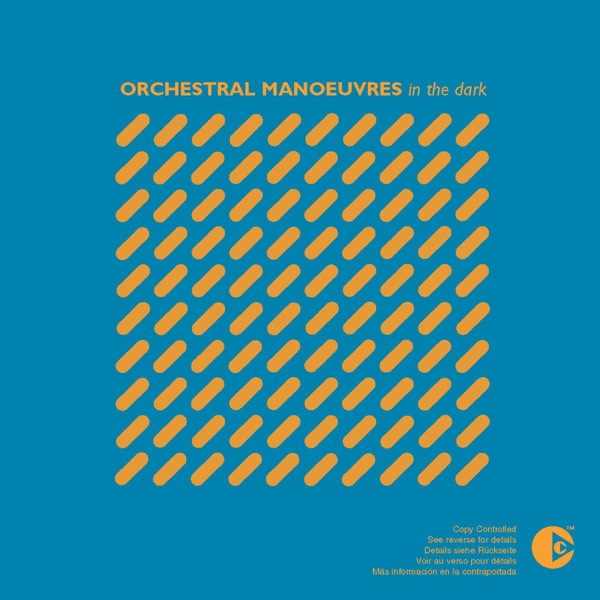
- 1 Bunker Soldiers ↗ 2:54
- 2 Almost ↗ 3:44
- 3 Mystereality ↗ 2:45
- 4 Electricity ↗ 3:39
- 5 The Messerschmitt Twins ↗ 5:41
- 6 Messages ↗ 4:12
- 7 Julia's Song ↗ 4:41
- 8 Red Frame/White Light ↗ 3:12
- 9 Dancing ↗ 2:59
- 10 Pretending To See the Future ↗ 3:48
- 11 Messages (Single Version) ↗ 4:46
- 12 I Betray My Friends ↗ 3:53
- 13 Taking Sides Again ↗ 4:23
- 14 Waiting For the Man ↗ 3:00
- 15 Electricity (Hannett / Cargo Studios Version) ↗ 3:37
- 16 Almost (Hannett / Cargo Studios Version) ↗ 3:51

- 1 Enola Gay ↗ 3:34
- 2 2nd Thought ↗ 4:15
- 3 Vcl XI ↗ 3:51
- 4 Motion and Heart ↗ 3:17
- 5 Statues ↗ 4:31
- 6 The Misunderstanding ↗ 4:55
- 7 The More I See You ↗ 4:12
- 8 Promise ↗ 4:51
- 9 Stanlow ↗ 6:41
- 10 Annex ↗ 4:34
- 11 Introducting Radios ↗ 1:27
- 12 Distance Fades Between Us ↗ 3:44
- 13 Progress ↗ 2:57
- 14 Once When I Was Six ↗ 3:12
- 15 Electricity (Dindisc 1980 Version) ↗ 3:44

- 1 The New Stone Age ↗ 3:23
- 2 She's Leaving ↗ 3:28
- 3 Souvenir ↗ 3:40
- 4 Sealand ↗ 7:47
- 5 Joan of Arc ↗ 3:48
- 6 Maid of Orleans ↗ 4:12
- 7 Architecture and Morality ↗ 3:43
- 8 Georgia ↗ 3:24
- 9 The Beginning and the End ↗ 3:48
- 10 Extended Souvenir ↗ 4:17
- 11 Motion and Heart (Amazon Version) ↗ 3:08
- 12 Sacred Heart ↗ 3:31
- 13 The Romance of the Telescope ↗ 3:23
- 14 Navigation ↗ 3:01
- 15 Of All the Things We've Made ↗ 3:26
- 16 Gravity Never Failed ↗ 3:25

- 1 Radio Prague ↗ 1:18
- 2 Genetic Engineering ↗ 3:38
- 3 ABC Auto-Industry ↗ 2:07
- 4 Telegraph ↗ 2:58
- 5 This Is Helena ↗ 1:58
- 6 International ↗ 4:25
- 7 Dazzle Ships, Pt. II, III & VII ↗ 2:22
- 8 The Romance of the Telescope ↗ 3:27
- 9 Silent Running ↗ 3:34
- 10 Radio Waves ↗ 3:45
- 11 Time Zones ↗ 1:50
- 12 Of All the Things We've Made ↗ 3:27


- 1 Universal ↗ 5:41
- 2 Walking On the Milky Way ↗ 4:39
- 3 The Moon & the Sun ↗ 3:37
- 4 The Black Sea ↗ 3:39
- 5 Very Close to Far Away ↗ 5:45
- 6 The Gospel of St Jude ↗ 2:24
- 7 That Was Then ↗ 4:27
- 8 Too Late ↗ 4:09
- 9 The Boy from the Chemist Is Here to See You ↗ 4:41
- 10 If You're Still in Love With Me ↗ 2:51
- 11 New Head ↗ 5:01
- 12 Victory Waltz ↗ 2:46

- 1 New Babies; New Toys ↗ 3:52
- 2 If You Want It ↗ 4:45
- 3 History of Modern (Part I) ↗ 4:41
- 4 History of Modern (Part II) ↗ 4:13
- 5 Sometimes ↗ 3:46
- 6 RFWK ↗ 3:46
- 7 New Holy Ground ↗ 3:42
- 8 The Future, The Past, and Forever After ↗ 4:52
- 9 Sister Marie Says ↗ 4:00
- 10 Pulse ↗ 3:44
- 11 Green ↗ 4:17
- 12 Bondage of Fate ↗ 4:06
- 13 The Right Side? ↗ 8:20


