
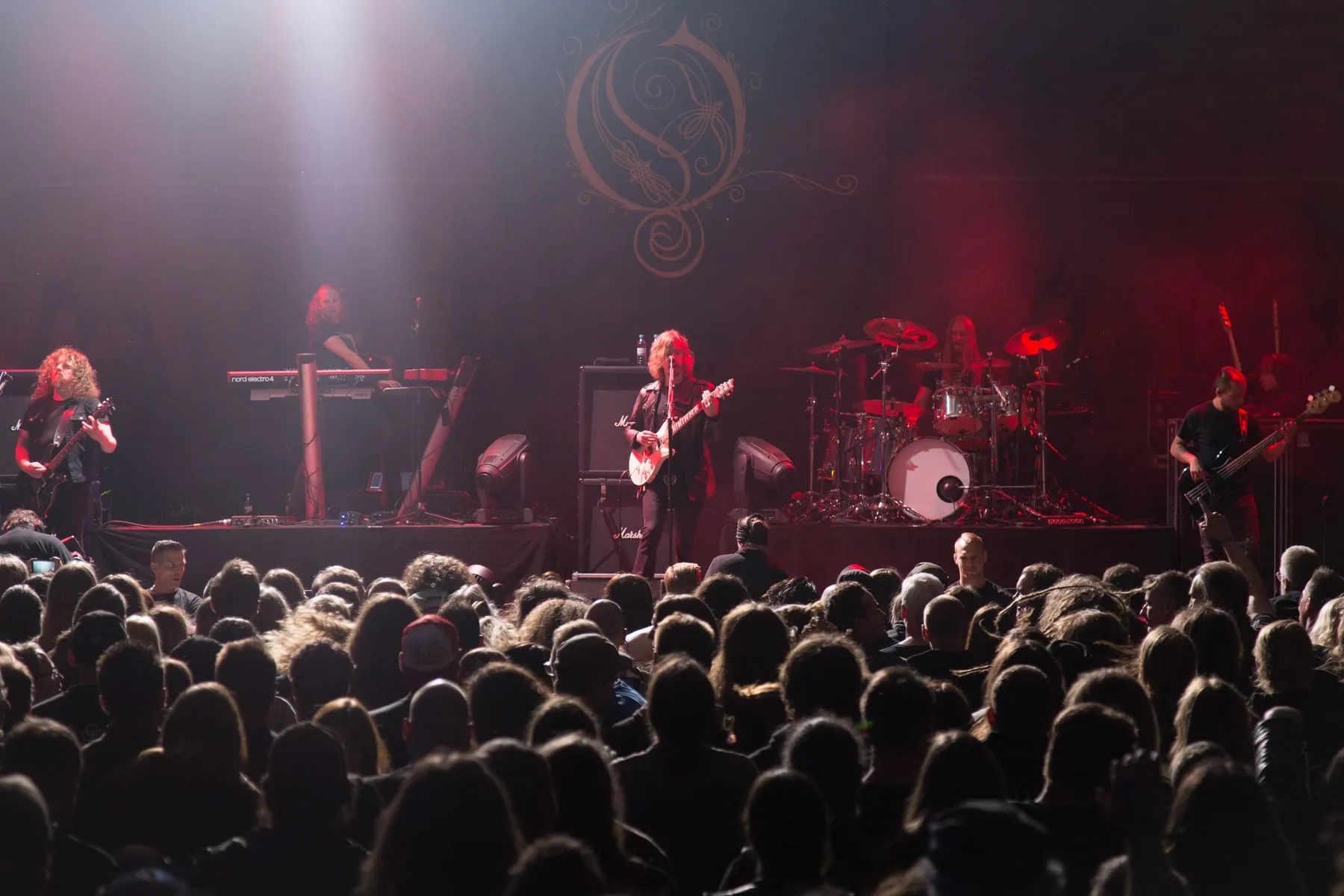
Photo by Grywnn , licensed under CC BY-SA 4.0 · Wikimedia Commons
Rank #177
Opeth
Stockholm prog-metal mainstays of long-form composition and dynamics.
From Wikipedia
Opeth is a Swedish progressive metal band from Stockholm, formed in 1990. The band incorporates folk, blues, classical, and jazz elements into its usually lengthy compositions, as well as strong influences from death metal, especially in their early works. Songs may include acoustic guitar passages, Mellotrons, death growls, and strong dynamic shifts.
Members
- Fredrik Åkesson
- Joakim Svalberg
- Martin Mendez
- Mikael Åkerfeldt
- Waltteri Väyrynen
Studio Albums
- 1995 Orchid
- 1996 Morningrise
- 1998 My arms, Your hearse
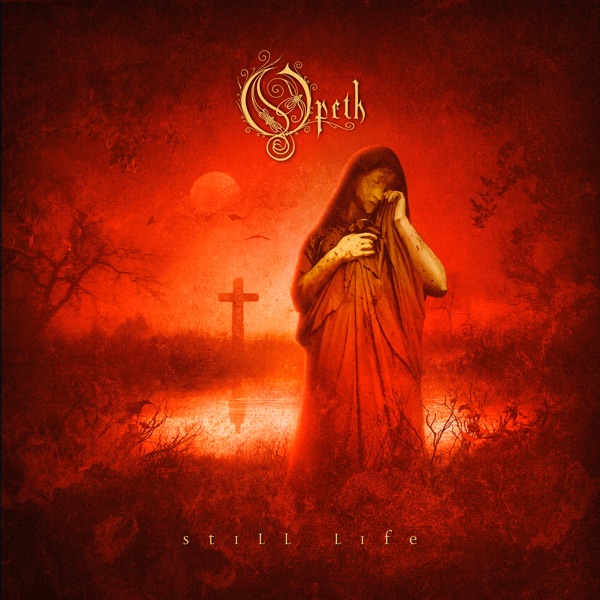
- 1999 Still Life
- 2001 Blackwater Park
- 2002 Deliverance
- 2003 Damnation
- 2005 Ghost Reveries
- 2008 Watershed
- 2011 Heritage
- 2014 Pale Communion
- 2016 Sorceress
- 2019 In Cauda Venenum
- 2024 The Last Will and Testament
Source: MusicBrainz
Deep Dive
Overview
Opeth is a Swedish progressive metal band from Stockholm, formed in 1990, that stands as one of the defining acts in progressive metal’s expansion beyond traditional rock structures. The band’s signature approach—elongated compositions layered with acoustic passages, harsh death growls, folk sensibilities, and sudden dynamic shifts—created a template that influenced generations of metal and progressive artists. Over more than three decades, Opeth has released fourteen studio albums that chronicle an evolution from raw death metal textures toward increasingly sophisticated arrangements that incorporate classical, blues, and jazz elements without abandoning metal’s foundational aggression.
Formation Story
Opeth coalesced in Stockholm in 1990 around Mikael Åkerfeldt’s compositional vision. The Swedish capital had cultivated a distinctive metal scene throughout the 1980s, but Opeth’s emergence coincided with a broader shift in death metal away from brute-force aesthetics toward compositional ambition. The band’s early lineup crystallized around core members who shared Åkerfeldt’s belief that metal could sustain extended instrumental passages, folk-inflected melodies, and the clean guitar tones traditionally associated with progressive rock. This fusion of genres—explicit from the outset—set Opeth apart from contemporary Swedish death metal bands that favored directness and speed.
Breakthrough Moment
Opeth’s earliest recordings, the 1995 debut Orchid and 1996’s Morningrise, established their trademark sound but remained largely within underground metal circles. Broader recognition arrived with Blackwater Park in 2001, an album that solidified the band’s approach across eight tracks, several exceeding eight minutes in length. The record demonstrated that progressive composition and death metal aesthetics were not opposing forces but complementary tools; tremolo-picked riffs and growled vocals could coexist with fingerpicked acoustic passages and clean vocal harmonies. Blackwater Park resonated across metal subgenres and progressive rock audiences alike, establishing Opeth as a band capable of sustaining structural complexity without sacrificing emotional impact.
Peak Era
The years from 2001 to 2008 marked Opeth’s most celebrated period, spanning five albums: Blackwater Park, Deliverance (2002), Damnation (2003), Ghost Reveries (2005), and Watershed (2008). This stretch showcased Åkerfeldt’s evolving mastery of large-scale composition, each record expanding the boundaries of what progressive metal could encompass. Deliverance and Damnation demonstrated a particularly striking contrast—the former leaning heavily into death metal brutality, the latter exploring almost exclusively clean-vocal, acoustic territory—suggesting that the band’s core aesthetic could absorb radical shifts in instrumentation and tone without losing coherence. Ghost Reveries and Watershed synthesized these directions, combining density with accessibility and establishing Opeth as one of metal’s most consistently inventive acts.
Musical Style
Opeth’s sound rests on the juxtaposition of opposing musical languages. Tracks routinely shift between acoustic guitar passages played with classical fingerstyle technique, Mellotron washes evoking progressive rock’s 1970s origins, and brutal metal sections anchored by distorted guitars and growled vocals. Åkerfeldt’s vocal range spans from deep death growls to clean, often melancholic singing that carries folk sensibilities—a versatility that few metal singers command. The band’s rhythmic approach favors complex time signatures and extended instrumental sections that reward repeated listening; where traditional death metal emphasizes speed and density, Opeth prioritizes dynamics and space, allowing riffs to breathe and melodies to register across lengthy compositions. This willingness to leave silence and light within heavy music created an aesthetic that appealed to both death metal audiences and listeners drawn to progressive rock’s intellectual rigor.
The band’s incorporation of folk and classical idioms was never superficial. Rather than treating these elements as ornamental, Opeth wove them into the fundamental architecture of songs, ensuring that the flow from aggression to introspection felt inevitable rather than calculated. By the mid-2000s, the influence of blues harmony and jazz voicings became increasingly audible, further expanding the harmonic palette available to the band.
Major Albums
Blackwater Park (2001)
The record that established Opeth’s international profile, Blackwater Park balanced the raw energy of earlier work with mature compositional sophistication, containing some of the band’s most enduring songs and proving that extended metal compositions could achieve mainstream metal recognition.
Deliverance (2002)
Demonstrating the band’s commitment to exploring extremity, Deliverance reengaged with death metal’s most aggressive textures while maintaining the compositional complexity established on Blackwater Park.
Damnation (2003)
A striking counterpoint to Deliverance, Damnation eschews distorted guitars and growled vocals almost entirely in favor of acoustic arrangements and clean singing, proving Opeth’s ability to create powerful metal albums outside traditional heavy instrumentation.
Ghost Reveries (2005)
Uniting the aggressive and introspective directions of the preceding two albums, Ghost Reveries is widely considered the band’s fullest artistic statement, synthesizing all available elements into ten lengthy, intricately constructed compositions.
Watershed (2008)
The final album of the band’s most creatively celebrated period, Watershed applied orchestral arrangements and guest performers to Opeth’s established framework, suggesting further evolution ahead.
Signature Songs
- The Leper Affinity — A Blackwater Park centerpiece featuring one of the band’s most memorable opening riffs and demonstrating their mastery of extended instrumental development.
- Master’s Apprentices — A Deliverance standout combining brutal death metal passages with classical guitar passages and showcasing Åkerfeldt’s dynamic range.
- Dirge for November — From Ghost Reveries, this song exemplifies Opeth’s ability to build emotional weight across nine minutes through careful dynamic control.
- The Drapery Falls — A Blackwater Park track that contrasts gentle acoustic passages with overwhelming heaviness, establishing the blueprint for much of the band’s subsequent work.
Influence on Rock
Opeth’s influence extended across progressive and metal communities, validating the notion that death metal and progressive rock were not mutually exclusive categories but could be synthesized into something larger than either tradition alone. Bands including Mastodon, Gojira, and countless European progressive metal acts emerged in their wake, many explicitly citing Opeth’s example of compositional ambition within aggressive music. The band demonstrated to younger musicians that metal audiences possessed the patience and intelligence to engage with extended compositions, harmonic complexity, and genre-blending approaches—a realization that reshaped expectations for metal in the 2000s and beyond. Opeth’s success also validated the value of folk and classical elements within metal contexts, influencing how subsequent acts approached instrumentation and arrangement.
Legacy
Following the Watershed era, Opeth entered a new phase marked by releases including Heritage (2011), Pale Communion (2014), Sorceress (2016), In Cauda Venenum (2019), and The Last Will and Testament (2024). These albums continued to explore clean vocal approaches and progressive rock architecture while gradually distancing themselves from death metal aesthetics. The band remains active and continually touring, maintaining a presence across streaming platforms and remaining a reference point in conversations about metal’s artistic ceiling. Opeth’s three-decade trajectory—from underground death metal act to internationally recognized progressive ensemble—established them as essential figures in metal’s evolution, their catalog a monument to the genre’s capacity for sophistication and emotional depth.
Fun Facts
- Opeth is one of few major metal bands to emerge from Stockholm’s progressive rather than purely death metal tradition, though the city’s broader metal culture provided essential context for their development.
- The band has released albums across multiple independent and major labels including Peaceville Records, Nuclear Blast, and Century Media Records, reflecting their evolution and the changing landscape of metal distribution.
- Mikael Åkerfeldt’s classical guitar technique and formal understanding of composition distinguish him among metal guitarists, informing the sophisticated harmonic structures present throughout the band’s discography.
Discography & Previews
Click any album to expand its track list. Each track plays a 30-second preview streamed from Apple Music. Tap the link icon next to a track to open it in Apple Music for full playback.

- 1 In Mist She Was Standing (2023 Abbey Road Remaster) ↗ 14:10
- 2 Under the Weeping Moon (2023 Abbey Road Remaster) ↗ 9:54
- 3 Silhouette (2023 Abbey Road Remaster) ↗ 3:07
- 4 Forest of October (2023 Abbey Road Remaster) ↗ 13:08
- 5 The Twilight Is My Robe (2023 Abbey Road Remaster) ↗ 11:02
- 6 Requiem (2023 Abbey Road Remaster) ↗ 2:36
- 7 The Apostle In Triumph (2023 Abbey Road Remaster) ↗ 11:34


- 1 Prologue (Abbey Road Remaster) ↗ 0:59
- 2 April Ethereal (Abbey Road Remaster) ↗ 8:43
- 3 When (Abbey Road Remaster) ↗ 9:14
- 4 Madrigal (Abbey Road Remaster) ↗ 1:27
- 5 The Amen Corner (Abbey Road Remaster) ↗ 8:46
- 6 Demon of the Fall (Abbey Road Remaster) ↗ 6:11
- 7 Credence (Abbey Road Remaster) ↗ 5:32
- 8 Karma (Abbey Road Remaster) ↗ 7:49
- 9 Epilogue (Abbey Road Remaster) ↗ 3:59


- 1 Persephone ↗ 1:52
- 2 Sorceress ↗ 5:49
- 3 The Wilde Flowers ↗ 6:49
- 4 Will O the Wisp ↗ 5:08
- 5 Chrysalis ↗ 7:17
- 6 Sorceress 2 ↗ 3:49
- 7 The Seventh Sojourn ↗ 5:29
- 8 Strange Brew ↗ 8:45
- 9 A Fleeting Glance ↗ 5:07
- 10 Era ↗ 5:42
- 11 Persephone (Slight Return) ↗ 0:54
- 12 The Ward ↗ 3:13
- 13 Spring MCMLXXIV ↗ 6:11
- 14 Cusp of Eternity (Live) ↗ 5:45
- 15 The Drapery Falls (Live) ↗ 10:23
- 16 Voice of Treason (Live) ↗ 8:11

