
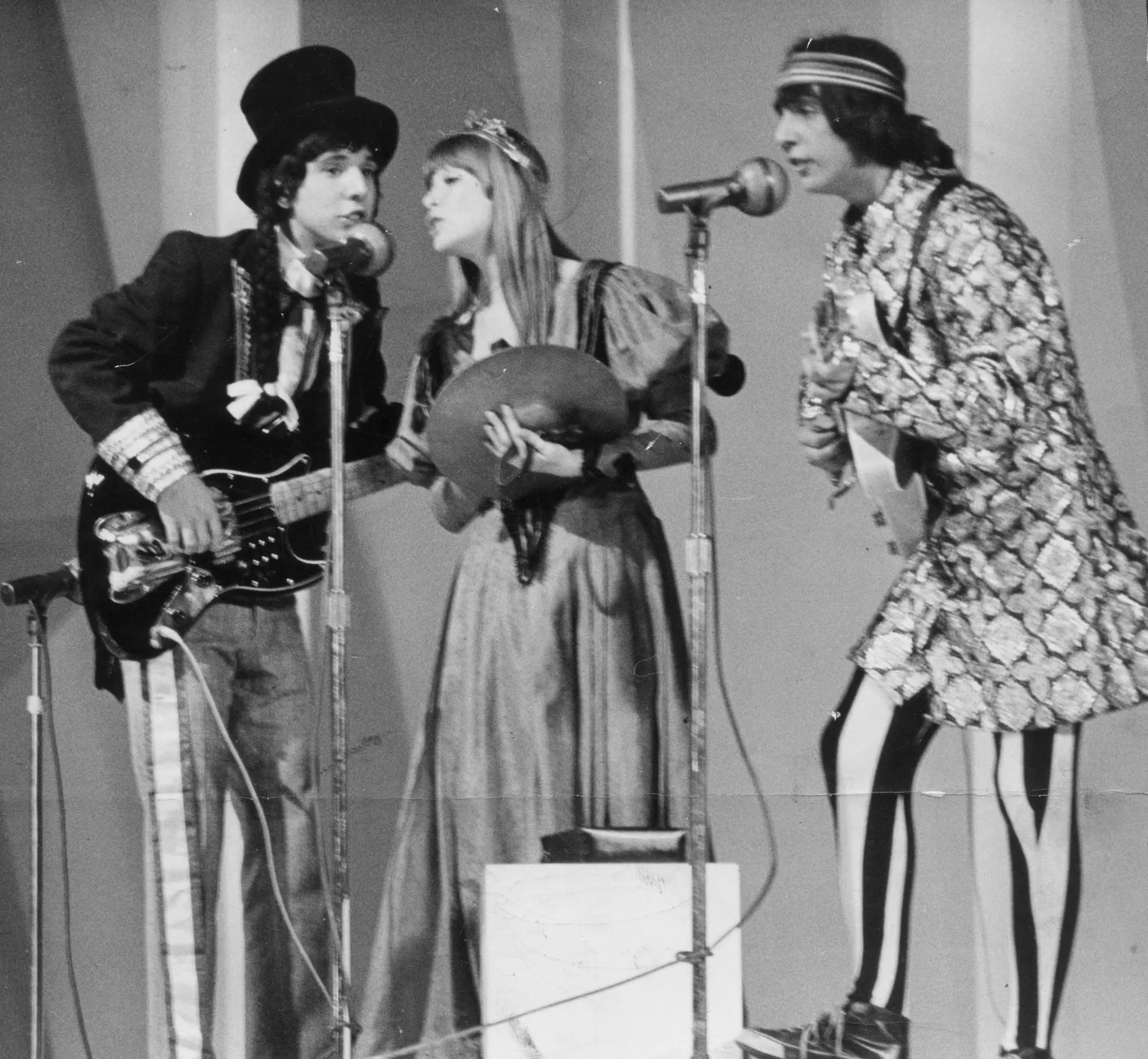
Photo by Unknown Unknown , licensed under Public domain · Wikimedia Commons
Rank #263
Os Mutantes
São Paulo Tropicália pioneers whose psychedelic strangeness is a global influence.
From Wikipedia
Os Mutantes is a Brazilian rock band that were linked with the Tropicália movement of the late 1960s. Heavily influenced by Anglo-American psychedelic pop, they bridged Brazilian sensibilities together with studio trickery, feedback, distortion, and musique concrète. They released their now-acclaimed self-titled debut album in 1968.
Members
- Arnaldo Baptista (1968–1973)
- Rita Lee (1968–1972)
- Liminha (1969–1974)
- Zélia Duncan (2006–2007)
- Bia Mendes (2008–2014)
- Sérgio Dias
Studio Albums
- 1968 Os Mutantes
- 1969 Mutantes
- 1970 A divina comédia ou ando meio desligado
- 1971 Jardim elétrico
- 1972 Mutantes e seus cometas no país do baurets
- 1974 Tudo foi feito pelo sol
- 1986 "A" e o "Z"
- 1999 Tecnicolor
- 2009 Haih or amortecedor
- 2013 Fool Metal Jack
- 2020 Zzyzx
Source: MusicBrainz
Deep Dive
Overview
Os Mutantes emerged from São Paulo in 1966 as one of the most audacious acts in Brazilian rock history. The band synthesized local sensibilities—particularly the avant-garde impulses of Brazilian popular music—with the psychedelic production techniques and distorted guitars that dominated Anglo-American pop in the late 1960s. As architects of the Tropicália movement, they used the recording studio as an instrument itself, layering feedback, musique concrète, and studio trickery into songs that sounded like nothing else emerging from Brazil at the time. Their work remains a touchstone for understanding how rock’s global expansion created hybrid forms that transcended simple imitation of Western models.
Formation Story
Os Mutantes coalesced in São Paulo during 1966, a moment when Brazilian youth were becoming increasingly attuned to Anglo-American rock while remaining rooted in local musical traditions. The band’s early incarnation featured Arnaldo Baptista alongside Rita Lee, vocalist and multi-instrumentalist, and Sérgio Dias, whose guitar work would become central to their sonic identity. The trio formed amid São Paulo’s effervescent cultural scene, where visual artists, musicians, and intellectuals were beginning to question the boundaries between Brazilian tradition and global modernism. This collision of influences—bossa nova sophistication, rock aggression, and experimental studio technique—became the defining characteristic of their approach from the outset.
Breakthrough Moment
Os Mutantes released their self-titled debut album in 1968, a work that immediately positioned them at the forefront of the emerging Tropicália movement. The album arrived at a moment when Brazilian culture was searching for new forms of expression in the face of political repression, and Os Mutantes provided a sonic manifesto that rejected both conservative traditionalism and straightforward rock imitation. By 1969, they had released their second album, simply titled Mutantes, solidifying their reputation as innovators unwilling to settle into predictable patterns. These early recordings introduced audiences to their core aesthetic: pop melodies and Brazilian rhythmic sensibilities filtered through heavy distortion, backwards tape, and production choices that made the studio itself a compositional tool.
Peak Era
The early 1970s represented Os Mutantes’ most creatively fertile period. Between 1970 and 1972, they released three albums—A divina comédia ou ando meio desligado (1970), Jardim elétrico (1971), and Mutantes e seus cometas no país do baurets (1972)—that showcased their expanding range and deepening command of production. During this span, the band’s lineup included Arnaldo Baptista and Rita Lee, whose vocal contributions ranged from ethereal whispers to piercing wails, while Liminha provided additional instrumentation and sonic texture from 1969 to 1974. These records cemented Os Mutantes’ status as not merely a Brazilian curiosity but as genuine architects of psychedelic rock, capable of matching or surpassing their Anglo-American contemporaries in ambition and execution. The music grew increasingly baroque, incorporating orchestral arrangements alongside heavy guitars and experimental vocal processing.
Musical Style
Os Mutantes’ sound defied easy categorization, which was precisely the point. At their foundation lay an openness to studio experimentation inherited from psychedelic pioneers like The Beatles and Frank Zappa, yet the band filtered these influences through distinctly Brazilian harmonic sensibilities and rhythmic complexity. Sérgio Dias’ guitar work ranged from gentle arpeggios to walls of feedback and distortion, while the rhythm section provided grounding in samba and bossa nova rhythms even as the production layered musique concrète, backwards vocals, and heavily treated drums across the mix. Rita Lee’s voice functioned less as a traditional lead instrument and more as another textural element—processed, multitracked, and often buried in the mix alongside whistles, vibraphone, and orchestral strings. The band’s approach rejected the verse-chorus-verse pop formula, favoring instead extended instrumental passages, abrupt key changes, and production choices that made each album sound like a collection of studio experiments rather than a straightforward rock record. By the early 1970s, their style had become increasingly ornate, incorporating elements of avant-garde classical music alongside rock’s basic grammar.
Major Albums
Os Mutantes (1968)
The debut set the template for the band’s approach: psychedelic pop filtered through Brazilian sensibilities and adventurous studio technique, establishing them immediately as voices distinct from both Western rock and traditional Brazilian music.
Mutantes (1969)
The follow-up deepened their sonic exploration, showing a band rapidly maturing in their command of production and arrangement, with more elaborate vocal layering and instrumental overdubbing.
A divina comédia ou ando meio desligado (1970)
This album marked a high point of baroque psychedelia, with orchestral arrangements competing with heavy guitars and increasingly complex song structures that abandoned pop convention.
Jardim elétrico (1971)
Continuing their creative trajectory, this record showcased the band at peak inventiveness, with Rita Lee’s vocals becoming more experimental and the arrangements more densely layered.
Mutantes e seus cometas no país do baurets (1972)
The final album of their early peak era demonstrated a band still unafraid of radical production choices and structural experimentation, though tensions within the lineup were beginning to surface.
Signature Songs
- “Panis et circenses” — A key Tropicália anthem that merged pop accessibility with avant-garde production, showcasing the band’s ability to craft memorable melodies without sacrificing experimental intent.
- “Bat Macumba” — Demonstrating the band’s gift for psychedelic reinterpretation of Brazilian folk and ritual traditions through heavily processed guitars and layered vocals.
- “Belíssima” — A showcase for Rita Lee’s vocal capabilities and the band’s skill at balancing delicacy with distortion across a single composition.
- “Dom Quixote” — Exemplifying their baroque approach to arrangement, with orchestral elements and complex vocal harmonies weaving through rock instrumentation.
Influence on Rock
Os Mutantes’ radical approach to combining psychedelic rock with Brazilian sensibilities opened a pathway that influenced generations of musicians across multiple continents. Their willingness to treat the recording studio as a compositional tool—rather than merely a place to document performances—paralleled similar innovations happening in the West, yet their specifically Brazilian context meant that their experiments carried cultural weight beyond simple sonic novelty. The band demonstrated that rock music did not require Anglo-American authenticity; instead, it could be thoroughly localized while remaining internationally relevant. Artists across Latin America, and eventually worldwide, drew inspiration from their model of cultural hybridity and studio fearlessness. The Tropicália movement they helped define became a reference point for any musician seeking to blend traditional and contemporary elements without submitting to either wholly.
Legacy
Os Mutantes’ impact has grown steadily since their initial commercial peak in the early 1970s. After a period of relative inactivity marked by lineup changes and shifting musical landscapes, the band returned with new recordings—Tecnicolor in 1999 and Haih or amortecedor in 2009—demonstrating their continued relevance and willingness to engage with contemporary production techniques. Their catalog has been continuously reissued and discovered by successive generations of listeners interested in the intersection of rock, experimental music, and global influences. The band’s early albums, once difficult to access outside Brazil, are now recognized as canonical works of 1960s and 1970s rock history, studied alongside Western psychedelic classics and credited with expanding the geographical and conceptual boundaries of rock music. Their influence extends well beyond music history into popular culture, with their innovations regularly cited by musicians and producers seeking precedent for genre-crossing and studio experimentation.
Fun Facts
- Rita Lee became one of Brazil’s most celebrated solo artists after leaving Os Mutantes in 1972, establishing a parallel career that demonstrated the band’s role in launching major individual careers.
- The band’s album titles frequently employed wordplay and linguistic experimentation, reflecting their broader artistic commitment to challenging conventional forms of expression across all media.
- Os Mutantes’ status as Brazilian artists working in rock allowed them to occupy a unique position in Tropicália, a movement that deliberately positioned itself as resistant to cultural imperialism while enthusiastically engaging with imported artistic forms.
- The band’s early recordings, initially released on limited runs, have since become cornerstone documents in the history of psychedelic rock, influencing critics’ understanding of the genre’s global development beyond the Anglo-American axis.
Discography & Previews
Click any album to expand its track list. Each track plays a 30-second preview streamed from Apple Music. Tap the link icon next to a track to open it in Apple Music for full playback.


- 1 Ando Meio Desligado ↗ 4:46
- 2 Quem Tem Medo de Brincar de Amor ↗ 3:45
- 3 Ave, Lúcifer ↗ 2:20
- 4 Desculpe, Babe ↗ 2:49
- 5 Meu Refrigerador Não Funciona ↗ 6:21
- 6 Hey Boy ↗ 2:48
- 7 Preciso Urgentemente Encontrar Um Amigo ↗ 3:50
- 8 Chão de Estrelas ↗ 3:12
- 9 Jogo de Calçada ↗ 4:07
- 10 Haleluia ↗ 3:40
- 11 Oh! Mulher Infiel ↗ 4:20


- 1 Posso Perder Minha Mulher, Minha Mãe, Desde Que Eu Tenha O Rock and Roll ↗ 3:43
- 2 Vida de Cachorro ↗ 3:15
- 3 Dune Buggy ↗ 5:23
- 4 Cantor de Mambo ↗ 4:36
- 5 Beijo Exagerado / Todo Mundo Pastou ↗ 4:49
- 6 Balada do Louco ↗ 4:01
- 7 A Hora e a Vez do Cabelo Nascer ↗ 3:30
- 8 Rua Augusta ↗ 4:05
- 9 Mutantes e Seus Cometas No País do Baurets ↗ 9:49
- 10 Todo Mundo Pastou II ↗ 2:25
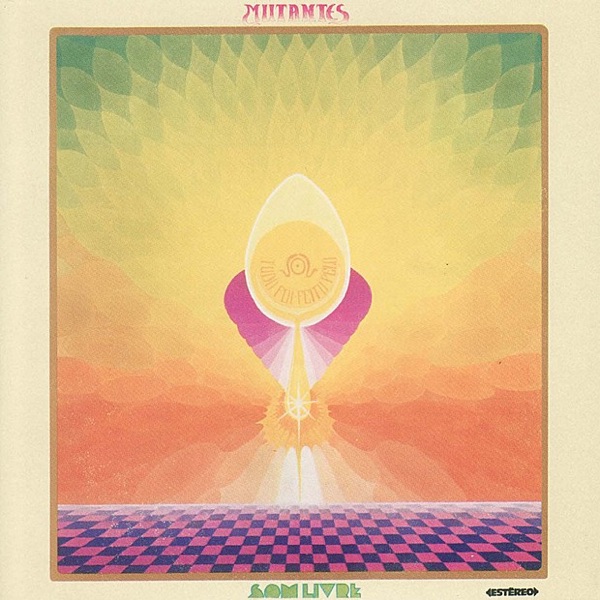


- 1 Hymns Of The World P.1 (Intro) ↗ 0:33
- 2 Querida Querida ↗ 4:13
- 3 Teclar ↗ 3:11
- 4 2000 e Agarrum ↗ 3:22
- 5 Baghdad Blues ↗ 5:18
- 6 O Careca ↗ 3:56
- 7 O Mensageiro ↗ 4:00
- 8 Anagrama ↗ 4:12
- 9 Samba do Fidel ↗ 5:31
- 10 Neurociencia do Amor ↗ 4:10
- 11 Nada Mudou ↗ 5:15
- 12 Gopala Krishna Om ↗ 3:39
- 13 Hymns Of The World P.2 (Final) ↗ 1:50
- 14 Amortecedor ↗ 4:19
- 15 Call Me ↗ 3:46

