

Photo by Simon Doggett , licensed under CC BY 2.0 · Wikimedia Commons
Rank #168
Saosin
Orange County post-hardcore band whose technical chops set a 2000s template.
From Wikipedia
Saosin is an American rock band formed in 2003 in Orange County, California. The group originally consisted of Beau Burchell, Justin Shekoski, Zach Kennedy and Anthony Green. They released their debut EP, Translating the Name, in 2003. The following year, Green departed from the band and Cove Reber joined as vocalist. The band released their self-titled debut album in 2006 under Capitol Records.
Members
- Anthony Green
Studio Albums
- 2006 Saosin
- 2009 In Search of Solid Ground
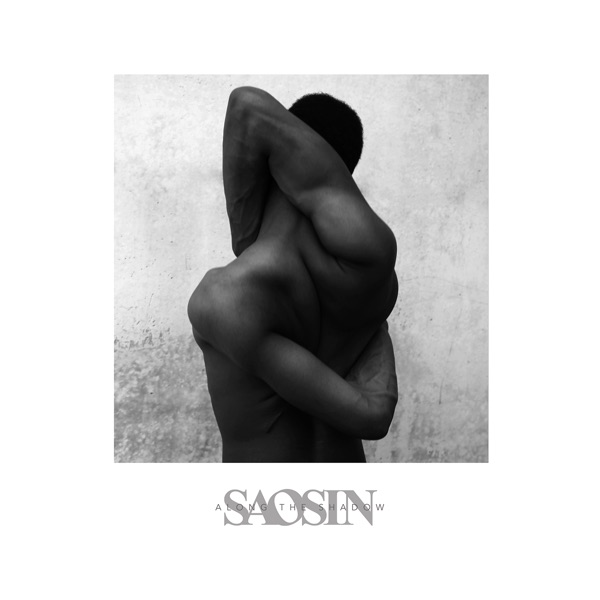
- 2016 Along the Shadow
Source: MusicBrainz
Deep Dive
Overview
Saosin emerged from Newport Beach, California in 2003 as one of the defining post-hardcore acts of the 2000s emo wave. The band’s combination of intricate guitar work, dynamic rhythm sections, and distinctive vocal performances—anchored first by Anthony Green and later by Cove Reber—positioned them as technical standard-bearers in a genre increasingly defined by emotional intensity and compositional complexity. Over two decades, Saosin carved out a devoted following through albums that balanced screamed and sung vocal delivery with instrumental precision.
Formation Story
Saosin coalesced in 2003 around founding members Beau Burchell, Justin Shekoski, Zach Kennedy, and Anthony Green. The Newport Beach-based quartet arrived at a moment when post-hardcore was fracturing into multiple subgenres: some bands leaned toward metallic brutality, others toward art-rock experimentation, and still others toward pure screamo catharsis. Saosin’s earliest statement came in the form of their debut EP, Translating the Name, released the same year they formed. That seven-song collection announced a band comfortable with both aggressive vocal delivery and measured instrumental storytelling.
Breakthrough Moment
The departure of Anthony Green in 2004 marked a pivotal shift. Rather than dissolve, the band recruited Cove Reber as vocalist, a decision that proved creatively fruitful. With Reber on board, Saosin signed to Capitol Records and released their self-titled debut album in 2006. The Saosin record became their most widely distributed statement, landing the group in a national conversation about post-hardcore maturation. The self-titled expanded on the template sketched by Translating the Name: precise, syncopated riffing; polyrhythmic bass and drum interplay; and a vocal strategy that alternated or layered sung melodies against screamed passages. This album secured Saosin’s position as a band whose technical ambitions exceeded typical screamo bombast.
Peak Era
Saosin’s creative momentum extended through the late 2000s and into the early 2010s. The 2009 release In Search of Solid Ground demonstrated that the band had no intention of simplifying or chasing mainstream radio. Instead, they deepened their compositional toolkit, exploring longer song structures and more intricate interplay between band members. The album sustained the group’s reputation among dedicated post-hardcore followers while the broader rock landscape shifted toward electronica, dubstep-influenced metalcore, and the fracturing of the emo category. By the time Saosin returned with Along the Shadow in 2016, they had become as much a cult institution as a contemporary force—a band whose catalog appealed to longtime fans and served as a reference point for younger musicians navigating post-hardcore’s ongoing evolution.
Musical Style
Saosin’s sound hinged on technical proficiency applied without self-indulgence. Burchell’s guitar work combined standard post-hardcore tuning and rhythmic precision with an ear for dissonant color; Shekoski and Kennedy constructed bass and drum lines that often operated in conversation with the guitar rather than simply doubling it. This approach pushed Saosin away from the verse-chorus-verse obviousness that dominated mainstream rock while keeping them tethered to song structure rather than pure instrumental exploration. Vocally, the band’s evolution reflected their changing lineup: Anthony Green brought an almost jagged emotional immediacy to his screamed and sung parts, while Cove Reber introduced a smoother sung tone that could co-exist with equally intense screaming. The overall aesthetic occupied the space between emo’s melodic investment and screamo’s abrasive energy, a balance that required genuine musicianship to maintain.
Major Albums
Saosin (2006)
The self-titled debut announced Saosin’s formula at commercial scale: intricate instrumental arrangements, vocal layering, and a refusal to sacrifice complexity for accessibility. This Capitol Records release became the band’s most widely heard record and established them as more than a regional Orange County commodity.
In Search of Solid Ground (2009)
The follow-up deepened Saosin’s compositional ambitions, exploring longer forms and more elaborate drum and bass interplay. The album reaffirmed that the band viewed technical mastery as a vehicle for emotional expression rather than an end in itself.
Along the Shadow (2016)
Seven years after their previous full-length, Saosin returned with Along the Shadow, a record that balanced retrospective consolidation with continued evolution. The album demonstrated that the band’s core identity remained intact even as the broader post-hardcore landscape fractured.
Signature Songs
- “Weapons Grade Motivational Tactics” — The title exemplifies Saosin’s lyrical approach while the song showcases their signature dynamic contrast between quiet, syncopated passages and explosive screamed choruses.
- “Blue Sky Noise” — A showcase for the band’s ability to construct longer compositional arcs without losing melodic focus.
- “The Transitive Property” — Built around a driving rhythm that permits each band member distinctive instrumental space while maintaining cohesive forward motion.
- “Meru” — A demonstration of Cove Reber’s sung vocal capability, balancing vulnerability with the underlying instrumental intensity that defines the band.
Influence on Rock
Saosin occupied a crucial position in post-2000s post-hardcore genealogy. At a moment when the genre threatened to calcify into formula, they modeled an alternative path: one in which technical precision, emotional honesty, and compositional ambition were not opposing forces. Bands emerging in the late 2000s and 2010s—from the post-screamo experimentalists to newer math-rock influenced acts—could point to Saosin as precedent for refusing simplification. The band’s influence extended less through direct imitation and more through validation: the idea that a post-hardcore band could sustain a career and creative integrity by doubling down on musicianship and arrangement rather than chasing trend cycles.
Legacy
By the early 2020s, Saosin had become a touchstone for musicians and listeners who valued technical rigor within emotional frameworks. While the 2000s emo wave itself receded from popular consciousness, bands associated with that era—particularly those who evolved rather than repeated themselves—found sustained interest from dedicated audiences. Saosin’s catalog, distributed across Capitol Records and later Epitaph Records, remained available on streaming platforms, introducing new generations to the post-hardcore template they helped establish. The band’s longevity across two decades, two vocal eras, and multiple full-length albums testified to the durability of their foundational approach: let the musicians play, trust the songs, refuse easy answers.
Fun Facts
- Anthony Green, Saosin’s original vocalist, later became the frontman for Chiodos, another influential 2000s post-hardcore act, creating a parallel lineage of technical emo rock.
- The band’s name, Saosin, derives from a term in Irish mythology, reflecting the literary and cultural references embedded in post-hardcore scene aesthetics.
- Saosin maintained an official website at saosin.com throughout their career, a relatively uncommon practice for mid-tier rock bands in the streaming era, emphasizing direct fan engagement.
Discography & Previews
Click any album to expand its track list. Each track plays a 30-second preview streamed from Apple Music. Tap the link icon next to a track to open it in Apple Music for full playback.

- 1 It's Far Better to Learn ↗ 3:55
- 2 Sleepers ↗ 2:52
- 3 It's So Simple ↗ 2:49
- 4 Voices ↗ 3:38
- 5 Finding Home ↗ 3:09
- 6 Follow and Feel ↗ 3:19
- 7 Come Close ↗ 3:16
- 8 I Never Wanted To ↗ 3:29
- 9 Collapse ↗ 3:15
- 10 You're Not Alone ↗ 3:58
- 11 Bury Your Head ↗ 3:34
- 12 Some Sense of Security ↗ 4:00
- 13 Let Go Control ↗ 2:58

- 1 I Keep My Secrets Safe ↗ 3:54
- 2 Deep Down ↗ 3:25
- 3 Why Can't You See ↗ 2:39
- 4 Changing ↗ 3:47
- 5 On My Own ↗ 5:18
- 6 The Alarming Sound of a Still Small Voice ↗ 4:43
- 7 Say Goodbye ↗ 5:04
- 8 The Worst of Me ↗ 3:35
- 9 It's All Over Now ↗ 3:47
- 10 What Were We Made For? ↗ 3:35
- 11 Is This Real ↗ 3:59
- 12 Nothing Is What It Seems ↗ 4:25
- 13 Fireflies (Light Messengers) ↗ 8:30
- 14 Bury Me (Bonus Track) ↗ 4:25
- 15 The Alarming Sound (Inst. Demo) ↗ 4:37
- 16 Brikka Brikka (Inst. Demo) ↗ 3:47
- 17 Exfoliator (Inst. Demo) ↗ 4:10
- 18 Write Something Heavy and Fast (Inst. Demo) ↗ 3:56
- 1 The Silver String ↗ 3:57
- 2 Ideology Is Theft ↗ 3:34
- 3 Racing Toward a Red Light ↗ 2:55
- 4 Second Guesses ↗ 4:08
- 5 Count Back from Ten ↗ 3:07
- 6 The Stutter Says a Lot ↗ 2:53
- 7 Sore Distress ↗ 3:59
- 8 The Secret Meaning of Freedom ↗ 2:45
- 9 Old Friends ↗ 4:14
- 10 Illusion & Control ↗ 3:48
- 11 Control and the Urge to Pray ↗ 4:16
- 12 Drinking from the Fountain ↗ 3:52
- 13 Along the Shadow of Man ↗ 4:18