
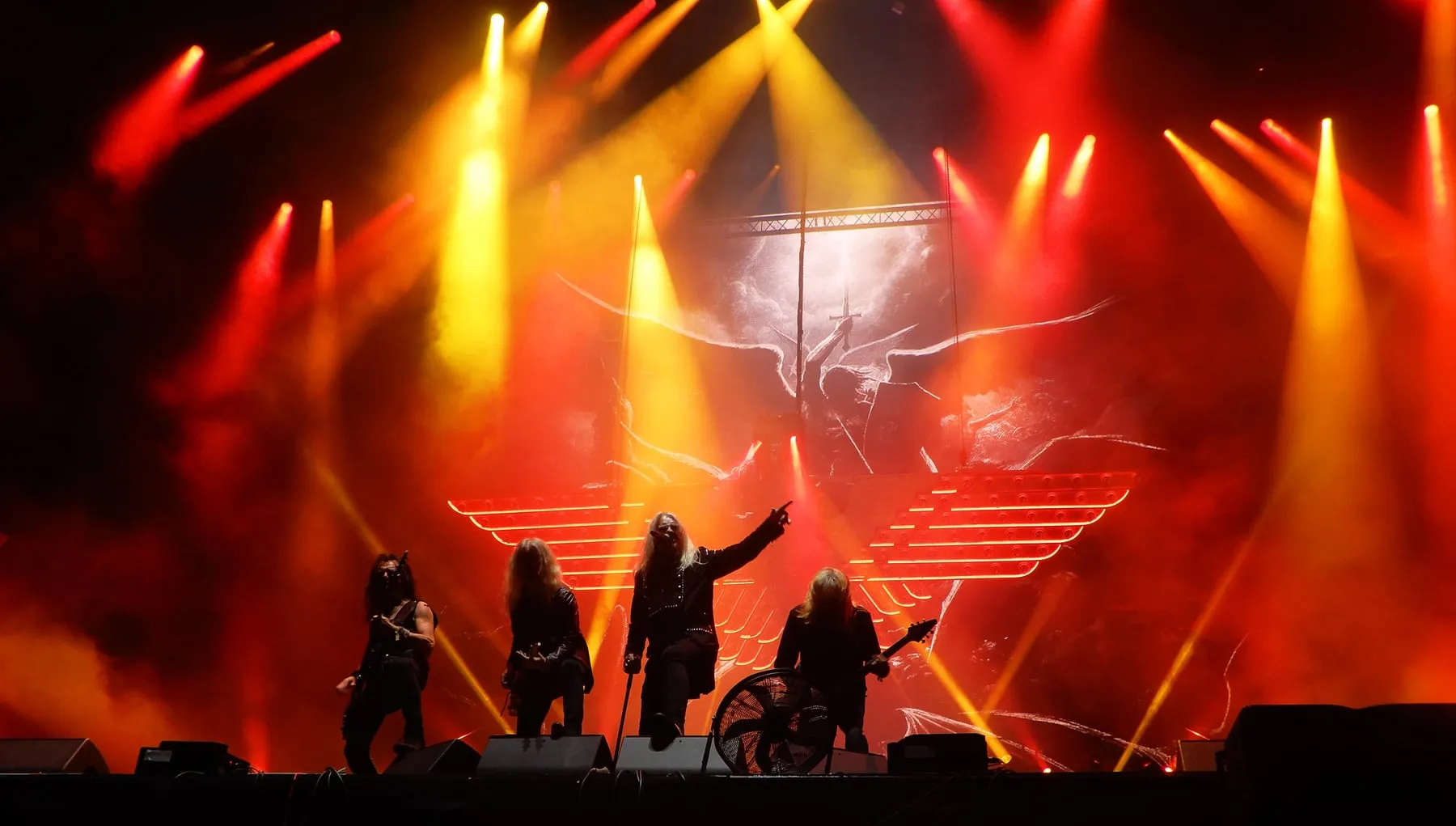
Photo by Tilly antoine , licensed under CC BY-SA 4.0 · Wikimedia Commons
Rank #238
Saxon
Yorkshire NWOBHM mainstays of working-class metal anthems.
From Wikipedia
Saxon are an English heavy metal band formed in Barnsley in 1975. As leaders of the new wave of British heavy metal (NWOBHM), they had eight UK Top 40 albums during the 1980s including four UK Top 10 albums and two Top 5 albums. They had numerous hit singles on the UK Singles Chart and experienced success all over Europe, South America and Japan, as well as in the United States and Canada.
Deep Dive
Overview
Saxon are an English heavy metal band formed in Barnsley, Yorkshire, in 1975. They emerged as leaders of the new wave of British heavy metal (NWOBHM), a movement that revitalized the genre in the late 1970s and 1980s with raw energy and working-class authenticity. Saxon built their reputation on stadium-sized riffs, singalong choruses, and lyrics celebrating the brotherhood of metalheads and the defiant spirit of industrial Britain. During the 1980s, they achieved substantial commercial success, placing eight albums in the UK Top 40, including four Top 10 entries and two Top 5 records—a foothold of consistency that positioned them among the decade’s most prolific and commercially reliable heavy metal acts.
Formation Story
Saxon crystallized in Barnsley during the mid-1970s as the British rock underground began to reject the excesses of progressive rock and stadium rock in favor of stripped-down, riff-driven heavy metal. The band’s roots lay in the Yorkshire industrial heartland, where working-class audiences provided fertile ground for metal’s raw appeal. By 1975, the core lineup had solidified, drawing from local musicians who shared a commitment to authentic, no-frills heavy metal. Their early identity was shaped as much by their geographic and social context—a post-industrial town where metal served as an anthem for ordinary working people—as by musical influences drawn from the hard rock and heavy metal canon.
Breakthrough Moment
Saxon’s first studio album, Saxon, arrived in 1979 and established the band as serious contenders within the emerging NWOBHM scene. The following year proved pivotal: they released two albums, Strong Arm of the Law (1980) and Wheels of Steel (1980), both of which consolidated their reputation for accessible, anthemic heavy metal that appealed far beyond hardcore metal circles. These records demonstrated Saxon’s ability to craft songs with memorable hooks and lyrics that resonated with their core audience of metalheads and blue-collar listeners. The dual release showcased their work ethic and creative momentum, setting the stage for a decade of sustained chart success. By 1981, with Denim and Leather, Saxon had become fixtures on the UK charts and across European markets, their straightforward style and energetic live presence earning them a loyal international following.
Peak Era
The mid-1980s represented Saxon’s creative and commercial zenith. Power & the Glory (1983), Crusader (1984), and Innocence Is No Excuse (1985) formed a run of albums that combined driving guitar work, forceful rhythm sections, and vocals that emphasized clarity and power over technical virtuosity. These records dominated UK charts and sold well across Europe, South America, and Japan, making Saxon one of the few British metal bands of the era to achieve genuinely international reach. Rock the Nations (1986) continued the streak, maintaining both critical credibility and commercial momentum. The band’s ability to balance accessibility with authenticity—never compromising their heavy metal foundation for mass-market softening—defined their success during this window. By the late 1980s, as popular music shifted and new heavy metal trends emerged, Saxon’s commercial fortunes began to moderate, though they remained active and toured consistently.
Musical Style
Saxon built their sound on a foundation of heavy metal orthodoxy: loud, distorted guitars serving chunky, repeating riff patterns; thunderous rhythm sections anchoring galloping tempos; and vocal delivery emphasizing straightforward communication over technical display. Their songwriting favored the three- to four-minute anthem format, with choruses designed for crowd participation and sing-alongs. The band’s production was consistently clean and powerful without being overly polished, maintaining a sense of rawness and energy that connected with audiences who valued authenticity over studio sheen. Lyrically, they drew on metal traditions—tales of battle, defiance, metalhead camaraderie, freedom, and working-class pride—delivered with earnest conviction rather than irony or pretense. As the 1980s progressed, their arrangements occasionally incorporated more complex layering and production sophistication, but the core approach remained consistent: straightforward, powerful, and built for maximum audience engagement.
Major Albums
Strong Arm of the Law (1980)
One of Saxon’s most significant early statements, this album consolidated their position within the NWOBHM and demonstrated their mastery of the memorable metal anthem format, establishing the template they would refine throughout the decade.
Wheels of Steel (1980)
Released the same year as Strong Arm of the Law, this album further proved Saxon’s prolific output and ability to maintain quality across multiple records, with a setlist designed for both album play and live performance versatility.
Denim and Leather (1981)
Capturing Saxon at a moment of rising popularity, this album cemented their reputation as working-class heroes and featured songs that became permanent fixtures in their live sets and fan consciousness.
Power & the Glory (1983)
A artistic and commercial peak, this record showcased the band’s fully mature songwriting approach and proved they could sustain a top-tier position on the UK charts while maintaining musical credibility.
Crusader (1984)
Demonstrating sustained creative momentum, Crusader continued Saxon’s run of chart success and solidified their status as one of the decade’s most reliable heavy metal acts, appealing equally to longtime devotees and newer listeners drawn to the NWOBHM.
Rock the Nations (1986)
An ambitious effort that represented Saxon’s attempt to maintain relevance as the musical landscape shifted in the mid-1980s, this album proved the band’s continued drawing power even as the initial wave of NWOBHM popularity began to fade.
Signature Songs
- “Wheels of Steel” — A defining anthem that became synonymous with Saxon’s brand of accessible, heavy metal power.
- “Strong Arm of the Law” — An early showcase for the band’s ability to craft memorable hooks within a heavy metal framework.
- “Denim and Leather” — A working-class metal anthem that resonated deeply with Saxon’s core audience and became a live staple.
- “Power and the Glory” — A majestic, ambitious single that demonstrated the band’s ability to scale up their songwriting scope without losing their essential character.
- “Rock the Nations” — A broad, anthemic statement that captured Saxon’s international aspirations and widespread appeal.
Influence on Rock
Saxon’s place in the NWOBHM ensured their direct influence on the trajectory of 1980s heavy metal and beyond. They demonstrated that British heavy metal could remain artistically and spiritually rooted while achieving mainstream chart success and international sales. The band’s straightforward approach—prioritizing clear, singable melodies and powerful riffs over technical complexity—helped establish a template that countless metal acts in their wake would follow. Saxon’s success in continental Europe and Japan proved that the NWOBHM was not an isolated British phenomenon but a movement with genuine global appeal. Their work influenced the shape of mainstream metal during the 1980s and established a blueprint for band longevity: consistent touring, steady album output, and refusal to abandon core musical values in pursuit of trend-chasing.
Legacy
Saxon’s legacy rests on two foundation stones: their leadership role in the NWOBHM and their sustained creative and commercial longevity. Across nearly five decades, from their 1975 formation through the 2020s, the band has maintained a touring and recording presence, releasing Hell, Fire and Damnation in 2024 and continuing to draw audiences internationally. Their eight UK Top 40 albums during the 1980s alone place them among the decade’s most commercially successful metal acts, and their influence on European metal in particular proved enduring. Saxon’s catalog remains accessible to modern listeners through digital streaming, and their live performances continue to attract both longtime devotees and new listeners discovering NWOBHM through historical retrospectives and genre documentaries. The band’s refusal to disband or significantly reinvent themselves has preserved their authenticity, ensuring that their contribution to heavy metal history remains tangible and alive.
Fun Facts
- Saxon released two full studio albums in 1980 alone (Strong Arm of the Law and Wheels of Steel), demonstrating extraordinary prolific output during their peak period.
- The band maintained consistent chart presence throughout the 1980s, with eight UK Top 40 albums in a single decade, a remarkable achievement for any metal act.
- Saxon’s international reach extended across Europe, South America, and Japan, making them one of the few British NWOBHM acts to achieve genuinely global commercial success beyond the Anglo-American axis.
- As of 2024, the band continues to record and release new material, with Hell, Fire and Damnation marking their persistence in the studio after nearly 50 years of activity.
- Barnsley’s industrial heritage and working-class ethos directly shaped Saxon’s identity and lyrical themes, embedding them deeply in a specific geographic and cultural context that informed their entire musical approach.