
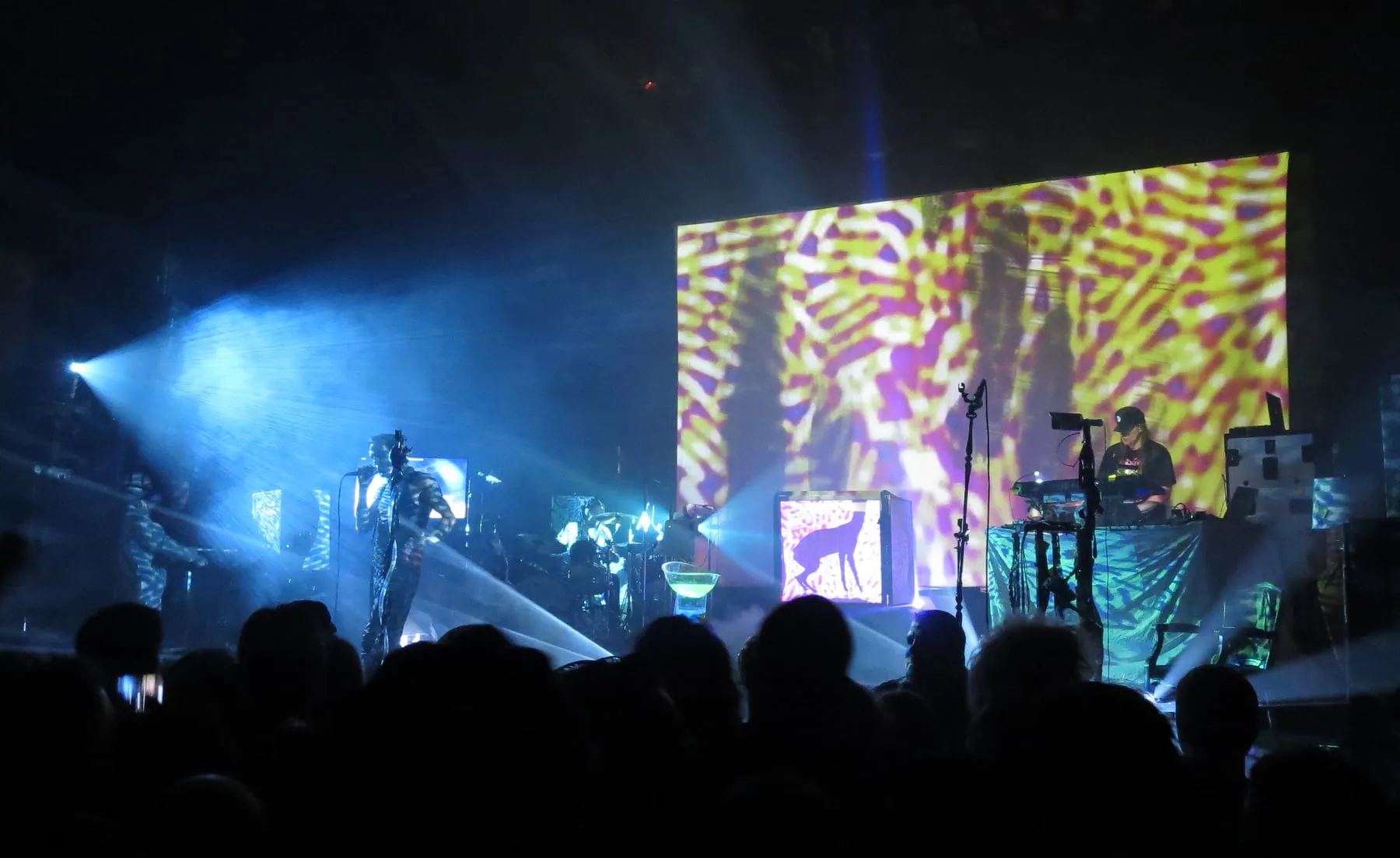
Photo by swimfinfan from Chicago , licensed under CC BY-SA 2.0 · Wikimedia Commons
Rank #197
Skinny Puppy
Vancouver industrial pioneers of grim collage and biomechanical theatre.
From Wikipedia
Skinny Puppy was a Canadian electro-industrial band formed in Vancouver in 1982. The group was among the founders of the industrial rock and electro-industrial genres. Initially envisioned as an experimental side-project by cEvin Key while he was in the new wave band Images in Vogue, Skinny Puppy evolved into a full-time project with the addition of vocalist Nivek Ogre. Over the course of 13 studio albums and many live tours, Key and Ogre were the only constant members. Other members have included Dwayne Goettel, Dave "Rave" Ogilvie, Bill Leeb, Mark Walk (2003–2023), and a number of guests, including Al Jourgensen (1989), Danny Carey (2004), and many others.
Studio Albums
- 1984 Back and Forth
- 1984 Remission
- 1985 Bites
- 1986 Mind: The Perpetual Intercourse
- 1987 Cleanse Fold and Manipulate
- 1988 VIVIsectVI
- 1989 Rabies
- 1990 Too Dark Park
- 1992 Last Rights
- 1996 The Process
- 2002 Puppy Gristle
- 2004 The Greater Wrong of the Right
- 2007 Mythmaker
- 2011 HanDover
- 2013 Weapon
Source: MusicBrainz
Deep Dive
Overview
Skinny Puppy stands as one of the primary architects of industrial rock and electro-industrial music. Formed in Vancouver in 1982, the band emerged from cEvin Key’s work with new wave group Images in Vogue, initially conceived as an experimental side-project before evolving into a full-time endeavor with vocalist Nivek Ogre. Over 13 studio albums and four decades of activity, Skinny Puppy defined a sound that fused harsh electronic textures, samples, and performance art into a cohesive aesthetic that influenced generations of musicians working in industrial, post-industrial, and electronic genres.
Formation Story
Skinny Puppy’s origins trace to cEvin Key’s dissatisfaction with the constraints of conventional pop structures. While performing with Images in Vogue, Key began exploring electronic sound design and unconventional song arrangements outside that band’s framework. The project took its name—Skinny Puppy—and acquired a permanent collaborator when Nivek Ogre joined as vocalist. Based in Vancouver, a city not yet established as a major industrial music center, Key and Ogre built their aesthetic from electronic synthesis, tape manipulation, and the raw energy of post-punk, creating something that felt neither purely synthesizer-driven nor traditionally guitar-based. From this point forward, Key and Ogre remained the project’s only constant members, though their lineup would expand and contract throughout the band’s history.
Breakthrough Moment
Skinny Puppy released their debut album, Back and Forth, in 1984, the same year they issued Remission. These early efforts established the band’s core sonic vocabulary: abrasive synthesizers, heavily processed vocals, and collage-based production that rejected conventional verse-chorus song structure. The release of Bites in 1985 solidified their reputation within underground electronic and industrial circles, marking them as not merely a novelty act but serious architects of a new sound. By the late 1980s, the band had secured international distribution and a growing cult following across Europe and North America, with Rabies (1989) representing a watershed moment in which their experimental approach gained broader recognition among fans of post-punk and early industrial music.
Peak Era
Skinny Puppy’s creative and commercial peak occurred in the late 1980s and early 1990s. Cleanse Fold and Manipulate (1987) and VIVIsectVI (1988) showcased an increasingly refined approach to biomechanical songcraft, layering found sounds with synthesizer melodies that bordered on the melodic despite their aggressive presentation. Too Dark Park (1990) and Last Rights (1992) cemented their status as leaders of the industrial music movement, with the latter album arriving at a moment when industrial rock had begun to penetrate mainstream alternative charts. These records combined meticulously crafted electronic production with live energy and visceral imagery, creating a complete artistic statement that extended beyond sound into visual and conceptual territory.
Musical Style
Skinny Puppy’s sound synthesizes electronic body music, post-punk rhythmic sensibility, and industrial noise aesthetics. The band’s core approach relies on heavily processed vocals—often buried in reverb or distortion—layered over synth-driven arrangements that favor dissonance and textural contrast over harmonic resolution. Their production style, shaped in part by collaborations with engineers and producers including Dave Ogilvie, creates a murky, claustrophobic sonic environment in which samples of speech, machinery, and organic sounds collide with electronic percussion and basslines. The guitars that appear in their work are typically heavily processed through effects, becoming additional textural elements rather than melodic anchors. Rather than progressing linearly through fixed song structures, their compositions expand and contract around cyclical patterns, sudden breaks, and moments of surprising melody that puncture the harsh surface. This approach remained consistent throughout their catalog while evolving in production sophistication and thematic ambition.
Major Albums
Too Dark Park (1990)
A defining statement of Skinny Puppy’s mature period, Too Dark Park represents the band at peak creative power, balancing accessibility with experimental rigor and establishing a template for industrial rock that would influence countless subsequent acts.
Last Rights (1992)
Arguably their most cohesive work, Last Rights channels the band’s biomechanical aesthetic into sharply focused compositions that maintained the project’s experimental edge while achieving their strongest melodic moments.
Rabies (1989)
Marking a breakthrough in recognition and refinement, Rabies expanded Skinny Puppy’s sonic palette while maintaining the raw energy and conceptual ambition of their earlier work, introducing new listeners to industrial music’s possible textures.
VIVIsectVI (1988)
This album demonstrates the band’s increasing sophistication in layering samples and synthesizers, creating densely textured environments where multiple melodic and rhythmic elements compete for listener attention.
The Process (1996)
Following a period of relative quiet, The Process reasserted Skinny Puppy’s relevance to industrial music in the mid-1990s, proving that their aesthetic had evolved rather than stagnated.
Mythmaker (2007)
A late-period return to full-time activity, Mythmaker showed the band sustaining their core approach while incorporating contemporary production techniques, demonstrating their continued creative engagement with electronic music.
Signature Songs
- “Assimilate” — A propulsive electronic composition that exemplifies Skinny Puppy’s ability to marry harsh textures with infectious rhythmic momentum.
- “Dig It” — Showcasing the band’s knack for building tension through repetition and layering, this piece demonstrates their post-punk roots.
- “Tear the World Down” — A visceral track that captures the band’s capacity for both sonic aggression and melodic intrigue.
- “Testure” — Exemplifying their collage-based approach, this composition weaves together disparate sonic elements into a cohesive artistic statement.
Influence on Rock
Skinny Puppy’s influence on industrial and electronic music cannot be overstated. They established electro-industrial and industrial rock as legitimate genres worthy of serious artistic engagement, proving that electronic music could be as raw and emotionally intense as traditional rock. Their approach—combining aggressive sounds with conceptual rigor and live performance intensity—created a blueprint adopted by subsequent industrial acts including Nine Inch Nails, Einsturzende Neubauten, and countless electronic musicians working in darker aesthetic territories. Their rejection of standard songwriting approaches in favor of collage and textural development opened possibilities for post-rock and experimental electronic music that extended far beyond industrial circles. The band demonstrated that electronic instruments could serve avant-garde artistic vision rather than mere commercial pop appeal, elevating synthesizers and effects processors to the status of serious compositional tools.
Legacy
Skinny Puppy’s continued activity—they remain active through the present day—underscores the durability of their aesthetic and the enduring appeal of their vision. Their influence extends beyond direct musical imitation into broader industrial culture, performance art practices, and visual design philosophies. The band’s ability to maintain creative relevance across multiple decades, releasing albums including HanDover (2011) and Weapon (2013), demonstrates that their core artistic concerns remain contemporary. As streaming platforms have made their full catalog continuously accessible, Skinny Puppy has introduced new listeners to industrial music’s possibilities while maintaining the loyalty of longtime followers. Their position as Canadian artists who achieved international prominence without relocating to traditional music industry centers also established a model for how regional electronic music scenes could achieve global impact.
Fun Facts
- Al Jourgensen of Ministry joined Skinny Puppy as a collaborator in 1989, representing a significant cross-pollination between two foundational industrial acts.
- Mark Walk served as a band member from 2003 until 2023, providing two decades of consistent lineup continuity alongside Key and Ogre.
- Danny Carey, drummer for progressive metal band Tool, participated in Skinny Puppy recording and performance in 2004, illustrating the band’s reach across multiple heavy music communities.
- Skinny Puppy released albums across diverse labels including Nettwerk, Capitol Records, and Metropolis Records, reflecting both their underground credibility and periodic mainstream distribution deals.
Discography & Previews
Click any album to expand its track list. Each track plays a 30-second preview streamed from Apple Music. Tap the link icon next to a track to open it in Apple Music for full playback.
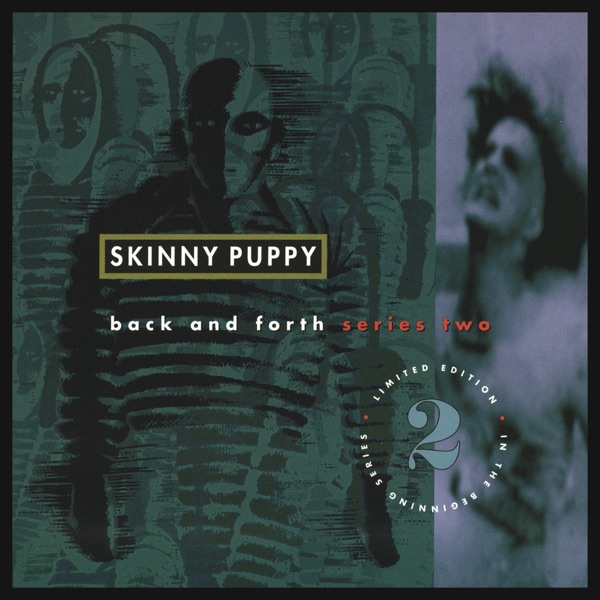
- 1 Intro (Live In Winnipeg) ↗ 2:07
- 2 Sleeping Beast ↗ 5:57
- 3 K-9 ↗ 3:41
- 4 Monster Radio Man ↗ 2:23
- 5 Quiet Solitude ↗ 4:45
- 6 The Pit ↗ 3:32
- 7 Sore In a Masterpiece/Dead of Winter ↗ 13:45
- 8 Univos On a Stick ↗ 2:40
- 9 To a Baser Nature ↗ 2:52
- 10 A.M./Meat Flavor ↗ 1:48
- 11 My Voice Sounds Like Shit ↗ 2:30
- 12 Smother Hope (Demo) ↗ 7:21
- 13 Explode the P.A. (Live Brap) ↗ 10:05
- 14 Assimilate (Original Inst. Demo) ↗ 3:04
- 15 Edge of Insanity ↗ 4:50


- 1 Assimilate ↗ 6:57
- 2 Blood On the Wall ↗ 2:58
- 3 Dead Lines ↗ 6:14
- 4 Church ↗ 3:17
- 5 Icebreaker ↗ 3:15
- 6 Tomorrow ↗ 4:53
- 7 Dead Doll ↗ 2:28
- 8 Film ↗ 2:19
- 9 Love ↗ 1:52
- 10 The Choke ↗ 6:29
- 11 Social Deception ↗ 2:58
- 12 Christianity ↗ 1:32
- 13 Basement ↗ 3:26
- 14 Last Call ↗ 5:55
- 15 Falling ↗ 4:20
- 16 The Centre Bullet ↗ 9:42
- 17 One Day ↗ 4:20

- 1 One Time One Place ↗ 5:42
- 2 God's Gift (Maggot) ↗ 4:46
- 3 Three Blind Mice ↗ 3:09
- 4 Love ↗ 1:43
- 5 Stairs and Flowers ↗ 5:18
- 6 Antagonism ↗ 5:03
- 7 200 Years ↗ 4:46
- 8 Dig It ↗ 7:34
- 9 Burnt With Water ↗ 7:42
- 10 Chainsaw ↗ 5:55
- 11 Addiction ↗ 6:01
- 12 Stairs and Flowers (Dub) ↗ 6:35
- 13 Deep Down Trauma Hounds ↗ 4:42


