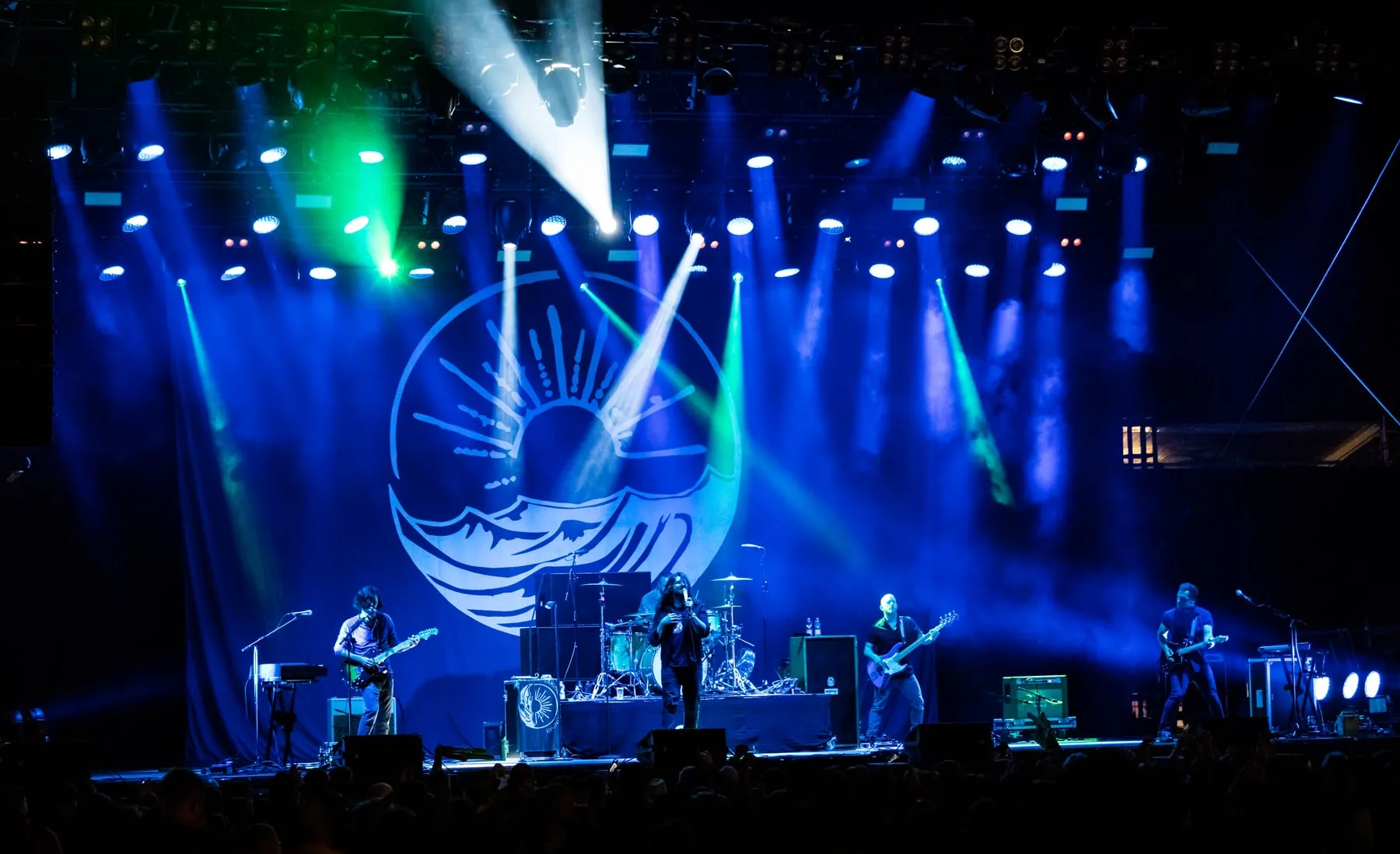
Photo by Andreas Lawen, Fotandi , licensed under CC BY-SA 4.0 · Wikimedia Commons
Rank #165
Taking Back Sunday
Long Island emo-rockers behind a string of mid-2000s genre-defining LPs.
From Wikipedia
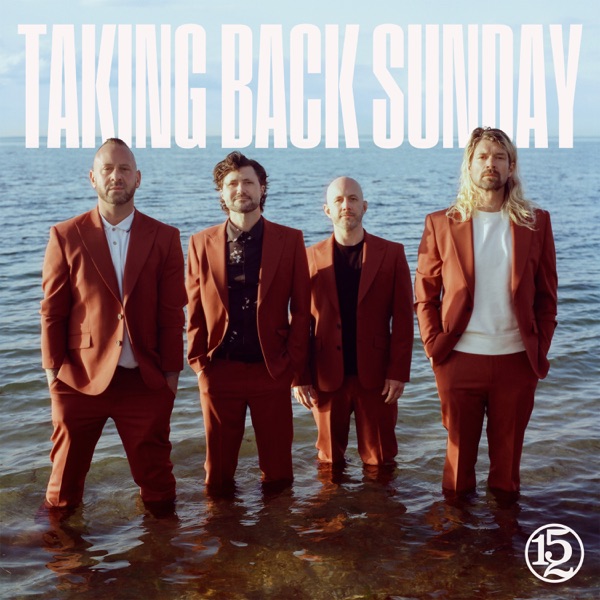
Taking Back Sunday is an American rock band from Amityville, New York, formed by guitarist Eddie Reyes and bassist Jesse Lacey in late 1999. The band's current members are Adam Lazzara, John Nolan and Shaun Cooper, accompanied by Nathan Cogan (guitar) and Mitchell Register (drums) for their live performances. The band's former members include original singer Antonio Longo, Jesse Lacey, Eddie Reyes, drummer Mark O'Connell, bassist Matthew Rubano, and guitarist-vocalists Fred Mascherino and Matthew Fazzi.
Studio Albums
- 2002 Tell All Your Friends
- 2004 Where You Want to Be
- 2006 Louder Now
- 2009 New Again
- 2011 Taking Back Sunday
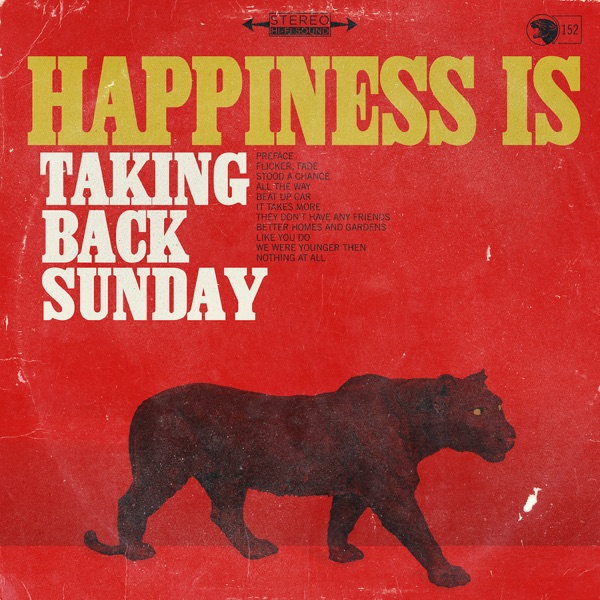
- 2014 Happiness Is
- 2016 Tidal Wave
- 2023 152
Source: MusicBrainz
Deep Dive
Overview
Taking Back Sunday stands as one of the primary architects of mid-2000s emo-pop and post-hardcore fusion, a Long Island quartet whose catalogue of guitar-driven, lyrically urgent albums shaped the genre during its commercial and critical peak. Formed in Amityville, New York in late 1999, the band built a career on tightly wound arrangements, dual-guitar interplay, and emotionally raw lead vocals that became the blueprint for countless acts that followed. Their influence extended beyond chart success to define an entire era of alternative rock, one in which vulnerability and technical proficiency coexisted without irony.
Formation Story
Taking Back Sunday emerged from the Long Island music scene in late 1999 when guitarist Eddie Reyes and bassist Jesse Lacey pooled their ambitions into a new project. The early lineup included original singer Antonio Longo, who sang on their debut sessions before departing. By the time the band solidified, Adam Lazzara had joined as lead vocalist, bringing a distinctive nasal intensity and confessional perspective that would come to define the project’s voice. The band’s roots lay in the intersection of post-hardcore aggression and emo’s emotional directness—a sound that reflected late-1990s alternative rock’s turn inward while maintaining the instrumental complexity of more experimental acts.
Breakthrough Moment
Taking Back Sunday announced themselves nationally with Tell All Your Friends in 2002, an album that crystallized the band’s core identity and resonated throughout the expanding underground emo circuit. Released through Victory Records, the record showcased Lazzara’s angst-inflected delivery and the band’s talent for constructing hooks around discordant guitars and locked-in rhythms. The album’s success on the strength of word-of-mouth and heavy touring established them as serious contenders within a scene that was beginning to cross over from subcultural phenomenon to mainstream radio presence.
Peak Era
Taking Back Sunday’s creative and commercial zenith arrived with Where You Want to Be (2004) and Louder Now (2006), back-to-back efforts that solidified their position among the genre’s elite. Where You Want to Be refined the formula established by their debut, tightening arrangements and deepening the emotional pitch, while Louder Now represented the band’s most assured, dynamic work—a record that balanced introspection with hooks that landed on mainstream rock radio. During this period, the band became staples of MTV2, headlined sold-out tours, and attracted the kind of devoted fanbase that defined emo’s cultural moment. Their records became reference points for how post-hardcore technique could serve deeply personal songwriting.
Musical Style
Taking Back Sunday built their sound on the friction between post-hardcore’s angular guitars and emo’s emotional vulnerability. Lazzara’s vocals occupy a register between singing and controlled shouting, delivered with precision that underlines rather than obscures the lyrics’ intimacy. The band’s instrumental approach relies on interplay between guitars—often creating call-and-response patterns or complementary melodies that add textural depth—locked with propulsive bass and precise drumming. Their songwriting habits favored builds and breakdowns, moments of near-whispered verses giving way to shouted choruses that captured the sensation of emotional release. As the band progressed through the 2000s, their production became cleaner and their hooks more emphatic, though they maintained the fundamental tension between roughness and accessibility that made early emo compelling.
Major Albums
Tell All Your Friends (2002)
The debut that announced the band’s arrival, featuring the tightly wound guitar dynamics and raw emotional delivery that would define their early identity. A foundational text for mid-2000s emo.
Where You Want to Be (2004)
A refinement of their debut’s blueprint, with sharper songwriting and more confident arrangement work. Expanded their fanbase significantly and positioned them as legitimate commercial players.
Louder Now (2006)
The band’s most polished and hook-laden effort, combining post-hardcore instrumentation with undeniable pop sensibilities. Their biggest statement of artistic and commercial confidence.
New Again (2009)
Released through Warner Bros. Records, representing a shift toward larger-scale production and a consolidation of their established sound.
Happiness Is (2014)
A return to Victory Records that demonstrated the band’s commitment to their core aesthetic after their time with a major label.
Signature Songs
- Cute Without the “E” (Cut from the Team) — A standout from Tell All Your Friends that epitomized the band’s ability to marry nervous guitar work with catchy, relatable lyrics about social anxiety and rejection.
- New American Classic — A showcase for their dual-guitar interplay and Lazzara’s ability to convey longing through phrasing and tone control.
- Hands Down — One of the band’s most recognizable tracks, combining urgency with genuine melodic sensibility.
- Dummy — Demonstrated the band’s range in dynamics and their willingness to let quieter moments speak before building to cathartic release.
Influence on Rock
Taking Back Sunday became a primary reference point for post-2000 emo and post-hardcore, their records studied by younger bands seeking to balance commercial appeal with subcultural credibility. Their technical facility without showiness, and their earnestness without camp, made them a gateway band for audiences discovering the deeper emo catalogue. The sound they refined—post-hardcore’s angular guitars filtered through emo’s emotional core—would permeate mainstream alternative rock throughout the 2000s. Bands working across pop-punk, progressive emo, and metalcore variants all drew lessons from their approach to arrangement and emotional transparency, making them less a stylistic originator than a crucial synthesizer of existing elements into a form that proved enduringly influential.
Legacy
Taking Back Sunday maintained an active touring and recording presence well into the 2010s and beyond, releasing Tidal Wave in 2016 and 152 in 2023, demonstrating the durability of their core fanbase and their commitment to artistic continuity. The band’s influence persists within contemporary emo and post-hardcore circles, their records remaining reference points for understanding how the genre achieved mainstream visibility without surrendering its emotional content. They remain central to any serious discussion of 2000s alternative rock, a time when vulnerability and technical proficiency became attractive rather than contradictory qualities in popular music. Streaming platforms have ensured their early catalogue continues to find new listeners, sustaining their presence in the broader conversation around rock music’s evolution.
Fun Facts
- Taking Back Sunday emerged from the same Long Island scene that had produced notable acts across multiple generations, making the region a consistent incubator for emo and alternative rock talent.
- The band’s longevity—spanning over two decades from their 1999 formation—places them among the emo genre’s most enduring acts, outlasting many of their contemporaries and maintaining consistent touring schedules.
- Their affiliation with Victory Records during their formative years connected them to a label roster that defined underground and mainstream emo’s intersection, alongside bands that became household names within rock fandom.
Discography & Previews
Click any album to expand its track list. Each track plays a 30-second preview streamed from Apple Music. Tap the link icon next to a track to open it in Apple Music for full playback.

- 1 You Know How I Do ↗ 3:21
- 2 Bike Scene ↗ 3:36
- 3 Cute Without the 'E' (Cut from the Team) ↗ 3:33
- 4 There's No 'I' In Team ↗ 3:49
- 5 Great Romances of the 20th Century ↗ 3:35
- 6 Ghost Man On Third ↗ 3:59
- 7 Timberwolves at New Jersey ↗ 3:25
- 8 The Blue Channel ↗ 2:31
- 9 You're So Last Summer ↗ 3:01
- 10 Head Club ↗ 3:04

- 1 Set Phasers To Stun ↗ 3:03
- 2 Bonus Mosh Pt. II ↗ 3:06
- 3 A Decade Under the Influence ↗ 4:08
- 4 This Photograph Is Proof (I Know You Know) ↗ 4:11
- 5 The Union ↗ 2:50
- 6 New American Classic ↗ 4:35
- 7 I Am Fred Astaire ↗ 3:43
- 8 One-Eighty By Summer ↗ 3:54
- 9 Number Five With a Bullet ↗ 3:50
- 10 Little Devotional ↗ 3:07
- 11 ...Slowdance On the Inside ↗ 4:26

- 1 What's It Feel Like To Be A Ghost? ↗ 3:48
- 2 Liar (It Takes One To Know One) ↗ 3:11
- 3 MakeDamnSure ↗ 3:28
- 4 Up Against (Blackout) ↗ 3:03
- 5 My Blue Heaven ↗ 4:07
- 6 Twenty-Twenty Surgery ↗ 3:55
- 7 Spin ↗ 3:40
- 8 Divine Intervention ↗ 4:15
- 9 Miami ↗ 3:41
- 10 Error Operator ↗ 2:52
- 11 I'll Let You Live ↗ 5:08


- 1 El Paso ↗ 3:16
- 2 Faith (When I Let You Down) ↗ 3:09
- 3 Best Places To Be A Mom ↗ 3:32
- 4 Sad Savior ↗ 3:19
- 5 Who Are You Anyway? ↗ 3:33
- 6 Money (Let It Go) ↗ 3:07
- 7 This Is All Now ↗ 4:04
- 8 It Doesn't Feel A Thing Like Falling ↗ 3:55
- 9 Since You're Gone ↗ 4:09
- 10 You Got Me ↗ 3:21
- 11 Call Me In The Morning ↗ 3:59