

Photo by Raph_PH , licensed under CC BY 2.0 · Wikimedia Commons
Rank #104
Tears for Fears
Synth-pop duo behind some of the most enduring 80s hits.
From Wikipedia
Tears for Fears are an English pop rock band formed in Bath in 1981 by Curt Smith and Roland Orzabal. Founded after the dissolution of their first band, the mod-influenced Graduate, Tears for Fears were associated with the synth-pop bands of the 1980s, and attained international chart success as part of the Second British Invasion.
Members
- Ian Stanley (1981–1987)
- Manny Elias (1981–1986)
- Curt Smith
- Roland Orzabal
Studio Albums
- 1983 The Hurting
- 1985 Songs From the Big Chair
- 1989 The Seeds of Love
- 1991 Live Volume One
- 1993 Elemental
- 1995 Raoul and The Kings of Spain
- 2004 Everybody Loves a Happy Ending
- 2022 The Tipping Point
Source: MusicBrainz
Deep Dive
Overview
Tears for Fears are an English pop rock band formed in Bath in 1981 by Curt Smith and Roland Orzabal. Emerging from the ashes of their mod-influenced previous group Graduate, they became central figures in the synth-pop movement that defined the 1980s and contributed significantly to what critics and music historians term the Second British Invasion. The duo’s marriage of synthesizer-driven production, introspective songwriting, and pop sensibility created a body of work that transcended the novelty often associated with electronic pop, earning both critical respect and sustained commercial success.
Formation Story
Curt Smith and Roland Orzabal founded Tears for Fears in Bath in 1981, building the project around synthesizers and drum machines in an era when electronic instrumentation was becoming central to British pop. The band’s core lineup was anchored by Orzabal and Smith as primary songwriters and vocalists, with keyboardist Ian Stanley and percussionist Manny Elias completing the initial ensemble. Stanley and Elias would remain integral to the band’s sound through the mid-1980s, contributing arrangement ideas and sonic texture that elevated the group beyond a simple two-person synth act. Bath, a provincial English city outside London’s immediate orbit, was an unlikely birthplace for one of the decade’s most influential pop acts, yet it was from this cultural remove that the band forged its distinctive identity.
Breakthrough Moment
Tears for Fears achieved international recognition with their debut album The Hurting in 1983, which introduced audiences to their introspective, emotionally direct approach to synth-pop. The album’s success was consolidated and massively expanded by their second release, Songs From the Big Chair in 1985, which became a defining document of mid-1980s pop rock. This album established them as major chart forces and brought their sophisticated production and songwriting craft to a global audience, cementing their position not as trend-chasers but as serious artists working within the synth-pop idiom.
Peak Era
The mid-to-late 1980s represented Tears for Fears’ creative and commercial zenith. Following The Hurting and Songs From the Big Chair, the band continued to refine their sound with The Seeds of Love in 1989, demonstrating their capacity to evolve within their chosen aesthetic while maintaining the emotional core that had always distinguished their work. During this period—roughly 1983 to 1989—they established themselves not merely as hitmakers but as artists whose exploration of electronic production and pop songwriting carried genuine artistic ambition. The combination of accessible melodies with lush, meticulously crafted arrangements allowed them to appeal simultaneously to mainstream radio audiences and to listeners seeking substance beneath the synthetic sheen.
Musical Style
Tears for Fears trafficked in synth-pop and new wave, genres defined by the primacy of synthesizers, drum machines, and electronic production over traditional rock instrumentation. Their sound was characterized by layered synthesizer textures, prominent electronic drums, and vocals that conveyed emotional vulnerability without resorting to rock vocal theatricality. Orzabal and Smith’s songwriting emphasized introspection and emotional directness, themes often concerned with anxiety, desire, and personal struggle, delivered with a clarity that made their music both commercially viable and artistically substantive. The band’s production aesthetic, shaped significantly by their work with skilled producers and arrangers, favored precision and detail; each synthesizer line, each drum machine pattern, and each vocal harmony was deliberate rather than incidental. This attention to production craft, combined with pop sensibility, created music that wore its sophistication lightly while remaining accessible to broad audiences.
Major Albums
The Hurting (1983)
Tears for Fears’ debut introduced their synth-pop template and established the introspective emotional tone that would define their entire career, achieving both critical and commercial success that marked them as significant new voices in 1980s pop.
Songs From the Big Chair (1985)
Their second album became their masterwork and a defining record of the 1980s, expanding their sonic palette while deepening their exploration of emotional and psychological themes, achieving massive international chart success.
The Seeds of Love (1989)
Released at the close of the decade, this album demonstrated the band’s willingness to experiment and evolve, incorporating new influences while maintaining the core sensibilities that had built their audience.
Elemental (1993)
Following a period of relative quiet, Elemental marked a return to recording after the early 1990s, showing the band’s continued commitment to studio work and artistic development.
Everybody Loves a Happy Ending (2004)
After a decade-long absence from the studio, this album represented a reunion of creative purpose, proving the band’s relevance extended well beyond their 1980s peak.
The Tipping Point (2022)
Their most recent studio album, released more than three decades after their formation, demonstrated that Tears for Fears remained creatively active and committed to new material in the streaming era.
Signature Songs
- “Shout” — An explosive, percussion-driven anthem that became one of the band’s signature moments and a staple of 1980s pop radio.
- “Everybody Wants to Rule the World” — A globally recognized hit that exemplified their gift for crafting emotionally resonant pop songs with sophisticated production.
- “Mad World” — A haunting, introspective track that showcased the darker emotional register the band could access within the pop idiom.
- “Pale Shelter” — An early breakthrough that established their ability to blend vulnerability with pop accessibility.
- “Head Over Heels” — A radio-friendly track that demonstrated their range across tempos and emotional terrain.
Influence on Rock
Tears for Fears’ significance lies not in inventing synth-pop—that achievement belongs to pioneers like Kraftwerk, Gary Numan, and Depeche Mode—but in demonstrating that the form could sustain artistic ambition and emotional depth across an entire career. Their work proved that synthesizer-based pop could be both commercially successful and creatively serious, a lesson that influenced countless subsequent artists working in electronic and pop idioms. The band’s emphasis on precise production, layered arrangement, and emotional candor became a template for pop artists throughout the 1980s and beyond. By treating synth-pop as a vehicle for genuine artistic expression rather than as novelty, they helped establish electronic pop as a legitimate and permanent strand within rock and pop music.
Legacy
Tears for Fears remain significant figures in 1980s pop history, their albums continuing to chart in streaming metrics and their influence visible in subsequent generations of synth-pop and electronic pop artists. Their albums from the 1980s retain cultural currency, sampled, referenced, and revisited by critics and musicians seeking to understand how pop music achieved sophistication during that era. The band’s continued activity—including the release of new studio material as recently as 2022—speaks to the enduring partnership between Smith and Orzabal and their commitment to the artistic project they began in Bath over four decades ago. While they do not occupy the absolute apex of rock music’s historical hierarchy, their contribution to 1980s pop remains secure and their influence on the sound and approach of subsequent electronic pop artists remains substantive.
Fun Facts
- Tears for Fears originated from Bath, England, a Georgian spa town better known for its architecture than its music scene, making their emergence as international pop stars particularly distinctive.
- The band initially recorded for Epic Records, Mercury Records, and Fontana Records across their career, working with multiple major labels at different points in their history.
- Ian Stanley and Manny Elias, core members of the classic 1980s lineup, departed the band in the mid-to-late 1980s as Orzabal and Smith moved toward different creative configurations.
- The band maintained the core partnership of Curt Smith and Roland Orzabal continuously from their formation in 1981 through the present day, spanning more than four decades.
Discography & Previews
Click any album to expand its track list. Each track plays a 30-second preview streamed from Apple Music. Tap the link icon next to a track to open it in Apple Music for full playback.


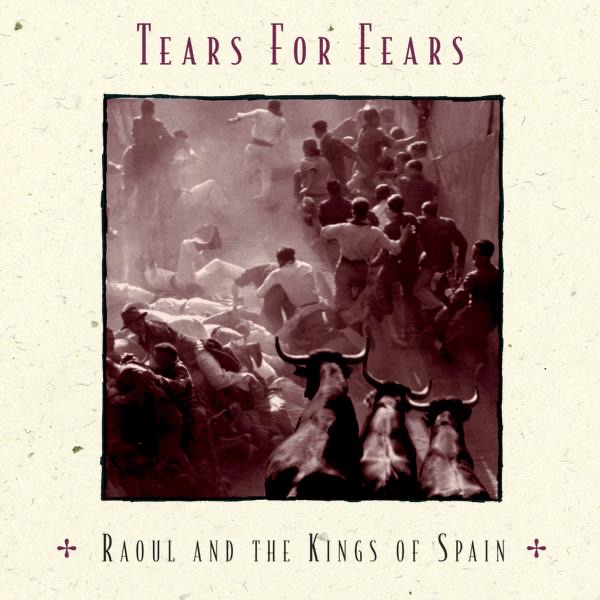
- 1 Raoul and the Kings of Spain ↗ 5:16
- 2 Falling Down ↗ 4:56
- 3 Secrets ↗ 4:42
- 4 God's Mistake ↗ 3:48
- 5 Sketches of Pain ↗ 4:21
- 6 Los Reyes Catolicos ↗ 1:44
- 7 Sorry ↗ 4:48
- 8 Humdrum and Humble ↗ 4:11
- 9 I Choose You ↗ 3:26
- 10 Don't Drink the Water ↗ 4:51
- 11 Me and My Big Ideas ↗ 4:33
- 12 Los Reyes Catolicos (Reprise) ↗ 3:43

- 1 Everybody Loves a Happy Ending ↗ 4:21
- 2 Closest Thing to Heaven ↗ 3:37
- 3 Call Me Mellow ↗ 3:37
- 4 Size of Sorrow ↗ 4:44
- 5 Who Killed Tangerine ↗ 5:33
- 6 Quiet Ones ↗ 4:22
- 7 Who You Are ↗ 3:41
- 8 The Devil ↗ 3:30
- 9 Secret World ↗ 5:12
- 10 Killing with Kindness ↗ 5:25
- 11 Ladybird ↗ 4:49
- 12 Last Days on Earth ↗ 5:41
