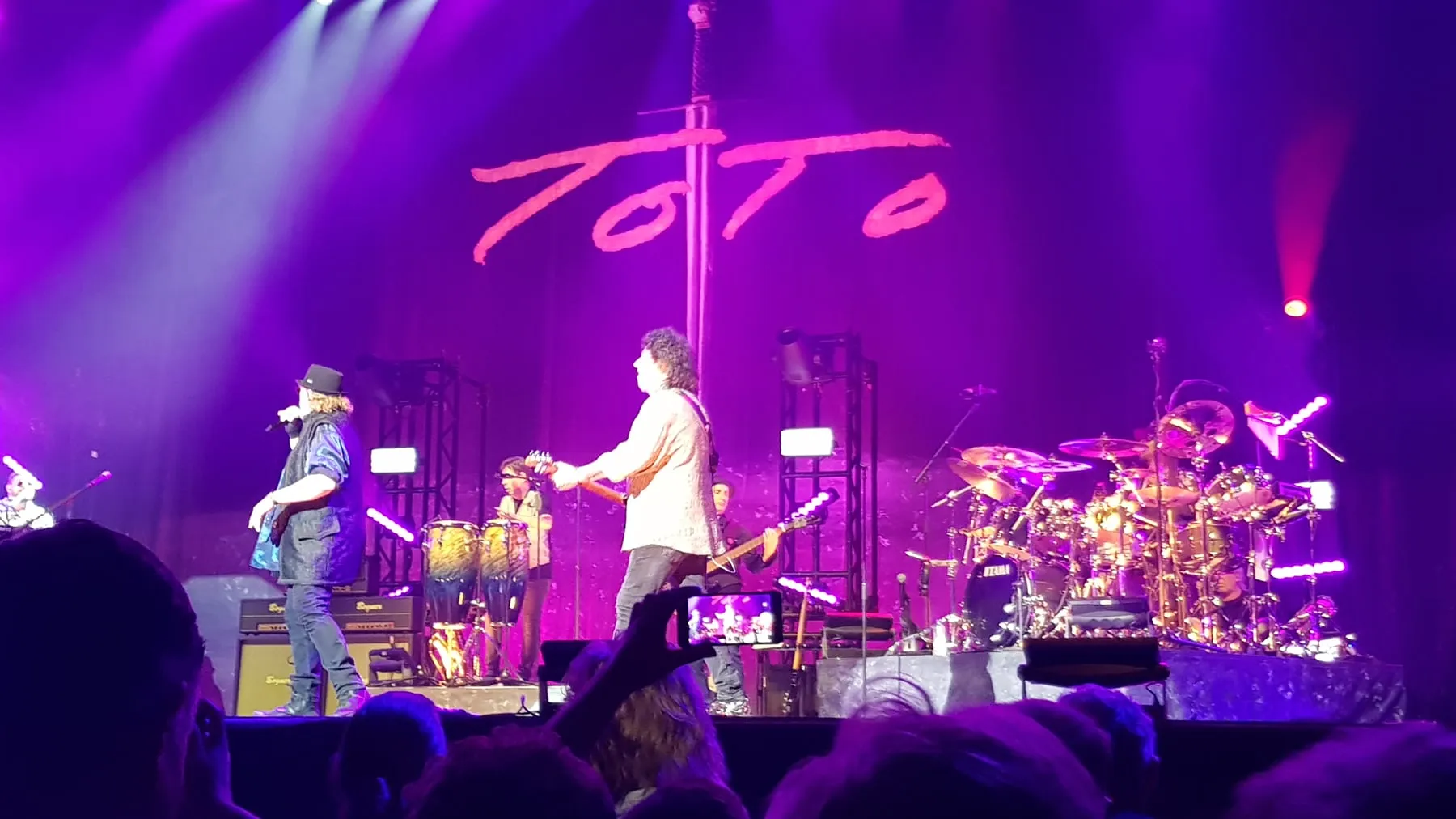
Photo by Haggis MacHaggis , licensed under CC0 · Wikimedia Commons
Rank #88
Toto
L.A. session-musician supergroup behind 'Africa' and other studio classics.
From Wikipedia
Toto is an American rock band formed in Los Angeles, California, in 1977. Toto combines elements of pop, rock, soul, funk, prog, hard rock, R&B, blues, and jazz. Having released 14 studio albums and sold over 50 million records worldwide, the group has received several Grammy Awards and was inducted into the Musicians Hall of Fame and Museum in 2009.
Members
- Jeff Porcaro (1977–1992)
- Mike Porcaro (1982–2007)
- Jean-Michel Byron (1989–1990)
- Bobby Kimball
- David Hungate
- David Paich
- Dennis Frederiksen
- Greg Phillinganes
- Joseph Williams
- Simon Phillips
- Steve Lukather
- Steve Porcaro
Studio Albums
- 1978 Toto
- 1979 Hydra
- 1981 Turn Back
- 1982 Toto IV
- 1984 Isolation
- 1986 Fahrenheit
- 1988 The Seventh One
- 1992 Kingdom of Desire
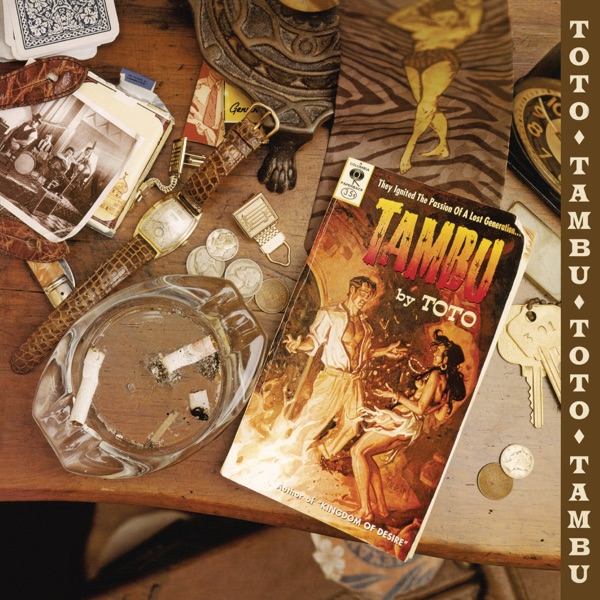
- 1995 Tambu
- 1999 Mindfields
- 2002 Through the Looking Glass
- 2006 Falling in Between
- 2015 Toto XIV
- 2018 Old Is New
Source: MusicBrainz
Deep Dive
Overview
Toto is an American rock band formed in Los Angeles in 1977, emerging from the city’s thriving studio-musician ecosystem. The group represents a convergence of technical mastery, pop sensibility, and genre fluidity—combining elements of pop, rock, soul, funk, progressive rock, hard rock, R&B, blues, and jazz into a cohesive studio-rock approach. With 14 studio albums and over 50 million records sold worldwide, Toto achieved both critical recognition and mass commercial success across multiple decades, marking one of rock music’s most sustained and prolific catalog achievements.
Formation Story
Toto coalesced in Van Nuys, California, drawing its membership from the ranks of Los Angeles’s session-musician community. The core lineup featured David Paich, Steve Lukather, David Hungate, and Jeff Porcaro, supplemented by Bobby Kimball on vocals and Steve Porcaro on keyboards. The band’s 1977 formation capitalized on a trend particular to 1970s Los Angeles: experienced studio professionals seeking to establish their own recording projects alongside lucrative session work. This background shaped Toto’s identity from inception—members brought not only technical facility but also an ear trained by work across genres and with established recording stars.
Breakthrough Moment
Toto’s self-titled debut arrived in 1978, introducing the group’s polished, radio-friendly approach to rock and pop audiences. The album established a template: immaculate production, intricate arrangements, and hooks engineered for immediate accessibility. However, it was the 1982 release Toto IV that catalyzed the band’s ascent to mainstream prominence. The album spawned multiple hit singles and demonstrated the group’s ability to craft sophisticated pop-rock in an era increasingly receptive to such material. Toto IV consolidated the band’s reputation and commercial momentum, positioning them as architects of high-fidelity studio pop-rock during the early 1980s.
Peak Era
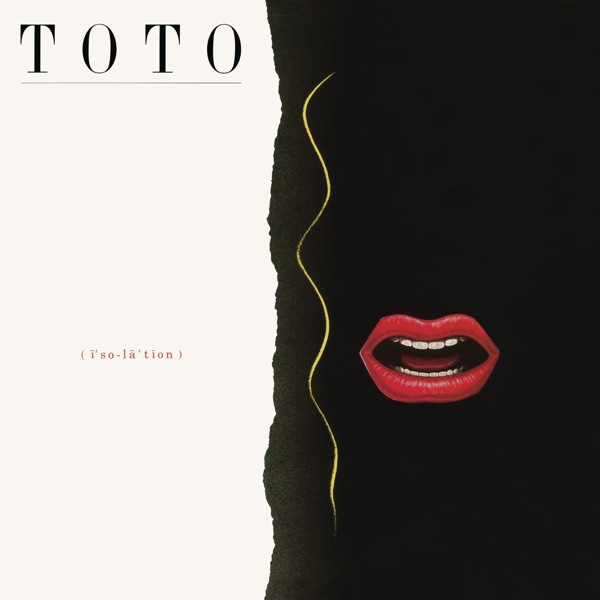
The period spanning Toto IV (1982) through Fahrenheit (1986) represented Toto’s peak commercial and creative output. During these years, the band refined its signature blend of accessible hooks and technical proficiency, recording material that dominated rock radio and crossed over to mainstream pop and adult-contemporary audiences. The group maintained consistent album output—Isolation (1984) and Fahrenheit (1986) followed Toto IV—while establishing themselves as among rock music’s most commercially reliable acts. This era cemented Toto’s standing in the broader rock landscape and earned them induction into the Musicians Hall of Fame and Museum in 2009, a recognition reflecting their peer-level technical contributions across a broad discography.
Musical Style
Toto’s sound is built on a foundation of precision and eclecticism. The band’s arrangements showcase layered keyboard textures, often anchored by tight rhythm sections and guitar work ranging from funk-inflected grooves to harder rock passages. David Paich’s songwriting frequently centers on accessible, radio-compatible structures, while the production—a hallmark of the band’s studio-musician pedigree—emphasizes clarity, separation of instruments, and meticulous overdubbing. Vocally, the band cycled through multiple lead singers, including Bobby Kimball and later Joseph Williams, adapting the band’s approach across different eras. Over their career, Toto demonstrated an ability to work across soft rock, hard rock, and progressive rock frameworks, often within single albums, reflecting the genre-crossing experience of their membership. The band’s willingness to engage funk, soul, and jazz influences alongside straightforward rock positioning marked a deliberate rejection of genre purism in favor of professional craftsmanship and commercial viability.
Major Albums
Toto (1978)
The band’s debut established their core identity: polished production, accessible hooks, and a technically assured blend of rock, pop, and soul influences that would define their catalog.
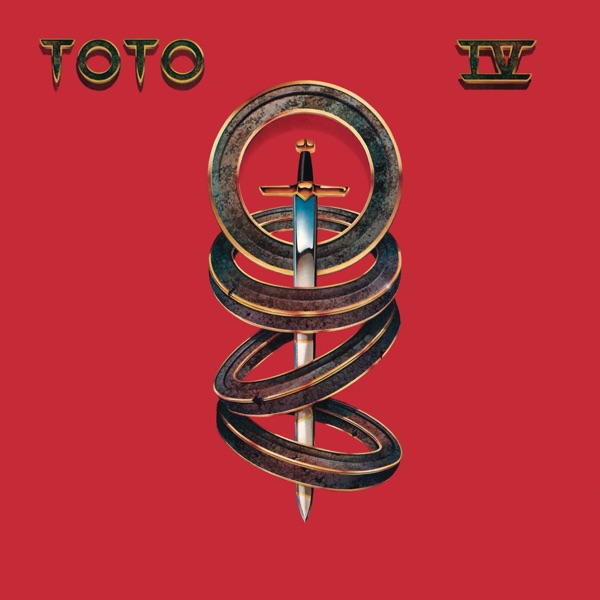
Toto IV (1982)
The album that consolidated Toto’s mainstream breakthrough, demonstrating the band’s mastery of commercially viable pop-rock structures while maintaining technical sophistication.
Fahrenheit (1986)
A peak-period release showcasing the band at full creative and commercial confidence, balancing harder rock elements with the accessible songwriting that defined their mainstream success.
Kingdom of Desire (1992)
Released a decade after Toto IV, this album illustrated the band’s continued relevance and ability to adapt their sound to evolving production standards and radio formats.
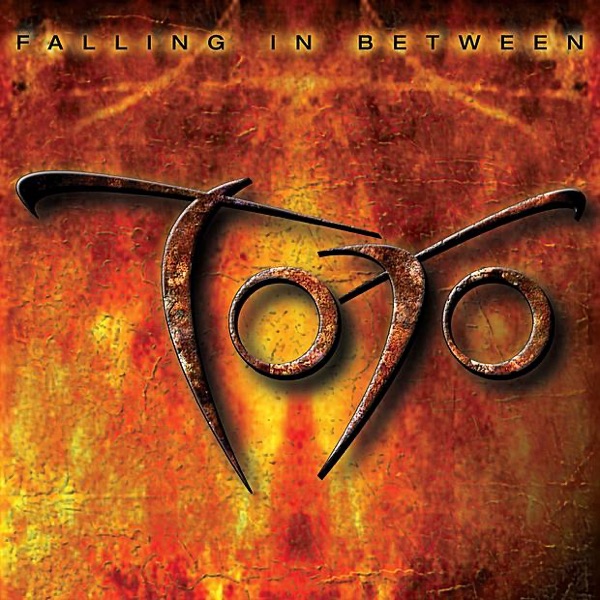
Falling in Between (2006)
A mid-career retrospective in terms of sound and approach, demonstrating Toto’s sustained output and commercial viability into the 2000s.
Signature Songs
- “Africa” — An enduring cross-generational hit and the band’s signature composition, epitomizing their ability to craft sophisticated pop-rock for universal audiences.
- “Rosanna” — A funk-inflected showcase for the band’s rhythmic precision and pop sensibility.
- “Hold the Line” — An early chart success establishing Toto’s commercial potential and radio-friendly rock identity.
- “I’ll Be Over You” — A ballad demonstrating the band’s range beyond uptempo rock and their mastery of emotional accessibility.
- “Georgy Porgy” — An early collaboration featuring Bobby Kimball on vocals, showcasing the band’s soul and funk influences.
Influence on Rock
Toto’s influence flows through the relationship between technical mastery and commercial accessibility in 1980s rock and pop. The band demonstrated that session-musician credibility and mass-market success were not mutually exclusive, legitimizing a path for skilled studio professionals to establish their own recording careers. Their emphasis on production quality, arrangement complexity, and polished overdubbing became a model for subsequent stadium rock and adult-contemporary rock bands. The group’s comfort spanning funk, soul, and rock elements influenced the broader 1980s genre-blending environment, while their approach to songwriting—balancing hook-driven accessibility with harmonic sophistication—informed subsequent pop-rock practitioners seeking similar commercial and critical standing.
Legacy
Toto’s commercial legacy rests on sustained album sales, streaming ubiquity, and peer recognition across multiple decades. The 2009 Musicians Hall of Fame induction acknowledged their technical contributions and influence within professional music communities. Beyond accolades, the band’s catalog maintains significant streaming presence and radio accessibility, with “Africa” achieving renewed cultural prominence through viral internet culture and sampling in subsequent music. The group’s continued activity—releasing Toto XIV in 2015 and Old Is New in 2018—demonstrates their enduring market relevance and fan engagement. Toto represents a distinct strain in rock history: the supergroup born not from musical rebellion or avant-garde ambition but from the convergence of skilled professionals seeking to apply their craft to original material on their own terms. Their 50-million-record global sales footprint and longevity across changing musical landscapes confirm their position among rock’s most commercially successful and technically accomplished ensembles.
Fun Facts
- The band’s membership underwent significant changes across their four decades of activity, with notable transitions including the departure of Jeff Porcaro in 1992 and Mike Porcaro’s tenure from 1982 to 2007, illustrating Toto’s evolution as a working ensemble.
- Toto’s formation in Van Nuys, California, placed them at the geographic center of Los Angeles’s studio-session economy, where the band’s members maintained simultaneous careers as session players for other recording artists throughout their early decades.
- The group’s genre classification as soft rock, pop rock, hard rock, and progressive rock across different databases reflects the genuine eclecticism of their catalog and the difficulty in containing their sound within single genre boundaries.
Discography & Previews
Click any album to expand its track list. Each track plays a 30-second preview streamed from Apple Music. Tap the link icon next to a track to open it in Apple Music for full playback.




- 1 Gift of Faith ↗ 7:23
- 2 I Will Remember ↗ 6:06
- 3 Slipped Away ↗ 5:16
- 4 If You Belong to Me ↗ 5:03
- 5 Baby He's Your Man ↗ 5:41
- 6 The Other End of Time ↗ 5:04
- 7 The Turning Point ↗ 5:25
- 8 Time Is the Enemy ↗ 5:40
- 9 Drag Him to the Roof ↗ 6:11
- 10 Just Can't Get to You ↗ 5:03
- 11 Dave's Gone Skiing ↗ 4:59
- 12 The Road Goes On ↗ 4:31
- 13 Blackeye ↗ 3:37

- 1 Cruel ↗ 5:55
- 2 Mysterious Ways ↗ 3:40
- 3 Mindfields ↗ 6:03
- 4 High Price Of Hate ↗ 9:49
- 5 Selfish ↗ 5:31
- 6 No Love ↗ 4:36
- 7 Caught In the Balance ↗ 6:21
- 8 Last Love ↗ 5:00
- 9 Mad About You ↗ 4:26
- 10 One Road ↗ 3:48
- 11 Melanie ↗ 5:20
- 12 After You've Gone ↗ 6:38
- 13 Better World ↗ 7:41
- 14 Spanish Steps ↗ 4:27