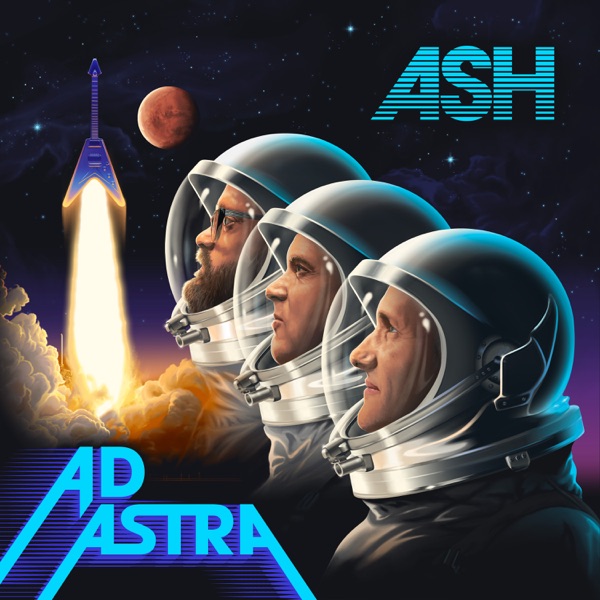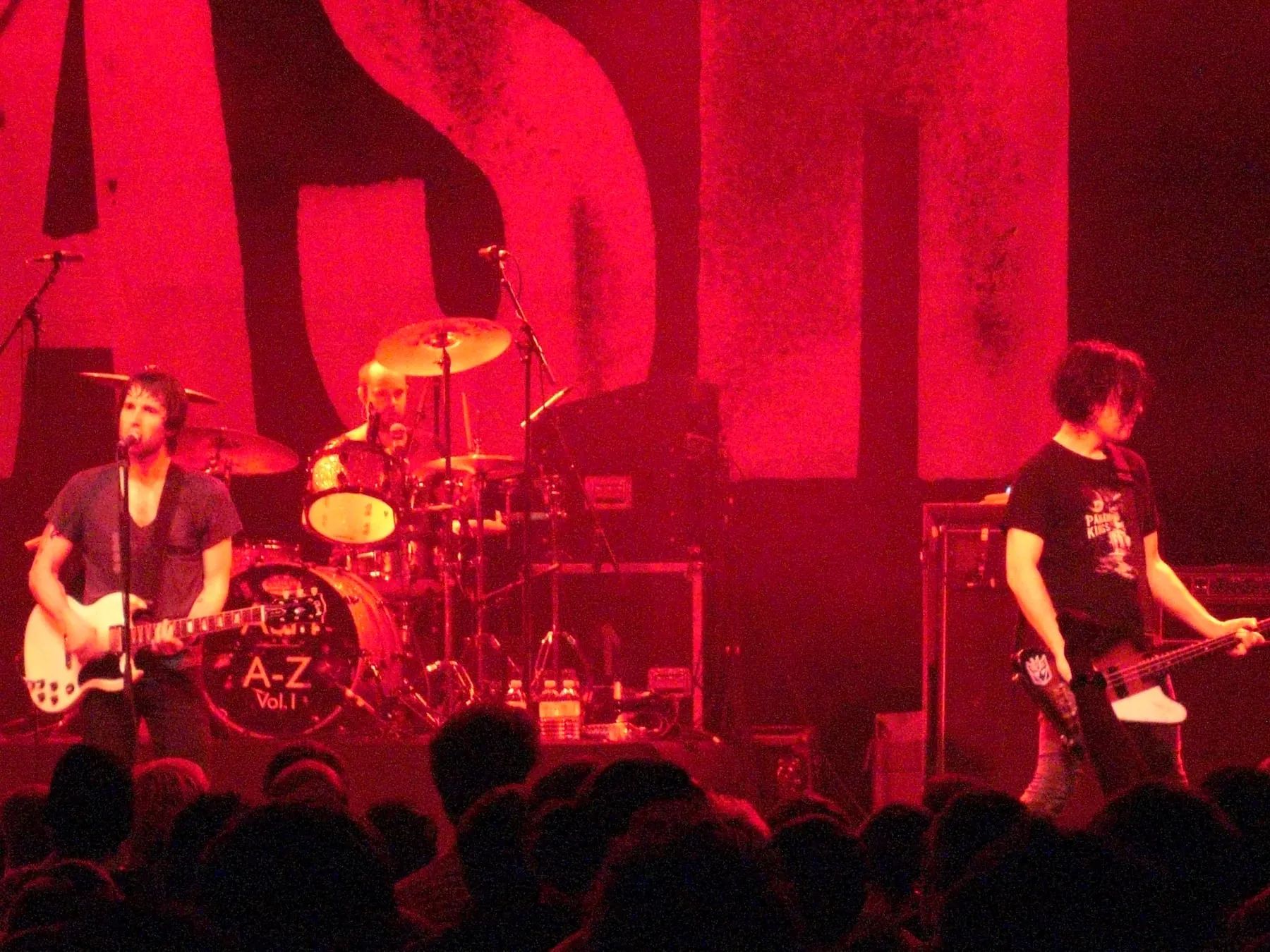
Photo by Chazzyb31 , licensed under Public domain · Wikimedia Commons
Rank #484
Ash
Downpatrick band whose '1977' is a beloved Britpop-era melodic-rock LP.
From Wikipedia
Ash are a Northern Irish rock band formed in Downpatrick, County Down, in 1992 by vocalist and guitarist Tim Wheeler, bassist Mark Hamilton and drummer Rick McMurray. As a three-piece, they released mini-album Trailer in 1994 and full-length album 1977 in 1996. This 1996 release was named by NME as one of the 500 greatest albums of all time. After the success of their full debut the band recruited Charlotte Hatherley as a guitarist and vocalist, releasing their second record Nu-Clear Sounds in 1998. After narrowly avoiding bankruptcy, the band released Free All Angels in 2001 and a string of successful singles.
Members
- Charlotte Hatherley (1997–2006)
- Mark Hamilton
- Rick McMurray
- Tim Wheeler
Studio Albums
- 1994 Trailer
- 1996 1977
- 1998 Nu-Clear Sounds
- 2000 Ash Sampler
- 2001 Free All Angels
- 2004 Meltdown
- 2007 Twilight of the Innocents
- 2015 Kablammo!
- 2018 Islands
- 2023 Race the Night
- 2025 Ad Astra
Source: MusicBrainz
Deep Dive
Overview
Ash are a Northern Irish rock band formed in Downpatrick, County Down, in 1992. Emerging as a three-piece with vocalist and guitarist Tim Wheeler, bassist Mark Hamilton, and drummer Rick McMurray, the band became one of the defining acts of the mid-1990s British rock renaissance. Their 1996 debut album 1977 stands as a landmark record in melodic indie rock, combining jangly guitars, infectious hooks, and a youthful energy that helped define the era. Though they began their career in relative obscurity in Northern Ireland, Ash would graduate to international recognition and sustain a recording and touring presence across three decades.
Formation Story
Ash coalesced in Downpatrick during the early 1990s as a three-piece unit. Tim Wheeler handled vocals and guitar, Mark Hamilton provided bass, and Rick McMurray kept drums. The band’s formation coincided with a period of renewed vitality in British guitar rock, though they would initially operate outside the London-centric scenes that dominated music press attention. Downpatrick, a modest market town in County Down, offered little in the way of established infrastructure for rock bands, yet the trio used their geographic isolation and youth as creative assets. Before releasing their first full-length album, Ash recorded the mini-album Trailer in 1994, a six-song introduction that showcased their pop-minded sensibility and suggested a band keen to distill rock songwriting into its most immediate, hook-driven forms.
Breakthrough Moment
The release of 1977 in 1996 transformed Ash from a regional prospect into a nationally recognized act. Named after the year of punk’s explosion and punk’s cultural apotheosis, the album arrived at a moment when Britpop was reaching its commercial and critical peak. 1977 combined the melodic craftsmanship of power-pop with the urgency and rawness of punk itself, creating a sound that felt both contemporary and historically conscious. NME’s subsequent recognition of the album as one of the 500 greatest albums of all time validated what listeners had already recognized: 1977 was a fully realized artistic statement, not a one-hit venture. The record’s success opened doors across Europe and beyond, establishing Ash as exportable British talent rather than a curiosity from the margins of the UK music map.
Peak Era
Ash’s commercial and critical momentum peaked across the late 1990s and early 2000s. Following the breakthrough of 1977, the band expanded its lineup in 1997 by recruiting Charlotte Hatherley as a guitarist and vocalist, adding textural depth and harmonic complexity to their sound. With Hatherley in place, Ash released Nu-Clear Sounds in 1998, a record that deepened the songwriting and production sophistication evident on their debut while maintaining the immediacy that had defined their breakthrough. The early 2000s brought further success: after narrowly avoiding bankruptcy—a precarious moment that tested their resolve and industry support—the band released Free All Angels in 2001, followed by a string of successful singles that cemented their status as reliable hitmakers. This period, spanning roughly 1996 to 2003, represented Ash at their most visible and commercially vibrant.
Musical Style
Ash’s sound is rooted in melodic indie rock with strong pop-punk and alternative-rock lineage. Their compositions typically center on hook-laden verses and explosive choruses, favoring concise song structures and singalong melodies over progressive indulgence. Tim Wheeler’s vocals deliver lyrics with conversational directness, rarely retreating into abstraction; his guitar work blends jangly arpeggios with distorted power chords, giving songs both shimmer and bite. Mark Hamilton’s bass lines sit at the melodic center of the mix, often driving the song’s harmonic movement rather than simply anchoring it. Rick McMurray’s drumming is energetic and straightforward, prioritizing pocket and pocket-driven urgency rather than technical display. The addition of Charlotte Hatherley in 1997 introduced additional layers: her guitar and vocal contributions added harmonic density and provided counterpoint to Wheeler’s lead lines, particularly on Nu-Clear Sounds and beyond. Across their albums, Ash’s sound evolved from the stripped-down three-piece aesthetic of 1977 toward fuller, more layered production, yet the core emphasis on melody and emotional directness remained constant.
Major Albums
1977 (1996)
A landmark melodic-rock record that blends jangly guitars, explosive dynamics, and pop sensibility into a fully realized indie-rock statement. NME later ranked it among the 500 greatest albums of all time, cementing its canonical status.
Nu-Clear Sounds (1998)
Ash’s first album as a quartet, with Charlotte Hatherley’s addition expanding the band’s harmonic and textural palette, while maintaining the infectious songwriting that defined their breakthrough.
Free All Angels (2001)
Released after the band navigated near-bankruptcy, Free All Angels demonstrated their resilience and continued capacity for crafting successful singles while maintaining artistic ambition.
Meltdown (2004)
An album marking a turning point in Ash’s career trajectory, released after Charlotte Hatherley’s departure from the group.
Signature Songs
- “Goldfinger” — A buoyant, instantly recognizable track that became one of Ash’s most lasting pop-rock moments, exemplifying their gift for infectious melody.
- “Girl from Mars” — A propulsive anthem from their debut era, combining wiry guitar work with soaring vocal hooks that defined their Britpop-era appeal.
- “A Life Less Ordinary” — A showcase of the band’s ability to construct radio-friendly rock songs without sacrificing energy or melodic substance.
- “Shone” — A reflective mid-tempo piece demonstrating the band’s range beyond their faster, more explosive material.
Influence on Rock
Ash arrived at a precise moment in rock’s cultural arc: Britpop was reaching its commercial apex, yet the movement risked calcification into cliché. By insisting on melody, directness, and emotional sincerity rather than irony or excess, Ash helped establish a template for indie-rock songwriting that transcended the era-specific fashions of Britpop itself. Their emphasis on the three-piece or four-piece rock band playing concise, hook-driven songs influenced countless acts in the 2000s and beyond, from garage-rock revivals to pop-punk bands seeking melodic credibility. The success of 1977 in particular demonstrated that geography and modest origins posed no barrier to artistic achievement; the album’s international recognition helped establish Northern Ireland as a source of vital rock talent, paving the way for later acts from the region. Their endurance—continuing to record and tour decades after their breakthrough—reinforced the model of the self-sustaining rock band as a long-term creative project rather than a brief, combustible phenomenon.
Legacy
Though commercial attention shifted away from guitar-driven rock in the 2010s and 2020s, Ash maintained a loyal fanbase and continued releasing new material. The band’s catalog remained consistently available across streaming platforms and physical formats, ensuring that new listeners could encounter 1977 and its companion records. The near-universal recognition of 1977’s quality meant that Ash’s name remained synonymous with a particular strain of melodic British rock from the 1990s. Their survival of near-bankruptcy and continued recording output across decades—including albums such as Kablammo! in 2015, Islands in 2018, Race the Night in 2023, and the forthcoming Ad Astra in 2025—demonstrated a commitment to the rock-band model that exceeded many of their contemporaries’ tenure. For listeners and critics, Ash represent not a moment frozen in time but a sustainable approach to rock music-making, one grounded in craftsmanship, melody, and the pleasure of the well-constructed song.
Fun Facts
- Ash formed in Downpatrick, County Down—a location far from the London-centric music industry that dominated British rock during the 1990s, yet their breakthrough proved that geography posed no barrier to creating and distributing internationally significant art.
- Charlotte Hatherley’s tenure as guitarist and vocalist (1997–2006) fundamentally altered the band’s sound, introducing layered harmonies and textural complexity that distinguish albums like Nu-Clear Sounds from their earlier three-piece work.
- The band’s decision to name their debut 1977—the year of punk’s emergence and British cultural upheaval—signaled their historical consciousness and their desire to position their own melodic rock within a lineage stretching back to punk’s urgency and directness.
Discography & Previews
Click any album to expand its track list. Each track plays a 30-second preview streamed from Apple Music. Tap the link icon next to a track to open it in Apple Music for full playback.