
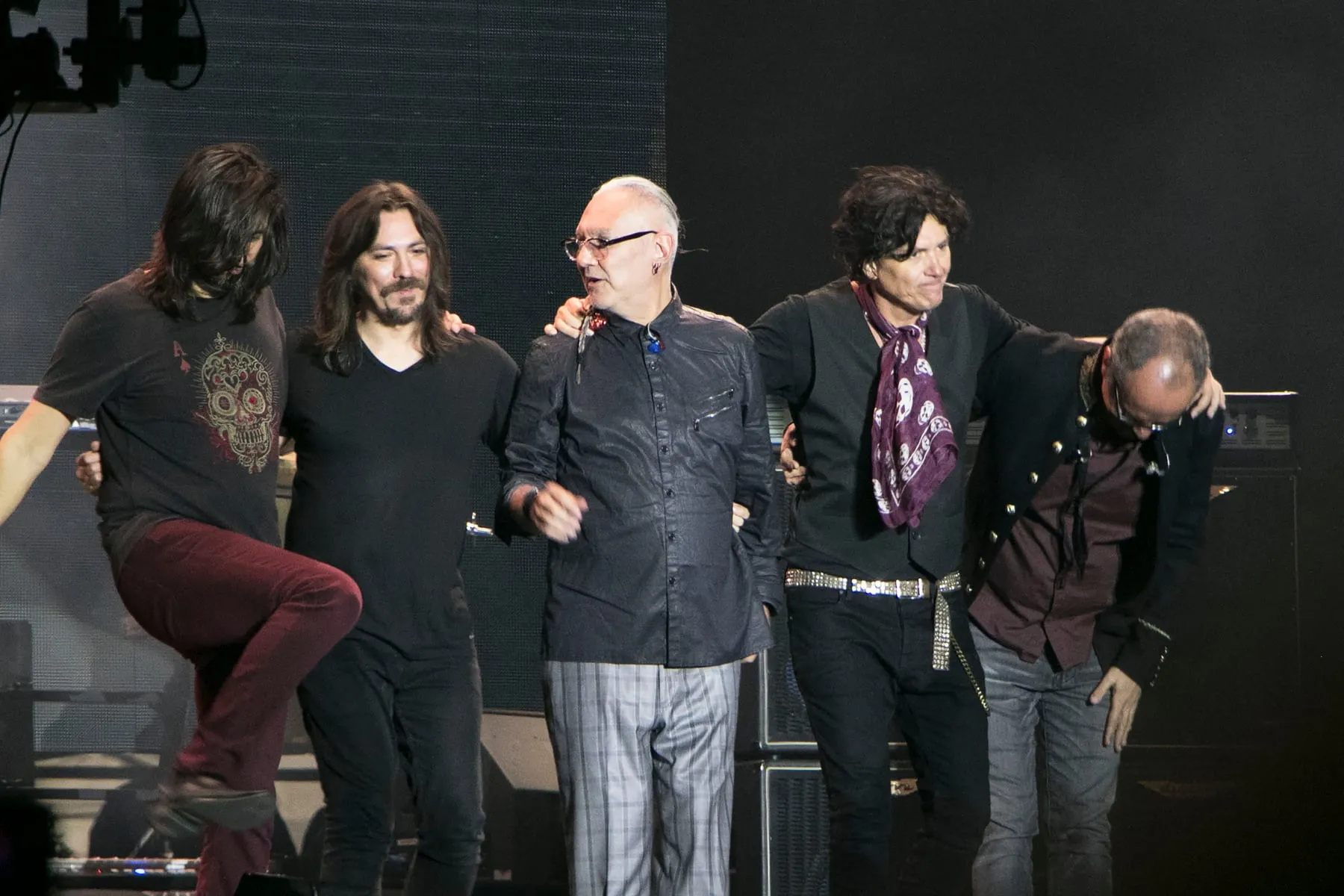
Photo by Secretaría de Cultura Ciudad de México from México , licensed under CC BY-SA 2.0 · Wikimedia Commons
Rank #267
Caifanes
Mexico City rock-en-español pioneers of dark, danceable rock.
From Wikipedia
Caifanes is a Mexican rock band formed in Mexico City in 1986. The group achieved commercial success during the late 1980s and early 1990s. The original lineup of members consisted of Saúl Hernández, Sabo Romo (bass), Alfonso André (drums) and Diego Herrera. Alejandro Marcovich later joined as lead guitarist. Caifanes' style can be described as a hybrid of British new wave, progressive rock and Latin percussion underscored by deep, somber and Latin American-Mexican Spanish-influenced lyrics and the vocal style of Saúl Hernández. Members of Caifanes have cited The Cure, The Beatles and King Crimson as major influences. Adrian Belew produced their third studio album, El Silencio, and made a guest appearance on the track Piedra.
Members
- Diego Herrera (1987–present)
- Sabo Romo (1987–present)
- Saúl Hernández (1987–present)
- Alejandro Marcovich (1989–present)
- Alfonso André
Studio Albums
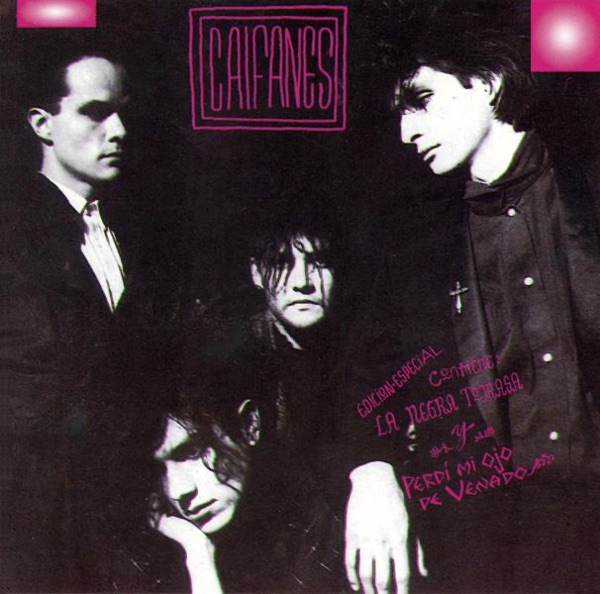
- 1988 Caifanes
- 1990 El diablito
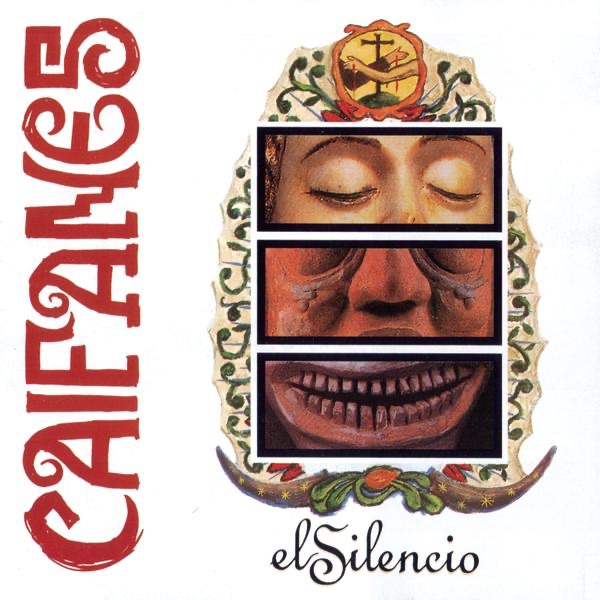
- 1992 El silencio
- 1994 El nervio del volcán
Source: MusicBrainz
Deep Dive
Overview
Caifanes emerged from Mexico City in 1987 as one of the most ambitious rock bands of the Spanish-speaking world during the late 1980s and early 1990s. The band crystallized a singular sound that fused British new wave architecture with progressive rock ambition, dark gothic atmospherics, and Latin percussion, all anchored by Saúl Hernández’s distinctive vocal delivery and introspective, often somber Spanish-language lyrics. Over a decade-long initial run, Caifanes proved that rock en español could transcend regional boundaries and compete on international stages without diluting its cultural identity or sonic ambition.
Formation Story
Caifanes coalesced in Mexico City in 1987 around the partnership of Saúl Hernández (vocals), Sabo Romo (bass), Diego Herrera (guitar), and Alfonso André (drums). This foundational quartet established the band’s core sonic DNA almost immediately. In 1989, Alejandro Marcovich joined as lead guitarist, expanding the band’s textural possibilities and providing the shimmering, complex guitar work that would define their mature sound. The band emerged from a Mexico City rock scene energized by the exposure to British post-punk, new wave, and progressive rock, but determined to create something distinctly rooted in Mexican cultural experience and Spanish-language expression.
Breakthrough Moment
Caifanes’ self-titled debut album, released in 1988, announced a fully formed artistic vision from the outset. The record demonstrated technical proficiency and melodic sophistication that immediately distinguished them within Latin American rock. However, it was their second album, El diablito (1990), that secured their commercial foothold across Spanish-speaking markets. The album’s darker, more assured production and the band’s deepening command of their hybrid style brought wider recognition and established Caifanes as essential artists beyond Mexico’s borders. By the early 1990s, they were touring internationally and attracting serious critical attention as ambassadors of a new wave of Latin rock artistry.
Peak Era
The period from 1990 to 1994 represented Caifanes’ most creatively fertile and commercially successful span. El diablito proved they could sustain their vision across a full album, while their third release, El silencio (1992), marked a watershed moment when the band’s ambitions fully crystallized. That album featured production work from Adrian Belew, the legendary guitarist and King Crimson collaborator, who also appeared as a guest musician on the track “Piedra.” Belew’s involvement signaled international respect for the band’s artistic standing and brought additional technical sophistication to their arrangements. El nervio del volcán (1994) completed this peak period, maintaining their commercial momentum and creative vitality even as the broader alternative rock landscape was shifting.
Musical Style
Caifanes constructed their sound as a deliberate synthesis of European new wave and progressive rock traditions transplanted into a Latin American context. The band’s core instrumentation—Marcovich and Herrera’s layered guitars, Romo’s melodic bass lines, André’s precise drumming, and Hernández’s baritone vocal presence—created a dark, moody palette that recalled The Cure and King Crimson, the band’s stated primary influences, but filtered through Beatles melodicism and authentic Latin percussion elements. Hernández’s vocal style, marked by dramatic phrasing and emotional depth delivered entirely in Spanish, became the band’s most immediately recognizable trademark. Lyrically, the band favored introspection and melancholy, exploring themes of alienation, existential questioning, and emotional turbulence. The arrangements frequently balanced dance-oriented rhythmic grooves with gothic atmospheric textures, making their music simultaneously club-friendly and intellectually ambitious—a rare equilibrium that reflected both new wave accessibility and art rock complexity.
Major Albums
Caifanes (1988)
The self-titled debut introduced the band’s core sound with impressive technical execution and melodic ambition, establishing them as serious contenders within the Latin American rock landscape.
El diablito (1990)
Their second album cemented Caifanes’ commercial appeal and demonstrated increased production sophistication and artistic confidence, becoming the record that expanded their audience across Spanish-speaking territories.
El silencio (1992)
Produced with Adrian Belew’s involvement and featuring his guest appearance on “Piedra,” this album represented the band’s artistic apex, marrying intricate progressive rock arrangements with their signature dark aesthetic.
El nervio del volcán (1994)
Their fourth studio album maintained the band’s creative momentum and commercial standing, showcasing mature songwriting and continued technical refinement during their peak active period.
Signature Songs
- “Ángel” (El diablito, 1990) — A showcase for Hernández’s dramatic vocal delivery and the band’s ability to blend Gothic atmosphere with melodic pop sensibility.
- “Piedra” (El silencio, 1992) — The Adrian Belew collaboration that brought international progressive rock credibility to the band’s artistry.
- “Detrás de los ojos” — A track exemplifying the band’s introspective lyricism and moody, dance-inflected arrangements.
Influence on Rock
Caifanes occupied a unique cultural position in 1990s rock music as Spanish-language artists who achieved international recognition without compromising their linguistic or cultural identity. They demonstrated that rock en español could explore the full aesthetic and technical range of Anglo-American rock traditions while remaining distinctly rooted in Mexican artistic sensibility. The band’s successful fusion of new wave, post-punk, and progressive rock with Latin percussion and Spanish-language lyrics opened pathways for subsequent Latin American alternative rock acts, proving there existed a viable international market for sophisticated Spanish-language rock that engaged with dark, introspective, and intellectually ambitious material. Their influence extended across Latin America and the Spanish-speaking world, establishing templates for rock artistry that took seriously both cultural specificity and international artistic scope.
Legacy
Caifanes’ initial run concluded around 1995, but the band’s catalog retained enduring cultural significance within Mexican and Latin American rock history. The band’s official website, maintained at caifanes2011.com, signals their continued presence in the digital age and the sustained interest in their work. Their albums remain in circulation through major distribution channels including Sony Music, RCA Records, and BMG, ensuring accessibility to new generations discovering 1990s Latin American alternative rock. In the broader historiography of Spanish-language rock, Caifanes stand as pioneering figures who proved artistic ambition, technical sophistication, and cultural authenticity could coexist within international commercial frameworks. Their body of work—particularly the albums produced between 1990 and 1994—continues to influence Spanish-language rock artists and remains essential listening for understanding how alternative rock manifested across non-English-speaking territories during the 1990s.
Fun Facts
- Adrian Belew, the guitarist and vocalist most famous for his work with King Crimson and his solo career, produced El silencio (1992) and contributed a guest appearance on “Piedra,” lending international progressive rock credibility to the band’s third album.
- The band’s core lineup remained remarkably stable, with Saúl Hernández, Sabo Romo, and Diego Herrera maintaining their positions from 1987 onward, with Alejandro Marcovich joining in 1989 and remaining through the band’s peak years.
- Caifanes’ aesthetic drew explicitly from British post-punk and new wave acts like The Cure, combined with the progressive rock complexity of King Crimson and The Beatles’ melodic sophistication, creating a distinctly cosmopolitan yet culturally grounded sound.
Discography & Previews
Click any album to expand its track list. Each track plays a 30-second preview streamed from Apple Music. Tap the link icon next to a track to open it in Apple Music for full playback.

- 1 Detras de Ti ↗ 3:39
- 2 Antes de Que Nos Olviden ↗ 4:47
- 3 La Vida No Es Eterna ↗ 4:00
- 4 De Noche Todos los Gatos Son Pardos ↗ 4:19
- 5 Sombras en Tiempos Perdidos ↗ 5:55
- 6 El Negro Cosmico ↗ 3:47
- 7 La Célula Que Explota ↗ 3:36
- 8 Aqui No Pasa Nada ↗ 4:41
- 9 Los Dioses Ocultos ↗ 4:42
- 10 El Elefante ↗ 3:04
- 11 Amarrate a una Escoba y Vuela Lejos ↗ 3:51
- 1 Metamorféame ↗ 2:44
- 2 Nubes ↗ 4:34
- 3 Piedra ↗ 4:36
- 4 Tortuga ↗ 4:37
- 5 Nos Vamos Juntos ↗ 5:07
- 6 No Dejes Que... ↗ 4:39
- 7 Hasta Morir ↗ 3:45
- 8 Debajo de Tu Piel ↗ 3:29
- 9 Estás Dormida ↗ 3:38
- 10 Miércoles de Ceniza ↗ 4:52
- 11 El Comunicador ↗ 4:56
- 12 Para Que No Digas Que No Pienso en Ti ↗ 3:55
- 13 Vamos a Hacer un Silencio ↗ 5:16
- 14 Mariquita ↗ 1:56
