
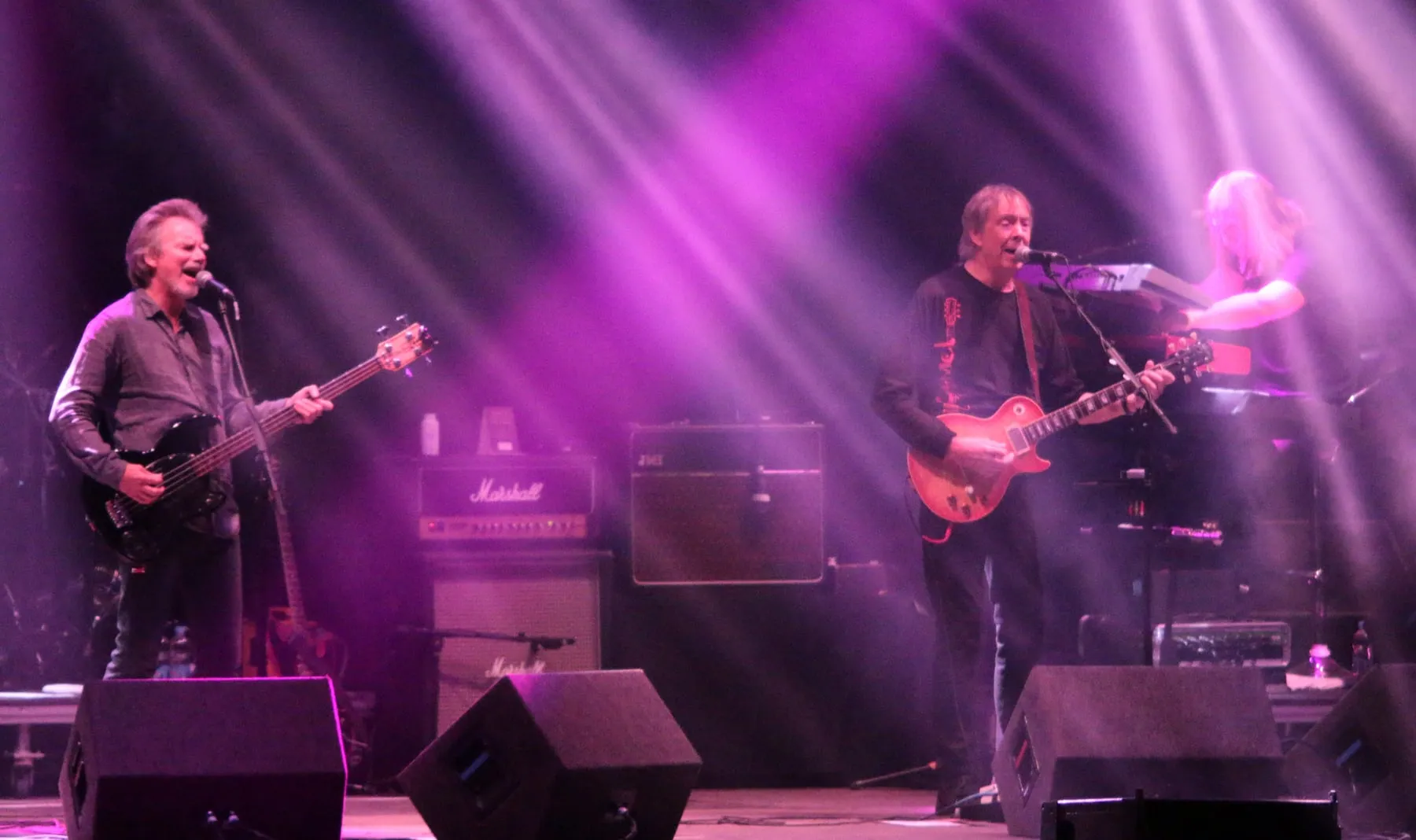
Photo by kitmasterbloke , licensed under CC BY 2.0 · Wikimedia Commons
Rank #286
Camel
British prog band whose 'Snow Goose' is a melodic mid-70s gem.
From Wikipedia
Camel are an English progressive rock band formed in Guildford, Surrey, in 1971. Led by guitarist Andrew Latimer, they have released fourteen studio albums and fourteen singles, plus numerous live albums and DVDs. Without achieving mass popularity, the band gained a cult following in the 1970s with albums such as Mirage (1974) and The Snow Goose (1975). They moved into a jazzier, more commercial direction in the early 1980s, but then went on an extended hiatus. Since 1991 the band has been independent, releasing albums on their own label.
Members
- Peter Bardens
Deep Dive
Overview
Camel are an English progressive rock band formed in Guildford, Surrey, in 1971. Without achieving mass commercial success, they cultivated a dedicated cult following throughout the 1970s and beyond, primarily through their ability to balance complex compositional structures with genuine melodic sensibility. Their music sits at the intersection of progressive rock and art rock, characterized by fluid arrangements, sophisticated instrumental interplay, and an emphasis on mood and atmosphere over bombast.
Formation Story
Camel emerged from Guildford in 1971, a time when progressive rock was fragmenting into dozens of regional variants across the United Kingdom. The band coalesced around guitarist Andrew Latimer, whose distinctive playing style—combining technical precision with expressive phrasing—would become the band’s primary voice. Peter Bardens contributed keyboards and helped shape the band’s harmonic palette. The early 1970s lineup solidified quickly, allowing them to begin recording and performing within two years of formation. Guildford’s distance from London’s competitive music hub meant Camel developed its sound relatively free from immediate commercial pressure, a factor that likely contributed to their willingness to experiment with long-form compositional ideas.
Breakthrough Moment
Camel’s genuine breakthrough arrived with their second album, Mirage (1974), which announced the band as serious architects of melodic progressive rock. The success of Mirage led directly to their masterwork, The Snow Goose (1975), a concept album that became their most enduring statement. The album demonstrated that progressive rock could be intricate and ambitious while remaining emotionally direct; it resonated with listeners fatigued by the self-indulgence creeping into the genre elsewhere. The Snow Goose cemented their reputation among critics and progressive rock aficionados, establishing them as equals to better-known acts despite their persistent lack of radio mainstream success.
Peak Era
The period from 1974 through 1979 represented Camel’s most creatively vital and commercially successful phase. Following Mirage and The Snow Goose, the band released Moonmadness (1976), Rain Dances (1977), and Breathless (1978), each exploring variations on their core sound while maintaining instrumental sophistication and melodic accessibility. I Can See Your House From Here (1979) closed this era with continued technical assurance. During these six years, Camel toured extensively, building their reputation as a serious live act capable of executing complex arrangements with precision and emotional engagement. This decade established the band’s artistic identity and attracted the core audience that would sustain them through less commercially receptive periods.
Musical Style
Camel’s sound synthesized the keyboard-driven approach of Yes and Emerson, Lake & Palmer with a more restrained, jazz-inflected sensibility. Latimer’s guitar work provided the primary melodic and textural anchor; Bardens’ keyboards supplied harmonic complexity and atmospheric depth without dominating the mix. The rhythm section maintained a responsiveness to shifting time signatures and dynamic shifts that required considerable technical skill. Their arrangements favored flowing transitions between sections over jarring contrasts, creating an immersive listening experience that rewarded close attention. The band’s compositional approach emphasized suite-like structures, with thematic development across multiple movements rather than conventional verse-chorus-verse songwriting. Vocalists appeared sparingly; when present, they served the instrumental narrative rather than anchoring the song as a conventional pop framework. This restraint in vocal presence—a deliberate choice rather than a limitation—allowed Camel to explore purely instrumental storytelling, positioning them alongside Genesis and Jethro Tull as bands for whom the instrument was the primary voice.
Major Albums
Mirage (1974)
Camel’s second album demonstrated the band had moved beyond debut exploration into confident artistic vision, combining intricate instrumental passages with surprisingly direct emotional communication and establishing the sound that would define their classic period.
The Snow Goose (1975)
A concept album centered on a melancholic story of bird and human connection, featuring flowing multi-part compositions that showcase the band’s ability to balance technical sophistication with genuine melodic accessibility and emotional resonance across a full album arc.
Moonmadness (1976)
Building on the success of The Snow Goose, this album deepened the band’s exploration of atmosphere and mood, cementing their reputation for creating immersive progressive rock experiences that operated outside mainstream commercial expectations.
Breathless (1978)
Released at the tail end of the classic prog era, Breathless maintained the band’s instrumental standards while beginning to incorporate more jazz-influenced rhythmic elements and modal exploration, pointing toward stylistic developments in the early 1980s.
Signature Songs
- Lady Let It Lie — A showcase for Latimer’s expressively melodic guitar work within a carefully structured progressive rock composition that demonstrates the band’s ability to balance complexity with emotional directness.
- The Snow Goose — The centerpiece of their 1975 concept album, capturing the melancholic narrative the album explored through primarily instrumental means.
- Moonmadness — A suite-length composition displaying the band’s skill at extended thematic development and dynamic orchestration across shifting moods and instrumental combinations.
- Lady Let It Lie — An early signature piece establishing Latimer’s distinctive guitar voice and the band’s melodic progressive rock identity.
Influence on Rock
While Camel never achieved the commercial penetration or institutional recognition of Yes, Genesis, or Emerson, Lake & Palmer, they represented an important current within progressive rock: the insistence that complexity and emotion were not opposing forces. Their emphasis on melody within intricate arrangements influenced subsequent generations of progressive rock musicians who sought to move beyond the cold virtuosity that had begun to dominate the genre by the mid-1970s. The band demonstrated that a cult following—intensely engaged and loyal—could sustain a decades-long recording and touring career without chasing commercial reinvention. Their 1970s albums remain touchstones for musicians exploring the intersection of rock instrumentation and jazz harmonic sophistication.
Legacy
Camel continued recording and touring after their extended hiatus ended in 1991, releasing new albums independently through their own label and maintaining an active touring schedule. The band’s independence—their decision to release albums on their own label rather than pursuing major label deals—became emblematic of how established prog acts could operate outside conventional industry structures while preserving artistic control. The Snow Goose endures as their most celebrated recording, regularly cited by prog rock enthusiasts and critics as among the era’s finest melodic progressive rock statements. The band’s longevity through changing musical fashions and commercial climates reflects both the durability of their core audience and the band’s genuine commitment to their artistic vision regardless of external trends.
Fun Facts
- Camel formed in Guildford, Surrey—a location outside London’s primary music industry centers, allowing the band considerable creative freedom during their formative years.
- The band has released recordings across multiple eras and labels, including MCA Records, Charisma, Decca, and Deram, before establishing their own independent label in the 1990s.
- The Snow Goose was revisited in 2013 when the band released a new recording of the album, revisiting their most celebrated work in a contemporary context.
- The band maintained sufficient activity and touring presence to document live performances across decades, including releases such as Live In Tokyo ‘79 & ‘80.