
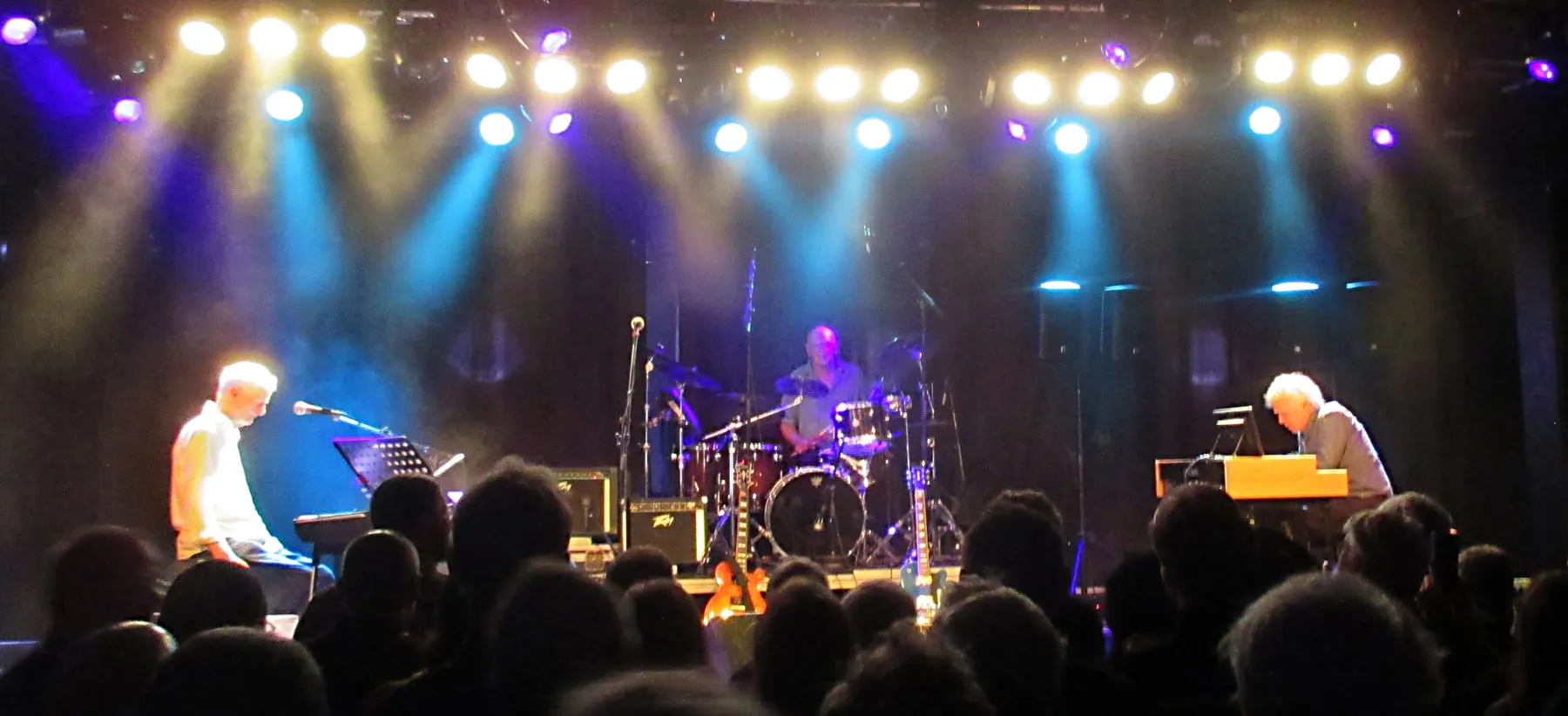
Photo by Gunnar Creutz , licensed under CC BY-SA 4.0 · Wikimedia Commons
Rank #285
Van der Graaf Generator
Peter Hammill-led prog band of dense saxophones and wrenching theatre.
From Wikipedia
Van der Graaf Generator are an English progressive rock band, formed in 1967 in Manchester by singer-songwriters Peter Hammill and Chris Judge Smith. They were the first act signed by Charisma Records. They did not experience much commercial success in the UK, but became popular in Italy during the 1970s. In 2005 the band reformed, and are still musically active with a line-up of Hammill, organist Hugh Banton and drummer Guy Evans.
Members
- David Jackson
- Guy Evans
- Hugh Banton
- Peter Hammill
Studio Albums
- 1969 The Aerosol Grey Machine
- 1970 H to He, Who Am the Only One
- 1970 The Least We Can Do Is Wave to Each Other
- 1971 Pawn Hearts
- 1975 Godbluff
- 1976 Still Life
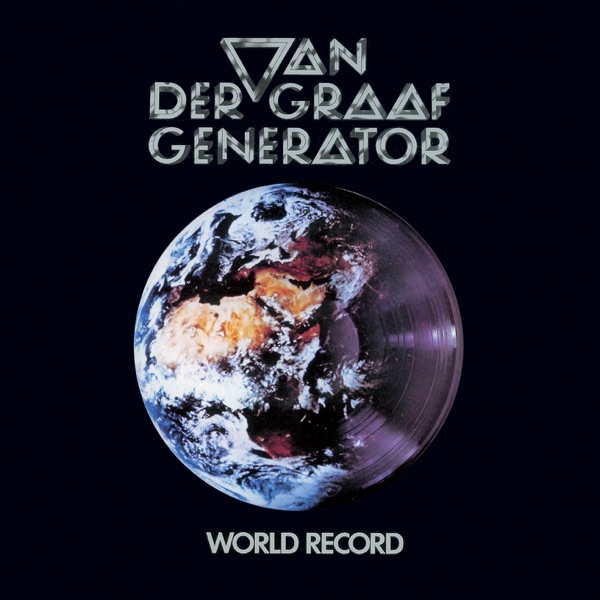
- 1976 World Record
- 1977 The Quiet Zone / The Pleasure Dome
- 1991 The Lost Live Tapes
- 2005 Present
- 2008 Trisector
- 2011 A Grounding in Numbers
- 2012 Alt
- 2016 Do Not Disturb
Source: MusicBrainz
Deep Dive
Overview
Van der Graaf Generator stands as one of progressive rock’s most uncompromising and architecturally complex ensembles. Formed in Manchester in 1967, the band emerged as the first signing to Charisma Records and built a reputation across their initial run for dense instrumental arrangements, urgent vocal delivery, and theatrical ambition. While they achieved modest commercial reach in the UK, they cultivated a devoted following in Italy and among dedicated progressive-rock listeners worldwide. The band’s core identity centers on Peter Hammill’s songwriting and vocal intensity, anchored by Hugh Banton’s organ work and the saxophone textures of David Jackson, with drummer Guy Evans providing propulsion through intricate time signatures.
Formation Story
Peter Hammill and Chris Judge Smith founded Van der Graaf Generator in Manchester in 1967, naming the outfit after a piece of electrical apparatus—a fitting choice for a band whose sound would prioritize experimental rigor over commercial convention. The duo built the early lineup into a five-piece configuration that included David Jackson on saxophones, Hugh Banton on organ, and Guy Evans on drums. Manchester in the late 1960s provided a regional stepping stone, but the band’s artistic vision quickly outpaced local circuits. Their signing to Charisma Records, the newly formed independent label, marked a watershed: Van der Graaf Generator became Charisma’s first artist, a partnership that would define both the label’s identity and the band’s trajectory through the 1970s.
Breakthrough Moment
Van der Graaf Generator’s early albums generated critical attention within progressive-rock circles, though mainstream chart success remained elusive. The release of Pawn Hearts in 1971 crystallized the band’s artistic statement and broadened their audience, particularly in Italy, where the band’s unrelenting intensity and baroque arrangements resonated strongly. The album demonstrated the full crystallization of their songwriting and instrumental approach, establishing them as serious contenders within prog rock’s expanding ecosystem. By this point, the band had moved beyond their 1969 debut The Aerosol Grey Machine and the paired 1970 releases H to He, Who Am the Only One and The Least We Can Do Is Wave to Each Other, into a phase of mature compositional authority.
Peak Era
The mid-to-late 1970s marked Van der Graaf Generator’s most prolific and visually ambitious period. Between 1975 and 1977, the band released five studio albums—Godbluff (1975), Still Life (1976), World Record (1976), and The Quiet Zone / The Pleasure Dome (1977)—that pushed their compositional vocabulary into increasingly theatrical and abstract directions. During these years, Hammill’s songwriting grew more introspective and conceptually ambitious, while the band’s collective instrumental prowess reached its apex. The sheer density of these records, the refusal to simplify arrangements for radio play, and the emotional turbulence embedded in Hammill’s vocal performances established Van der Graaf Generator as one of progressive rock’s most demanding and rewarding acts. Their European touring base, particularly strong support in Italy, sustained the band even as UK radio remained largely indifferent.
Musical Style
Van der Graaf Generator’s signature sound rests on David Jackson’s saxophone work—breathy, occasionally shrill, and deployed not as ornament but as a primary melodic and textural voice alongside Hammill’s vocals. Hugh Banton’s organ playing provides harmonic density and cyclical momentum, moving between classical-inflected passages and rock-edged textures. Guy Evans drums with precision and dynamism, driving the band through polyrhythmic passages and sudden dynamic shifts. Hammill’s voice carries an urgent, often anguished quality; he rarely sings conventionally, instead using the voice as an expressive instrument capable of cracking, bending, and pushing toward abstraction. The songwriting itself privileges architectural complexity and thematic development over verse-chorus-verse structure. Where other prog bands incorporated folk melody or blues phrasing, Van der Graaf Generator built from atonal and modernist compositional principles, creating music that felt more akin to contemporary experimental classical work than to rock’s traditional lineage. Their approach to production emphasized instrumental clarity within dense arrangements, allowing each member’s contribution to remain audible even within maximalist instrumental passages.
Major Albums
Pawn Hearts (1971)
The band’s third album consolidated their artistic identity and earned them their strongest critical reception. Pawn Hearts balanced accessibility with uncompromising arrangement, becoming the touchstone by which other progressive-rock ensembles measured their own ambition.
Godbluff (1975)
Released four years into a mid-decade hiatus, Godbluff marked a stylistic redirection toward more abstract and conceptually ambitious songwriting. The album demonstrated that Hammill’s vision had evolved substantially during the band’s time apart.
Still Life (1976)
Recorded and released in the same year as World Record, Still Life showcased the band’s mature instrumental prowess and Hammill’s increasingly personal and introspective lyricism. The album remains a cornerstone of 1970s progressive rock.
The Quiet Zone / The Pleasure Dome (1977)
The final studio album of the band’s original run, this double album represented the apotheosis of their 1970s vision—ambitious, uncompromising, and temporally vast in scope.
Signature Songs
- “Godbluff” — The album title track and centerpiece of the 1975 comeback, anchored by Jackson’s saxophone wail and Hammill’s emotional intensity.
- “Still Life” — A suite-like composition that showcases the band’s ability to construct complex instrumental passages around Hammill’s vulnerable vocal delivery.
- “Darkness” — A standout track from Pawn Hearts that crystallized the band’s theatrical approach and Jackson’s role as a textural linchpin.
- “Pioneers Over C” — An instrumental piece demonstrating the band’s compositional architecture and the interplay between organ, saxophone, and drums.
Influence on Rock
Van der Graaf Generator’s impact resonated primarily within progressive-rock and art-rock circles, establishing a template for bands unwilling to compromise artistic vision for commercial viability. Their emphasis on instrumental density, formal compositional logic, and emotional intensity influenced subsequent generations of avant-garde rock musicians. While they never achieved the household-name status of Yes or Emerson, Lake & Palmer, their unrelenting artistic rigor earned them respect among musicians and critics who prioritized integrity over accessibility. The band demonstrated that progressive rock could function as a vehicle for deeply personal and emotionally turbulent expression rather than merely technical display or fantasy-narrative escapism.
Legacy
Van der Graaf Generator disbanded after their initial creative run but reunited in 2005 with a lineup consisting of Hammill, Banton, and Evans—the core of the band’s most essential period intact. This reformation proved creatively vital rather than nostalgic; the band has continued recording new material including Present (2005), Trisector (2008), A Grounding in Numbers (2011), Alt (2012), and Do Not Disturb (2016), demonstrating sustained artistic engagement into the 2010s. The band remains active, their catalog preserved and circulated through modern streaming platforms, ensuring that new listeners discover their work alongside devoted listeners from the 1970s. Their standing within progressive-rock discourse has only solidified with time, recognized as essential figures in the genre’s most experimental and conceptually ambitious traditions.
Fun Facts
- Van der Graaf Generator became the first artist signed to Charisma Records, establishing the label’s identity as a home for uncompromising progressive-rock acts.
- The band’s name derives from a piece of electrical apparatus—a Van de Graaff generator—reflecting their commitment to unconventional naming and conceptual precision.
- Despite minimal UK commercial success during the 1970s, the band cultivated a particularly strong and devoted following in Italy, where their theatrical intensity resonated with audiences across Europe.
- The 2005 reunion involved only three members—Hammill, Banton, and Evans—yet the reunited band maintained the original sonic identity while exploring new compositional directions across multiple subsequent studio albums.
Discography & Previews
Click any album to expand its track list. Each track plays a 30-second preview streamed from Apple Music. Tap the link icon next to a track to open it in Apple Music for full playback.



- 1 Every Bloody Emperor ↗ 7:03
- 1 Vulcan Meld ↗ 7:19
- 2 Boleas Panic ↗ 6:51
- 2 Double Bass ↗ 6:34
- 3 Nutter Alert ↗ 6:12
- 3 Slo Moves ↗ 6:24
- 4 Abandon Ship! ↗ 5:08
- 4 Architectural Hair ↗ 8:56
- 5 In Babelsberg ↗ 5:30
- 5 Spanner ↗ 5:03
- 6 On the Beach ↗ 6:49
- 6 Crux ↗ 5:51
- 7 Manuelle ↗ 7:52
- 8 'Eavy Mate ↗ 3:51
- 9 Homage To Teo ↗ 4:46
- 10 The Price of Admission ↗ 8:49


- 1 Earlybird ↗ 4:01
- 2 Extractus ↗ 1:39
- 3 Sackbutt ↗ 1:53
- 4 Colossus ↗ 6:36
- 5 Batty Loop ↗ 1:14
- 6 Splendid ↗ 3:46
- 7 Repeat After Me ↗ 7:39
- 8 Elsewhere ↗ 4:19
- 9 Here's One I Made Earlier ↗ 5:42
- 10 Midnite or So ↗ 3:34
- 11 D'accord ↗ 2:28
- 12 Mackerel Ate Them ↗ 4:50
- 13 Tuesday, the Riff ↗ 2:47
- 14 Dronus ↗ 10:37
