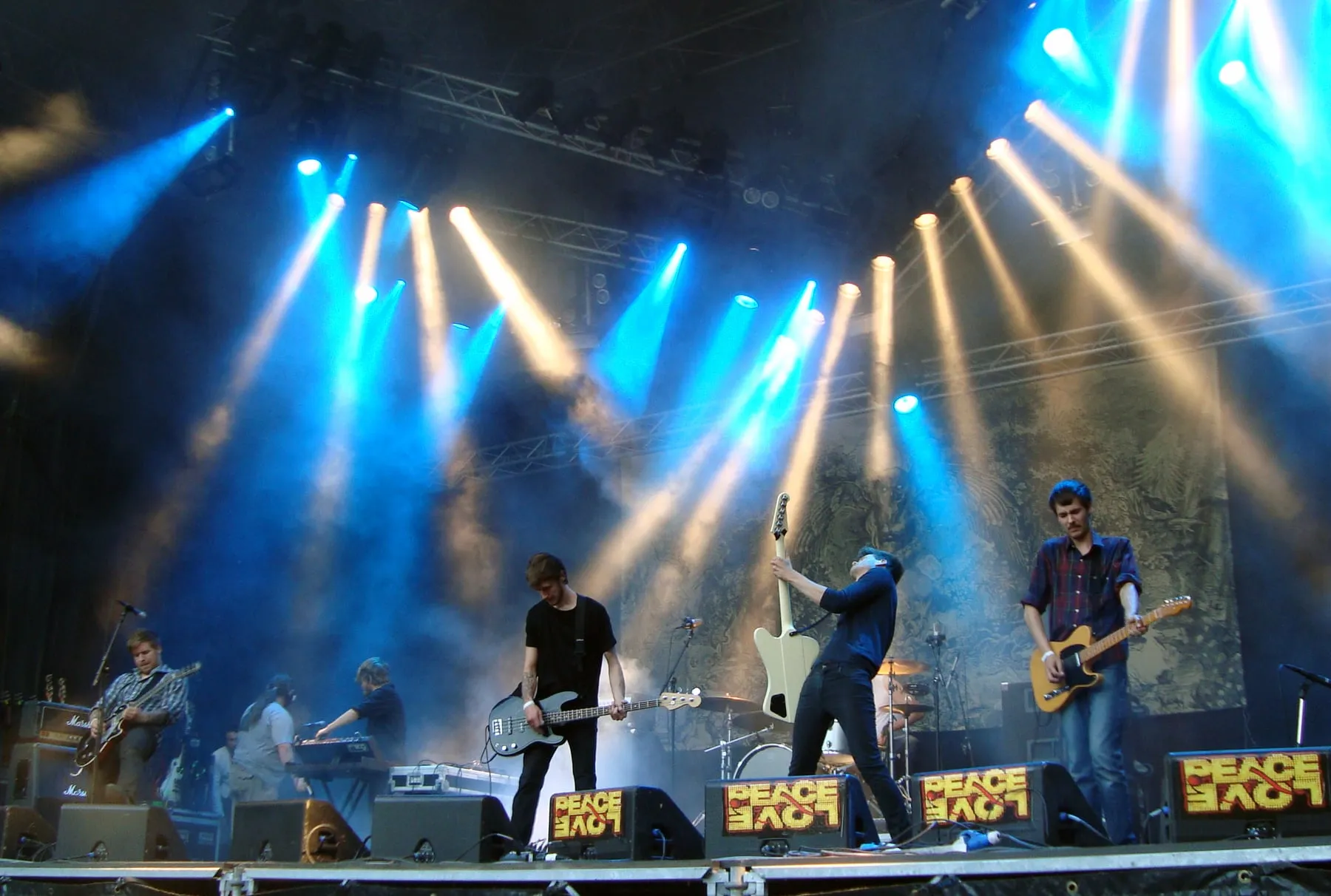
Photo by Calle Eklund/ V-wolf , licensed under CC BY-SA 3.0 · Wikimedia Commons
Rank #125
Cult of Luna
Swedish post-metal stalwarts of glacial heaviness and atmosphere.
From Wikipedia
Cult of Luna is a Swedish post-metal band from Umeå founded in 1998. Their style of music is similar to contemporary bands Neurosis and Isis. Cult of Luna was signed to Earache Records in the early 2000s and released five albums, including the commercially successful albums Salvation (2004) and Somewhere Along the Highway (2006). After an extended period of inactivity, Cult of Luna returned with its Indie Recordings debut Vertikal (2013) and companion EP Vertikal II (2013), both drawing inspiration from Fritz Lang's 1927 film, Metropolis. In 2016 the band released their space-themed collaborative album, Mariner, featuring American vocalist Julie Christmas.
Studio Albums
- 2001 Cult of Luna
- 2002 The Beyond
- 2004 Salvation
- 2006 Somewhere Along the Highway
- 2008 Eternal Kingdom
- 2010 Eviga riket
- 2013 Vertikal
- 2016 Mariner
- 2019 A Dawn to Fear
- 2022 The Long Road North
Source: MusicBrainz
Deep Dive
Overview
Cult of Luna is a Swedish post-metal band from Umeå that emerged in the late 1990s and has sustained a distinctive career spanning more than two decades. Operating within the post-metal framework—a genre that splices the density and low-end focus of doom metal with the textural ambition and compositional expansiveness of post-rock—the band constructs soundscapes of glacial heaviness, favoring atmosphere and compositional architecture over conventional song structures. Their alignment with contemporaries Neurosis and Isis placed them within an international movement of bands that sought to excavate new possibilities from heavy music by integrating ambient passages, dynamic crescendos, and conceptual coherence across full albums.
Formation Story
Cult of Luna was founded in Umeå in 1999, a city in northern Sweden not yet established as a metal stronghold. The band’s emergence coincided with a broader late-1990s consolidation of post-metal as a viable artistic direction, though their early recordings suggested a parallel track to both the American post-metal underground and European doom traditions. The founding lineup crystallized around Thomas Vågsæther and Marco Hasler, who would anchor the project through decades of stylistic refinement and periods of dormancy. Umeå’s geographic isolation may have contributed to the band’s distinctive sonic palette—distant from Stockholm’s established rock networks, they built their aesthetic autonomously, drawing on the region’s industrial and landscape character.
Breakthrough Moment
Cult of Luna’s early albums on Earache Records—Salvation (2004) and Somewhere Along the Highway (2006)—secured the band’s reputation beyond Scandinavian borders and positioned them as serious contenders within the post-metal hierarchy. Salvation in particular demonstrated the band’s command of long-form composition and timbral subtlety, establishing a template they would refine throughout the following decade. The commercial traction of these mid-2000s releases afforded the band a stable platform within the underground metal press and touring circuits, making them fixtures at festivals and tours aligned with European post-metal audiences.
Peak Era
The 2010s represented both Cult of Luna’s consolidation of approach and their most adventurous structural departures. After an extended period of inactivity, the band returned in 2013 with Vertikal and its companion EP Vertikal II, both inspired by Fritz Lang’s 1927 film Metropolis. This conceptual framework—rooted in cinema and urban anxiety—became a recurring anchor for their thinking. The 2016 album Mariner, a collaborative effort with American vocalist Julie Christmas, expanded the band’s textural palette by introducing a human voice as a lead instrument rather than an accompanying element, pushing the boundaries of what post-metal could accommodate. A Dawn to Fear (2019) and The Long Road North (2022) continued this trajectory of atmospheric refinement and compositional ambition, cementing the band’s status as enduring architects of glacial heaviness.
Musical Style
Cult of Luna’s sound rests on a foundation of downtuned guitars and cavernous low-end frequencies, yet the band’s distinguishing characteristic lies in their integration of silence, space, and melodic tension within predominantly heavy frameworks. Their compositions often eschew verse-chorus structures in favor of extended instrumental crescendos that build from near-silence toward overwhelming density, a technique shared with Neurosis and Isis but executed with distinctive Scandinavian restraint. Sonically, the band favors guitar layering, with multiple instruments creating textural depth rather than harmonic complexity, while drums function as both rhythmic anchor and textural element. The post-metal tag defines their approach more precisely than “doom metal”—while the heavy frequencies suggest kinship with funeral doom, the compositional logic and dynamic arc belong to post-rock traditions. Vocalization, when present, serves the texture rather than carrying melody; Julie Christmas’s appearance on Mariner marked an exception, though even her voice was deployed as an atmospheric element integrated into the band’s immersive soundworld.
Major Albums
Salvation (2004)
Cult of Luna’s breakthrough on Earache Records proved that post-metal could achieve commercial purchase without sacrificing compositional rigor, establishing the band’s core aesthetic of protracted crescendos and glacial pacing.
Somewhere Along the Highway (2006)
A logical expansion of Salvation’s template, this album refined the band’s approach to dynamic architecture and confirmed their status within the post-metal underground as significant voices alongside Neurosis and Isis.
Vertikal (2013)
Inspired by Fritz Lang’s Metropolis, this return from dormancy introduced conceptual ambition and marked the band’s shift to Indie Recordings, signaling a renewed creative urgency after years of inactivity.
Mariner (2016)
A collaborative album with American vocalist Julie Christmas that positioned the human voice as a primary textural element rather than a conventional vocal layer, expanding the band’s sonic vocabulary and audience reach.
A Dawn to Fear (2019)
A return to instrumental post-metal foundations that synthesized lessons from the Mariner experiment, demonstrating the band’s continued facility with atmospheric construction and emotional resonance through purely instrumental means.
Signature Songs
- “Eviga Riket” — The title track from the 2010 album exemplifies the band’s command of extended instrumental passages and dynamic restraint.
- “Mariner” — The 2016 collaborative track featuring Julie Christmas demonstrates how the band incorporated vocal presence into their glacial framework.
- “The Silent Man” — A key composition from the Vertikal era that showcases the band’s integration of conceptual cinema references with post-metal formalism.
- “Approaching Nirvana” — A representative example of the band’s ability to build overwhelming sonic density from minimal instrumental components.
Influence on Rock
Cult of Luna’s sustained presence across three decades solidified post-metal’s viability as a long-term artistic direction within heavy music. Alongside Neurosis and Isis, they demonstrated that metal could accommodate cinematic ambition, compositional complexity, and emotional subtlety without abandoning heaviness or physicality. Their influence extended beyond post-metal proper into broader alternative metal and progressive doom communities, inspiring subsequent generations of bands to treat the genre less as a fixed set of sonic parameters and more as a philosophical approach to composition—one that prioritized atmosphere, dynamic contrast, and thematic coherence over riff-based accessibility. The band’s willingness to experiment with vocalists and conceptual frameworks on albums like Mariner opened pathways for post-metal collaborations that other bands would subsequently explore.
Legacy
Cult of Luna’s career trajectory—from early-2000s Earache Records presence through sustained output across two decades—established them as reliable touchstones within post-metal discourse long after the genre’s initial 2000s underground peak. The band’s continued touring and recording through the 2010s and 2020s, including releases as recent as The Long Road North (2022), sustained their relevance in an era when many peers disbanded or entered permanent dormancy. Their relationship with conceptual frameworks drawn from cinema, combined with consistent sonic development and willingness to experiment with vocalists and production approaches, positioned them as more than preservationists of a prior era’s aesthetics. The band’s catalog remains a steady reference point for understanding post-metal’s capacity for sustained artistic development and emotional depth.
Fun Facts
- The band’s origin in Umeå, a city in northern Sweden far from established metal centers, contributed to their distinctive approach and relative independence from Stockholm-based music industry gatekeeping.
- Vertikal and its companion EP Vertikal II were both released in 2013 as a dual conceptual statement inspired by Fritz Lang’s 1927 film Metropolis, reflecting the band’s investment in cinema as compositional source material.
- The 2016 collaboration with American vocalist Julie Christmas on Mariner marked a rare instance of a lead vocal presence in the band’s otherwise instrumental-focused catalog, with the album adopting a space-themed narrative concept.
- After an extended period of inactivity in the late 2000s, the band’s return with Vertikal demonstrated post-metal’s capacity for renewed relevance despite the metal underground’s constant stylistic churn.
Discography & Previews
Click any album to expand its track list. Each track plays a 30-second preview streamed from Apple Music. Tap the link icon next to a track to open it in Apple Music for full playback.