
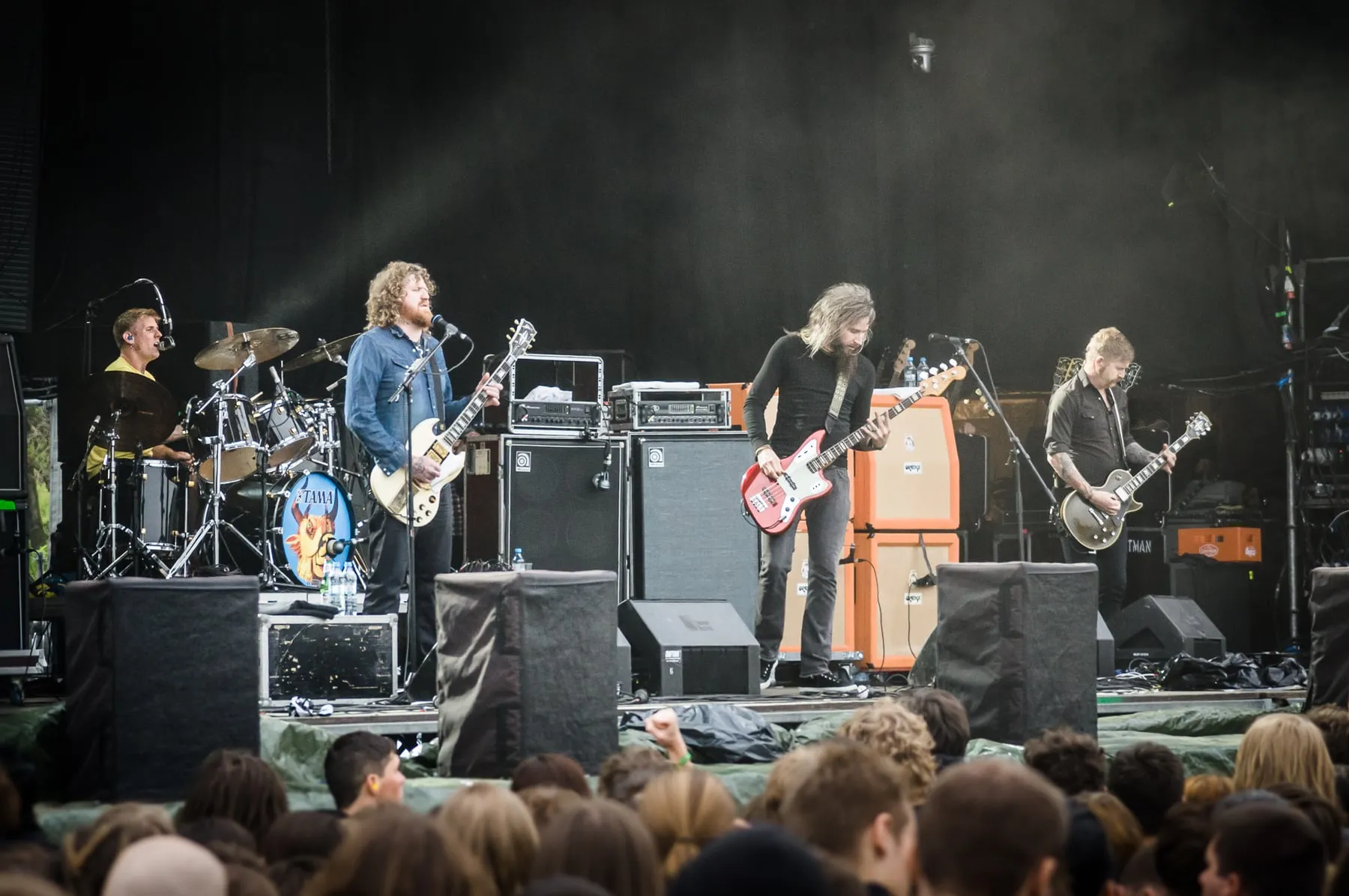
Photo by When reusing, please credit me as author: Adam Kliczek, http://memoriesstay.com ( CC-BY-SA-3.0 ) If you use my image on your website, please send me an email with webpage adress. Contact me at: adam.kliczek gmail.com pl en +/− pl en +/− , licensed under CC BY-SA 3.0 · Wikimedia Commons
Rank #126
Mastodon
Atlanta progressive-metal band whose concept albums redefined modern heavy.
From Wikipedia
Mastodon is an American heavy metal band from Atlanta, Georgia. Formed in 2000, the band's lineup of Troy Sanders (bass/vocals), Brent Hinds, Bill Kelliher, and Brann Dailor (drums/vocals) remained unchanged for 24 years, until Hinds's removal in March 2025. Mastodon has released eight studio albums, as well as a number of other releases.
Members
- Troy Sanders
Studio Albums
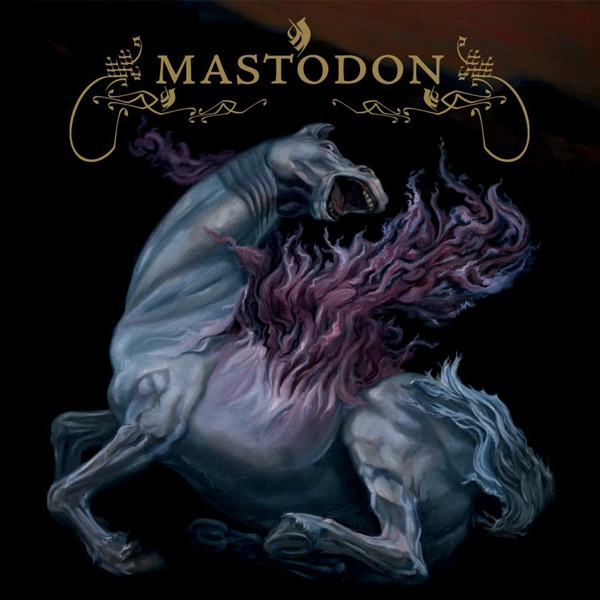
- 2002 Remission
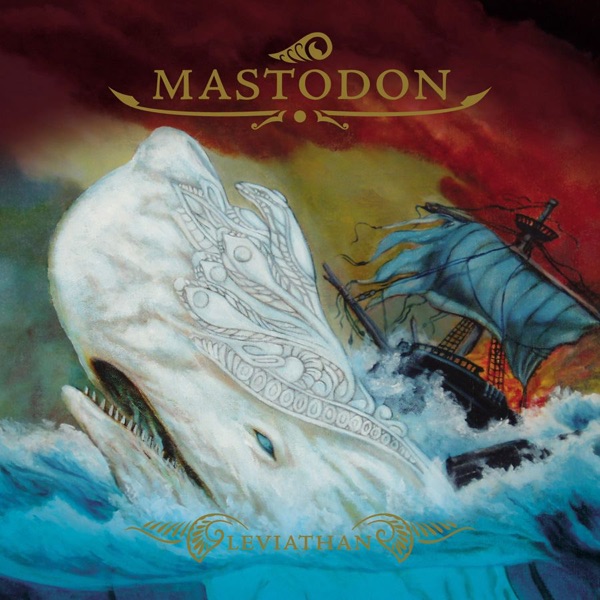
- 2004 Leviathan
- 2006 Blood Mountain
- 2009 Crack the Skye
- 2011 The Hunter
- 2014 Once More ’Round the Sun
- 2017 Emperor of Sand
- 2021 Hushed and Grim
Source: MusicBrainz
Deep Dive
Overview
Mastodon is an American heavy metal band from Atlanta, Georgia, formed in 2000. The group emerged as one of the most innovative and technically ambitious heavy metal acts of the 21st century, merging the distorted heaviness of sludge metal with progressive rock’s architectural complexity and unconventional song structures. Over two decades, Mastodon built a catalog of concept albums that treated the full-length record as a unified artistic statement, pushing the boundaries of what progressive heavy metal could express thematically and musically.
Formation Story
Mastodon coalesced in Atlanta in 2000, drawing from the city’s established heavy music underground. The band’s core lineup—Troy Sanders on bass and vocals, Brent Hinds and Bill Kelliher on guitars, and Brann Dailor on drums and vocals—came together with the shared vision of creating metal that was neither bound by traditional song structures nor by the genre’s conventional narrative constraints. All four members brought technical proficiency and compositional ambition to the project, setting the stage for the ambitious albums that would follow. This lineup remained stable for 24 years until Hinds’s departure in March 2025, making Mastodon one of heavy music’s most consistent ensembles by membership tenure.
Breakthrough Moment
Mastodon’s 2004 album Leviathan marked the moment when the band moved beyond regional recognition into the broader heavy metal consciousness. Released two years after their debut Remission, Leviathan represented a quantum leap in compositional scope and thematic coherence. The album functioned as a loose concept work, anchored by imagery drawn from Herman Melville’s Moby-Dick, and showcased the band’s ability to construct lengthy, multi-part songs that rewarded careful listening. The album’s combination of brutal heaviness, intricate instrumental passages, and unconventional vocal arrangements established Mastodon as a band willing to challenge listener expectations, earning them attention within progressive metal circles and beyond.
Peak Era
Mastodon’s creative apex stretched from 2006 through 2014, encompassing three albums—Blood Mountain (2006), Crack the Skye (2009), and The Hunter (2011)—that cemented their status as progressive metal’s standard-bearers. Blood Mountain, their third album, deepened the band’s conceptual approach while maintaining the sonic intensity that defined their early work. Crack the Skye, arriving three years later, pushed further into psychological and metaphysical territory, establishing Mastodon as a band capable of balancing intellectual ambition with visceral metal power. The Hunter continued this trajectory, proving the band’s ability to sustain innovation across a decade-long run of increasingly sophisticated releases. During this period, Mastodon toured extensively, building a devoted international fanbase and influencing a new generation of metal musicians interested in structural complexity.
Musical Style
Mastodon’s sound is characterized by dense, polyrhythmic drumming, heavily distorted and layered guitars, and bass work that functions as a melodic and textural instrument rather than purely rhythmic support. Brann Dailor’s drumming is particularly distinctive, employing time signature shifts, polymetric patterns, and dynamic range that rival progressive rock’s technical standards while maintaining metal’s physicality. Both Troy Sanders and Brent Hinds contribute vocals, often layered and harmonized, adding a choral dimension absent from most heavy metal bands. The instrumentation draws from heavy metal and sludge metal’s brutalist palette—thick, down-tuned guitars and crushing distortion—but deploys these elements in service of progressive songwriting traditions, with compositions frequently exceeding five minutes and eschewing verse-chorus-verse structures. The band’s approach to concept albums meant that individual songs often function as movements within larger suites, creating narrative and thematic continuity across an album’s duration.
Major Albums
Leviathan (2004)
Mastodon’s breakthrough album established the template for their conceptual approach, loosely narrativizing Herman Melville’s novel through instrumental and lyrical metaphor. The album’s technical ambition and thematic coherence announced Mastodon as major creative voices in contemporary heavy metal.
Blood Mountain (2006)
Their third album further refined the band’s progressive vision, deepening both compositional complexity and production sophistication. Blood Mountain solidified Mastodon’s reputation as uncompromising architects of modern metal.
Crack the Skye (2009)
Often regarded as Mastodon’s most ambitious work, this album explores metaphysical and psychological themes through immersive, multi-layered compositions. The album demonstrates the band’s mastery of extended instrumental passages and vocal interplay.
The Hunter (2011)
A more direct and aggressive entry in Mastodon’s catalog, The Hunter maintains the band’s technical standards while incorporating relatively accessible melodic hooks, broadening their audience without compromising artistic integrity.
Once More ‘Round the Sun (2014)
This album continued Mastodon’s evolution toward more structured song designs while preserving the layered instrumentation and dynamic range that defined their work throughout the 2000s.
Emperor of Sand (2017)
Released six years into their second decade, this album found Mastodon balancing extended instrumental passages with more immediate songwriting, showcasing a band confident in their established identity while continuing to explore new compositional territory.
Signature Songs
- Aqua Dementia — A showcase for the band’s ability to construct lengthy, dynamic compositions that shift from brutal heaviness to introspective instrumental passages.
- Crack the Skye — The centerpiece of their 2009 album, demonstrating Mastodon’s mastery of extended multi-part song structures.
- Blood and Thunder — From Leviathan, an exemplary blend of crushing heaviness and progressive ambition that epitomizes the band’s approach to concept-album construction.
- Sleeping Giant — A composition highlighting the interplay between Mastodon’s dual vocal approach and their rhythmically complex instrumental arrangements.
Influence on Rock
Mastodon’s sustained commitment to progressive metal has reverberated throughout contemporary heavy music. Their willingness to construct concept albums and extended compositions in an era when radio-friendly three-minute songs dominated popular discourse established them as intellectual leaders within metal culture. Bands emerging in the 2010s and beyond, working within progressive metal, sludge, and mathcore frameworks, have looked to Mastodon’s catalogs as proof that commercial viability and artistic uncompromising could coexist. The band’s approach to producing themselves and exercising creative control over every album’s vision has influenced how contemporary metal acts approach their own studio work. Their influence extends beyond direct stylistic imitation to a broader cultural reassertion that heavy music could be intellectually rigorous, thematically complex, and commercially sustained simultaneously.
Legacy
Mastodon stands as one of the defining heavy metal bands of the 21st century, having maintained creative momentum and artistic credibility across more than two decades. The 24-year stability of their original lineup—until Hinds’s 2025 departure—testifies to the strength of their collaborative vision and the durability of their core musical identity. Their eight studio albums form a coherent artistic arc, each entry advancing the band’s technical and conceptual horizons while maintaining fidelity to the brutal, complex heavy metal foundation they established in 2000. Mastodon’s sustained presence on major tours, continued streaming engagement, and influence on emerging progressive metal acts ensures their position within contemporary rock’s canon. The band’s refusal to simplify their vision or chase commercial trends has earned them respect within metal communities as uncompromising artists who built their legacy through sustained artistic development rather than momentary commercial peaks.
Fun Facts
- Mastodon was formed in Atlanta, a city with a significant heavy metal underground that provided essential context for the band’s emergence and early development.
- The band released their debut album Remission in 2002, just two years after forming, demonstrating the efficiency and clarity of vision that characterized their early creative period.
- Troy Sanders has served as the band’s consistent vocal and bass presence throughout their entire history, anchoring the group’s sound across all eight studio albums.
- The band’s concept albums often draw from literary and philosophical sources, elevating heavy metal’s thematic ambitions beyond typical genre conventions.
Discography & Previews
Click any album to expand its track list. Each track plays a 30-second preview streamed from Apple Music. Tap the link icon next to a track to open it in Apple Music for full playback.

- 1 The Wolf Is Loose ↗ 3:34
- 2 Crystal Skull ↗ 3:25
- 3 Sleeping Giant ↗ 5:36
- 4 Capillarian Crest ↗ 4:25
- 5 Circle of Cysquatch ↗ 3:19
- 6 Bladecatcher ↗ 3:21
- 7 Colony of Birchmen ↗ 4:20
- 8 Hunters of the Sky ↗ 3:52
- 9 Hand of Stone ↗ 3:31
- 10 This Mortal Soil ↗ 5:01
- 11 Siberian Divide ↗ 5:29
- 12 Pendulous Skin ↗ 5:04


- 1 Black Tongue ↗ 3:27
- 2 Curl of the Burl ↗ 3:40
- 3 Blasteroid ↗ 2:36
- 4 Stargasm ↗ 4:40
- 5 Octopus Has No Friends ↗ 3:49
- 6 All the Heavy Lifting ↗ 4:31
- 7 The Hunter ↗ 5:18
- 8 Dry Bone Valley ↗ 4:00
- 9 Thickening ↗ 4:31
- 10 Creature Lives ↗ 4:41
- 11 Spectrelight ↗ 3:10
- 12 Bedazzled Fingernails ↗ 3:08
- 13 The Sparrow ↗ 5:31


- 1 Pain with an Anchor ↗ 5:02
- 2 The Crux ↗ 5:00
- 3 Sickle and Peace ↗ 6:18
- 4 More Than I Could Chew ↗ 6:52
- 5 The Beast ↗ 6:03
- 6 Skeleton of Splendor ↗ 5:04
- 7 Teardrinker ↗ 5:21
- 8 Pushing the Tides ↗ 3:30
- 9 Peace and Tranquility ↗ 5:56
- 10 Dagger ↗ 5:12
- 11 Had It All ↗ 5:26
- 12 Savage Lands ↗ 4:25
- 13 Gobblers of Dregs ↗ 8:34
- 14 Eyes of Serpents ↗ 6:50
- 15 Gigantium ↗ 6:54