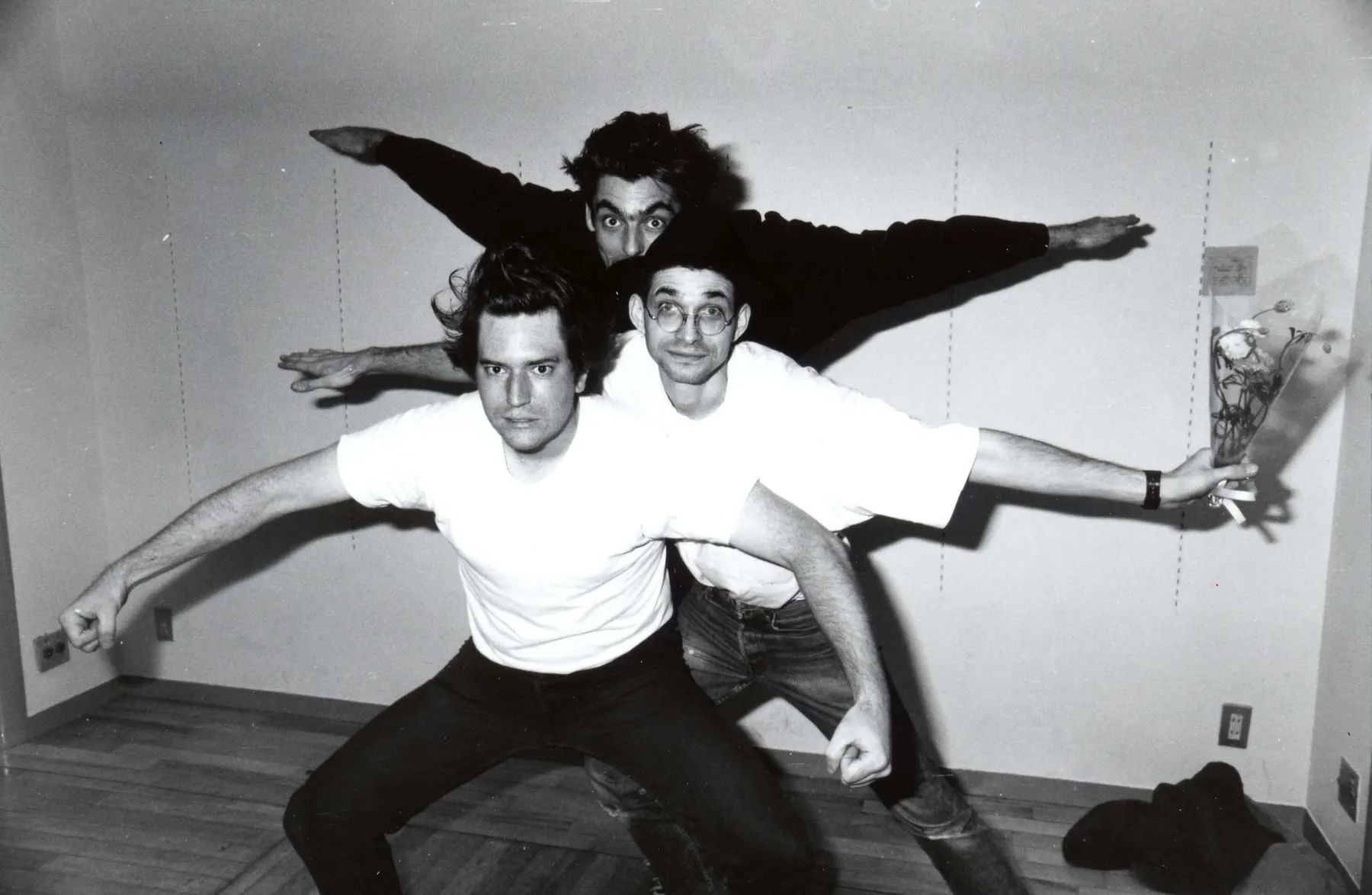
Photo by Masao Nakagami , licensed under CC BY-SA 2.0 · Wikimedia Commons
Rank #438
Shellac
Chicago Albini-led trio of meticulous, mathy noise rock.
From Wikipedia
Shellac was an American noise rock band from Chicago, Illinois, formed in 1992 by Steve Albini, Bob Weston and Todd Trainer. Their lineup remained consistent until Albini's death in May 2024.
Members
- Bob Weston
- Steve Albini
- Todd Trainer
Studio Albums
- 1994 At Action Park
- 1997 Futurist
- 1998 Terraform
- 2000 1000 Hurts
- 2007 Excellent Italian Greyhound
- 2014 Dude Incredible
- 2024 To All Trains
Source: MusicBrainz
Deep Dive
Overview
Shellac was an American noise rock band from Chicago, formed in 1992 by Steve Albini, Bob Weston, and Todd Trainer. The trio operated as a working unit with remarkable stability—the same three musicians held the lineup for more than three decades until Albini’s death in May 2024. Their sound occupied the fractured intersection of noise rock and post-hardcore: angular, mathematically precise arrangements built from distorted guitars, jazz-inflected rhythms, and Albini’s distinctive vocal delivery. Shellac proved that experimental rock could be both intellectually demanding and publicly active, recording and touring steadily across four decades while operating largely outside mainstream industry machinery.
Formation Story
Shellac emerged from Chicago in 1992 when Steve Albini, already established as a recording engineer and producer, joined forces with bassist Bob Weston and drummer Todd Trainer. All three musicians came from the Midwest underground rock scene and shared an interest in rigorous, unconventional song architecture. The trio’s formation coincided with the broader post-hardcore movement, but Shellac distinguished itself by combining the genre’s angular intensity with Albini’s exacting approach to composition and production. Chicago’s independent record labels and venues provided the foundation for their initial run, and the band would remain rooted in the city throughout its existence.
Breakthrough Moment
Shellac’s debut studio album, At Action Park, arrived in 1994 and immediately established their aesthetic: sparse, dissonant, heavily syncopated arrangements that resisted conventional song structure. The album caught the attention of Touch and Go Records, the Chicago-based label that would become their primary outlet. At Action Park circulated within underground rock circles and college radio, introducing Shellac’s uncompromising sound to an audience primed for noise rock experimentation. The band’s early live performances reinforced their reputation for technical precision and minimalist intensity, building a cult following among listeners who valued complexity over accessibility.
Peak Era
Shellac’s creative and commercial peak extended from the late 1990s through the early 2010s. Futurist (1997) and Terraform (1998) solidified their approach: densely arranged, rhythmically intricate songs that demonstrated jazz fusion’s influence alongside punk and noise traditions. 1000 Hurts (2000) deepened this trajectory, establishing Shellac as a band of singular purpose and technical mastery. Over two decades of recordings—including Excellent Italian Greyhound (2007) and Dude Incredible (2014)—the band maintained creative momentum without the lineup instability that plagued many rock acts. Their consistency in both songwriting and live performance became a hallmark, with Albini’s recording expertise and compositional vision driving each successive project.
Musical Style
Shellac’s sound emerged from post-hardcore and noise rock but incorporated elements of math rock and free jazz. The band favored dissonance over melody, building songs from interlocking rhythmic figures where drums and bass often moved in independent patterns rather than locking into conventional grooves. Albini’s guitar work ranged from heavily distorted rhythm textures to sparse, angular leads, while his vocals—often deadpan or detached—functioned as another textural layer rather than a focal point. Bob Weston’s bass lines were melodic and active, driving much of the harmonic content. Todd Trainer’s drumming emphasized polyrhythmic complexity: rides, hi-hats, and kick drum patterns that frequently syncopated against the underlying meter. The production aesthetic, shaped by Albini’s decades of studio experience, favored clarity and precision: every instrument remained distinct and audible, refusing the compressed density typical of much rock recording. As Shellac evolved across albums, the fundamental approach remained consistent—unconventional song structures, technical rigor, and a resistance to obvious hooks or commercial concession.
Major Albums
At Action Park (1994)
Shellac’s debut defined their core aesthetic: short, densely arranged songs built from oblique guitar textures, syncopated bass and drums, and Albini’s detached vocals. The album’s claustrophobic, intellectually demanding sound established the band’s trajectory immediately.
Futurist (1997)
The second album refined the formula with even greater compositional control and production clarity. Jazz influences became more pronounced, with interweaving instrumental lines replacing traditional verse-chorus structures throughout.
1000 Hurts (2000)
A landmark for Shellac, consolidating their signature approach into some of their most concise and potent songwriting. The album’s tight sequencing and refined arrangements made their already challenging sound somewhat more accessible.
Excellent Italian Greyhound (2007)
After seven years away from recording, this album demonstrated that Shellac’s fundamental vision remained intact. The precision and mathematical complexity of the playing remained undiminished, with no concessions to passing trends.
Dude Incredible (2014)
Released after a further seven-year gap, the album confirmed Shellac as a band unconcerned with commercial viability or contemporary relevance, maintaining their exacting standards across a new set of fractured, angular compositions.
Signature Songs
- Wingwalker — A propulsive, rhythm-driven track showcasing the band’s ability to create momentum despite rejecting conventional song structure.
- TTpp — Demonstrates Albini’s production philosophy: minimal arrangement, maximum clarity, every instrument audible in the mix.
- Games — A signature example of Shellac’s post-hardcore roots, combining angular guitar lines with complex rhythmic interplay.
- Copper — Exemplifies the band’s sparse approach, allowing space between notes to shape the composition as much as the notes themselves.
Influence on Rock
Shellac’s three-decade run influenced the development of math rock and experimental post-hardcore. Their commitment to technical precision without sacrificing raw intensity demonstrated an alternative to both populist rock accessibility and the obscurantism of some noise music. The band’s refusal to compromise or chase trends established a model for independent artistic sustainability. Steve Albini’s simultaneous work as a recording engineer—producing albums for everyone from Pixies to Nirvana—created a secondary influence: his philosophy of clear, uncompressed recording became a standard for bands seeking alternatives to overproduced mainstream aesthetics. Shellac’s output influenced younger noise and experimental rock acts who valued compositional complexity and sonic honesty over mass appeal.
Legacy
Shellac’s death with Albini in May 2024 closed a singular chapter in American rock. The band’s three-person consistency across thirty-two years of recording and touring stands as a rare achievement in rock history. Their six studio albums, all of considerable artistic integrity, remain in circulation via Touch and Go Records and other independent distributors. The band’s live performances—documented across decades of touring—established Shellac as a reliable presence on the international experimental rock circuit, earning respect from musicians and audiences invested in uncompromising artistic vision. Albini’s broader legacy in recording engineering may ultimately overshadow his role as bandleader, but Shellac demonstrated that technical mastery and conceptual rigor could sustain a rock band across decades without mainstream recognition or industry support.
Fun Facts
- Shellac released their final studio album, To All Trains, in 2024, the same year of Albini’s death, completing a discography spanning exactly three decades.
- The band recorded for two independent labels: Touch and Go Records and Drag City, both Chicago-based institutions outside major label structures.
- Bob Weston and Todd Trainer remained the only other members throughout Shellac’s entire existence, creating one of rock’s most stable and unchanged lineups across multiple decades.
Discography & Previews
Click any album to expand its track list. Each track plays a 30-second preview streamed from Apple Music. Tap the link icon next to a track to open it in Apple Music for full playback.