
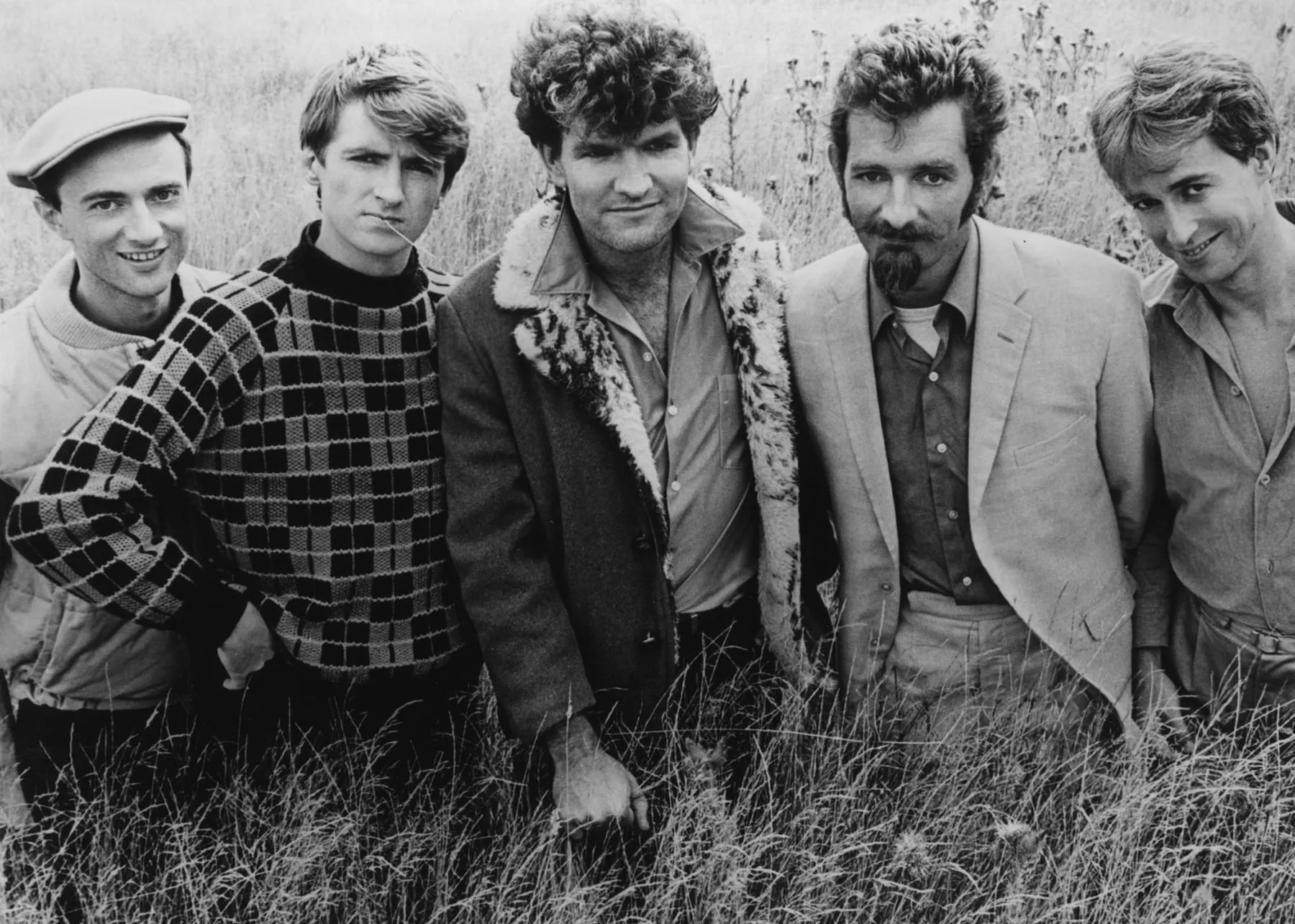
Photo by Distributed by A&M Records , licensed under Public domain · Wikimedia Commons
Rank #309
Split Enz
Auckland New Wave band led by the Finn brothers, precursor to Crowded House.
From Wikipedia
Split Enz are a New Zealand band formed in 1972 in Auckland. Regarded as the first New Zealand band to gain significant recognition outside of Australasia, they were initially noted for their progressive/art rock sound, flamboyant visual style and theatrical performances. The band later moved toward a pop/new wave sound that yielded hit singles such as "I See Red" (1978), "I Got You" (1980), "History Never Repeats" (1981), "Dirty Creature" (1982) and "Message to My Girl" (1983). The band also released several critically acclaimed and commercially successful albums, including Mental Notes (1975), Dizrythmia (1977), True Colours (1980), Waiata (1981) and Time and Tide (1982). Split Enz broke up in 1984. Since that time, the band has staged several brief reunions.
Studio Albums
- 1975 Mental Notes
- 1976 Second Thoughts
- 1977 Dizrythmia
- 1979 Frenzy
- 1980 True Colours
- 1981 Waiata
- 1982 Time and Tide
- 1983 Conflicting Emotions
- 1984 See Ya 'Round
- 2007 The Rootin Tootin Luton Tapes
- — History Never Repeats - The Best of Spli Enz
Source: MusicBrainz
Deep Dive
Overview
Split Enz stands as a landmark in rock’s geographical expansion beyond the Anglo-American axis. Formed in Auckland in 1972, the band earned recognition as the first New Zealand group to achieve significant international attention, bridging progressive rock’s conceptual ambition with new wave’s melodic immediacy. Over twelve years of primary activity, Split Enz moved from art rock experimentalism into pop-oriented new wave, releasing a string of commercially successful albums and hit singles that established New Zealand as a source of distinctive rock talent.
Formation Story
Split Enz emerged from Auckland’s music scene in 1972, arriving at a moment when progressive rock and glam rock were reshaping rock’s visual and sonic boundaries. The founding nucleus included brothers Neil Finn and Tim Finn, alongside Phil Judd and Eddie Rayner. The band’s early identity was forged in the intersection of theatrical presentation and complex musical arrangements—a positioning that would define their first decade. Emerging from a small nation with limited domestic market but growing cultural ambition, Split Enz quickly recognized that building an audience required international reach.
Breakthrough Moment
Split Enz’s path to broader recognition solidified with the release of True Colours in 1980, an album that signaled a deliberate shift toward radio-friendly new wave pop without abandoning melodic sophistication. The single “I Got You” (1980) became their commercial breakthrough, establishing the band’s ability to craft infectious hooks. The previous year had seen Frenzy (1979) move further from their art rock origins, but True Colours and its singles—particularly “I Got You”—demonstrated that the band could sustain commercial momentum while maintaining musical credibility. This period represented the band’s peak commercial visibility, with new wave’s ascendance providing both a cultural moment and a sonic framework suited to their evolving style.
Peak Era
The years 1980 to 1982 constitute Split Enz’s most artistically fertile and commercially successful period. True Colours established the template; Waiata (1981) deepened it, achieving both critical respect and sales success; and Time and Tide (1982) sustained the momentum, generating hits including “Dirty Creature” and further cementing the band’s place in the new wave conversation. During these three years, Split Enz operated at full creative confidence, crafting albums that balanced pop accessibility with uncompromised musicianship. The band’s sophisticated arrangements, featuring layered keyboards and precise vocal harmonies, set them apart from more stripped-down new wave acts emerging elsewhere.
Musical Style
Split Enz’s sonic evolution tracks a deliberate movement from complexity toward clarity. Their early albums, including Mental Notes (1975) and Second Thoughts (1976), showcased progressive rock’s structural ambitions—complex time signatures, extended instrumental passages, and conceptual frameworks. This art rock foundation never disappeared; rather, it was refined through the lens of new wave’s emphasis on hooks and economy. By the True Colours era, the band had learned to embed sophisticated harmonic and orchestral ideas within pop song structures. Eddie Rayner’s keyboard work—whether synthesizer textures or piano arrangements—provided the band’s sonic signature across their catalog. The Finn brothers’ vocal arrangements created harmonic sophistication that recalled both progressive rock tradition and pop sensibility. The band’s visual presentation, noted for its theatrical flair and unconventional styling, reinforced their identity as art-conscious musicians working within commercial frameworks.
Major Albums
Mental Notes (1975)
The debut established Split Enz as art-rock experimentalists, showcasing complex arrangements and the Finn brothers’ creative vision in unfiltered form.
True Colours (1980)
The watershed album that repositioned the band as new wave pop craftspeople without sacrificing musical ambition; I Got You became an international hit and defined their commercial identity.
Waiata (1981)
A follow-up that consolidated True Colours’ gains while deepening the band’s exploration of new wave textures and maintaining strong songwriting across the album.
Time and Tide (1982)
The final major statement before declining commercial fortunes, balancing accessible pop hooks with the band’s trademark production sophistication.
Signature Songs
- “I See Red” (1978) — The single that heralded the band’s commercial ascent before their new wave reorientation.
- “I Got You” (1980) — The breakthrough hit that introduced Split Enz to international audiences and became their best-known song.
- “History Never Repeats” (1981) — A later single demonstrating the band’s gift for melodic pop within new wave frameworks.
- “Dirty Creature” (1982) — A Time and Tide highlight showcasing their enduring command of new wave songcraft.
- “Message to My Girl” (1983) — One of their final hits, recorded as the band’s commercial momentum waned.
Influence on Rock
Split Enz’s significance extends beyond chart success to questions of rock’s geographical expansion and the viability of art-conscious pop in the new wave era. They demonstrated that new wave could be intellectually rigorous without sacrificing hooks, a lesson absorbed by subsequent art-pop movements. More directly, they established a template upon which Neil Finn would build Crowded House, inheriting Split Enz’s sophisticated pop sensibilities and international perspective. The band’s visual experimentation and theatrical presentation influenced how new wave artists thought about image and performance. Their trajectory—from local art-rock innovators to international pop success—provided a roadmap for antipodean rock bands seeking global audiences in an era of increasing cultural exchange.
Legacy
Split Enz disbanded in 1984, their commercial momentum exhausted and internal creative directions diverging. However, the band’s cultural footprint in rock history remained durable. They have staged several brief reunions since the breakup, indicating the enduring bonds among members and the audience’s sustained interest. The band’s catalog—distributed across Mushroom Records and A&M Records—remains in print and continues to circulate on streaming platforms, introducing new listeners to their blend of theatrical new wave and art-rock sophistication. The 2007 release The Rootin Tootin Luton Tapes served as a document of the band’s archival material. Most significantly, Neil Finn’s later success with Crowded House cemented Split Enz’s foundational role in establishing New Zealand as a source of crafted, harmonically sophisticated pop-rock. For rock historians, Split Enz occupies the crucial position of first, not by accident but by superior musicianship and artistic vision.
Fun Facts
- Split Enz are credited as the first New Zealand rock band to achieve significant international recognition, preceding the later global success of Crowded House and other antipodean acts.
- The band’s name combines the concepts of “split” (division, duality) and “enz” (end), reflecting their early philosophical approach to artistic meaning.
- Multiple members and the band itself pursued solo and side projects following the 1984 breakup, but the Split Enz catalog remained foundational to New Zealand rock identity.
Discography & Previews
Click any album to expand its track list. Each track plays a 30-second preview streamed from Apple Music. Tap the link icon next to a track to open it in Apple Music for full playback.


- 1 Bold as Brass (2020 Remaster) ↗ 3:31
- 2 My Mistake (2020 Remaster) ↗ 3:02
- 3 Parrot Fashion Love (2020 Remaster) ↗ 3:55
- 4 Sugar and Spice (2020 Remaster) ↗ 3:47
- 5 Without a Doubt (2020 Remaster) ↗ 6:08
- 6 Crosswords (2020 Remaster) ↗ 3:25
- 7 Charley (2020 Remaster) ↗ 5:31
- 8 Nice to Know (2020 Remaster) ↗ 4:24
- 9 Jamboree (2020 Remaster) ↗ 6:32


- 1 Dirty Creature ↗ 4:02
- 2 Giant Heartbeat ↗ 3:57
- 3 Hello Sandy Allen ↗ 3:50
- 4 Never Ceases to Amaze Me ↗ 3:04
- 5 Lost for Words ↗ 3:00
- 6 Small World ↗ 3:36
- 7 Take a Walk ↗ 3:35
- 8 Pioneer ↗ 1:31
- 9 Six Months In a Leaky Boat ↗ 4:20
- 10 Haul Away ↗ 2:26
- 11 Log Cabin Fever ↗ 4:35
- 12 Make Sense of It ↗ 3:34
