
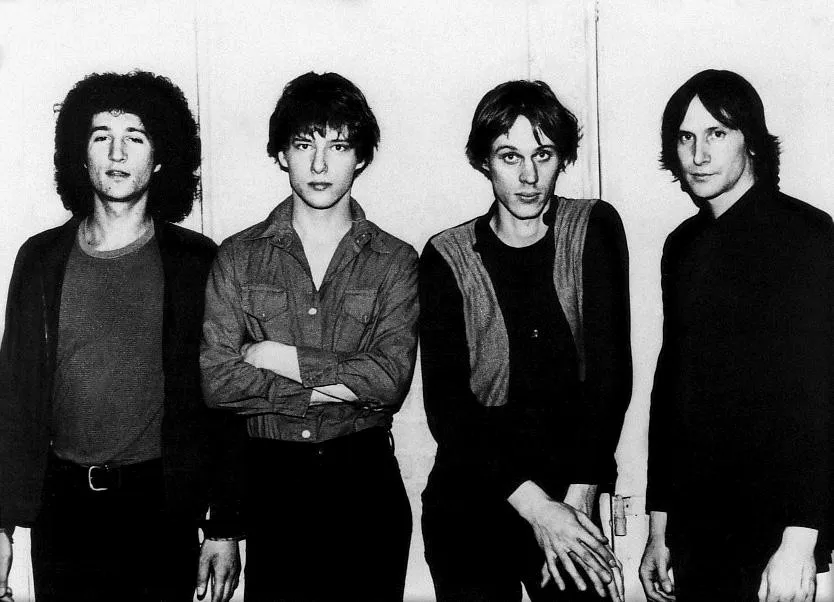
Photo by Photograph by Roberta Bayley . Distributed by Elektra Records. , licensed under Public domain · Wikimedia Commons
Rank #204
Television
New York post-punks whose 'Marquee Moon' rewired guitar interplay.
From Wikipedia
Television was an American rock band formed in New York City in 1973. The group's most prominent lineup consisted of Tom Verlaine, Richard Lloyd (guitar), Billy Ficca (drums), and Fred Smith (bass). An early fixture of CBGB and the 1970s New York rock scene, the band is considered influential in the development of punk and alternative rock.
Studio Albums
- 1977 Marquee Moon
- 1978 Adventure
- 1992 Television
Source: MusicBrainz
Deep Dive
Overview
Television was an American rock band formed in New York City in 1973 that stands as a foundational act in the development of post-punk and alternative rock. Led by Tom Verlaine on vocals and guitar, the band emerged from the early CBGB scene and channeled art-rock ambition through punk’s raw immediacy, creating a distinctive sound built on intricate dual-guitar interplay and literary lyrics. Their 1977 debut Marquee Moon rewired expectations of what rock guitar could accomplish and established a template that would influence generations of alt-rock and post-punk musicians.
Formation Story
Television coalesced in New York City in 1973 around the partnership of Tom Verlaine and Richard Lloyd, two guitarists who shared a fascination with abstract composition and unconventional song structures. They were joined by drummer Billy Ficca and bassist Fred Smith, forming the classic lineup that would define the band’s first era. The group became an early fixture of CBGB, the legendary Lower East Side club where punk, new wave, and art-rock collided in the mid-1970s. In that fertile environment, where the Ramones, Blondie, and Talking Heads were also taking shape, Television cultivated a fanbase and developed the sophisticated instrumental approach that would distinguish them from their punk contemporaries.
Breakthrough Moment
Television’s breakthrough came with the release of their self-titled debut Marquee Moon in 1977, an album that immediately signaled the band’s artistic ambition and technical precision. The album’s title track became the band’s signature piece—a ten-minute showcase of Verlaine and Lloyd’s interweaving guitar lines, complex time signatures, and dynamic restraint that proved punk-derived rock could accommodate instrumental complexity without sacrificing emotional directness. Released on Elektra Records, Marquee Moon established Television as more than another CBGBs novelty; it positioned them as serious musicians capable of bridging the gap between punk’s urgency and art rock’s compositional sophistication. The album’s critical success elevated the band’s profile within the broader rock landscape and earned them recognition as architects of a new musical vocabulary.
Peak Era
Television’s most creatively fertile period spanned 1977 and 1978, encompassing their first two studio albums. Following the success of Marquee Moon, the band released Adventure in 1978, which deepened their exploration of unusual song structures, literary narrative, and guitar textures. Both albums established Television as leading voices in the post-punk movement—a loosely affiliated group of bands that inherited punk’s DIY ethos and distorted guitars while rejecting its three-chord simplicity in favor of angular, intellectual approaches to rock composition. During this window, Television proved they could sustain their vision across multiple records, each showcasing Verlaine’s lyrics, Ficca’s precise drumming, and the dynamic tension between Verlaine and Lloyd’s complementary guitar styles.
Musical Style
Television’s sound was defined by the technical mastery and conceptual dialogue between its two guitarists. Verlaine and Lloyd approached the instrument not as a rhythm or lead player in conventional terms, but as two equal voices in a conversation—sometimes unison, often counterpoint, always attentive to space and silence. Their work was underpinned by Ficca’s exact, jazz-influenced drumming and Smith’s melodic bass lines, creating a rhythm section that supported rather than merely kept time. Tom Verlaine’s vocals—detached, articulate, and poetic—delivered lyrics steeped in urban imagery, philosophical inquiry, and literary reference, a stark contrast to the sneer or shout of traditional punk singers. The band’s approach to arrangement emphasized dynamics, with songs often building from sparse, almost chamber-like passages into fuller, driving crescendos. While rooted in the post-punk and proto-punk movements of the mid-1970s, Television drew equally from 1960s art-rock experimentalism and the structural complexity of progressive rock, forging a hybrid style that was immediately recognizable and fiercely difficult to replicate.
Major Albums
Marquee Moon (1977)
Television’s debut stands as one of the most influential rock albums of the 1970s, with the title track becoming a touchstone of post-punk musicianship. The album balanced intricate guitar work with Verlaine’s introspective lyricism across tracks that ranged from the concise and punchy to the sprawling and compositionally dense.
Adventure (1978)
Released a year after their debut, Adventure solidified Television’s artistic vision with deeper dives into literary themes and more adventurous studio production. The album demonstrated the band’s ability to evolve without abandoning the core of what made them distinctive.
Television (1992)
After a fifteen-year hiatus, Television reunited to record a self-titled album in 1992 that marked their return to recording. This album demonstrated that the band’s core sensibilities remained intact despite the passage of time and the seismic shifts in rock music that had occurred in the interim.
Signature Songs
- “Marquee Moon” — The band’s masterwork: a ten-minute guitar odyssey that defined Television’s approach to instrumental sophistication and dynamic control.
- “See No Evil” — A pointed, lyrically sharp song that showcased Verlaine’s ability to embed meaning within tightly constructed pop frameworks.
- “Prove It” — One of the band’s most direct rockers, balancing punk aggression with their trademark guitar interplay.
- “Kingdom Come” — A showcase for the band’s more introspective, art-rock inclinations with complex harmonic movement.
- “Friction” — A tense, moody track exemplifying the band’s use of dynamics and atmosphere.
Influence on Rock
Television’s influence on the development of post-punk, alternative rock, and eventually indie rock cannot be overstated. They demonstrated that punk-derived music could accommodate intellectual ambition, complex arrangements, and literary sensibility without sacrificing visceral impact. The interplay between Verlaine and Lloyd created a model for dual-guitar rock that would be echoed in countless post-punk and art-rock bands throughout the 1980s and beyond. Musicians across the alternative rock spectrum—from Talking Heads to R.E.M. to countless post-punk revivalists of the 21st century—drew inspiration from Television’s synthesis of punk energy and art-rock sophistication. Their emphasis on guitar as a conversational instrument rather than a platform for solo pyrotechnics opened new possibilities for rock composition and performance.
Legacy
Television remains a canonical influence in rock history, credited as pioneers of post-punk and architects of a more ambitious form of punk rock. While they never achieved the mainstream success of contemporaries like Blondie or the Ramones, their artistic and critical influence has only deepened with time. The band’s 1977 debut continues to be studied by musicians and cited in histories of alternative rock as a foundational text. Their 1992 reunion album and subsequent tours proved the band’s enduring appeal and the timelessness of their core material. In the decades since their emergence, streaming platforms and critical reappraisals have introduced Marquee Moon to successive generations, ensuring that Television’s contribution to the lexicon of rock guitar and post-punk aesthetics remains visible and accessible.
Fun Facts
- Television was an early CBGB fixture, establishing themselves in the club during its most generative period when punk and art-rock were still being defined in real time.
- Tom Verlaine’s stage name was adopted from the French Symbolist poet Paul Verlaine, reflecting the band’s literary sensibilities.
- The band’s fifteen-year gap between their second album in 1978 and their 1992 reunion was one of the longer hiatuses in rock music, yet they returned with enough catalog strength to tour and record new material.
- Marquee Moon was released on Elektra Records, the same label that housed The Doors and other art-rock acts, situating Television within a lineage of ambitious rock music.
Discography & Previews
Click any album to expand its track list. Each track plays a 30-second preview streamed from Apple Music. Tap the link icon next to a track to open it in Apple Music for full playback.

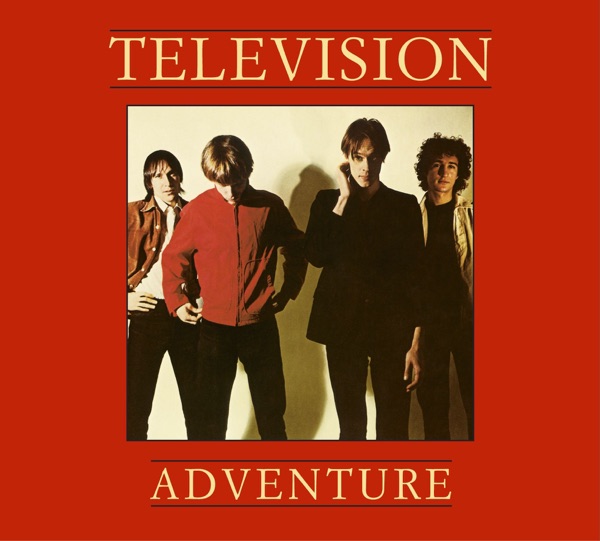
- 1 Glory ↗ 3:11
- 2 Days ↗ 3:14
- 3 Foxhole ↗ 4:49
- 4 Careful ↗ 3:18
- 5 Carried Away ↗ 5:12
- 6 The Fire ↗ 5:56
- 7 Ain't That Nothin' ↗ 4:53
- 8 The Dream's Dream ↗ 6:37
- 9 Adventure (Previously Unissued) ↗ 5:36
- 10 Ain't That Nothin' (Single Version) ↗ 3:52
- 11 Glory (Early Version) ↗ 3:37
- 12 Ain't That Nothin' (Run-Through) [Instrumental] ↗ 9:48
