
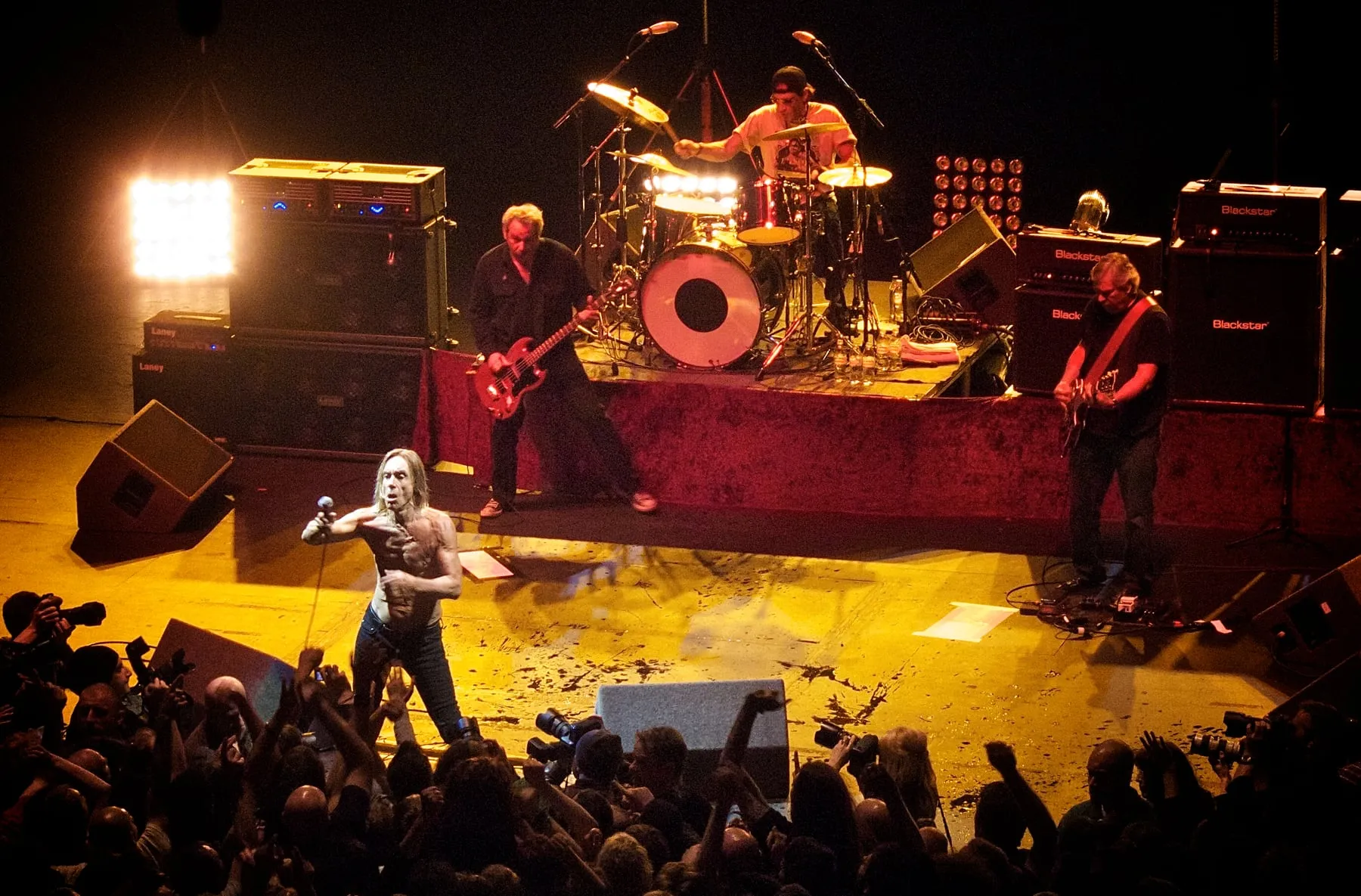
Photo by aurélien. , licensed under CC BY-SA 2.0 · Wikimedia Commons
Rank #205
The Stooges
Iggy Pop's Detroit band, proto-punk torchbearers of confrontational rock.
From Wikipedia
The Stooges were an American rock band formed in Ann Arbor, Michigan, in 1967 by singer Iggy Pop, guitarist Ron Asheton, drummer Scott Asheton, and bassist Dave Alexander. Initially playing a raw, primitive style of rock and roll, the band sold few records in their original incarnation and gained a reputation for their confrontational performances, which sometimes involved acts of self-mutilation by Iggy Pop.
Members
- Bill Cheatham
- Dave Alexander
- Iggy Pop
- Ron Asheton
- Scott Asheton
Studio Albums
- 1969 The Stooges
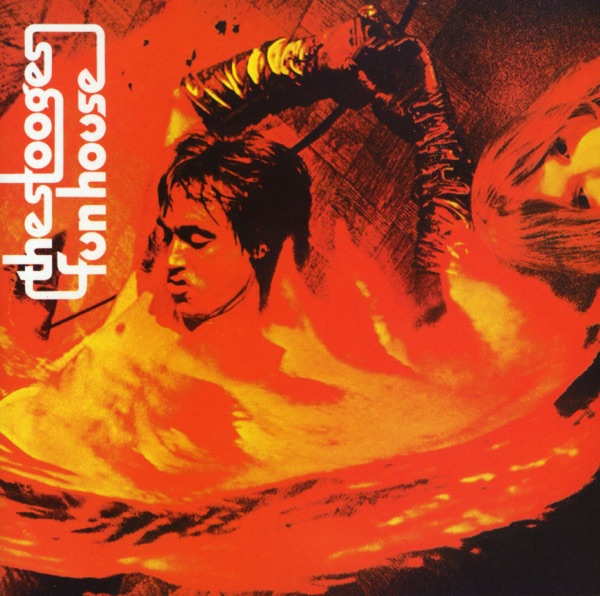
- 1970 Fun House
- 1994 Kill City
- 2003 Reunion At Coachella 2003-04-27
- 2007 The Weirdness
- 2013 Etiqueta Negra de Lugo
Source: MusicBrainz
Deep Dive
Overview
The Stooges were an American rock band formed in Ann Arbor, Michigan, in 1967, fronted by vocalist Iggy Pop and anchored by guitarist Ron Asheton, drummer Scott Asheton, and bassist Dave Alexander. Operating across nearly five decades with multiple hiatuses and lineup reformations, the band carved out a foundational role in proto-punk and confrontational rock aesthetics. Their influence extended far beyond their modest initial record sales; their raw, primitive approach to rock and roll and their uncompromising live performances established a template for punk rock that emerged fully formed in the mid-1970s and rippled through subsequent generations of alternative and independent rock.
Formation Story
The Stooges crystallized in Ann Arbor during 1967, a time when garage rock was still finding its footing across America. Iggy Pop, born James Newell Osterberg, had been involved in local music circles and brought together a nucleus of musicians with shared instincts for raw power and primitive arrangement. Ron Asheton provided the guitar foundation, while his younger brother Scott handled drums and Dave Alexander anchored the bass. The four-piece drew from both the crude energy of early garage rock and the blues-rooted simplicity that underpinned the era’s most direct rock and roll. Ann Arbor’s position as a university town with an active underground music scene provided fertile ground for experimentation, though the band’s aesthetic lay at odds with the more polished or psychedelic directions their contemporaries were exploring.
Breakthrough Moment
The Stooges’ first album, released in 1969, captured their anarchic approach to rock and roll in stark form. Raw and unadorned, it gained minimal commercial traction but established the band’s reputation in underground music circles. Their second album, Fun House, arrived in 1970 and represented the band’s peak creative period during their original run. The record showcased their ability to sustain propulsive, blues-inflected rock with minimal structural complexity and maximum visceral impact. Despite both albums receiving little radio play or major chart activity, the band became notorious for live performances that frequently crossed into dangerous or provocative territory, with Iggy Pop’s willingness to engage in acts of self-mutilation and direct confrontation between stage and audience becoming central to their mystique and historical significance.
Peak Era
The years surrounding the release of Fun House in 1970 marked the Stooges’ creative zenith during their initial incarnation. The band’s sound reached full force: economical chord progressions, thunderous rhythm section work, and Iggy Pop’s primal vocal delivery coalesced into a blueprint that would define punk rock’s aesthetic before punk had a name. Their confrontational stance—embodied in both the music and the performances—positioned them as outliers in early-1970s rock, predating the Sex Pistols, the Ramones, and other bands that would crystallize punk as a movement by half a decade or more. The original band’s run was brief and turbulent, but its concentrated output and reputation proved disproportionately influential relative to its commercial footprint.
Musical Style
The Stooges distilled rock and roll to its most rudimentary elements: heavy blues influence, repetitive chord structures, minimal melodic ornamentation, and an ethos of raw physical power over technical proficiency. Ron Asheton’s guitar work favored thick, distorted riffs over elaborate lead playing, while the Asheton brothers’ rhythm section drove the band with mechanical precision and brute force. Iggy Pop’s vocals ranged from deadpan spoken delivery to primal howls and shouts, expressing content through vocal texture and intensity rather than conventional melodic phrasing. The band’s primitive approach was not a limitation born of incompetence but a deliberate choice—they recognized that maximum impact derived from maximum directness. This aesthetic positioned them closer to blues and early rock and roll than to the psychedelic or progressive rock tendencies of their era, and it proved enormously consequential when punk rock erupted in the mid-1970s and drew direct lineage through the Stooges’ example.
Major Albums
The Stooges (1969)
The band’s self-titled debut captured their raw garage rock approach with minimal studio polish, establishing the template that would define their sound and prove influential to subsequent punk and proto-punk acts.
Fun House (1970)
The Stooges’ second and final original studio album of their initial era showcased the band at peak creative intensity, with extended blues-rock jams and Iggy Pop’s most uninhibited vocal performances cementing their status as pioneers of proto-punk aggression.
The Weirdness (2007)
Following a reunification of the band decades after their initial dissolution, The Weirdness represented a return to the Stooges’ foundational aesthetic, proving the durability of their approach and introducing their original music to new generations.
Etiqueta Negra de Lugo (2013)
The band’s final studio album documented their enduring vitality in their later years, continuing the reunion-era output that extended the Stooges’ legacy into the 2010s.
Signature Songs
- “I Wanna Be Your Dog” — A deceptively simple three-chord mantra that became synonymous with the band’s ability to distill rock and roll to its most primal form.
- “Search and Destroy” — A driving, guitar-led track from Fun House that exemplified the band’s confrontational lyrical stance and propulsive rhythm section work.
- “Dirt” — A showcase for Iggy Pop’s uninhibited vocal delivery and the band’s willingness to embrace crude, direct lyrical content.
- “I Got a Right” — A raw assertion of punk attitude that predated the punk era’s formal emergence by years.
Influence on Rock
The Stooges’ significance in rock history rests on their role as proto-punk architects who established an aesthetic and ethos that would dominate punk and post-punk rock. Bands that emerged in the mid-1970s—particularly the Ramones and Sex Pistols—drew directly from the Stooges’ playbook: minimal chord changes, aggressive rhythmic drive, and confrontational performance as artistic statement. The band’s music also influenced garage rock revival movements of subsequent decades, artists who sought to recover rock and roll’s primitive power. Beyond direct musical imitation, the Stooges codified the idea that rock performance could be a vehicle for transgression, danger, and genuine artistic risk—a concept that became central to punk’s philosophical framework and continues to resonate in alternative and independent rock.
Legacy
The Stooges’ trajectory from commercial obscurity in their original era to canonical status in rock history reflects the delayed recognition often accorded to pioneering underground acts. Following sporadic reunions beginning in the early 2000s, including a performance at Coachella in 2003 that was documented in their live album Reunion At Coachella 2003-04-27, the band maintained an active presence through the 2010s. Their original albums, particularly Fun House, have been subject to critical reappraisal and remain essential texts in proto-punk and garage rock history. The band’s sustained touring and studio activity in their later decades—including the studio albums The Weirdness and Etiqueta Negra de Lugo—demonstrated the enduring commercial and artistic viability of their aesthetic. Iggy Pop’s solo career, which began during the band’s initial dissolution, further cemented the band’s cultural footprint, as his continued prominence ensured that the Stooges’ foundational importance remained visible across generations.
Fun Facts
- The Stooges were signed to Elektra Records during their original incarnation, a major-label partnership that proved incongruous with both their aesthetic and the label’s commercial interests, contributing to their initial commercial obscurity.
- Iggy Pop’s stage performances with the Stooges frequently involved self-injury and provocation, establishing a template for punk rock performance art that influenced generations of artists willing to risk physical harm for artistic impact.
- The band reformed multiple times across the decades, including a significant reunion documented in their 2003 Coachella performance, proving that their original music retained vitality and relevance among both legacy audiences and younger listeners.
- Their influence extended through multiple record labels across their career, from their original Elektra recordings through later associations with Columbia Records, Bomp! Records, and Fat Possum Records, reflecting both changing industry conditions and the band’s evolving distribution channels.
Discography & Previews
Click any album to expand its track list. Each track plays a 30-second preview streamed from Apple Music. Tap the link icon next to a track to open it in Apple Music for full playback.


- 1 Trollin' ↗ 3:07
- 2 You Can't Have Friends ↗ 2:23
- 3 Atm ↗ 3:15
- 4 My Idea of Fun ↗ 3:18
- 5 The Weirdness ↗ 3:46
- 6 Free & Freaky ↗ 2:40
- 7 Greedy Awful People ↗ 2:07
- 8 She Took My Money ↗ 3:49
- 9 The End of Christianity ↗ 4:20
- 10 Mexican Guy ↗ 3:29
- 11 Passing Cloud ↗ 4:05
- 12 I'm Fried ↗ 3:44
- 13 I Wanna Be Your Man ↗ 3:42