
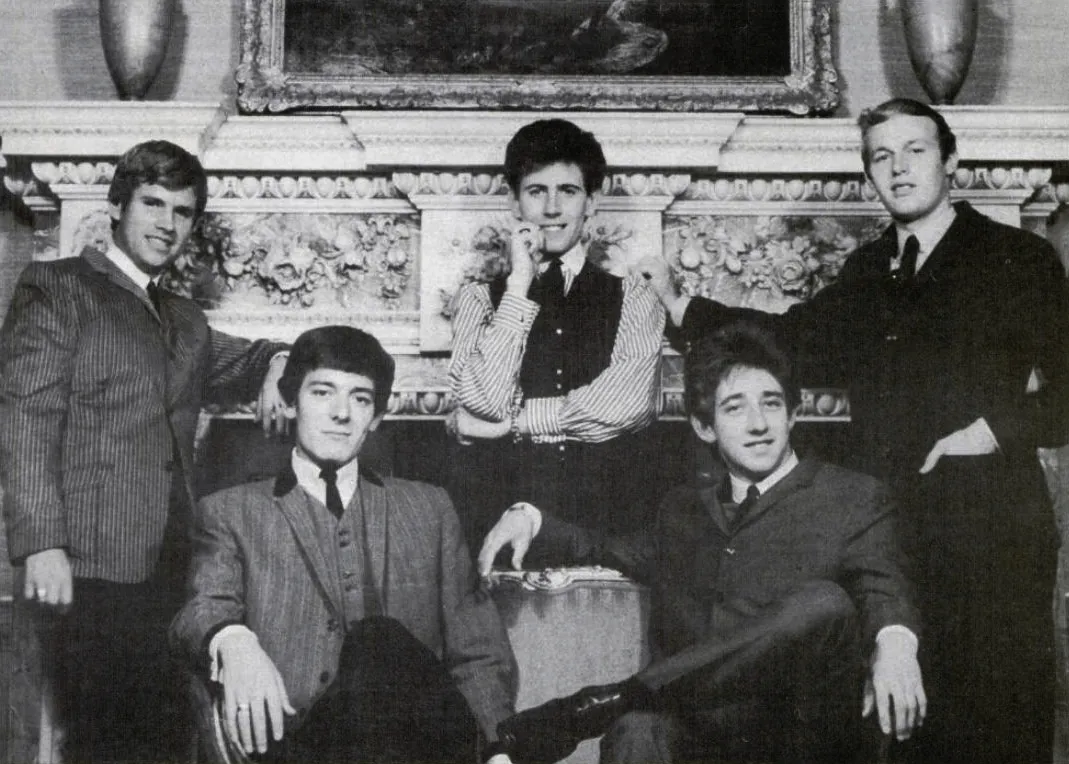
Photo by Imperial Records , licensed under Public domain · Wikimedia Commons
Rank #79
The Hollies
Manchester harmony-pop veterans of the British Invasion.
From Wikipedia
The Hollies are an English rock and pop band formed in Manchester in 1962. One of the leading British groups of the 1960s and into the mid-1970s, they are known for their distinctive three-part vocal harmony style. Singer Allan Clarke and rhythm guitarist/singer Graham Nash founded the band as a Merseybeat-type group in Manchester, although some of the band members came from towns further north, in east Lancashire. Nash left the group in 1968 to co-form Crosby, Stills & Nash, though he has reunited with the Hollies on occasion. In addition to Clarke and Nash, members have included lead guitarist Tony Hicks, rhythm guitarist Terry Sylvester, bassists Eric Haydock and Bernie Calvert, and drummers Don Rathbone and Bobby Elliott.
Deep Dive
Overview
The Hollies are an English rock and pop band formed in Manchester in 1962, standing as one of the leading British groups of the 1960s and into the mid-1970s. Their signature sound—built on distinctive three-part vocal harmony layered across upbeat pop-rock arrangements—made them central figures of the British Invasion, occupying a distinct middle ground between the raw energy of beat music and the melodic sophistication of pop. Though they emerged from the same northern English scene that produced other major acts, the Hollies carved out an identity rooted in vocal craft and harmonic arrangement rather than instrumental virtuosity or blues-based rock intensity.
Formation Story
Allan Clarke and rhythm guitarist Graham Nash founded the Hollies in Manchester in 1962, initially operating as a Merseybeat-type group. While based in Manchester, the band drew members from towns further north in east Lancashire, creating a pool of musicians distinct from the Liverpool-centered scene that had dominated British rock just years earlier. This geographic diversity within the North West of England helped define their character—regional but not parochial, rooted in working-class industrial towns yet ambitious enough to reach national and international audiences. The founding lineup solidified around Clarke’s distinctive vocals, Nash’s songwriting and rhythm work, lead guitarist Tony Hicks’ instrumental prowess, and the percussion and bass that would cycle through drummers Don Rathbone (early years) and Bobby Elliott, along with bassists Eric Haydock and later Bernie Calvert.
Breakthrough Moment
The Hollies achieved significant commercial and critical success beginning in the mid-1960s. Their early albums—In the Hollies Style and Stay With the Hollies (both 1964)—established their reputation on the British charts, but the period from 1965 through 1967 saw them reach peak commercial momentum. The 1966 release Bus Stop marked a high point of their commercial power, becoming their signature vehicle for the sophisticated pop-rock sound that defined their peak era. Throughout the mid-to-late 1960s, they maintained steady album output and touring activity, establishing themselves as reliable hitmakers on both sides of the Atlantic, a status reflected in their prolific recording schedule and consistent label support from Epic Records, Parlophone, and Capitol Records.
Peak Era
The Hollies’ most creatively and commercially important period spanned the mid-1960s through the late 1960s, roughly 1965 to 1968. Albums including Hollies (1965), Would You Believe? (1966), For Certain Because… (1966), Bus Stop (1966), Butterfly (1967), Dear Eloise / King Midas in Reverse (1967), and Evolution (1967) represent a sustained run of studio work that showcased their vocal arrangements at their most intricate and confident. This era also witnessed their greatest radio presence and touring prominence. The period ended with a significant lineup shift: Graham Nash departed in 1968 to co-found Crosby, Stills & Nash, removing one of the band’s two primary singers and a key creative voice. Despite this departure, the Hollies continued as a functioning concern, though their commercial and cultural presence began a gradual decline from their mid-1960s peak.
Musical Style
The Hollies’ sound was fundamentally built on vocal harmony. Three-part harmonies—with Allan Clarke’s tenor lead offset by carefully arranged background vocals from other band members—formed the melodic backbone of their arrangements. This harmonic approach drew from earlier pop traditions (the influence of groups like The Everly Brothers is evident) while being modernized through beat-music instrumentation: electric guitars, bass, and drums played with the energy and directness of 1960s rock, not the polished orchestration of pre-rock pop. Tony Hicks’ lead guitar work, whether on single-note melody lines or fuller chords, provided harmonic and melodic substance without resorting to the extended solos or blues-rock phrasing that defined contemporary rock-oriented bands. Their songwriting emphasized memorable hooks, singable melodies, and concise song structures suited to radio play and live performance. Over their longer career, they demonstrated flexibility—recording covers of material by others (notably Bob Dylan, as evidenced by Hollies Sing Dylan in 1969) and exploring various production styles and arrangements, though the core three-part harmony approach remained their defining characteristic.
Major Albums
Bus Stop (1966)
The 1966 album Bus Stop represents the band at their commercial and compositional peak, featuring some of their most recognizable material and demonstrating the sophistication of their harmonic approach at its fullest development.
Evolution (1967)
Evolution showcased a more expansive production palette and continued the Hollies’ exploration of pop-rock sophistication, representing the creative ambition of their late-1960s output.
Dear Eloise / King Midas in Reverse (1967)
This double-sided single and album showed the band’s willingness to experiment with different recording approaches while maintaining their harmonic identity, bridging conventional pop-rock with more elaborate arrangements.
Hollies Sing Dylan (1969)
The decision to record an album of Bob Dylan material demonstrated both their respect for contemporary songwriting and their ability to reimagine songs through their distinctive three-part harmony approach, reaching audiences interested in both rock and folk traditions.
Distant Light (1971)
Released in the early 1970s after Nash’s departure, Distant Light showed the continuing band working to maintain relevance in a changing musical landscape, adapted to a revised lineup and shifting commercial preferences.
Signature Songs
- “Bus Stop” — The title track from their 1966 album, this song exemplifies their commercial peak and remains their most recognizable single.
- “Stop Stop Stop” — A centerpiece of their mid-1960s output, showcasing the three-part harmony structure that defined their vocal approach.
- “Dear Eloise” — A key recording from 1967 that demonstrated their ability to handle more complex production and arrangement.
- “King Midas in Reverse” — Another 1967 track that highlighted their harmonic sophistication and pop sensibility.
- “Long Cool Woman in a Black Dress” — A signature rock-edged track from their later catalog that proved their staying power into the 1970s.
Influence on Rock
The Hollies occupied an important middle position in British rock during the 1960s. While not as blues-influenced as the Rolling Stones or as guitar-driven as the early Who, and not as experimental as the Beatles, they demonstrated that vocal harmony and pop-rock melody could sustain a major band’s career across multiple albums and years. They proved that British acts could thrive on sophisticated arrangement and song craft without abandoning rock authenticity. Their influence extended to bands that followed who valued vocal blend and harmonic complexity—the multipart vocal arrangements that became standard in soft rock and mainstream pop of the 1970s owed a debt to the template they helped establish. Graham Nash’s subsequent work with Crosby, Stills & Nash further amplified their harmonic legacy in the folk-rock and soft-rock traditions.
Legacy
The Hollies remained active as a touring and recording concern well beyond their 1960s peak, releasing albums into the 1980s and returning to the studio in the 2000s with Staying Power (2006) and Then, Now, Always (2009). These late-career efforts demonstrated their continued commitment to performing and recording, even as the music industry and public attention shifted toward new generations of artists. Their status as veterans of the British Invasion and consistent performers of a catalog spanning five decades secured their place in rock history, albeit one less dominant in contemporary discourse than their mid-1960s commercial success might have suggested. Streaming platforms and catalog reissues have ensured their recordings remain accessible, introducing their work to audiences beyond those who experienced their original releases.
Fun Facts
- Graham Nash’s departure in 1968 to co-found Crosby, Stills & Nash with David Crosby and Stephen Stills removed one of the band’s two primary vocalists and was a significant moment in both rock history and the Hollies’ trajectory.
- The band recorded an entire album of Bob Dylan material (Hollies Sing Dylan, 1969), a choice that reflected both their respect for Dylan’s songwriting and their desire to reach folk-rock audiences.
- The Hollies maintained their recording contract and touring schedule through the 1970s and into the 1980s, demonstrating exceptional longevity compared to many British Invasion-era bands that dissolved or became inactive during that decade.
- The band’s geographic roots in Manchester and east Lancashire, rather than Liverpool, situated them distinctly within Northern English rock tradition separate from the Merseybeat epicenter.