
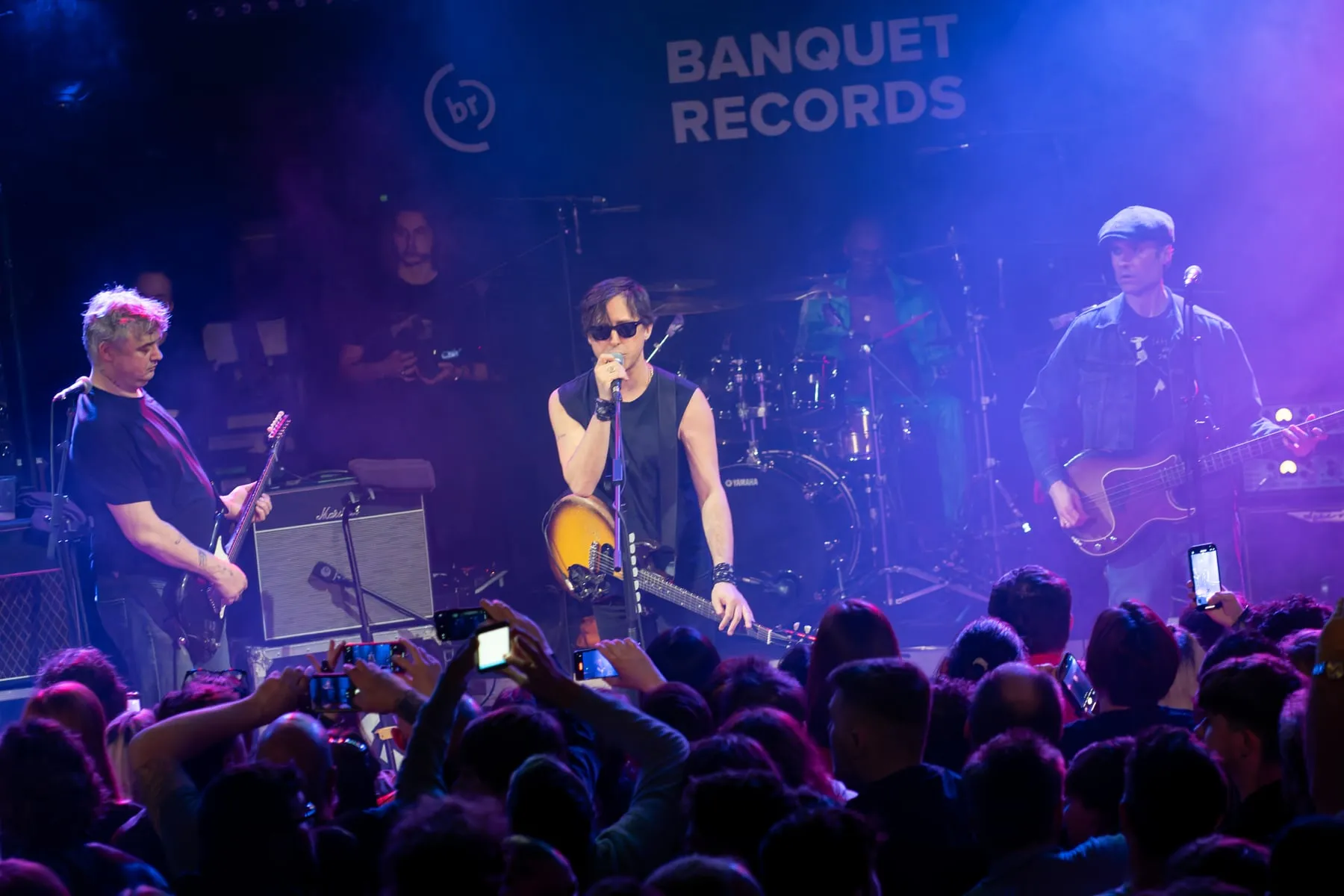
Photo by Raph_PH , licensed under CC BY 2.0 · Wikimedia Commons
Rank #363
The Libertines
London band of Doherty-Barât chaos and Albion-tinged tabloid notoriety.
From Wikipedia
The Libertines are an English rock band, formed in London in 1997 by frontmen Carl Barât (vocals/guitar) and Pete Doherty (vocals/guitar). The band, centred on the songwriting partnership of Barât and Doherty, has included John Hassall (bass), and Gary Powell (drums) for most of its recording career. The band was part of the garage rock revival and spearheaded the movement in the UK.
Members
- Carl Barât
Studio Albums
- 2002 Up the Bracket
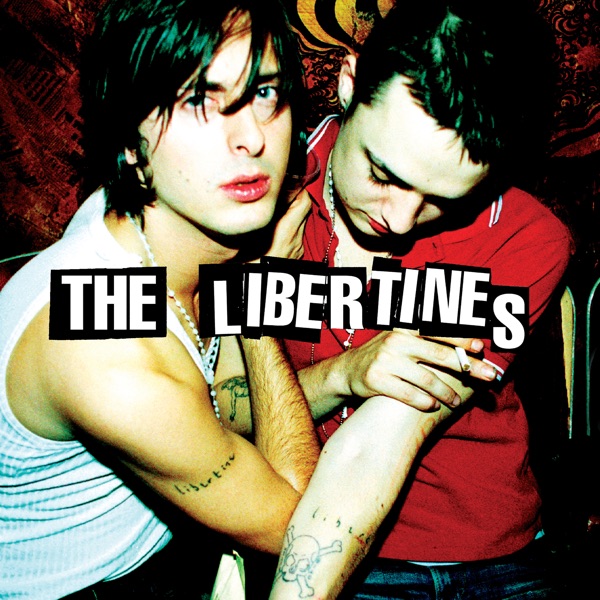
- 2004 The Libertines
- 2015 Anthems for Doomed Youth
- 2024 All Quiet on the Eastern Esplanade
Source: MusicBrainz
Deep Dive
Overview
The Libertines are an English rock band formed in London in 1997 by frontmen Carl Barât and Pete Doherty. Operating as a songwriting partnership built on dual vocals and guitars, the band anchored themselves around bassist John Hassall and drummer Gary Powell, a core lineup that would define their recorded output. The Libertines emerged as central figures in the garage rock revival that swept through the UK in the early 2000s, their stripped-down aesthetic and raw energy providing an alternative to the manufactured pop-rock that dominated the charts. Their contribution to British rock lay not in technical virtuosity but in a return to punk’s confrontational spirit married with the melodic sensibilities of 1970s proto-punk and the mod tradition.
Formation Story
The Libertines coalesced in London in 1997 as the capital’s music scene began gravitating toward garage rock and post-punk influences. Carl Barât and Pete Doherty formed the nucleus of the band around a shared vision of raucous, untutored rock and roll. John Hassall on bass and Gary Powell on drums completed the classic lineup that would carry the band through their most prolific period. London’s geographic and cultural specificity—the band’s own mythology rooted in the city’s squatter scenes and bohemian underbelly—became inseparable from their public identity, as the capital itself functioned as both subject and stage.
Breakthrough Moment
The Libertines achieved widespread recognition with the release of their debut album Up the Bracket in 2002. The album announced a band working in the immediate lineage of punk and post-punk but stripped of pretense, combining Barât and Doherty’s overlapping vocal deliveries with chiming guitars and an economy of arrangement. Up the Bracket positioned them as the vanguard of a new wave of UK garage rock, one that offered visceral directness in opposition to the prevailing sounds of early-2000s rock radio. The album’s reception established The Libertines as essential players in the contemporary British rock landscape and attracted a devoted fanbase that extended well beyond London.
Peak Era
The band’s creative and commercial zenith arrived with the release of their eponymous second album, The Libertines, in 2004. The album consolidated their reputation, refining the songwriting without sacrificing the rawness that defined their appeal. During this period from 2002 to 2004, The Libertines occupied a singular space in UK rock: they possessed neither the grandeur of stadium acts nor the studied obscurity of underground records, but instead operated in a middle ground of genuine popular reach paired with critical credibility. Their influence on the British indie rock and garage rock conversation during these years was substantial, signaling a hunger for unvarnished rock music that rejected both corporate slickness and ironic detachment.
Musical Style
The Libertines’ sound drew from punk rock’s foundational aggression and anarchic spirit while incorporating the melodic and harmonic sophistication of the mod tradition and British pub rock. Barât and Doherty’s voices—neither conventionally trained nor technically perfect—delivered lyrics and melodies with urgency and occasional fragility, their dual-vocalist approach creating tension and texture within arrangements that prioritized guitars, bass, and drums over effects or embellishment. The band’s music was characterized by its refusal of polish; drums remained loud and prominent, guitars were often distorted or cleanly bright without the intervening layer of studio sheen, and the songs’ structures favored directness over progressive elaboration. Their garage rock revival position placed them in conversation with earlier post-punk acts and the then-resurgent interest in 1970s punk’s raw aesthetic, updating it for an early-2000s context marked by digital recording but a renewed appetite for analog-era spontaneity.
Major Albums
Up the Bracket (2002)
The Libertines’ debut announced a new voice in UK garage rock, combining punk energy with pop hooks and establishing Barât and Doherty as formidable songwriting partners on cuts that balanced aggression with melody.
The Libertines (2004)
Their second and self-titled album built on the foundation of Up the Bracket with refined songwriting and tighter arrangements while maintaining the raw immediacy that defined the band’s identity.
Anthems for Doomed Youth (2015)
Released after an extended hiatus, this album marked The Libertines’ return to recording, demonstrating that the core songwriting partnership remained viable and that their sound retained its essential character.
All Quiet on the Eastern Esplanade (2024)
The band’s most recent album, released a decade after Anthems for Doomed Youth, continued their active recording career and suggested an ongoing commitment to the project.
Signature Songs
- “Time for Heroes” — An anthemic track that exemplified the band’s gift for memorable melodies delivered with punk-inflected conviction.
- “Can’t Stand Me Now” — A showcase for the Barât-Doherty vocal interplay and the tension that defined their songwriting partnership.
- “Don’t Look Back into the Sun” — A song that distilled the band’s aesthetic of cheerful-sounding melodies paired with darker emotional undercurrents.
- “Up the Bracket” — The title track from their debut, capturing the band’s raw energy and London-centric worldview.
Influence on Rock
The Libertines’ role in the UK garage rock revival extended beyond their own discography; they functioned as the movement’s most visible and commercially successful representatives during its crucial early years. Their success in 2002–2004 provided commercial validation for a generation of British bands interested in stripping down rock to its fundamentals, a moment that would influence the subsequent trajectory of UK indie rock. The band’s influence circulated through the circuits of guitar-based rock that followed, their approach to songwriting and performance offering a template for acts seeking authenticity without pretension. In Britain specifically, The Libertines helped establish a template for garage rock revival that proved durable and influential, their sound and ethos filtering into the work of subsequent generations of UK indie and punk bands.
Legacy
The Libertines’ long-term cultural position remains tied to their role as definitive early-2000s figures in British rock, a band whose moment was specific and potent but whose records retained currency in subsequent decades. Their status as progenitors of a particular strain of UK indie rock—melodic, punk-influenced, London-rooted—ensured steady engagement from listeners and critics alike. The band’s decision to return to recording and performance after hiatuses, culminating in recent albums like Anthems for Doomed Youth and All Quiet on the Eastern Esplanade, demonstrated a refusal to remain frozen in their original historical moment. Streaming platforms have sustained their catalog’s reach among listeners, while their foundational role in the garage rock revival ensured their inclusion in historical conversations about 2000s British rock.
Fun Facts
- The Libertines were signed to Rough Trade, the independent label that became synonymous with UK indie rock’s commercial and critical resurgence.
- Their band name drew from John Binyon’s The Libertine, positioning the group within a lineage of artistic bohemianism and countercultural reference.
- The band’s hiatus and reformation cycles became part of their mythology, with returns to recording functioning as significant events within the broader conversation around British rock.
Discography & Previews
Click any album to expand its track list. Each track plays a 30-second preview streamed from Apple Music. Tap the link icon next to a track to open it in Apple Music for full playback.

- 1 Can't Stand Me Now ↗ 3:24
- 2 Last Post On the Bugle ↗ 2:33
- 3 Don't Be Shy ↗ 3:04
- 4 The Man Who Would Be King ↗ 3:59
- 5 Music When the Lights Go Out ↗ 3:02
- 6 Narcissist ↗ 2:11
- 7 The Ha Ha Wall ↗ 2:30
- 8 Arbeit Macht Frei ↗ 1:14
- 9 Campaign of Hate ↗ 2:10
- 10 What Katie Did ↗ 3:50
- 11 Tomblands ↗ 2:06
- 12 The Saga ↗ 1:54
- 13 Road to Ruin ↗ 4:22
- 14 What Became of the Likely Lads ↗ 5:55

- 1 Barbarians ↗ 3:36
- 2 Gunga Din ↗ 2:59
- 3 Fame and Fortune ↗ 3:07
- 4 Anthem for Doomed Youth ↗ 4:27
- 5 You're My Waterloo ↗ 4:19
- 6 Belly of the Beast ↗ 4:07
- 7 Iceman ↗ 4:59
- 8 Heart of the Matter ↗ 3:29
- 9 Fury of Chonburi ↗ 2:40
- 10 The Milkman's Horse ↗ 3:23
- 11 Glasgow Coma Scale Blues ↗ 3:12
- 12 Dead for Love ↗ 5:14
