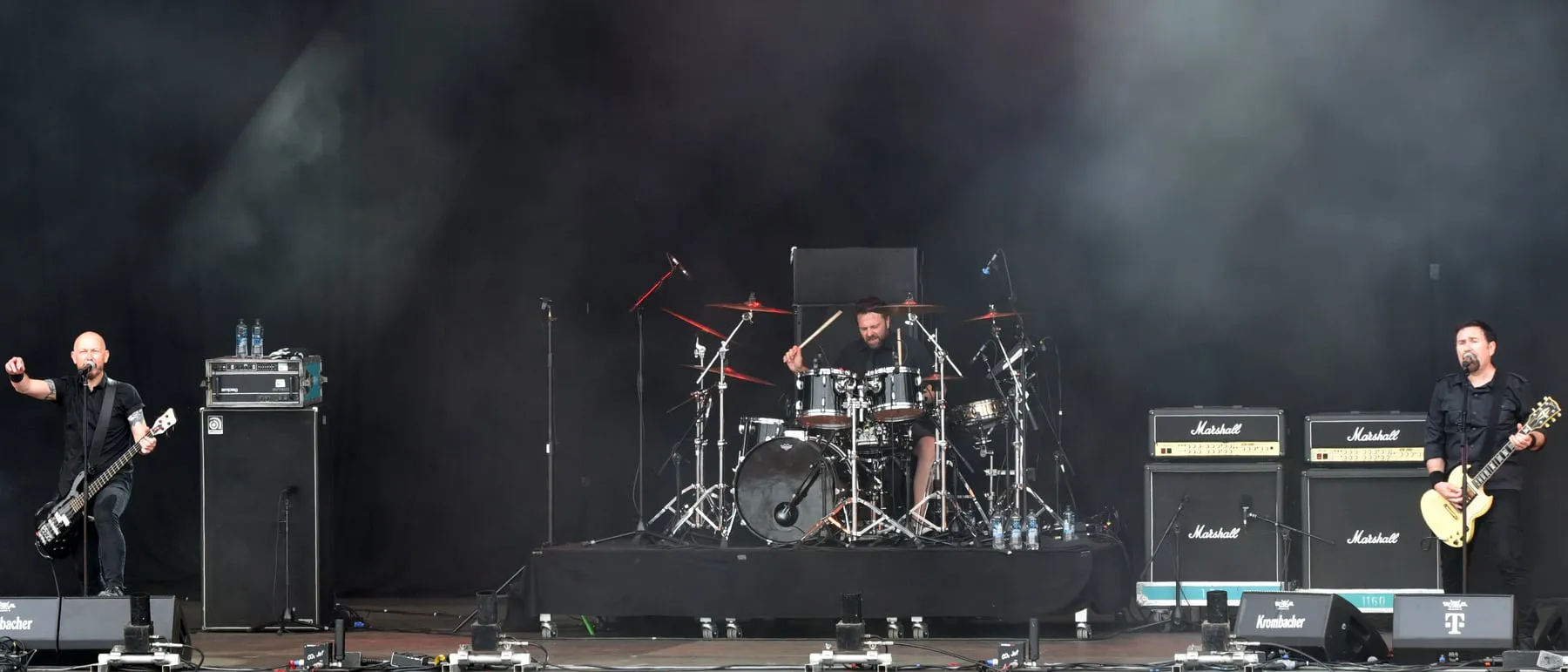
Photo by Frank Schwichtenberg , licensed under CC BY-SA 4.0 · Wikimedia Commons
Rank #481
Therapy?
Belfast trio whose noise-pop crunch made them 90s UK rock mainstays.
From Wikipedia
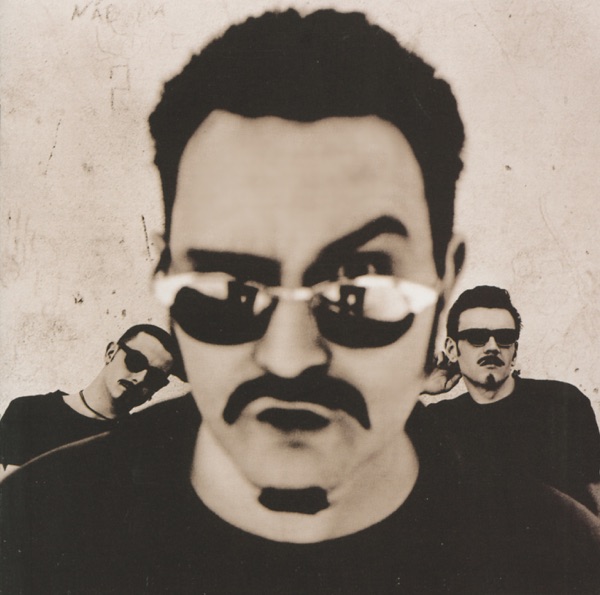
Therapy? are a Northern Irish rock band from Larne, formed in 1989 by guitarist-vocalist Andy Cairns and drummer-vocalist Fyfe Ewing. Therapy? recorded their first demo with Cairns filling in on bass guitar. To complete the lineup, the band recruited Larne bassist Michael McKeegan. The band signed with major label A&M Records in 1992, for which they released four albums, most notably Troublegum in 1994 and Infernal Love in 1995. Ewing's departure in early 1996 preceded the arrivals of his replacement Graham Hopkins, as well as Martin McCarrick on guitar and cello. Neil Cooper replaced Hopkins in 2002. McCarrick departed in 2004, and the band have remained a three-piece ever since.
Members
- Andy Cairns
- Michael McKeegan
- Neil Cooper
Studio Albums
- 1991 Babyteeth
- 1992 Pleasure Death
- 1992 Caucasian Psychosis
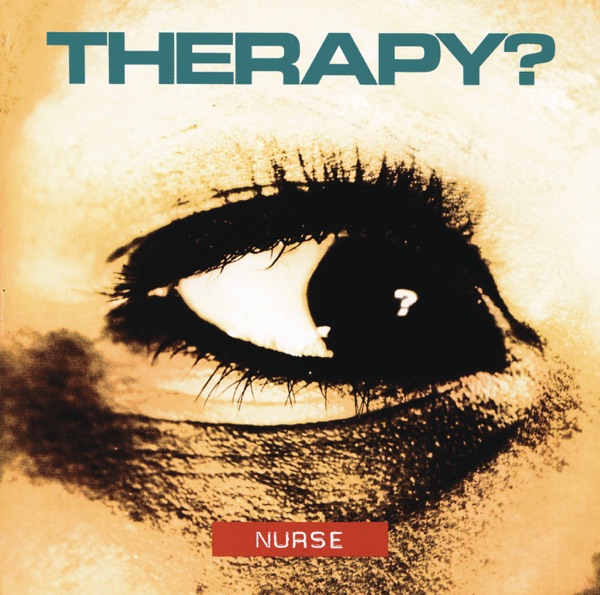
- 1992 Nurse
- 1994 Troublegum
- 1995 Infernal Love
- 1998 Semi‐Detached
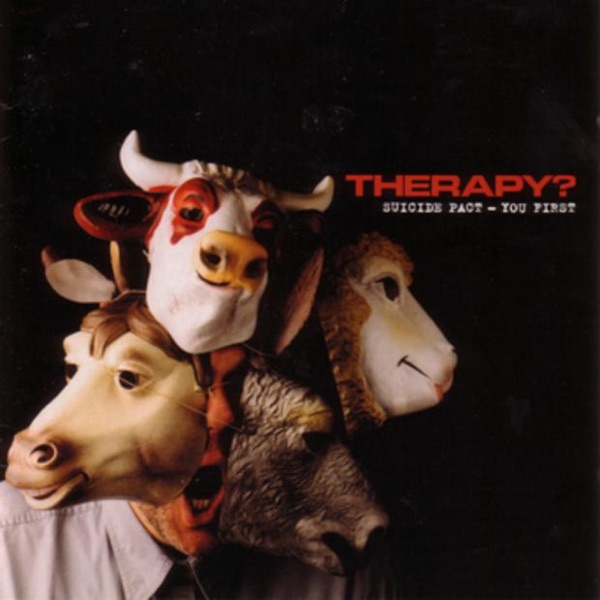
- 1999 Suicide Pact - You First
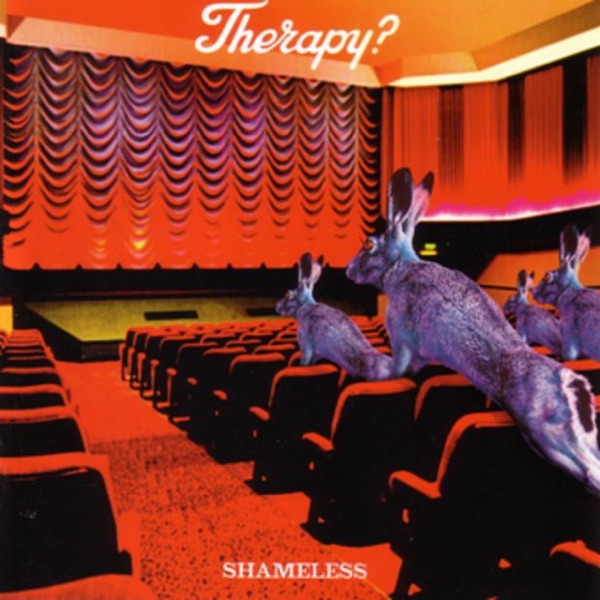
- 2001 Shameless
- 2003 High Anxiety
- 2004 Never Apologise Never Explain
- 2006 One Cure Fits All
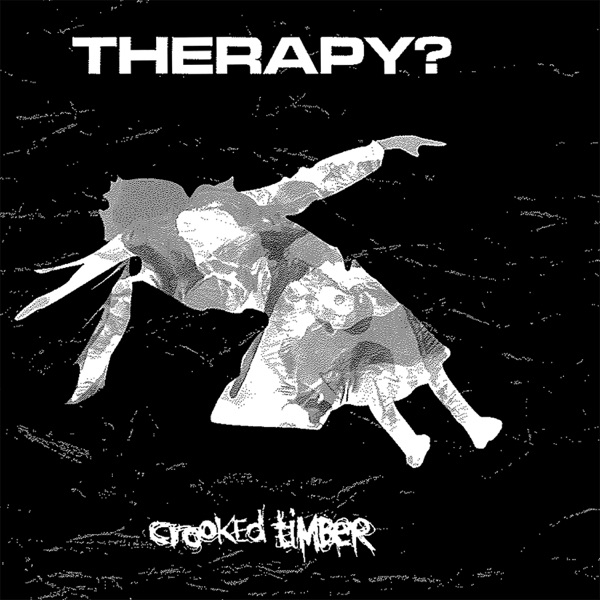
- 2009 Crooked Timber
- 2012 A Brief Crack of Light
- 2015 Disquiet
- 2016 Wood & Wire
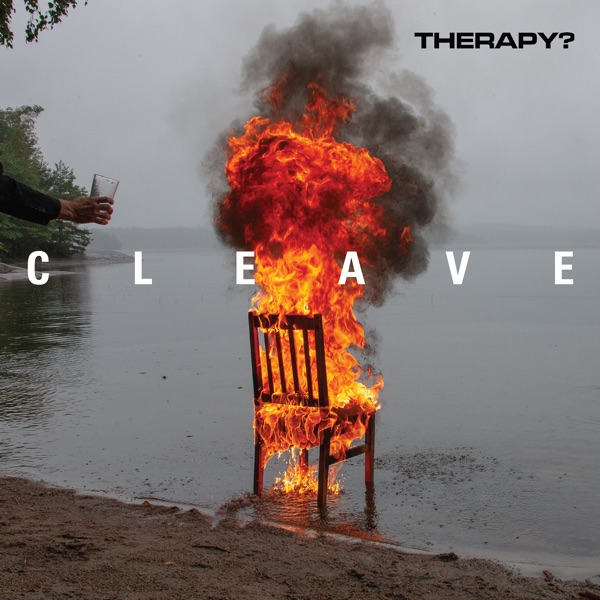
- 2018 Cleave
- 2023 Hard Cold Fire
Source: MusicBrainz
Deep Dive
Overview
Therapy? are a Northern Irish rock band from Larne, formed in 1989 by guitarist-vocalist Andy Cairns and drummer-vocalist Fyfe Ewing. Operating primarily as a trio across their career, Therapy? built a reputation throughout the 1990s as architects of a dense, guitar-driven sound that blended noise rock, alternative metal, and pop sensibility into a distinctly brittle, urgent attack. Their output on A&M Records between 1992 and 1995—anchored by the albums Troublegum and Infernal Love—positioned them as central figures in the UK alternative rock scene of that decade.
Formation Story
Therapy? emerged from Larne, a small industrial town in County Antrim, Northern Ireland. Andy Cairns (guitar and vocals) and Fyfe Ewing (drums and vocals) formed the nucleus of the band in 1989. For early recordings, including their first demo, Cairns assumed bass duties alongside his guitar work. To establish a complete three-piece lineup, the band recruited bassist Michael McKeegan from the same town. This founding trio remained intact through their formative years and their first recordings for independent labels before their signing to a major label would dramatically alter their trajectory.
Breakthrough Moment
Therapy? signed with major label A&M Records in 1992, a move that provided significant resources and distribution for their increasingly refined output. The 1994 album Troublegum marked the point at which the band achieved substantial recognition beyond underground and college radio circles. Building on their earlier A&M releases—Pleasure Death, Caucasian Psychosis, and Nurse, all from 1992—Troublegum crystallized their approach into a commercially viable but uncompromising statement. The album’s success established Therapy? as more than a regional phenomenon, bringing them to the attention of rock audiences across the United Kingdom and beyond.
Peak Era
The years 1994–1996 constituted Therapy?’s creative and commercial zenith. Troublegum (1994) and its follow-up Infernal Love (1995) defined their sound at its most potent: densely layered guitars, propulsive rhythm work, and Cairns’ strained, conversational vocal delivery. These records showcased the band’s ability to construct songs around repetitive, hypnotic riffs that nonetheless remained anchored to accessible melodic structures. The period culminated shortly after Infernal Love, when Fyfe Ewing departed in early 1996. His replacement, Graham Hopkins, arrived alongside guitarist and cellist Martin McCarrick, expanding the band’s textural possibilities while maintaining their core identity. Despite these changes, the band’s creative impetus began a gradual shift toward experimentation and diversification in the years that followed.
Musical Style
Therapy?’s sound derived from noise rock and alternative metal traditions but filtered through a distinctly pop-conscious sensibility. Cairns’ guitar work emphasized heavily distorted, churning riffs that often functioned almost rhythmically, creating a percussive rather than melodic foundation. The rhythm section—anchored by drumming that prioritized propulsive rather than technical display—and bass lines that rarely deviated from the foundational pulse gave their music a compressed, claustrophobic quality. Vocally, Cairns favored an understated delivery that sat relatively low in the mix, often resembling spoken-word performance as much as traditional singing. This particular combination—the clash between abrasive, maximalist instrumentation and minimalist, anti-charismatic vocals—formed the core of their distinctive aesthetic. Later iterations of the band, particularly after McCarrick’s 2004 departure, saw a return to their fundamental three-piece format, streamlining the sonic palette without abandoning the core textural and compositional elements that had always defined their work.
Major Albums
Troublegum (1994)
Therapy?’s breakthrough on A&M Records, Troublegum demonstrated the band’s ability to scale their noise-rock foundation into commercially viable forms without sacrificing sonic density or compositional integrity.
Infernal Love (1995)
Continuing the momentum of Troublegum, Infernal Love deepened the band’s exploration of their established sound, representing the final album with the original Fyfe Ewing lineup and serving as their most cohesive statement during their initial run of major-label success.
Semi‐Detached (1998)
Released several years into their post-Hopkins/McCarrick reconfiguration, Semi‐Detached marked a transitional work that saw the band navigating their evolving lineup while maintaining commitment to their foundational approach.
Never Apologise Never Explain (2004)
This album was released shortly after Martin McCarrick’s departure, allowing Therapy? to reestablish themselves as the three-piece that would define their output for the subsequent two decades.
Signature Songs
- Anxiety — A centerpiece of their early A&M period, representing the collision between abrasive noise foundations and oddly accessible melodic structure that characterized their mid-90s work.
- Hellbilly Deluxe — Exemplifying Cairns’ gift for constructing pop hooks within a framework of distorted guitar textures.
- Die Laughing — A showcase for the band’s rhythmic intensity and their ability to sustain propulsive momentum across extended compositions.
- Teethgrinder — Demonstrating their particular synthesis of noise-rock aggression and accessible song structure.
Influence on Rock
Therapy? occupied a distinctly transitional position within 1990s rock. They arrived at a moment when noise rock (via bands like Sonic Youth and The Melvins) was beginning to intersect with mainstream alternative rock popularity, and they helped legitimize densely textured, deliberately abrasive guitar music within that broader commercial context. Their particular variant—emphasizing repetitive, riff-driven structures over the more free-form noise exploration of their American predecessors—influenced the trajectory of UK alternative rock in the latter half of the 1990s. Bands working in post-grunge, post-Britpop alternative rock contexts would find in Therapy? a model for maintaining sonic intensity while remaining commercially relevant, an approach that informed numerous acts across the alternative metal and hard rock spheres.
Legacy
Therapy? have maintained continuous activity since their 1989 formation, releasing new material regularly into the 2020s—most recently the album Hard Cold Fire in 2023. Their longevity reflects both a dedicated fanbase and their own sustained commitment to their foundational sonic and thematic approach. While they never achieved the mainstream prominence of their highest-profile 1990s contemporaries, their influence within alternative rock and noise-rock circles has proven durable. The essential three-piece lineup—Andy Cairns, Michael McKeegan, and Neil Cooper (who replaced Graham Hopkins in 2002)—has remained stable for more than two decades, providing organizational consistency to their ongoing creative work. Streaming platforms have granted earlier recordings extended lifespan, ensuring that Troublegum and Infernal Love remain accessible to successive generations of listeners encountering 1990s alternative rock history.
Fun Facts
- Therapy?’s name, complete with the question mark, was adopted from a song title and has remained intact throughout all lineup changes and stylistic shifts across their entire career.
- The band recorded their earliest material with Andy Cairns temporarily filling bass duties, a necessity before Michael McKeegan formally completed the original three-piece lineup.
- Martin McCarrick’s tenure with the band introduced cello as a textural element, expanding their instrumental palette beyond traditional rock instrumentation for a five-year period (1996–2004).
- Their return to a consistent three-piece format after 2004 represented a deliberate artistic choice rather than a necessity, streamlining their sound back toward their foundational approach.
Discography & Previews
Click any album to expand its track list. Each track plays a 30-second preview streamed from Apple Music. Tap the link icon next to a track to open it in Apple Music for full playback.

- 1 Knives ↗ 1:57
- 2 Screamager ↗ 2:37
- 3 Hellbelly ↗ 3:21
- 4 Stop It You're Killing Me ↗ 3:51
- 5 Nowhere ↗ 2:26
- 6 Die Laughing ↗ 2:48
- 7 Unbeliever ↗ 3:28
- 8 Trigger Inside ↗ 3:56
- 9 Lunacy Booth ↗ 3:55
- 10 Isolation ↗ 3:11
- 11 Turn ↗ 3:50
- 12 Femtex ↗ 3:14
- 13 Unrequited ↗ 3:03
- 14 Brainsaw (Includes Hidden Track "You Are My Sunshine") ↗ 4:00
- 1 He's Not That Kind of Girl ↗ 3:25
- 2 Wall of Mouths ↗ 4:08
- 3 Jam Jar Jail ↗ 4:45
- 4 Hate Kill Destroy ↗ 3:33
- 5 Big Cave In ↗ 5:47
- 6 Six Mile Water ↗ 6:23
- 7 Little Tongues First ↗ 4:25
- 8 Ten Year Plan ↗ 5:14
- 9 God Kicks ↗ 2:42
- 10 Other People's Misery ↗ 1:54
- 11 Sister / Whilst I Pursue My Way Unharmed ↗ 18:33