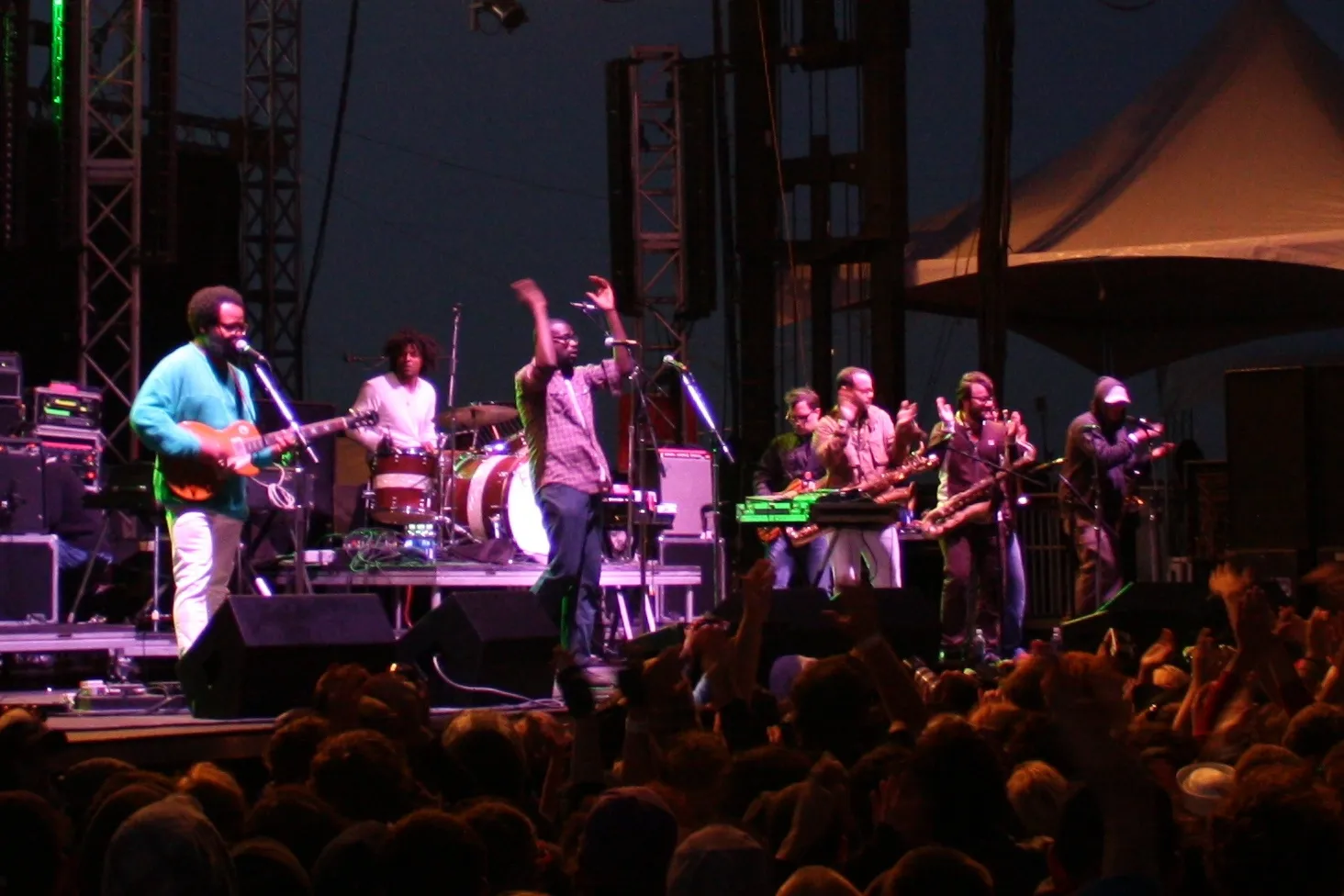
Photo by TV_on_the_Radio_2008_Treasure_Island_Music_Festival.jpg : Tyler Love ( talk ). Original uploader was Tyleralove at en.wikipedia derivative work: Quibik ( talk ) , licensed under Public domain · Wikimedia Commons
Rank #404
TV on the Radio
Brooklyn art-rockers fusing post-punk, soul, and electronic experimentation.
From Wikipedia
TV on the Radio (TVOTR) is an American rock band from Brooklyn, New York, formed in 2001. The band consists of Tunde Adebimpe, Dave Sitek, Kyp Malone, and Jaleel Bunton. Gerard Smith was a member of the band from 2005 until his death in 2011.
Members
- Gerard Smith (2005–2011)
- Jaleel Bunton (2005–present)
- Dave Sitek
- Kyp Malone
- Tunde Adebimpe
Studio Albums
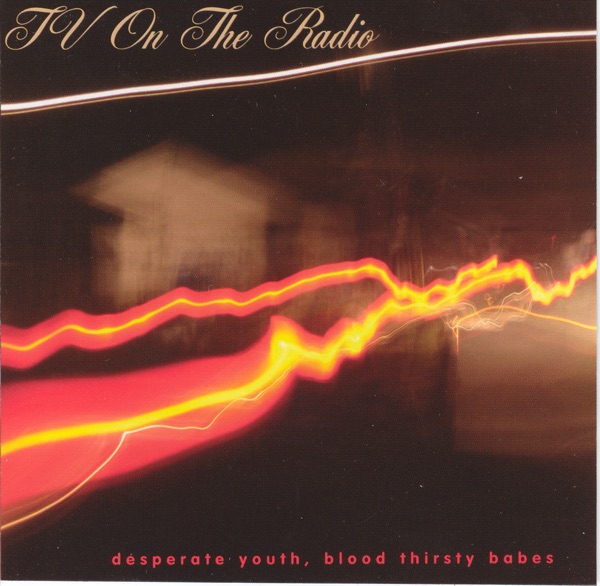
- 2004 Desperate Youth, Blood Thirsty Babes
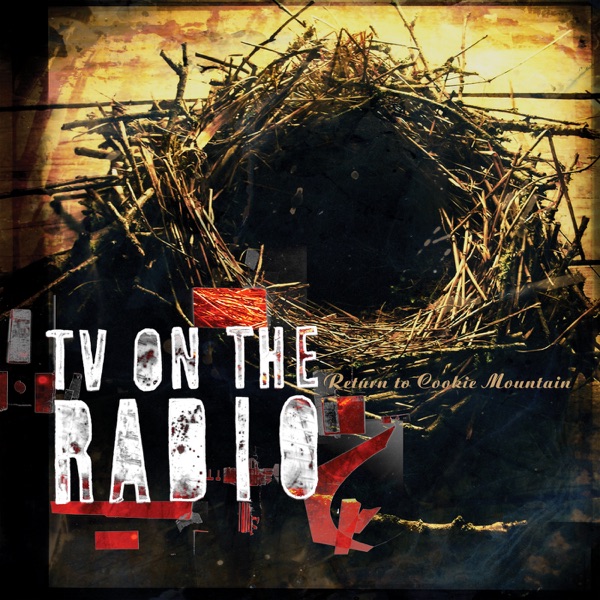
- 2006 Return to Cookie Mountain
- 2008 Dear Science
- 2011 Nine Types of Light
- 2014 Seeds
Source: MusicBrainz
Deep Dive
Overview
TV on the Radio emerged from Brooklyn in 2001 as an art-rock ensemble that synthesized post-punk texture, soul vocal warmth, and electronic abstraction into a sound that resisted easy genre placement. The band—Tunde Adebimpe (vocals), Dave Sitek (production, guitar, keyboards), Kyp Malone (guitar, vocals), and Jaleel Bunton (drums)—developed a reputation for sonic density, conceptual ambition, and a willingness to pursue both introspection and experimentalism in tandem. They inhabited a space between indie rock’s earnestness and electronic music’s sculptural precision, a position that would sustain their relevance across two decades of shifting tastes.
Formation Story
TV on the Radio coalesced in Brooklyn during the early 2000s when Tunde Adebimpe and Dave Sitek began working together on material that blended electronic production with live instrumentation. The duo recruited Kyp Malone on guitar and vocals, establishing a three-part vocal framework that became central to their aesthetic. Jaleel Bunton joined as drummer in 2005, the same year bassist Gerard Smith entered the lineup, completing the quintet that would record their first two albums. Smith remained with the band until his death in 2011, after which the core quartet continued as a four-piece.
Breakthrough Moment
TV on the Radio’s debut, Desperate Youth, Blood Thirsty Babes (2004), arrived on Touch and Go Records as a calling card of orchestral ambition and post-punk anxiety. The album established their method: dense, layered production by Sitek; layered vocals from Adebimpe and Malone; and a rhythmic foundation that alternated between propulsive and fractured. By 2006, Return to Cookie Mountain, released on 4AD, had begun to widen their audience beyond underground spheres. The record deepened their approach to soul-inflected melody and electronic texture, signaling an artist willing to evolve rather than repeat. However, it was 2008’s Dear Science, also on 4AD, that positioned them at the intersection of critical acclaim and a genuinely curious listening public—a record that balanced accessibility with formal sophistication.
Peak Era
The period spanning 2008 to 2014 represented the band’s most creatively and commercially visible stretch. Dear Science consolidated their sonic identity: synth washes, tightly wound guitar lines, vocals stacked and processed as texture alongside their emotional clarity. The album’s combination of song craft and production density created a template they would refine on successive releases. In 2011, Nine Types of Light appeared on Harvest Records, continuing their partnership with major-label infrastructure while maintaining artistic control. The final studio album of their period, Seeds (2014), again on 4AD, closed a chapter defined by consistent output and deepening technical command. Across these records, TV on the Radio established themselves as working artists capable of sustaining conceptual vision across multiple album cycles.
Musical Style
TV on the Radio’s sound originated in the post-punk tradition—angular, texture-driven, rhythmically unpredictable—but applied it through a decidedly contemporary lens of electronic production and soul vocal influence. Dave Sitek’s production role was foundational; he treated the recording studio as an instrument, layering effects, processing vocals through chains of effects, and using space as compositional element. Kyp Malone and Tunde Adebimpe’s vocals functioned both as melody carriers and as timbral colors in the overall mix, often doubled, harmonized, or electronically transformed. The rhythm section—particularly Jaleel Bunton’s drumming—favored broken, syncopated patterns over straightforward rock timekeeping, placing them closer to art rock and electronic music traditions than to rock-and-roll lineage. Across their discography, the band demonstrated an evolving approach to synthesizers and production technique, moving from dense, occasionally murky early work toward clearer but still complex architecture by the 2010s.
Major Albums
Desperate Youth, Blood Thirsty Babes (2004)
The debut established TV on the Radio’s core method: orchestral density, layered vocals, and post-punk unease filtered through electronic production, immediately distinguishing them from peer bands working in indie and alternative rock.
Return to Cookie Mountain (2006)
The second album refined their approach toward melody and soul influence, demonstrating a band willing to expand beyond their initial template while maintaining their signature sound density and emotional restraint.
Dear Science (2008)
Their breakthrough statement, combining radio-friendly song structures with sophisticated production and lush arrangements, this album expanded their reach while proving they could balance accessibility with artistic ambition.
Nine Types of Light (2011)
Released following Gerard Smith’s death, the album continued their evolution toward clarity and emotional directness, maintaining the band’s experimental impulse within increasingly accessible frameworks.
Seeds (2014)
The final album of their primary run deepened their work with electronic texture and intricate production, demonstrating a mature band at the height of their technical and compositional command.
Signature Songs
- “Staring at the Sun” — A propulsive piece that showcases the band’s ability to balance kinetic energy with lyrical introspection and layered vocal work.
- “Crying” — One of their most emotionally direct moments, built on tense guitar and vulnerable vocal interplay between Adebimpe and Malone.
- “Wolf Like Me” — A later track combining driving rhythm with electronic color and vocal harmonies that demonstrate their mastery of emotional restraint and timbral complexity.
- “Golden Age” — Exemplifying their approach to synthesizer-based arrangement and multi-tracked vocal harmony within a song-form structure.
- “Dancing Choose” — Showcasing their rhythmic experimentation and the way rhythm serves emotional and textural rather than merely metrical purposes.
Influence on Rock
TV on the Radio occupied a singular position in 2000s and 2010s alternative and indie rock: they proved that post-punk’s textural and rhythmic innovations could coexist with soul vocal tradition and contemporary electronic production without contradiction. Their influence rippled through art-rock and indie circles, demonstrating a model for bands seeking sophistication and emotional authenticity simultaneously. In a landscape where indie rock often defaulted to either lo-fi aesthetics or major-label slickness, they offered a third path: investment in production and arrangement detail without surrender of artistic autonomy or experimental impulse. Later art-rock and electronic-leaning indie acts benefited from the space they carved out, establishing that complexity and emotional directness were not mutually exclusive.
Legacy
TV on the Radio’s legacy remains that of a working, evolving band that maintained artistic integrity across multiple album cycles while gradually expanding their audience from underground to broader recognition. Their discography stands as a document of consistent formal development and technical refinement, with each album representing a clear chapter rather than repetition. The band’s model—balancing major-label partnership with artistic control, pursuing electronic and acoustic texture without hierarchizing one over the other, treating the studio as a compositional instrument—influenced how subsequent art-rock and alternative bands approached recording and production. Their presence across streaming platforms, along with the continuing availability of their catalog on 4AD and other labels, has ensured their music reaches listeners who discover them independent of contemporary critical reception or commercial chart presence.
Fun Facts
- The band formed during Brooklyn’s emergence as a center for indie rock and art-rock activity, a geography that shaped their aesthetic sensibility and connection to experimental and alternative music scenes.
- Dave Sitek’s production work extended beyond TV on the Radio; his approach to arrangement and electronic texture influenced the broader 2000s art-rock landscape.
- Gerard Smith’s death in 2011 marked a significant moment in the band’s history, following immediately before the release of Nine Types of Light and fundamentally altering their live and recording dynamic.
- The band’s partnership with 4AD Records for three consecutive albums (2006–2014) placed them within a roster historically committed to experimental and boundary-pushing rock music.
Discography & Previews
Click any album to expand its track list. Each track plays a 30-second preview streamed from Apple Music. Tap the link icon next to a track to open it in Apple Music for full playback.