
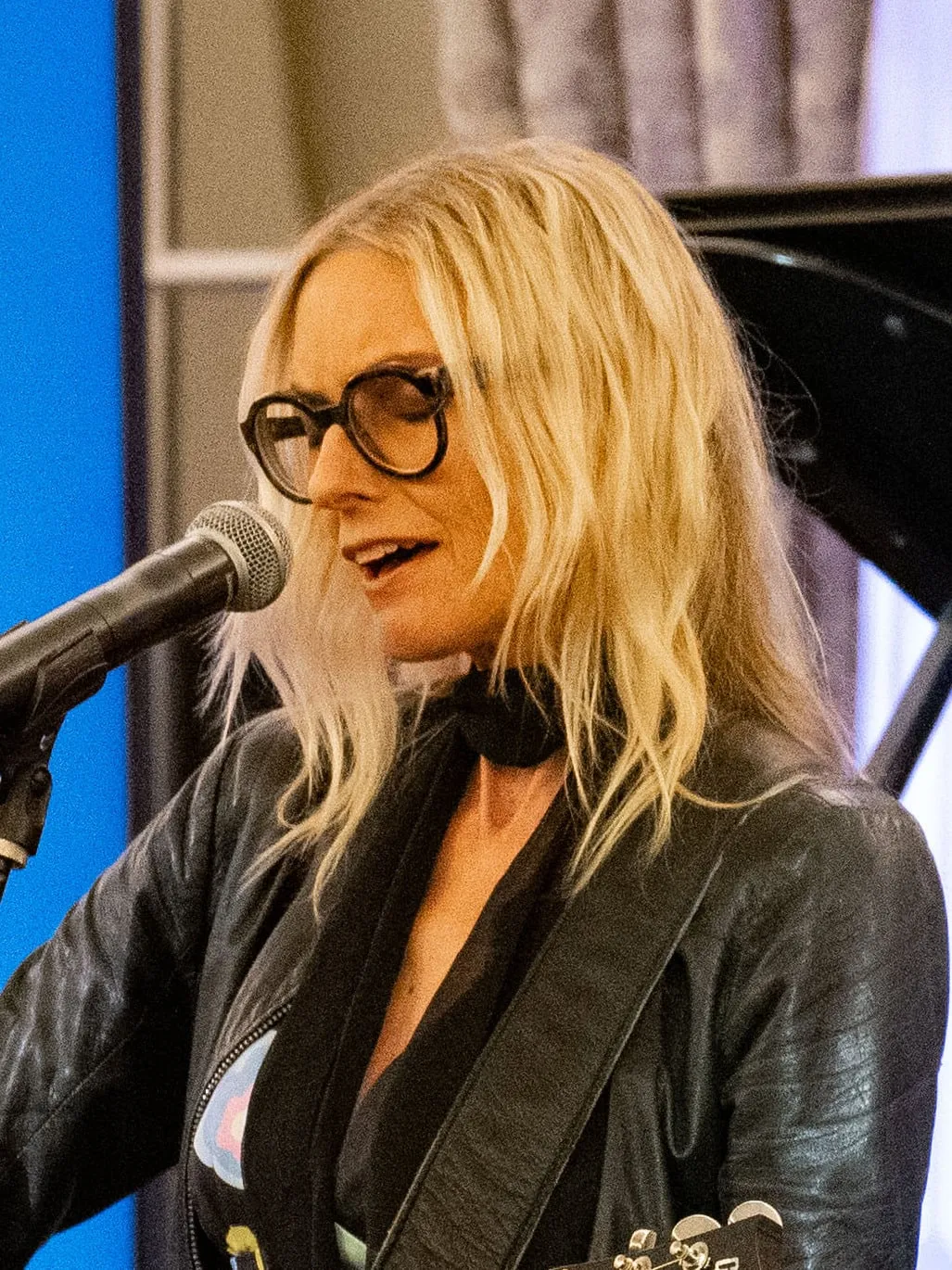
Photo by U.S. Department of State from United States , licensed under Public domain · Wikimedia Commons
Rank #127
Aimee Mann
From Wikipedia
Aimee Elizabeth Mann is an American singer-songwriter. She is noted for her sardonic and literate lyrics about dark subjects, often describing underdog characters. She has released ten albums as a solo artist.
Discography & Previews
Browse through and click an album to open and play 30-second previews streamed from Apple Music.

Whatever
1993 · 13 tracks
- 1 I Should've Known ↗ 4:54
- 2 Fifty Years After the Fair ↗ 3:46
- 3 4th of July ↗ 3:21
- 4 Could've Been Anyone ↗ 4:23
- 5 Put Me on Top ↗ 3:29
- 6 Stupid Thing ↗ 4:28
- 7 Say Anything ↗ 4:58
- 8 Jacob Marley's Chain ↗ 3:02
- 9 Mr. Harris ↗ 4:06
- 10 I Could Hurt You Now ↗ 4:17
- 11 I Know There's a Word ↗ 3:16
- 12 I've Had It ↗ 4:42
- 13 Way Back When ↗ 4:05
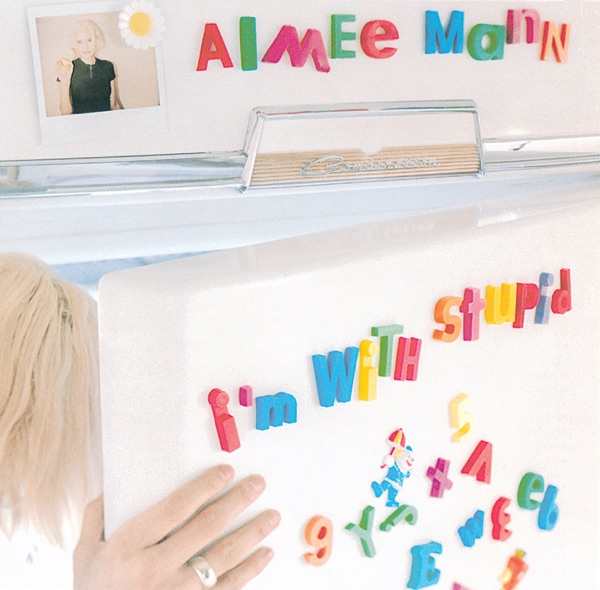
I’m With Stupid
1995 · 13 tracks
- 1 Long Shot ↗ 3:13
- 2 Choice in the Matter ↗ 3:13
- 3 Sugarcoated ↗ 3:40
- 4 You Could Make a Killing ↗ 3:42
- 5 Superball ↗ 3:06
- 6 Amateur ↗ 4:55
- 7 All Over Now ↗ 4:02
- 8 Par for the Course ↗ 6:02
- 9 You're With Stupid Now ↗ 3:30
- 10 That's Just What You Are ↗ 4:25
- 11 Frankenstein ↗ 4:28
- 12 Ray ↗ 4:50
- 13 It's Not Safe ↗ 7:14

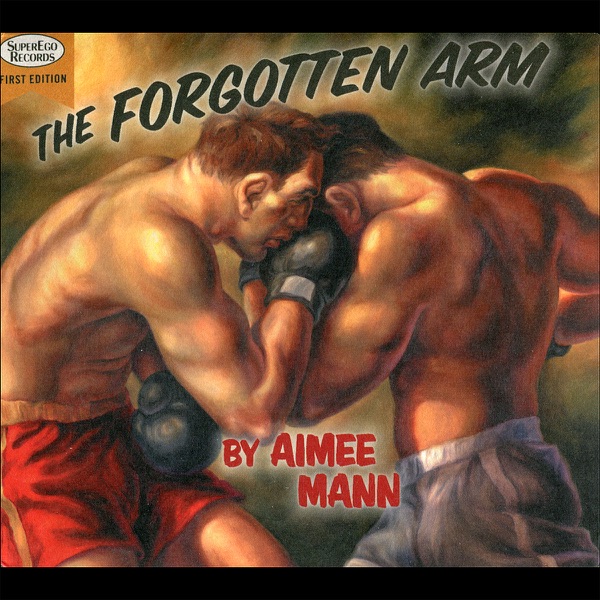
The Forgotten Arm
2005 · 12 tracks
- 1 Dear John ↗ 3:07
- 2 The King of the Jailhouse ↗ 5:20
- 3 Goodbye Caroline ↗ 3:54
- 4 Going Through the Motions ↗ 2:58
- 5 I Can't Get My Head Around It ↗ 3:37
- 6 She Really Wants You ↗ 3:26
- 7 Video ↗ 3:36
- 8 Little Bombs ↗ 3:49
- 9 That's How I Knew This Story Would Break My Heart ↗ 4:19
- 10 I Can't Help You Anymore ↗ 4:53
- 11 I Was Thinking I Could Clean Up for Christmas ↗ 4:24
- 12 Beautiful ↗ 3:48

One More Drifter in the Snow
2006 · 10 tracks
- 1 Whatever Happened to Christmas ↗ 2:52
- 2 The Christmas Song (Chestnuts Roasting On an Open Fire) ↗ 3:20
- 3 Christmastime ↗ 3:19
- 4 I'll Be Home for Christams ↗ 3:19
- 5 You're a Mean One Mr. Grinch ↗ 3:27
- 6 Winter Wonderland ↗ 3:47
- 7 Have Yourself a Merry Little Christmas ↗ 3:54
- 8 God Rest Ye Merry Gentlemen ↗ 2:07
- 9 White Christmas ↗ 2:59
- 10 Calling On Mary ↗ 4:03

@#%&*! Smilers
2008 · 13 tracks
- 1 Freeway ↗ 3:50
- 2 Stranger Into Starman ↗ 1:32
- 3 Looking for Nothing ↗ 3:47
- 4 Phoenix ↗ 3:56
- 5 Borrowing Time ↗ 3:12
- 6 It's Over ↗ 3:59
- 7 Thirty One Today ↗ 4:52
- 8 Great Beyond ↗ 3:12
- 9 Medicine Wheel ↗ 4:08
- 10 Columbus Avenue ↗ 4:06
- 11 Little Tornado ↗ 3:24
- 12 True Believer ↗ 3:32
- 13 Ballantines ↗ 2:21

Charmer
2012 · 12 tracks


Queens of the Summer Hotel
2021 · 15 tracks
- 1 You Fall ↗ 3:36
- 2 Robert Lowell and Sylvia Plath ↗ 3:14
- 3 Give Me Fifteen ↗ 2:43
- 4 At the Frick Museum ↗ 3:03
- 5 Home by Now ↗ 1:35
- 6 Checks ↗ 0:34
- 7 Little Chameleon ↗ 1:45
- 8 You Don't Have the Room ↗ 4:07
- 9 Suicide is Murder ↗ 4:15
- 10 You Could Have Been a Roosevelt ↗ 2:07
- 11 Burn It Out ↗ 2:58
- 12 In Mexico ↗ 3:33
- 13 Check (reprise) ↗ 0:57
- 14 You're Lost ↗ 2:17
- 15 I See You ↗ 3:37
-
 WhateverAimee Mann199313 tracks
 -
 I’m With StupidAimee Mann199513 tracks
 -
 Lost in SpaceAimee Mann200211 tracks
 -
 The Forgotten ArmAimee Mann200512 tracks
 -
 One More Drifter in the SnowAimee Mann200610 tracks
 -
 @#%&*! SmilersAimee Mann200813 tracks
 -
 CharmerAimee Mann201212 tracks
 -
 Mental IllnessAimee Mann201711 tracks
 -
 Queens of the Summer HotelAimee Mann202115 tracks
Deep Dive
Overview
Aimee Mann is an American singer-songwriter whose career spans three decades of unflinching lyrical introspection and genre-spanning musical craftsmanship. Born in 1960, Mann emerged as a solo artist in the early 1990s after a foundational decade in new wave and pop contexts. Her songwriting is characterized by sardonic, intelligent observations of human frailty and emotional estrangement, delivered through arrangements that blend new wave precision with folk and alternative rock sensibilities. Mann’s work occupies a distinct corner of American rock: neither confessional nor abstractly avant-garde, but rather a sharp-eyed documentation of underdog characters navigating love, loss, and disappointment.
Formation Story
Mann grew up in the pop and new wave ecosystem of the late 1970s and 1980s, during a period when art-school sensibilities and punk’s DIY ethos were reshaping mainstream rock. After establishing herself in earlier projects, she began her solo recording career in 1993 with the release of Whatever, marking her transition from supporting player to primary artist. The timing coincided with the emergence of 1990s alternative rock as a commercial and critical force, though Mann’s aesthetic—grounded in narrative specificity and harmonic sophistication—positioned her somewhat apart from that decade’s dominant guitar-driven angst.
Breakthrough Moment
Mann’s breakthrough as a solo artist came with her second album, I’m With Stupid (1995), which deepened her reputation as a lyricist willing to explore emotional and moral complexity. The album solidified her audience among listeners drawn to character-driven songwriting and contemporary-sounding production. By the late 1990s, Mann had established a loyal following and a consistent presence in the alternative rock and college radio spheres, though mainstream chart success remained elusive. Her willingness to self-release and maintain creative control would define her long-term career trajectory.
Peak Era
Mann’s most fertile creative period extended from the late 1990s through the mid-2000s. Bachelor Nº 2 (or, The Last Remains of the Dodo) (1999) and Lost in Space (2002) represent the apex of her artistic reach, displaying sophisticated arrangements, deeply observed character studies, and an increasing willingness to experiment with production textures. The Forgotten Arm (2005) continued this momentum, further refining her approach to songwriting and studio work. These three albums established the aesthetic foundation for everything that followed: intricate melodic construction paired with lyrics that avoid easy sentiment or resolution.
Musical Style
Mann’s music sits at the intersection of new wave, alternative rock, and singer-songwriter traditions. Her vocal delivery is precise and controlled, often emotionally restrained in ways that amplify rather than diminish the weight of her lyrics. Musically, her arrangements typically favor clean production, layered instrumentation, and melodies that prioritize singability and harmonic interest. Unlike much of 1990s alternative rock, which embraced distortion and dynamic extremes, Mann’s work tends toward clarity and structural sophistication. Her songwriting emphasizes narrative specificity—named characters, localized details, temporal markers—drawing listeners into particular psychological moments rather than universal emotional abstractions. Over her career, she has moved fluidly between acoustically-centered arrangements and fuller band configurations, with production that has generally favored accessibility and instrumental balance rather than textural experimentation.
Major Albums
Whatever (1993)
Mann’s debut album announced her solo voice: sardonic, witty, and deeply invested in the interior lives of ordinary people. It established the lyrical and melodic foundations that would sustain her career.
I’m With Stupid (1995)
This album deepened her songwriting and expanded her audience, solidifying her reputation as a lyricist of considerable range and psychological insight.
Lost in Space (2002)
A landmark album that balanced melodic accessibility with thematic darkness, showcasing Mann’s full maturity as a composer and her ability to sustain emotional coherence across an album-length narrative.
The Forgotten Arm (2005)
A concept album that demonstrated Mann’s ambition and her skill at sustained storytelling, working with sophisticated arrangements and deeply engaged character work.
Mental Illness (2017)
A return to more direct, intimate songwriting after a period of creative consolidation, proving her continuing relevance and undiminished lyrical acuity in a changed musical landscape.
Queens of the Summer Hotel (2021)
Mann’s most recent album maintains her commitment to literate, character-driven songwriting while exploring contemporary production approaches, demonstrating her ongoing evolution.
Signature Songs
- “Voices Carry” — A signature song from her pre-solo era that remains her most widely recognized recording, capturing her talent for melodic hooks paired with emotionally complex lyrics.
- “Save Me” — A centerpiece of her 1990s work that exemplifies her gift for constructing intimate dramatic monologues set to sophisticated pop-rock arrangements.
- “The Forgotten Arm” — A extended narrative song demonstrating her ability to sustain character and emotional stakes across a longer compositional form.
- “4th of July” — A deeply observed character study that showcases her range as a lyricist and her ability to compress complex emotional landscapes into song-length narratives.
Influence on Rock
Mann belongs to a lineage of American singer-songwriters who prioritize lyrical literacy and emotional specificity within contemporary rock frameworks. Her influence extends to subsequent generations of alternative and indie rock artists who have drawn on her example of maintaining artistic independence and refusing to subordinate songwriting craft to production trends. She demonstrated that sardonic wit and formal sophistication could coexist within rock music, offering a counterpoint to both the earnestness of much 1990s alternative rock and the irony-without-substance that sometimes accompanied indie rock’s aesthetic gestures. Her emphasis on character-driven narratives has influenced songwriters across multiple genres who value specificity over generality.
Legacy
Mann’s career exemplifies a certain strand of American artistic independence: an artist of substantial skill who has maintained creative control and consistency while remaining somewhat apart from mainstream commercial success. Her ten studio albums represent a sustained body of work that has aged well, with productions that favor clarity and compositional sophistication over period-specific production tricks. The breadth of her discography and the consistency of her output have established her as a significant figure in contemporary rock songwriting, particularly among listeners and musicians who value lyrical intelligence and harmonic complexity. Her work continues to be discovered by new audiences through streaming platforms, and she remains an active touring and recording artist, demonstrating an ongoing commitment to her craft and her audience.
Fun Facts
- Mann has maintained a high degree of creative control over her work, founding SuperEgo Records to release her albums independently and retain ownership of her catalog.
- Her songwriting has earned widespread respect among fellow musicians and critics even as mainstream commercial success has remained limited, a testament to the esteem in which artistic integrity is held within rock communities.
- Mann’s lyrics frequently feature named characters and specific locales, a technique that has influenced contemporary songwriters working in narrative modes.