
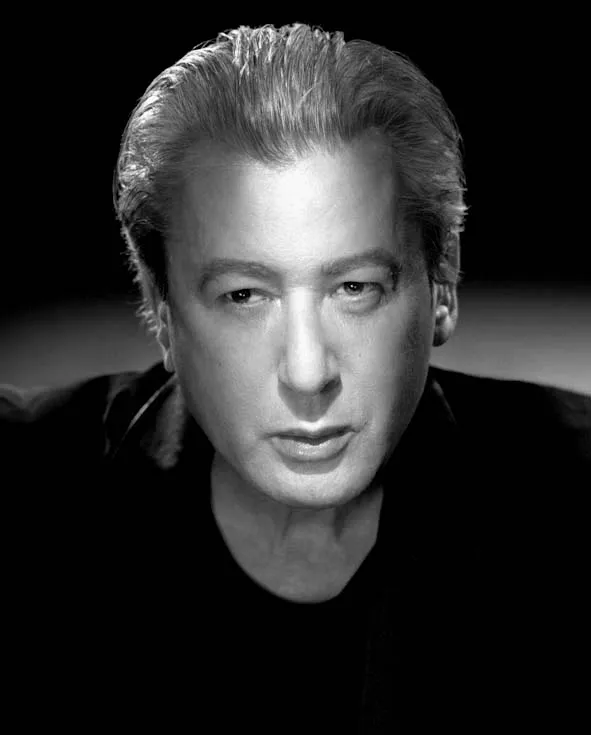
Photo by BASHUNG_Alain-24x30-2007.jpg : Studio Harcourt derivative work: Materialscientist ( talk ) , licensed under CC BY 3.0 · Wikimedia Commons
Rank #500
Alain Bashung
From Wikipedia
Alain Bashung was a French singer, songwriter and actor. Credited with reviving the French chanson in "a time of French musical turmoil", he is often regarded as the most important French rock musician after Serge Gainsbourg. He rose to prominence in the early 1980s with hit songs such as "Gaby oh Gaby" and "Vertige de l'amour", and later had a string of hit records from the 1990s onward, such as "Osez Joséphine", "Ma petite entreprise" and "La nuit je mens". He has had an influence on many later French artists, and is the most awarded artist in the Victoires de la Musique history with 12 victories obtained throughout his career.
Discography & Previews
Browse through and click an album to open and play 30-second previews streamed from Apple Music.

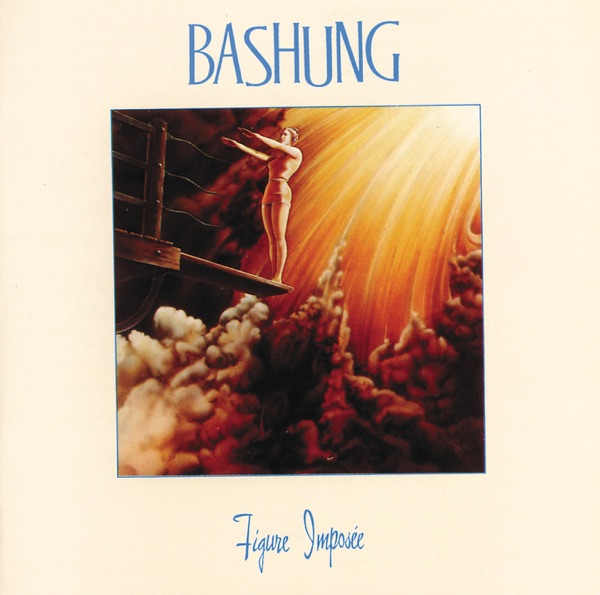
Figure imposée
1983 · 10 tracks
- 1 What's In a Bird (single version) ↗ 3:21
- 2 Horoscope (remix 1992) ↗ 2:54
- 3 Imbécile (remix 1992) ↗ 6:26
- 4 Hi ! (remix 1992) ↗ 3:08
- 5 Chaque nuit bébé (remix 1992) ↗ 3:32
- 6 Elégance (version single) ↗ 3:44
- 7 Poisson d'avril ↗ 2:55
- 8 Week-end doux (instrumental) ↗ 2:36
- 9 Spiele Mich an Die Wand ↗ 4:46
- 10 White Spirit (instrumental) ↗ 4:24

Passé le Rio Grande
1986 · 14 tracks
- 1 Helvete underground ↗ 3:37
- 2 Camping jazz ↗ 3:44
- 3 Dean Martin ↗ 4:17
- 4 Douane Eddy ↗ 3:10
- 5 Malédiction ↗ 3:36
- 6 L'arrivée du tour ↗ 3:59
- 7 Herr major ↗ 3:27
- 8 Milady ↗ 3:10
- 9 Rognons 1515 ↗ 3:52
- 10 Chat ↗ 2:38
- 11 L'arrivée du tour (Version Longue) ↗ 6:13
- 12 S.O.S. Amor (Remix) ↗ 4:02
- 13 Tu touches pas à mon pote ↗ 4:10
- 14 Les Européennes ↗ 4:10
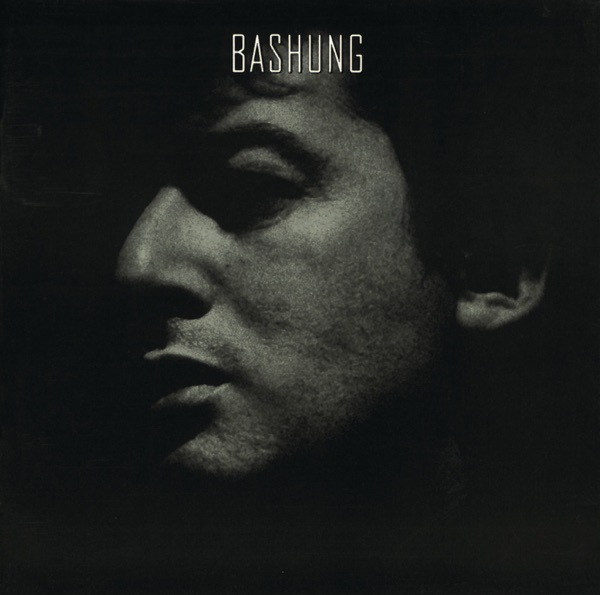
Novice
1989 · 13 tracks
- 1 Pyromanes ↗ 3:56
- 2 Résidences ↗ 3:34
- 3 Légère eclaircie ↗ 4:20
- 4 Alcaline ↗ 5:00
- 5 Tu m'as jeté ↗ 4:31
- 6 Elle fait l'avion ↗ 4:47
- 7 Bombez ↗ 3:02
- 8 Intrépide malgré la fièvre ↗ 4:01
- 9 Etrange été ↗ 3:33
- 10 Outrage (instrumental) ↗ 0:36
- 11 By Proxy ↗ 3:49
- 12 Bombez (version 92) ↗ 3:03
- 13 Climax 4 (instrumental) ↗ 4:23

Osez Joséphine
1991 · 11 tracks

Chatterton
1994 · 12 tracks
- 1 A perte de vue ↗ 5:08
- 2 Que n'ai-je ↗ 3:56
- 3 Ma petite entreprise ↗ 4:12
- 4 Elvire ↗ 4:20
- 5 Un âne plane ↗ 3:57
- 6 Après d'après hostilités ↗ 4:25
- 7 J'avais un pense-bête ↗ 3:26
- 8 J'passe pour une caravane ↗ 3:43
- 9 Danse d'ici ↗ 4:05
- 10 A Ostende ↗ 4:03
- 11 L'apiculteur ↗ 4:38
- 12 J'ai longtemps contemplé ↗ 3:59


L’Imprudence
2002 · 13 tracks

L’Homme à tête de chou
2011 · 12 tracks
- 1 L'homme a tête de chou ↗ 2:43
- 2 Chez Max coiffeur pour hommes ↗ 1:12
- 3 Marilou Reggae ↗ 2:36
- 4 Transit à Marilou ↗ 1:32
- 5 Flash Forward ↗ 2:19
- 6 Aéroplanes ↗ 2:09
- 7 Premiers symptômes ↗ 2:25
- 8 Ma Lou Marilou ↗ 3:06
- 9 Variations sur Marilou ↗ 8:59
- 10 Meurtre à l'extincteur ↗ 3:17
- 11 Marilou sous la neige ↗ 2:39
- 12 Lunatic Asylum ↗ 3:22

En amont
2018 · 11 tracks
-
 PizzaAlain Bashung198111 tracks
 -
 Figure imposéeAlain Bashung198310 tracks
 -
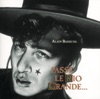 Passé le Rio GrandeAlain Bashung198614 tracks
 -
 NoviceAlain Bashung198913 tracks
 -
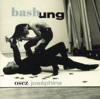 Osez JoséphineAlain Bashung199111 tracks
 -
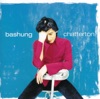 ChattertonAlain Bashung199412 tracks
 -
 Fantaisie militaireAlain Bashung199812 tracks
 -
 L’ImprudenceAlain Bashung200213 tracks
 -
 L’Homme à tête de chouAlain Bashung201112 tracks
 -
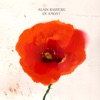 En amontAlain Bashung201811 tracks
Deep Dive
Overview
Alain Bashung stands as France’s most significant rock musician in the post-Gainsbourg era, a figure who bridged French chanson tradition with contemporary rock, new wave, and electronic experimentation. Over a career spanning from 1977 to his death in 2009, Bashung accumulated twelve Victoires de la Musique awards—more than any other artist in the history of France’s premier music awards—a testament to both critical and commercial recognition that few French musicians have achieved. He is credited with reviving French chanson during a period of genuine musical turmoil in France, transplanting the idiom into a modern rock and electronic context that proved neither reverential nor dismissive but creatively restless.
Formation Story
Bashung emerged as a recording artist in the mid-1970s, a period when French popular music was fragmenting between old-guard chanson singers, Anglo-American rock and disco imports, and a nascent domestic new wave. His debut album, Roman photos, arrived in 1977, positioning him within the broader French rock movement but immediately distinguishing itself through a sophistication that drew from cabaret, spoken-word poetry, and art-rock instrumentation. Rather than imitate the guitar-driven rock coming from Britain and America, Bashung constructed arrangements that honored the French tradition of text-driven song while embracing synthesizers, unconventional production, and a vocal delivery that blended narrative detachment with emotional precision. This hybrid approach—treating rock not as a replacement for French song tradition but as its contemporary extension—became his defining artistic stance from the outset.
Breakthrough Moment
Bashung’s commercial breakthrough arrived in the early 1980s with the singles “Gaby oh Gaby” and “Vertige de l’amour,” songs that demonstrated his capacity to write pop hooks without abandoning lyrical or melodic sophistication. The albums Pizza (1981) and Play blessures (1982) consolidated this early success, establishing him as a major force in French radio and concert halls. By the mid-1980s, with Passé le Rio Grande (1986), he had secured his position as a commercially viable artist, a status many intellectually ambitious French rockers struggle to maintain. His willingness to engage with pop forms—evident in the accessibility of these mid-period records—never compromised his artistic credibility, partly because the songwriting remained distinctly literary and the production choices always served the material rather than subordinating it to trends.
Peak Era
Bashung’s most influential and commercially successful period ran from the late 1980s through the 1990s and into the 2000s. The album Osez Joséphine (1991) marked a turning point, yielding the hit single of the same name and demonstrating a mature synthesis of all his previous elements: orchestral arrangements, electronic textures, conversational-yet-poetic lyrics, and a confident vocal presence. This album and its successors—Chatterton (1994), Fantaisie militaire (1998), L’Imprudence (2002), and La Ballade de Calamity Jane (2006)—sustained his relevance across two decades when most rock artists of his generation faded from the charts. The 1990s in particular saw Bashung release a string of hit records, with songs like “Ma petite entreprise” earning both radio play and critical favor. His ability to refresh his sound across each album—incorporating trip-hop and electronic elements alongside traditional orchestration—kept his work contemporary without chasing fashion.
Musical Style
Bashung’s sound defies simple categorization, though new wave, pop rock, and elements of trip hop all apply across his catalog. His early work, particularly the late 1970s and early 1980s albums, emphasized minimalist arrangements punctuated by synthesizers and drums that suggested post-punk influence; the vocal delivery was often laconic, detached, almost spoken rather than sung, a debt to French chanson’s narrative tradition. Over time, his productions grew more elaborate, layering orchestral strings, brass, and keyboards into densely textured arrangements. His lyrics, consistently in French, blend everyday vocabulary with poetic compression, often adopting character perspectives or ironic narrative distances. The vocal timbre itself—neither operatic nor purely conversational—carries an indefinable melancholy and wit that became his signature. Unlike many new-wave artists of the 1980s who turned toward synthesizer-driven minimalism, Bashung moved in the opposite direction, adding instrumental color and harmonic complexity to his later work while retaining electronic elements as one voice among many.
Major Albums
Pizza (1981)
A tightly constructed early album showcasing Bashung’s synthesis of art rock and French chanson, with the production restraint and melodic clarity that would anchor his breakthrough into the mainstream.
Play blessures (1982)
Consolidating the success of Pizza, this album expanded his sonic palette and proved the early-1980s singles were not flukes, establishing a loyal audience across France.
Osez Joséphine (1991)
A landmark recording that balanced orchestral richness with electronic sophistication, demonstrating Bashung’s creative peak and yielding his most enduring commercial hit, the title track.
Chatterton (1994)
An ambitious concept-adjacent album that deepened his artistic identity in the 1990s, showcasing his ability to sustain narrative and emotional coherence across a full-length work.
Fantaisie militaire (1998)
A late-career reaffirmation that incorporated trip-hop and electronic production into a distinctly Bashung context, proving his relevance in the post-industrial, digitally influenced 1990s rock landscape.
La Ballade de Calamity Jane (2006)
A penultimate studio album demonstrating continued creative vitality in his final years, returning to character-driven narratives and elaborate orchestration.
Signature Songs
- “Gaby oh Gaby” — The early-1980s single that established his commercial viability and introduced his conversational yet emotionally precise vocal style to a mass audience.
- “Vertige de l’amour” — A companion breakthrough hit that showcased his gift for pop melody without sacrificing lyrical or tonal sophistication.
- “Osez Joséphine” — His most iconic and enduring single, combining orchestral sweep, emotional vulnerability, and the narrative wit that defined his best work.
- “Ma petite entreprise” — A 1990s hit demonstrating his ability to find humor and dignity in mundane subject matter, a trait central to his songwriting approach.
- “La nuit je mens” — A later single that exemplified his sustained relevance and his gift for titles that capture Gallic wit and emotional ambiguity.
Influence on Rock
Bashung’s principal contribution was demonstrating that French chanson and rock music need not be antagonistic traditions. In an era when many French musicians either retreated into nostalgic tradition or wholesale adoption of English-language rock formulas, Bashung mapped a third path: modernizing chanson through production sophistication, electronic elements, and contemporary songwriting while maintaining the lyrical intelligence and vocal subtlety that defined the French song tradition. His commercial success—unusual for an artist of such obvious artistic seriousness—proved this hybrid was viable and desirable. He influenced a generation of French rock and pop artists who followed, demonstrating that intellectual rigor and pop accessibility need not be mutually exclusive. His approach to production, orchestration, and arrangement—treating the studio as an instrument and layering textures with care—echoed through French and European rock well into the 2000s.
Legacy
Alain Bashung died in 2009, but his twelve Victoires de la Musique awards remain the most won by any artist in the history of the prize, a concrete measure of his singular status in French music. His albums remain in print and available on streaming platforms, where they continue to reach international audiences discovering French rock beyond the 1960s yé-yé era. Later French artists and critics consistently cite Bashung as a foundational figure, a musician who proved that rock and chanson could coexist and enrich one another. Posthumous compilations and reissues have kept his catalog in circulation, and his influence is particularly evident in contemporary French art-rock and alternative-pop musicians who embrace similar production ambition and lyrical sophistication. He stands as a bridge between Serge Gainsbourg’s experimental irreverence and the modern French rock underground, a figure whose commercial success never became conventional or predictable.
Fun Facts
- Bashung was also an accomplished actor, pursuing film and theater work throughout his music career, a dual artistic practice that informed the theatrical and narrative qualities of his songwriting.
- His album titles often reflect literary or artistic interests: Chatterton references the Romantic poet, Fantaisie militaire invokes an orchestral form, and La Ballade de Calamity Jane adopts a historical Western persona.
- The later album En studio avec Bashung (2022), released posthumously, documented live studio sessions and offered listeners direct access to his working process and creative voice in a more intimate setting than studio albums typically allowed.