
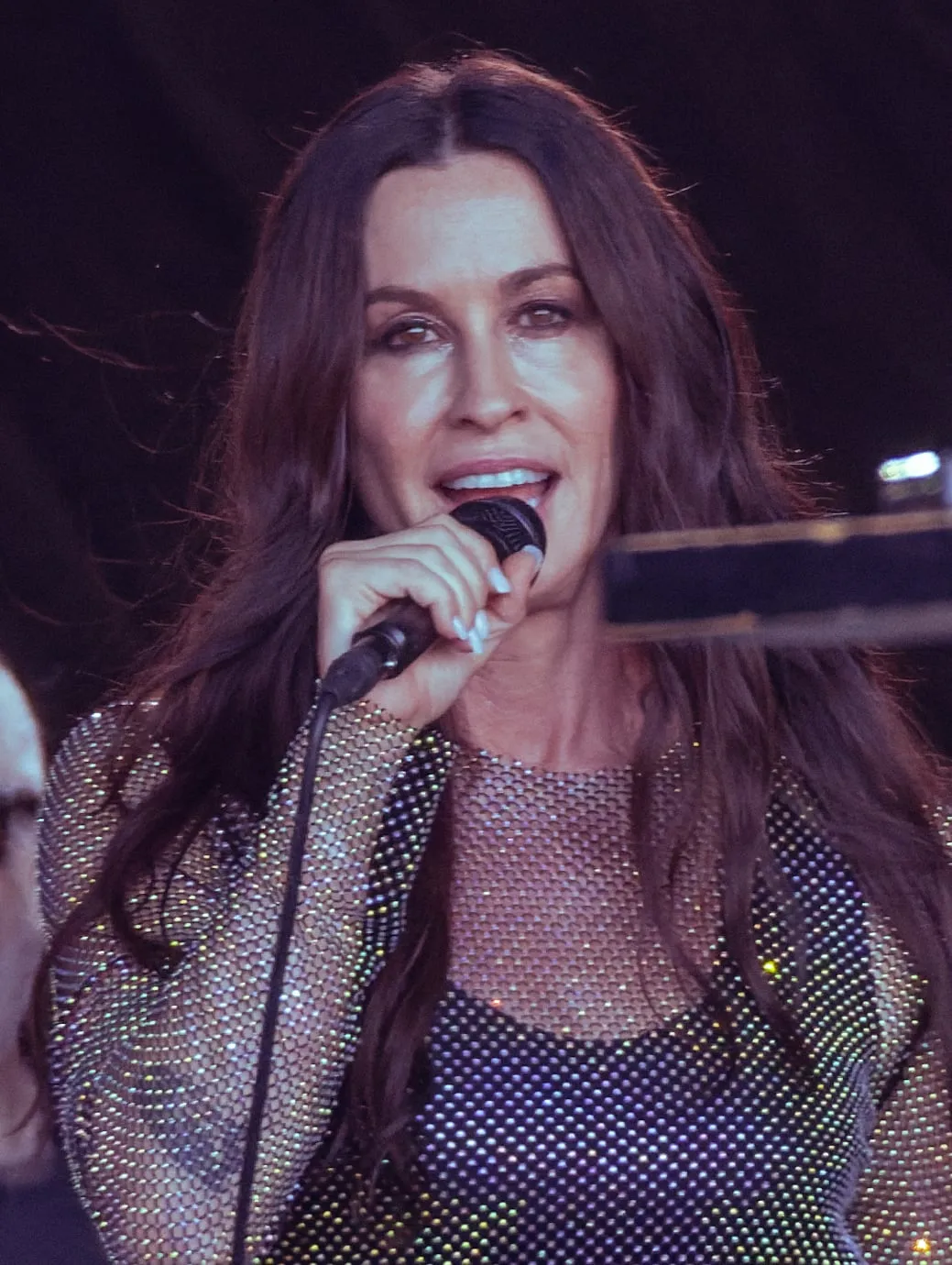
Photo by Raph_PH , licensed under CC BY 4.0 · Wikimedia Commons
Rank #49
Alanis Morissette
From Wikipedia
Alanis Nadine Morissette is a Canadian and American singer-songwriter and record producer. Regarded as the "Queen of Alt-Rock Angst", she became a cultural phenomenon in the 1990s, gaining international fame for her emotive mezzo-soprano voice and confessional songwriting. She has sold more than 60 million records worldwide. Her accolades include a Brit Award, seven Grammy Awards, fourteen Juno Awards, and nominations for two Golden Globe Awards and a Tony Award.
Discography & Previews
Browse through and click an album to open and play 30-second previews streamed from Apple Music.

Jagged Little Pill
1995 · 48 tracks
- 1 All I Really Want ↗ 4:43
- 1 The Bottom Line ↗ 4:11
- 1 All I Really Want (Acoustic Version) ↗ 5:25
- 1 All I Really Want (Live at Subterranea, London 09/28/95) ↗ 8:19
- 2 You Oughta Know ↗ 4:08
- 2 Superstar Wonderful Weirdos ↗ 4:23
- 2 You Oughta Know (Acoustic Version) ↗ 4:58
- 2 Right Through You (Live at Subterranea, London 09/28/95) ↗ 4:06
- 3 Perfect ↗ 3:06
- 3 Closer Than You Might Believe ↗ 3:35
- 3 Perfect (Acoustic Version) ↗ 3:26
- 3 Not the Doctor (Live at Subterranea, London 09/28/95) ↗ 6:48
- 4 Hand In My Pocket ↗ 3:39
- 4 No Avalon ↗ 4:21
- 4 Hand In My Pocket (Acoustic Version) ↗ 4:31
- 4 Hand In My Pocket (Live at Subterranea, London 09/28/95) ↗ 4:44
- 5 Right Through You ↗ 2:54
- 5 Comfort ↗ 4:05
- 5 Right Through You (Acoustic Version) ↗ 3:39
- 5 Mary Jane (Live at Subterranea, London 09/28/95) ↗ 6:40
- 6 Forgiven ↗ 4:59
- 6 Gorgeous ↗ 4:03
- 6 Forgiven (Acoustic Version) ↗ 4:43
- 6 Ironic (Live at Subterranea, London 09/28/95) ↗ 4:28
- 7 You Learn ↗ 3:59
- 7 King of Intimidation ↗ 3:20
- 7 You Learn (Acoustic Version) ↗ 4:09
- 7 You Learn (Live at Subterranea, London 09/28/95) ↗ 5:07
- 8 Head Over Feet ↗ 4:26
- 8 Death of Cinderella ↗ 3:15
- 8 Head Over Feet (Acoustic Version) ↗ 4:16
- 8 Forgiven (Live at Subterranea, London 09/28/95) ↗ 6:01
- 9 Mary Jane ↗ 4:38
- 9 London ↗ 4:32
- 9 Mary Jane (Acoustic Version) ↗ 5:07
- 9 You Oughta Know (Live at Subterranea, London 09/28/95) ↗ 5:23
- 10 Ironic ↗ 3:48
- 10 These Are the Thoughts ↗ 3:16
- 10 Ironic (Acoustic Version) ↗ 3:56
- 10 Wake Up (Live at Subterranea, London 09/28/95) ↗ 8:07
- 11 Not the Doctor ↗ 3:45
- 11 Not the Doctor (Acoustic Version) ↗ 4:25
- 11 Head Over Feet (Live at Subterranea, London 09/28/95) ↗ 4:23
- 12 Wake Up ↗ 4:55
- 12 Wake Up (Acoustic Version) ↗ 5:20
- 12 Perfect (Live at Subterranea, London 09/28/95) ↗ 3:31
- 13 You Oughta Know (Jimmy the Saint Blend) / Your House (A Capella) [2015 Remastered] ↗ 8:11
- 13 Your House (Acoustic Version) ↗ 3:38
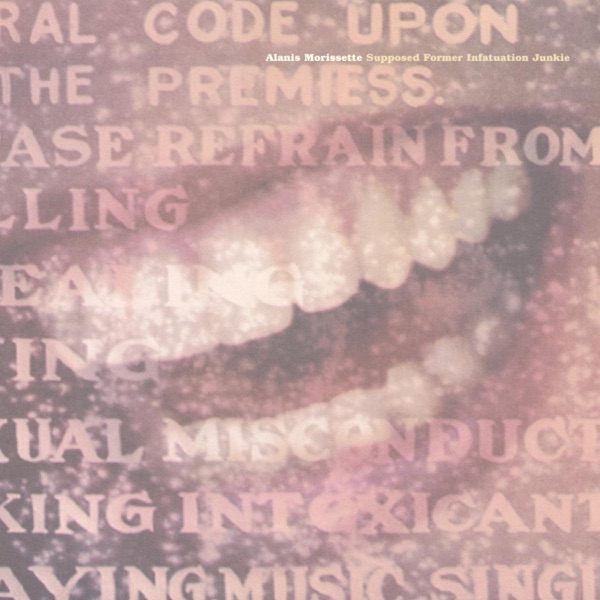
Supposed Former Infatuation Junkie
1998 · 17 tracks
- 1 Front Row ↗ 4:13
- 2 Baba ↗ 4:30
- 3 Thank U ↗ 4:19
- 4 Are You Still Mad ↗ 4:04
- 5 Sympathetic Character ↗ 5:13
- 6 That I Would Be Good ↗ 4:17
- 7 The Couch ↗ 5:25
- 8 Can't Not ↗ 4:36
- 9 UR ↗ 3:31
- 10 I Was Hoping ↗ 3:51
- 11 One ↗ 4:40
- 12 Would Not Come ↗ 4:05
- 13 Unsent ↗ 4:10
- 14 So Pure ↗ 2:51
- 15 Joining You ↗ 4:24
- 16 Heart of the House ↗ 3:46
- 17 Your Congratulations ↗ 3:56
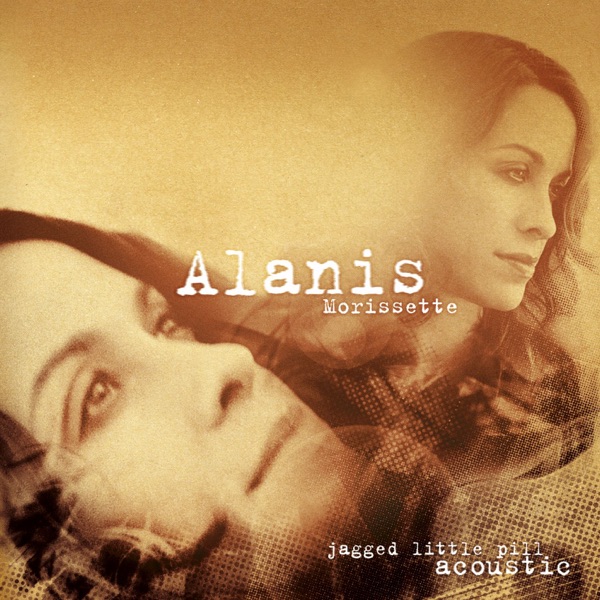
Jagged Little Pill (acoustic)
2005 · 13 tracks
- 1 All I Really Want (Acoustic Version) ↗ 5:25
- 2 You Oughta Know (Acoustic Version) ↗ 4:58
- 3 Perfect (Acoustic Version) ↗ 3:26
- 4 Hand in My Pocket (Acoustic Version) ↗ 4:31
- 5 Right Through You (Acoustic Version) ↗ 3:39
- 6 Forgiven (Acoustic Version) ↗ 4:43
- 7 You Learn (Acoustic Version) ↗ 4:09
- 8 Head over Feet (Acoustic Version) ↗ 4:16
- 9 Mary Jane (Acoustic Version) ↗ 5:07
- 10 Ironic (Acoustic Version) ↗ 3:56
- 11 Not the Doctor (Acoustic Version) ↗ 4:25
- 12 Wake Up (Acoustic Version) ↗ 5:20
- 13 Your House (Acoustic Version) ↗ 3:38
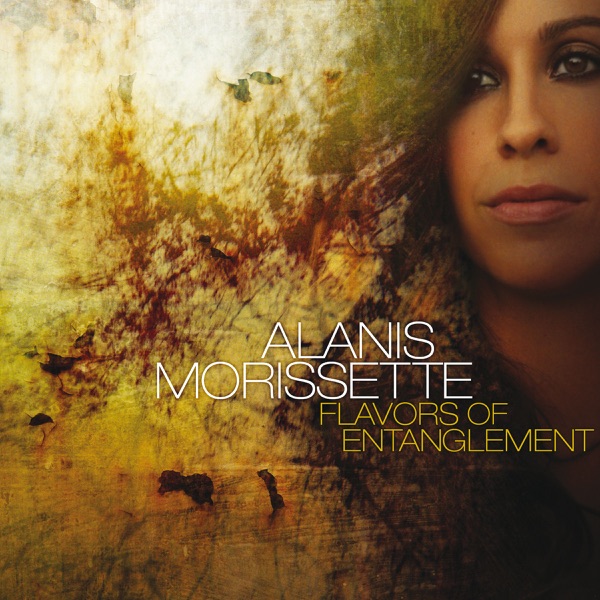
Flavors of Entanglement
2008 · 11 tracks

The Storm Before the Calm
2022 · 11 tracks
- 1 light—the lightworker’s lament ↗ 5:28
- 2 heart—power of a soft heart ↗ 7:46
- 3 explore—the other side of stillness ↗ 12:01
- 4 space—pause on violence ↗ 12:51
- 5 purification—the alchemical crunch ↗ 9:10
- 6 restore—calling generation X ↗ 9:47
- 7 awakening—in between thoughts ↗ 9:42
- 8 ground—i want to live. ↗ 11:43
- 9 safety—empath in paradise ↗ 11:02
- 10 mania—resting in the fire ↗ 7:22
- 11 vapor—amplified in stillness ↗ 9:46
-
 Jagged Little PillAlanis Morissette199548 tracks
 -
 Supposed Former Infatuation JunkieAlanis Morissette199817 tracks
 -
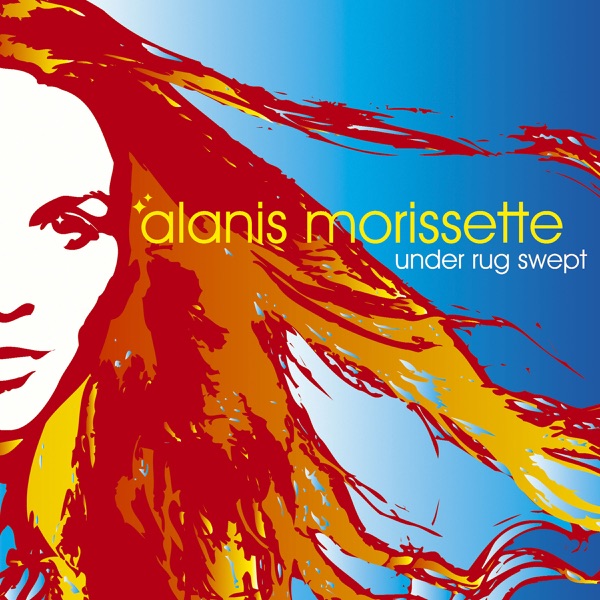
 Under Rug SweptAlanis Morissette200111 tracks
 -
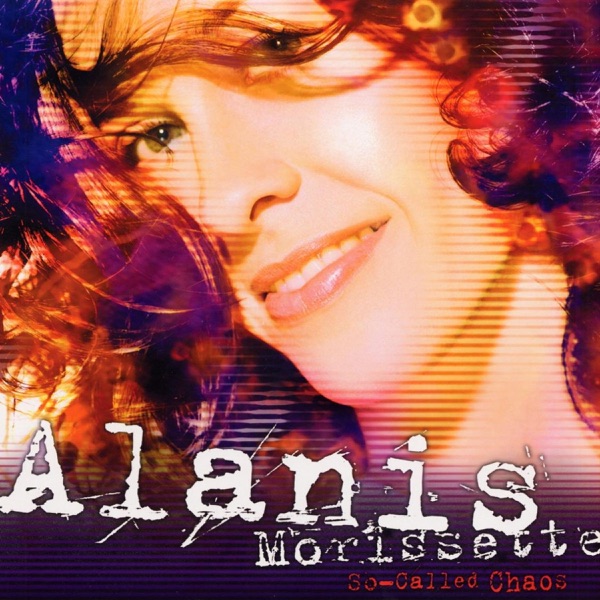
 So‐Called ChaosAlanis Morissette200410 tracks
 -
 Jagged Little Pill (acoustic)Alanis Morissette200513 tracks
 -
 Flavors of EntanglementAlanis Morissette200811 tracks
 -
 Havoc and Bright LightsAlanis Morissette201212 tracks
 -
 Such Pretty Forks in the RoadAlanis Morissette202011 tracks
 -
 The Storm Before the CalmAlanis Morissette202211 tracks
Deep Dive
Overview
Alanis Nadine Morissette emerged as one of rock music’s most distinctive voices, earning the title “Queen of Alt-Rock Angst” through a combination of emotional vulnerability, distinctive mezzo-soprano phrasing, and unflinching confessional songwriting. Born in 1974, she would become a defining artist of 1990s alternative rock, selling more than 60 million records worldwide and accumulating seven Grammy Awards, fourteen Juno Awards, a Brit Award, and nominations for two Golden Globes and a Tony Award. Her trajectory from early pop experimentation to stadium-filling alt-rock success marks one of the most significant transformations in rock music history.
Formation Story
Alanis Morissette was born in Ottawa, Ontario, Canada, in 1974, emerging from a musical household that nurtured her talents from an early age. She began performing and recording in her teenage years, initially exploring pop and dance-influenced material in the late 1980s and early 1990s. Her early albums—Alanis (1991) and Now Is the Time (1992)—positioned her as a promising pop artist, but these early efforts found limited traction in the broader marketplace. The Canadian music scene provided her foundation, but she remained largely unknown outside her home country during this period. It would take a significant artistic shift and change in creative approach to unlock the emotional and commercial potential that would define her career.
Breakthrough Moment
The release of Jagged Little Pill in 1995 fundamentally altered Alanis’s career trajectory and reshaped the landscape of 1990s rock music. The album’s raw, guitar-driven sound and deeply personal songwriting struck a cultural nerve at precisely the right moment, transforming her into an international phenomenon. Jagged Little Pill became a commercial and critical juggernaut, establishing Morissette as the voice of a generation wrestling with betrayal, anger, and emotional honesty. The album’s success positioned her at the vanguard of post-grunge and alternative rock, proving that confessional, introspective songwriting could achieve massive mainstream success without compromise. This breakthrough moment launched her into the upper echelon of global rock artists and remains the defining achievement of her career.
Peak Era
The period spanning 1995 to 2004 represents Alanis Morissette’s peak creative and commercial era. Following the monumental success of Jagged Little Pill, she consolidated her standing with Supposed Former Infatuation Junkie in 1998, which demonstrated her ability to sustain artistic momentum while continuing to explore personal and emotional territory. Under Rug Swept (2001) and So‐Called Chaos (2004) extended her run of critical and commercial relevance, showcasing her range across alternative rock, progressive rock, and experimental textures. During this nine-year window, she became one of the most influential figures in rock music, a status reflected in her Grammy recognition, Grammy nominations, and position as a cultural touchstone for artists exploring emotional vulnerability in rock contexts. Her touring presence during these years cemented her reputation as a commanding live performer capable of filling arenas worldwide.
Musical Style
Alanis Morissette’s sound synthesizes alternative rock’s intensity with pop-rock accessibility, anchored by her distinctive mezzo-soprano voice—distinctive not for technical perfection but for its emotional rawness and rhythmic unpredictability. Her songwriting fuses confessional lyrical themes with complex harmonic structures and intricate production, drawing from progressive rock’s instrumental sophistication while maintaining the directness and punch of contemporary alternative rock. Early albums like Jagged Little Pill showcase her ability to balance guitar-driven rock arrangements with electronic elements and layered vocal textures, creating sonic landscapes that feel both immediate and intricately constructed. As her career progressed, she experimented across genres including electronica and dance-pop, while maintaining the emotional core that defines her work. Her 2005 acoustic reworking of Jagged Little Pill demonstrated the strength of her compositions when stripped to their essence, while later albums like Havoc and Bright Lights (2012), Such Pretty Forks in the Road (2020), and The Storm Before the Calm (2022) revealed her continued willingness to evolve sonically while remaining rooted in introspective, character-driven songwriting.
Major Albums
Jagged Little Pill (1995)
The definitive breakthrough album that established Morissette as a major rock force. Its blend of alternative rock angst, confessional lyrics, and commercially accessible hooks created a template that influenced countless artists and became one of the decade’s bestselling records.
Supposed Former Infatuation Junkie (1998)
Proving Jagged Little Pill was no one-album phenomenon, this follow-up deepened her exploration of emotional complexity while maintaining commercial viability. It solidified her status as a singular voice in 1990s rock.
Under Rug Swept (2001)
This album continued her trajectory of artistic maturation, showcasing her range across rock, experimental, and alternative textures while maintaining the confessional songwriting that defined her brand.
So‐Called Chaos (2004)
Marking the end of her peak commercial period, this album demonstrated her commitment to artistic evolution and experimental approaches within a rock framework.
Havoc and Bright Lights (2012)
Released after an extended period of relative commercial quiet, this album signaled her return to recording and her continued artistic relevance beyond her 1990s peak.
Such Pretty Forks in the Road (2020)
A recent album demonstrating Morissette’s ongoing creative output and her ability to remain engaged with contemporary rock contexts and songwriting approaches.
Signature Songs
- “You Oughta Know” — The defining anthem from Jagged Little Pill that became her signature song, a raw expression of anger and betrayal that achieved international recognition.
- “Right Through You” — A hard-edged rock track from Jagged Little Pill exemplifying her ability to channel emotional intensity into guitar-driven arrangements.
- “Ironic” — A lighter, more pop-oriented track that expanded her radio presence while maintaining her distinctive vocal character.
- “Not the Doctor” — An alternative rock staple from Jagged Little Pill showcasing her range as both vocalist and songwriter.
- “Uninvited” — A powerful ballad demonstrating her capacity for emotional vulnerability and subtle, intricate arrangement.
- “Head over Feet” — A softer moment from Jagged Little Pill that balanced her harder rock edges with accessible melody.
Influence on Rock
Alanis Morissette’s impact on 1990s and 2000s rock music cannot be overstated. Her success demonstrated that confessional, emotionally raw songwriting could achieve massive commercial success without sacrificing artistic integrity or authenticity. She opened doors for female alternative rock artists operating at the intersection of vulnerability and power, proving that audiences craved emotional honesty in rock contexts. Her influence extends across alternative rock, pop-rock, and progressive rock, with countless artists citing her as a direct inspiration. The wave of introspective, guitar-driven rock that dominated the late 1990s and early 2000s owes a direct debt to the template she established with Jagged Little Pill. Her success also legitimized the confessional songwriting approach within mainstream rock, shifting cultural expectations around masculinity and emotional expression in the genre.
Legacy
Alanis Morissette’s legacy as a transformative figure in 1990s rock music remains secure. Jagged Little Pill’s enduring popularity across generations, reinforced by its 2005 acoustic reissue, confirms the durability of her songwriting and her cultural significance. Her continued recording activity—including albums through 2022—demonstrates her commitment to artistic engagement beyond the 1990s breakthrough that defined her initial fame. The scale of her commercial success (60 million records sold worldwide) and critical recognition (seven Grammys and fourteen Junos) places her among rock music’s most accomplished artists. Her influence on artists exploring emotional vulnerability in rock contexts persists, with her work remaining a touchstone for discussions of confessional songwriting, alternative rock’s mainstream emergence, and women’s roles in shaping 1990s rock culture. Morissette’s evolution from pop prodigy to alternative rock phenomenon to elder stateswoman of introspective rock continues to resonate across streaming platforms and in live performance.
Fun Facts
- Alanis Morissette holds the distinction of fourteen Juno Award wins, making her one of Canada’s most decorated musicians and reflecting her enduring significance in Canadian music culture.
- Her acoustic reimagining of Jagged Little Pill in 2005 underscored the strength of her compositions by demonstrating their effectiveness stripped of production embellishment, introducing the album to new listeners and reflecting shifting approaches to album reissues in the digital era.
- In addition to her recording career, Morissette has received nominations for Tony Awards and Golden Globe Awards, demonstrating her range beyond traditional rock music contexts and her involvement in broader entertainment and theatrical projects.
- Her 1990s breakthrough coincided with the rise of female-fronted alternative rock, positioning her as a key figure alongside other artists reshaping rock music’s commercial and artistic landscape during the decade.