
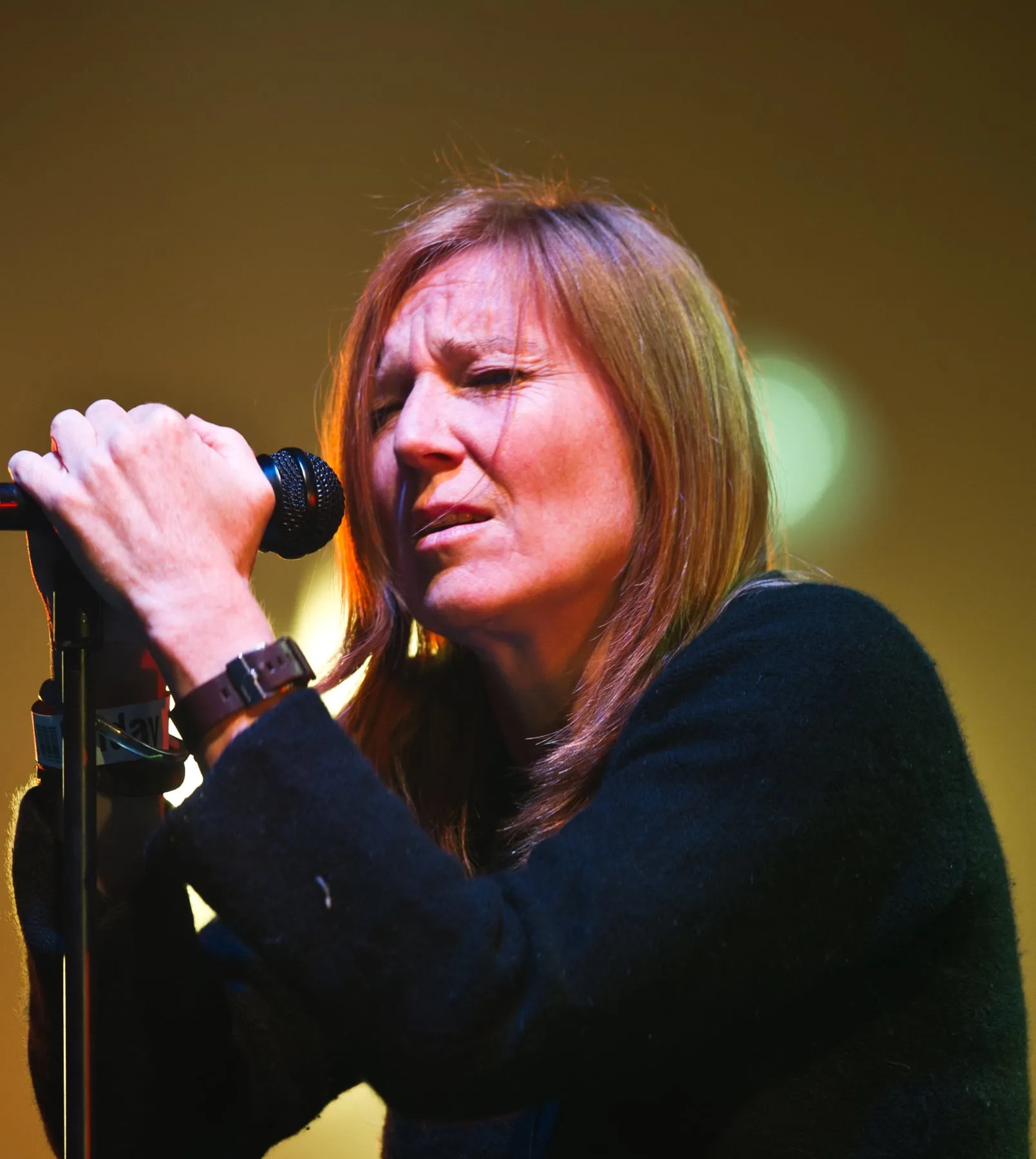
Photo by Bill Ebbesen , licensed under CC BY-SA 3.0 · Wikimedia Commons
Rank #417
Beth Gibbons
From Wikipedia
Beth Gibbons is an English singer and songwriter. She is the singer and lyricist for the band Portishead, who have released three albums. She released an album with fellow English musician Rustin Man, Out of Season, in 2002, and a recording of contemporary Polish composer Górecki's Symphony No. 3 in 2019 with the Polish National Radio Symphony Orchestra. In 2024, she released her first solo album without collaboration, Lives Outgrown. The album received critical acclaim and was nominated for the 2024 Mercury Prize.
Discography & Previews
Browse through and click an album to open and play 30-second previews streamed from Apple Music.

-
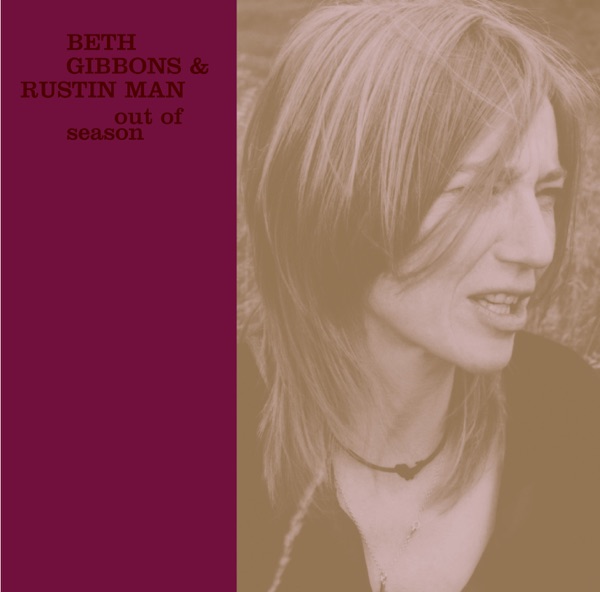
 Out of SeasonBeth Gibbons200210 tracks
 -
 Lives OutgrownBeth Gibbons202410 tracks
Deep Dive
Overview
Beth Gibbons is an English singer and songwriter born in Exeter in 1965 who has spent her career navigating between collective artistic vision and solo exploration. Known primarily as the vocalist and lyricist for the band Portishead, Gibbons has also pursued parallel work as a solo artist and collaborator, building a body of work that spans alternative rock, contemporary classical interpretation, and introspective songwriting. Her voice—measured, intimate, and often melancholic—has become synonymous with Portishead’s cinematic trip-hop sound, yet her solo ventures reveal an artist unwilling to be confined to a single aesthetic or genre.
Formation Story
Beth Gibbons grew up in Exeter, a medieval cathedral city in Devon in the southwest of England. She came of age during the 1980s and early 1990s as the post-punk and alternative rock scenes were fracturing into new styles. Gibbons emerged as a vocalist in the musical landscape that would eventually coalesce into Portishead, a band that formed in Bristol during the early 1990s and became central to the trip-hop movement. Her entry into music was not as a solo performer seeking the spotlight but as a collaborator and vocalist within an ensemble, placing her at the intersection of alternative rock and experimental electronic production from the outset of her professional career.
Breakthrough Moment
Gibbons’s breakthrough came as the voice and lyricist of Portishead, whose album Dummy (1994) became a defining moment in mid-1990s alternative music. The album’s cinematic production, film-noir aesthetic, and Gibbons’s reserved vocal performance positioned Portishead as architects of a new sound that blended electronic instrumentation with the emotional weight of traditional songwriting. Her distinctive vocal presence became inseparable from Portishead’s identity, and the band’s subsequent albums cemented her standing as one of the most recognizable voices in contemporary alternative rock. Though Gibbons has always been a member of a band rather than a conventional solo frontwoman, her contributions as both singer and lyricist made her the human face of Portishead’s abstract, production-driven approach.
Peak Era
Gibbons’s most creatively and commercially visible period spans the band’s releases through the 1990s and 2000s, when Portishead released multiple albums that expanded on their initial trip-hop blueprint. The band’s continued output established Gibbons as an artist whose restraint and emotional complexity elevated Portishead beyond the status of a trend or genre curiosity. During this era, she was equally invested in maintaining the integrity of the group’s vision while privately exploring other musical territories. This period reflected both her commitment to Portishead as the primary vehicle for her artistic voice and an awareness that other creative expressions lay beyond the band’s aesthetic parameters.
Musical Style
Gibbons’s vocal approach is characterized by understatement and nuance. She typically sings in a register that prioritizes clarity and emotional directness over technical virtuosity, allowing her lyrics to occupy the foreground of Portishead’s layered instrumental arrangements. Her phrasing is deliberate and spare, often moving slowly through lyrics that explore themes of alienation, longing, and introspection. Within Portishead, her voice functions as an additional instrument in a densely orchestrated sound that combines drum machines, analog synthesizers, string arrangements, and sampled textures. As a solo and collaborative artist, Gibbons has demonstrated a willingness to strip away electronic production and engage with different forms—chamber arrangements, orchestral settings, and acoustic accompaniment—that foreground her vocal and lyrical abilities. Her songwriting explores intimate psychological terrain, grounded in specific emotional states rather than abstract concepts or narrative tales.
Major Albums
Out of Season (2002)
A collaboration with musician Rustin Man, Out of Season marked Gibbons’s first proper solo recording and represented a deliberate departure from Portishead’s electronic architecture. Accompanied by minimal acoustic instrumentation, the album centered Gibbons’s voice and songwriting in a way that Portishead’s dense production often obscured, revealing a songwriter with a gift for intimate, character-driven composition.
Symphony No. 3, Op. 36 “Symphony of Sorrowful Songs” (2019)
Gibbons undertook this recording with the Polish National Radio Symphony Orchestra, performing Górecki’s contemporary classical composition. This project represented an unconventional solo work—not an album of her own songs but an interpretation of existing classical material, demonstrating her willingness to engage with genres and traditions entirely outside rock music.
Lives Outgrown (2024)
Gibbons’s first solo album without collaboration, Lives Outgrown was released in 2024 to critical acclaim. The album received a nomination for the 2024 Mercury Prize, one of the British music industry’s highest honors, affirming the artistic merit of her work outside of Portishead and positioning her as a significant solo artist in her own right after decades as primarily a band member.
Signature Songs
- “Wandering Star” (Portishead, Dummy, 1994) — A sparse, piano-driven composition that exemplifies Gibbons’s ability to convey profound melancholy through minimal means.
- “Glory Box” (Portishead, Portishead, 1997) — Features one of her most recognizable vocal performances, layered over a minimalist arrangement that emphasizes her interpretive control.
- “Roads” (Portishead, Dummy, 1994) — A signature showcase for her voice, this atmospheric track demonstrates her skill at sustaining emotional tension across an entire composition.
- “It Could Be Sweet” (Portishead, Dummy, 1994) — A quieter track that reveals the conversational, understated quality of her delivery in intimate settings.
Influence on Rock
Gibbons’s contribution to rock and alternative music has been primarily through her role in Portishead, though her influence operates in ways distinct from the typical rock frontperson. She helped define the sound of trip-hop, a genre that emerged in the mid-1990s and drew heavily from electronic production, hip-hop rhythms, and rock instrumentation. Her restrained vocal approach—rejecting the maximalism of 1980s rock vocals and the aggression common in grunge and punk—modeled an alternative way of being a rock vocalist, one grounded in clarity and emotional specificity rather than power or technical display. Her work has influenced how subsequent artists have approached the integration of electronic production with human vocal performance, and her later solo work has demonstrated that artists established within a single band or aesthetic can successfully reinvent themselves without abandoning their core sensibility.
Legacy
Beth Gibbons remains one of the defining voices of 1990s alternative rock, a period when British artists from Exeter and Bristol were reshaping global popular music. Her association with Portishead ensures her a permanent place in the history of trip-hop and alternative rock, genres whose innovations continue to influence electronic and experimental music producers decades later. The release of Lives Outgrown in 2024 and its Mercury Prize nomination represent a late-career affirmation of her artistry as a solo musician, proving that her voice and songwriting remain vital and relevant. Her recordings remain in steady circulation on streaming platforms, and her occasional performances continue to draw audiences interested in both Portishead’s catalog and her solo work. Gibbons has exemplified a particular kind of artistic integrity—a willingness to work within established creative frameworks while quietly pursuing parallel explorations, resulting in a legacy that spans both collective and solitary achievement.
Fun Facts
- Beth Gibbons was born in 1965 in Exeter, a city with a long musical history that would later produce other notable acts in the British rock and alternative scenes.
- In addition to her work in music, Gibbons has maintained a relatively private public profile compared to many rock vocalists, allowing her artistic output rather than celebrity persona to define her public image.
- Her 2019 recording of Góreki’s Symphony No. 3 demonstrated her classical training and interest in contemporary composition, a departure that underscored the range of her musical ambitions beyond rock idioms.