
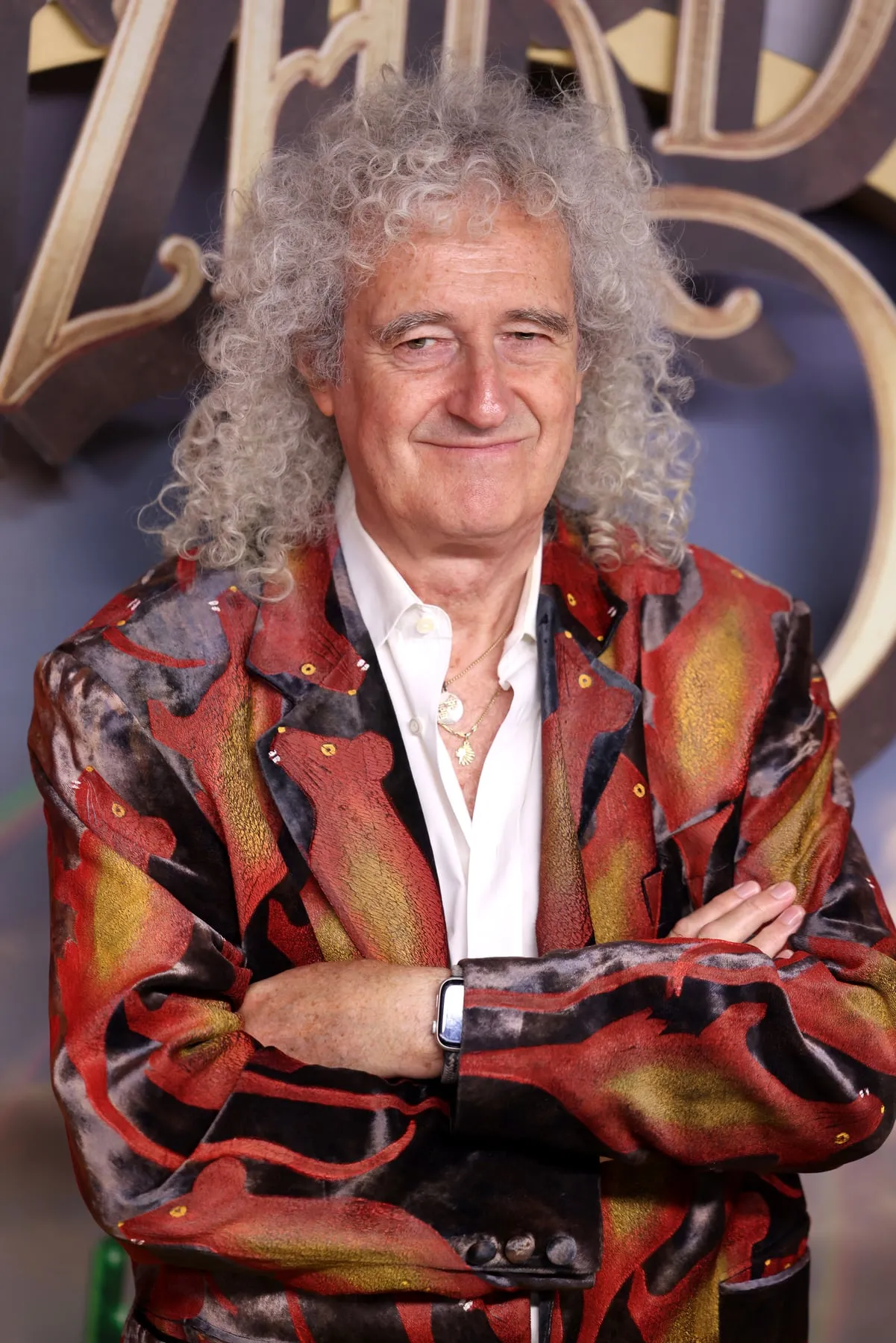
Photo by Gage Skidmore , licensed under CC BY-SA 4.0 · Wikimedia Commons
Rank #287
Brian May
From Wikipedia
Sir Brian Harold May is an English musician, animal welfare activist, and astrophysicist. He achieved global fame as the lead guitarist and backing vocalist of the rock band Queen, which he co-founded with singer Freddie Mercury and drummer Roger Taylor. His guitar work and songwriting contributions helped Queen become one of the most successful acts in music history.
Discography & Previews
Browse through and click an album to open and play 30-second previews streamed from Apple Music.

Star Fleet Project
1983 · 2 tracks

Back to the Light
1992 · 12 tracks
- 1 The Dark ↗ 2:20
- 2 Back To The Light ↗ 5:00
- 3 Love Token ↗ 5:56
- 4 Resurrection ↗ 5:27
- 5 Too Much Love Will Kill You ↗ 4:29
- 6 Driven By You ↗ 4:12
- 7 Nothin' But Blue ↗ 3:31
- 8 I'm Scared (Justin's Mix '92) ↗ 4:00
- 9 Last Horizon ↗ 4:11
- 10 Let Your Heart Rule Your Head ↗ 3:52
- 11 Just One Life ↗ 3:38
- 12 Rollin' Over ↗ 4:35

Another World
1998 · 13 tracks
-
 Star Fleet ProjectBrian May19832 tracks
 -
 Back to the LightBrian May199212 tracks
 -
 Another WorldBrian May199813 tracks
Deep Dive
Overview
Brian Harold May is an English musician best known as the lead guitarist and backing vocalist of Queen, the rock band he co-founded with Freddie Mercury and drummer Roger Taylor. His distinctive guitar work, characterized by layered, orchestral textures and harmonic complexity, became a defining element of Queen’s sound and one of rock music’s most recognizable signatures. Beyond his decades-long tenure with Queen, May pursued a parallel solo career spanning from the early 1980s onward, releasing studio albums that reflected his eclectic interests in pop rock, hard rock, and progressive rock.
Formation Story
Brian May was born in 1947 in the United Kingdom, emerging from the post-war British rock landscape that produced some of the era’s most innovative musicians. His path to rock music was shaped by the cultural ferment of the 1950s and 1960s, a period that saw the rise of electric guitar as a dominant force in popular music. May would later become not only a musician but also an astrophysicist, a dual identity that reflected his intellectually rigorous approach to both art and science. His entry into rock music came through his collaboration with Freddie Mercury and Roger Taylor, with whom he formed Queen. This partnership would define his early career and establish him as one of rock’s most significant figures, even as he maintained an interest in solo work and other creative pursuits.
Breakthrough Moment
May’s breakthrough came through Queen’s rapid ascent in the 1970s, though his solo work began to take shape in the early 1980s with the Star Fleet Project in 1983, a collaboration that marked his first formal venture outside the band framework. This early solo outing demonstrated that May could sustain interest in projects beyond Queen, though the band remained his primary focus. The release of Radio Voices in 1985 further established that May was committed to exploring musical territory independent of Queen’s theatrical rock sound. These early solo efforts positioned him as a multifaceted artist willing to experiment while maintaining his role as one of rock’s most technically accomplished guitarists.
Peak Era
May’s peak era extended across Queen’s most commercially and artistically successful decades, from the mid-1970s through the 1980s and into the 1990s. During this time, Queen released a series of albums that showcased May’s compositional gifts and his ability to craft songs that balanced accessibility with technical sophistication. His solo work in the 1990s also gained momentum, with Back to the Light arriving in 1992 and Out On His Own following in 1993, albums that allowed him to explore a more personal artistic vision. The late 1990s brought Another World in 1998, demonstrating that May remained creatively vital as both a solo artist and as part of Queen’s enduring legacy.
Musical Style
Brian May’s musical style is defined by his innovative approach to electric guitar, marked by the use of layered harmonics, sustained notes, and a tone that blended hard rock aggression with orchestral sophistication. His signature instrument, the Red Special, became iconic in rock music, its unique voice inseparable from Queen’s sound. May’s approach to songwriting bridged pop rock accessibility with progressive rock complexity, allowing him to craft songs that ranged from radio-friendly pop to ambitious, multi-part compositions. His backing vocals added harmonic depth to Queen’s arrangements, and his solo work similarly demonstrated a preference for rich, layered production. The genres he worked in—pop rock, hard rock, glam rock, and progressive rock—all found expression in his solo albums, which often reflected his curiosity about different production techniques and instrumental textures.
Major Albums
Back to the Light (1992)
May’s third solo album marked a significant return to focused solo work, presenting material that showcased his songwriting and production sensibilities apart from Queen’s group dynamic.
Another World (1998)
This album demonstrated May’s continued commitment to solo recording, exploring themes and sounds that reflected his artistic interests and technical mastery of the guitar.
Golden Days (2017)
Released decades into his career, Golden Days affirmed May’s vitality as a recording artist and his ability to remain relevant in contemporary rock music.
Star Fleet Project (1983)
May’s debut solo venture, this early work established his willingness to pursue projects outside Queen and demonstrated the range of his musical interests.
Signature Songs
- “We Will Rock You” — May’s straightforward yet powerful composition became one of Queen’s most recognizable anthems, showcasing his ability to craft songs with universal appeal.
- “The Show Must Go On” — Co-written by May and Mercury, this epic ballad became one of Queen’s signature pieces and a testament to his songwriting prowess.
- “Fat Bottomed Girls” — A hard rock track written by May that balanced humor with musical sophistication, becoming a concert staple.
- “Tie Your Mother Down” — May’s hard rock composition demonstrated his range beyond the theatrical material Queen became known for.
Influence on Rock
Brian May’s influence on rock music extends far beyond his work with Queen. His innovative approach to guitar tone and layering—techniques that predated digital multitracking by making creative use of analog recording—inspired generations of guitarists to think more orchestrally about their instrument. The harmonic complexity and technical precision he brought to rock music elevated guitarist expectations across the genre. His willingness to pursue solo work while remaining committed to Queen’s output demonstrated that artists could balance group and individual identity without compromising either. May’s example opened doors for rock guitarists to be seen not merely as accompanists but as primary songwriters and arrangers, a shift that reshaped how rock music was understood and created.
Legacy
Brian May’s legacy rests on his dual achievement as one of rock’s most significant guitarists and as a solo artist in his own right. His technical innovations with the guitar, particularly his use of harmonic layering and sustain, remain studied by musicians and continue to influence contemporary rock practitioners. His solo albums, while eclipsed in cultural impact by Queen’s work, established him as a serious recording artist capable of sustaining interest across multiple decades. Beyond music, May’s identity as an astrophysicist added intellectual credibility to his public profile, complicating and enriching the narrative of who rock musicians could be. His ongoing presence in rock culture, through continued touring with Queen’s surviving members and his advocacy work, ensures that his influence remains visible. Streaming platforms have introduced new generations to both Queen and his solo catalog, sustaining his position as a foundational figure in rock music history.
Fun Facts
- May holds a doctorate in astrophysics, which he pursued alongside his music career, blending scientific rigor with artistic creativity.
- His signature Red Special guitar was built by his father in the 1960s and remains his primary instrument, making it one of the most famous guitars in rock history.
- May has been a dedicated animal welfare activist throughout his career, integrating his humanitarian concerns with his public profile.
- He recorded under the Hollywood Records and Parlophone labels, establishing relationships with major recording institutions across his solo and group work.