

Photo by Raph_PH , licensed under CC BY 2.0 · Wikimedia Commons
Rank #84
Cyndi Lauper
From Wikipedia
Cynthia Ann Stephanie Lauper is an American singer, songwriter and actress. Lauper is known for her distinctive image, which features eccentric clothing and a variety of hair colors. She is also known for her powerful four-octave vocal range. Lauper has been dubbed the "Queen of Quirky Pop". She has sold over 50 million records worldwide. She has also been celebrated for her humanitarian work, particularly as an advocate for LGBTQ rights in the United States.
Discography & Previews
Browse through and click an album to open and play 30-second previews streamed from Apple Music.

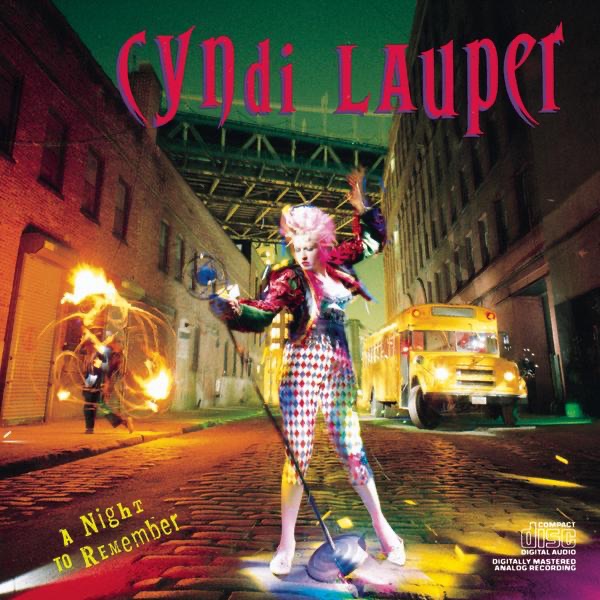
A Night to Remember
1989 · 12 tracks
- 1 Intro ↗ 0:28
- 2 I Drove All Night ↗ 4:12
- 3 Primitive ↗ 3:48
- 4 My First Night Without You ↗ 3:01
- 5 Like a Cat ↗ 3:23
- 6 Heading West ↗ 3:55
- 7 A Night to Remember ↗ 3:44
- 8 Unconditional Love ↗ 3:56
- 9 Insecurious ↗ 3:31
- 10 Dancing With a Stranger ↗ 4:11
- 11 I Don't Want to Be Your Friend ↗ 4:22
- 12 Kindred Spirit ↗ 1:16
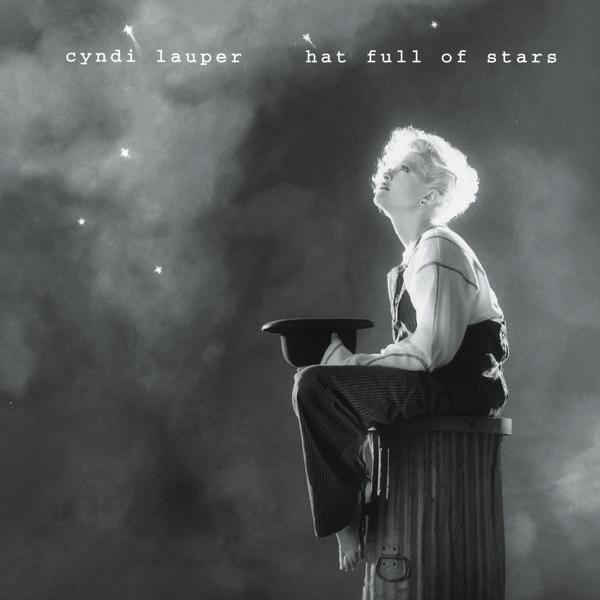
Hat Full of Stars
1993 · 12 tracks

Sisters of Avalon
1996 · 13 tracks
- 1 Sisters of Avalon ↗ 4:20
- 2 Ballad of Cleo & Joe ↗ 3:59
- 3 Fall Into Your Dreams ↗ 4:46
- 4 You Don't Know ↗ 5:14
- 5 Love to Hate ↗ 3:25
- 6 Hot Gets a Little Cold ↗ 3:37
- 7 Unhook the Stars ↗ 3:57
- 8 Searching ↗ 4:36
- 9 Say a Prayer ↗ 4:52
- 10 Mother ↗ 4:44
- 11 Fearless ↗ 3:39
- 12 Brimstone and Fire ↗ 3:35
- 13 Lollygagging ↗ 0:24

Merry Christmas… Have a Nice Life!
1998 · 11 tracks
- 1 Home On Christmas Day ↗ 4:07
- 2 Early Christmas Morning ↗ 5:06
- 3 Rockin' Around the Christmas Tree ↗ 2:45
- 4 Christmas Conga ↗ 3:31
- 5 Minnie and Santa ↗ 3:56
- 6 Feels Like Christmas ↗ 4:31
- 7 Three Ships ↗ 2:08
- 8 New Year's Baby (First Lullaby) ↗ 4:28
- 9 December Child ↗ 3:11
- 10 In The Bleak Midwinter ↗ 4:02
- 11 Silent Night ↗ 4:19


At Last
2003 · 13 tracks
- 1 At Last ↗ 2:42
- 2 Walk on By ↗ 4:32
- 3 Stay ↗ 3:13
- 4 La Vie en Rose ↗ 3:34
- 5 Unchained Melody ↗ 4:27
- 6 If You Go Away ↗ 4:27
- 7 Until You Come Back to Me (That's What I'm Gonna Do) ↗ 4:39
- 8 My Baby Just Cares for Me ↗ 2:37
- 9 Makin' Whoopee ↗ 4:14
- 10 Don't Let Me Be Misunderstood ↗ 3:39
- 11 You've Really Got a Hold On Me ↗ 4:04
- 12 Hymn to Love ↗ 3:33
- 13 On the Sunny Side of the Street ↗ 4:05
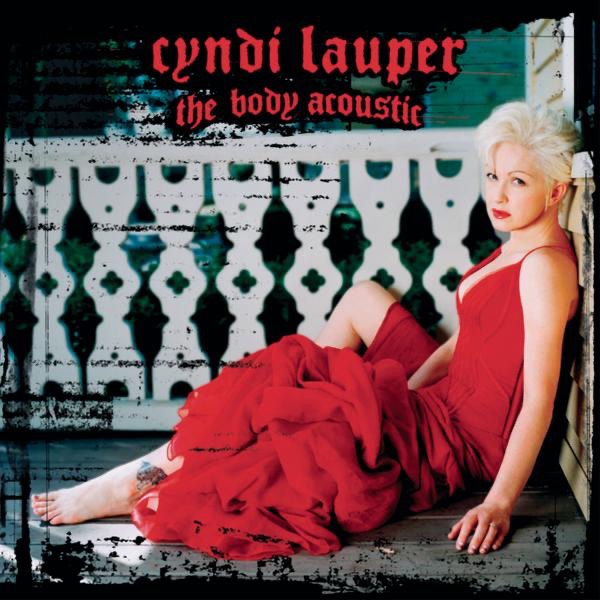
The Body Acoustic
2005 · 12 tracks
- 1 Money Changes Everything (feat. Adam Lazzara) ↗ 5:15
- 2 All Through the Night (feat. Shaggy) ↗ 4:41
- 3 Time After Time (feat. Sarah McLachlan) ↗ 4:17
- 4 She Bop ↗ 4:17
- 5 Above the Clouds (feat. Jeff Beck) ↗ 3:58
- 6 I'll Be Your River (feat. Vivian Green) ↗ 4:47
- 7 Sisters of Avalon (feat. Ani DiFranco & Vivian Green) ↗ 5:27
- 8 Shine ↗ 3:31
- 9 True Colors ↗ 4:10
- 10 Water's Edge (feat. Sarah McLachlan) ↗ 4:47
- 11 Fearless ↗ 3:58
- 12 Girls Just Want to Have Fun (feat. Puffy Ami Yumi) ↗ 3:01

Memphis Blues
2010 · 11 tracks
- 1 Just Your Fool (feat. Charlie Musselwhite) ↗ 3:38
- 2 Shattered Dreams (feat. Allen Toussaint) ↗ 3:52
- 3 Early In the Mornin' (feat. Allen Toussaint & B.B. King) ↗ 3:51
- 4 Romance In the Dark ↗ 5:44
- 5 How Blue Can You Get? (feat. Jonny Lang) ↗ 5:24
- 6 Down Don't Bother Me (feat. Charlie Musselwhite) ↗ 3:03
- 7 Don't Cry No More ↗ 2:44
- 8 Rollin' and Tumblin' (feat. Ann Peebles) ↗ 3:29
- 9 Down So Low ↗ 3:55
- 10 Mother Earth (feat. Allen Toussaint) ↗ 5:19
- 11 Crossroads (feat. Jonny Lang) ↗ 4:44
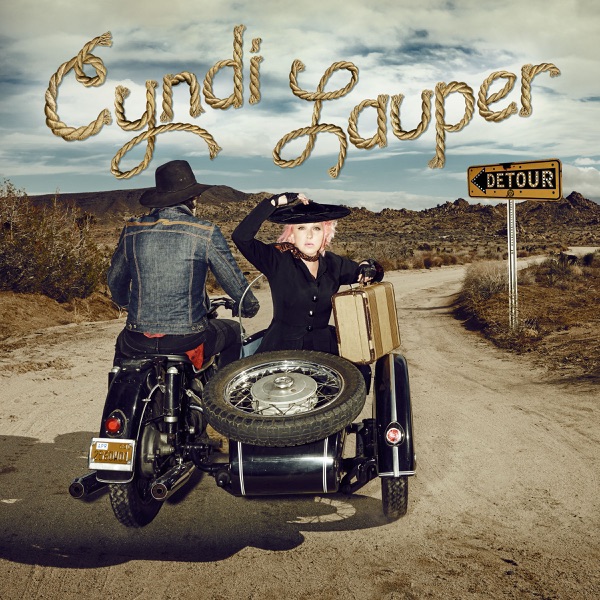
Detour
2016 · 12 tracks
- 1 Funnel of Love ↗ 3:16
- 2 Detour (feat. Emmylou Harris) ↗ 2:55
- 3 Misty Blue ↗ 3:19
- 4 Walkin' After Midnight ↗ 2:16
- 5 Heartaches By the Number ↗ 3:11
- 6 The End of the World ↗ 3:13
- 7 Night Life (feat. Willie Nelson) ↗ 2:59
- 8 Begging To You ↗ 3:24
- 9 You're the Reason Our Kids Are Ugly (feat. Vince Gill) ↗ 3:43
- 10 I Fall To Pieces ↗ 3:01
- 11 I Want To Be a Cowboy's Sweetheart (feat. Jewel) ↗ 3:14
- 12 Hard Candy Christmas (feat. Alison Krauss) ↗ 3:54
-
 She’s So UnusualCyndi Lauper198310 tracks
 -
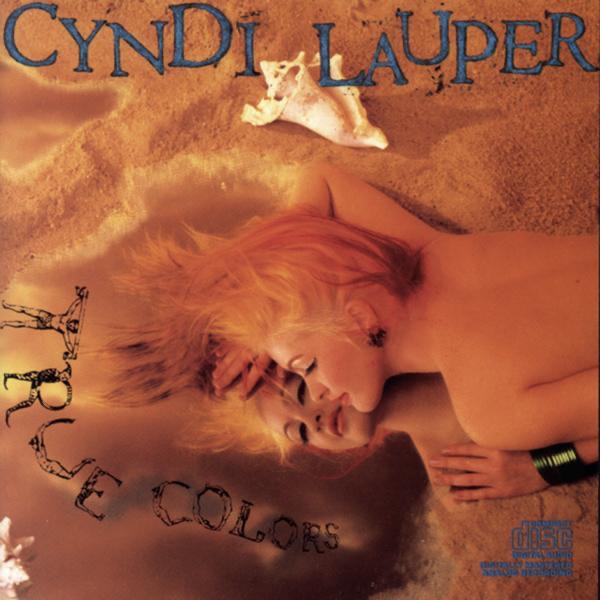
 True ColorsCyndi Lauper198610 tracks
 -
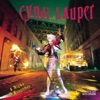 A Night to RememberCyndi Lauper198912 tracks
 -
 Hat Full of StarsCyndi Lauper199312 tracks
 -
 Sisters of AvalonCyndi Lauper199613 tracks
 -
 Merry Christmas… Have a Nice Life!Cyndi Lauper199811 tracks
 -
 ShineCyndi Lauper20016 tracks
 -
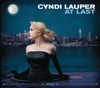 At LastCyndi Lauper200313 tracks
 -
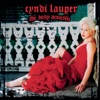 The Body AcousticCyndi Lauper200512 tracks
 -
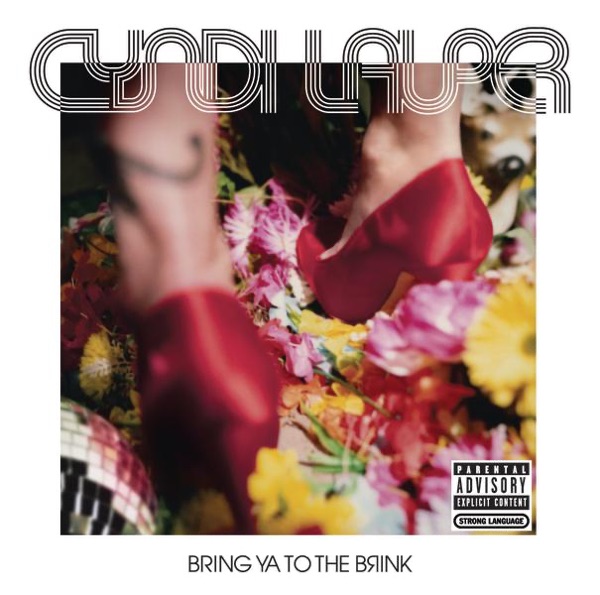
 Bring Ya to the BrinkCyndi Lauper200812 tracks
 -
 Memphis BluesCyndi Lauper201011 tracks
 -
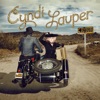 DetourCyndi Lauper201612 tracks
Deep Dive
Overview
Cyndi Lauper emerged in the early 1980s as one of pop rock’s most visually distinctive and vocally gifted artists. Her career spans four decades and crosses multiple genres—from dance-rock and new wave to adult contemporary, country, and blues—anchored by a powerful four-octave vocal range and an uncompromising commitment to eccentric personal expression. Lauper has sold over 50 million records worldwide and established herself not only as a recording artist but as a cultural figure whose humanitarian advocacy, particularly for LGBTQ rights, became as central to her public identity as her music.
Formation Story
Cynthia Ann Stephanie Lauper was born in 1953 and grew up during an era when rock and pop were still consolidating their cultural authority. She came of age in the transitional late 1960s and 1970s, absorbing influences from rock, soul, blues, and the emerging post-punk and new wave scenes. Unlike many of her pop-rock peers, Lauper did not arrive as a child prodigy or a manufactured teen idol. Instead, she spent her formative years honing her craft in clubs and theater productions, developing both the technical vocal mastery and the theatrical sensibility that would define her mature work. By the early 1980s, when she was signed to Portrait Records (under the Epic Records umbrella), she was ready to translate her unconventional stage presence and vocal prowess into a commercial vehicle.
Breakthrough Moment
Lauper’s full arrival came in 1983 with her debut studio album She’s So Unusual. The album was an immediate commercial and critical success, showcasing her range across multiple song styles and establishing her visual identity—eccentric clothing and bold hair colors—as integral to her brand. The record produced several hit singles and announced her as a significant new force in pop rock and new wave. She’s So Unusual made clear that Lauper was not a one-dimensional pop confection but an artist capable of moving fluidly between uptempo dance-rock, ballads, and genre experiments, all delivered with a vocal authority and personality that stood apart from her 1980s contemporaries.
Peak Era
The mid-to-late 1980s marked Lauper’s creative and commercial ascendancy. In 1986, she released True Colors, which deepened her palette and showcased her maturing songwriting and interpretation. That album confirmed that the success of She’s So Unusual was not a novelty but the beginning of a sustained career as a major pop-rock artist. During this period, Lauper balanced chart success with artistic growth, refusing to be constrained by genre boundaries. Her willingness to explore dance-pop, ballads, and other stylistic territories kept her work fresh and unpredictable, preventing the kind of formula fatigue that derailed many 1980s pop acts. By the early 1990s, even as mainstream radio tastes shifted, Lauper maintained her presence with albums such as Hat Full of Stars (1993) and Sisters of Avalon (1996), demonstrating the durability of her core appeal.
Musical Style
Lauper’s sound is defined by her technical vocal prowess and her refusal to be categorized within a single genre. Her four-octave range allows her to move from powerful full-voice belting to intimate, conversational phrasing, often within the same song. The production and arrangement of her work has drawn from dance-rock, new wave, pop rock, adult contemporary, and even country and blues idioms, reflecting both her eclectic influences and her collaborators’ diverse backgrounds. Her vocals are not operatic or trained in the classical sense; instead, they are grounded in rock and soul traditions, with a raspy warmth that conveys emotional directness. Lyrically, she has favored accessible, often witty or poignant writing that connects with listeners on personal and emotional levels, whether addressing love, identity, social justice, or self-determination. Her visual presentation—the clothing, hair, makeup—functions as an extension of her sonic palette, signaling her music’s refusal of conventional restraint.
Major Albums
She’s So Unusual (1983)
Lauper’s debut established her as a major commercial and artistic force, demonstrating her range across dance-rock, uptempo pop, and emotional ballads while her distinctive personality became her signature.
True Colors (1986)
This follow-up deepened her artistry and confirmed her staying power, showcasing more sophisticated songwriting and production while maintaining the accessibility that made her a pop-rock staple.
Hat Full of Stars (1993)
Released during the early 1990s when the commercial landscape was shifting away from 1980s pop conventions, this album showed Lauper’s ability to adapt and evolve without abandoning her core identity.
Memphis Blues (2010)
Late in her career, Lauper returned to American blues and soul traditions, recording an album that honored her long-standing influences and demonstrated her enduring vocal command.
Detour (2016)
This album found Lauper collaborating with other artists and exploring genre-crossing material, reinforcing her commitment to artistic restlessness and collaborative spirit.
Signature Songs
- She’s So Unusual — The title track and lead single from her debut, establishing her as a distinctive new voice in 1980s pop.
- True Colors — An emotional ballad that became one of her most enduring and beloved recordings, showcasing her vocal vulnerability.
- All Through the Night — A dance-rock track from her debut that captured her ability to be both rhythmically driving and personally expressive.
- Time After Time — A staple of her live performances and one of her most recognized songs, demonstrating her range and emotional reach.
Influence on Rock
Lauper’s impact on rock and pop music extends beyond her chart success and record sales. She arrived at a moment when new wave and post-punk were beginning to mainstream, and she helped prove that rock music could accommodate both commercial ambition and artistic eccentricity. Her refusal to conform to standard pop presentation—her clothing, her hair colors, her vocal choices—opened space for subsequent artists to claim visual and sonic idiosyncrasy as a strength rather than a liability. She demonstrated that a female rock and pop artist could be simultaneously powerful, vulnerable, experimental, and commercially successful without compromising any of those qualities. Her work in multiple genres—dance-rock, new wave, adult contemporary, blues, country—showed that genre boundaries in popular music were more permeable than industry gatekeepers had suggested.
Legacy
Cyndi Lauper’s legacy rests on two pillars: her sustained career as a recording artist and her activism. Over four decades, from 1983 to the present, she has continued recording and performing, adapting to changing musical landscapes while maintaining her distinctive artistic voice. Her humanitarian work, particularly her advocacy for LGBTQ rights in the United States, has become inseparable from her public identity and has deepened her cultural significance beyond music. She has sold over 50 million records worldwide, a figure that speaks to both the depth of her catalog and the breadth of her appeal. In the streaming era, her work from the 1980s remains accessible and widely heard, introducing her music to generations who did not experience her initial commercial breakthrough. Her career trajectory—from theatrical club performer to pop-rock star to elder statesman of music and social activism—offers a model of artistic longevity rooted in authenticity and refusal of easy categorization.
Fun Facts
- Lauper has pursued acting alongside her music career, appearing in television and film projects that have extended her influence beyond rock and pop.
- Her record labels have included Portrait Records and Epic Records, the latter a major release vehicle for her work throughout her career.
- She has recorded albums across multiple genres, including a holiday album (Merry Christmas… Have a Nice Life!, 1998) and a blues-focused project (Memphis Blues, 2010), demonstrating her commitment to artistic range.
- Her official website and sustained internet presence have helped maintain direct connection with fans across her four-decade career.