
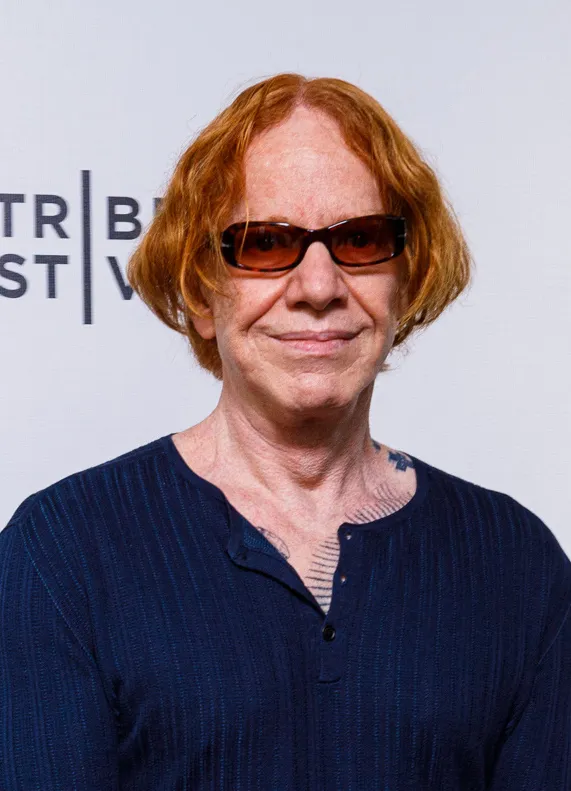
Photo by Sachyn , licensed under CC BY-SA 3.0 · Wikimedia Commons
Rank #110
Danny Elfman
From Wikipedia
Daniel Robert Elfman is an American film composer, singer, songwriter, and musician. He came to prominence as the lead vocalist and primary songwriter for the new wave band Oingo Boingo in the early 1980s. Since scoring his first studio film in 1985, Elfman has garnered international recognition for composing over 100 feature film scores as well as compositions for television, stage productions, and the concert hall.
Discography & Previews
Browse through and click an album to open and play 30-second previews streamed from Apple Music.

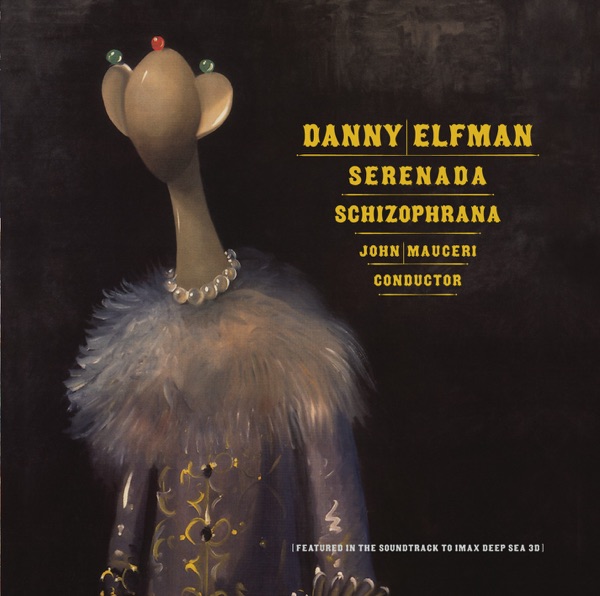
Serenada Schizophrana
2006 · 8 tracks
- 1 Serenada Schizophrana: I. Pianos ↗ 7:02
- 2 Serenada Schizophrana: II. Blue Strings ↗ 10:08
- 3 Serenada Schizophrana: III. A Brass Thing ↗ 7:56
- 4 Serenada Schizophrana: IV. The Quadruped Patrol ↗ 2:56
- 5 Serenada Schizophrana: V. I Forget ↗ 6:23
- 6 Serenada Schizophrana: VI. Bells and Whistles ↗ 8:08
- 7 Serenada Schizophrana: End Tag ↗ 0:49
- 8 Improv for Alto Sax ↗ 2:51

Big Mess
2021 · 18 tracks
- 1 Sorry ↗ 4:55
- 1 Happy ↗ 4:35
- 2 True ↗ 4:25
- 2 Just a Human ↗ 2:47
- 3 In Time ↗ 4:28
- 3 Devil Take Away ↗ 2:49
- 4 Everybody Loves You ↗ 7:03
- 4 Love in the Time of Covid ↗ 3:32
- 5 Dance with the Lemurs ↗ 4:15
- 5 Native Intelligence ↗ 4:21
- 6 Serious Ground ↗ 5:01
- 6 Better Times ↗ 3:15
- 7 Choose Your Side ↗ 4:34
- 7 Cruel Compensation ↗ 3:11
- 8 We Belong ↗ 3:47
- 8 Kick Me ↗ 2:11
- 9 Get over It ↗ 4:07
- 10 Insects ↗ 3:06
-
 So-LoDanny Elfman19849 tracks
 -
 Serenada SchizophranaDanny Elfman20068 tracks
 -
 Big MessDanny Elfman202118 tracks
Deep Dive
Overview
Danny Elfman stands as one of the most consequential figures in contemporary film music, having composed over 100 feature film scores since 1985 while maintaining a parallel identity as a rock musician and concert-hall composer. Born in 1953, Elfman emerged from the new wave and ska scenes of the early 1980s as the lead vocalist and primary songwriter for Oingo Boingo, a band that combined theatrical energy with angular pop-rock sensibilities. His transition from rock frontman to cinematic architect proved seamless and transformative: the compositional skills honed in the recording studio and on stage found their fullest expression in underscore, where his orchestral acumen and instinct for character and mood have made him indispensable to generations of filmmakers.
Formation Story
Born Daniel Robert Elfman in 1953, Elfman grew up immersed in performance and composition. He gravitated toward rock music and the emerging new wave scene, where art-school experimentalism and punk’s stripped-down energy were converging into something stranger and more theatrical. By the early 1980s, Elfman had become the creative nucleus of Oingo Boingo, a Los Angeles-based ensemble that fused new wave’s angular guitars and synth textures with ska’s rhythmic propulsion and an almost vaudeville theatricality. As the band’s lead vocalist and primary songwriter, Elfman shaped their sound and visual identity, establishing himself not merely as a frontman but as a composer with a distinctive harmonic and melodic vocabulary.
Breakthrough Moment
While Oingo Boingo remained a fixture of the American new wave underground throughout the 1980s, Elfman’s entry into film scoring came in 1985 with his first studio film composition. This transition, rather than marking a departure from rock, represented an expansion of the same theatrical and compositional instincts that had animated his work with the band. The film industry recognized in Elfman not just technical facility but an ability to marry melody, character psychology, and orchestral color—qualities he had been developing as a rock musician. The success of his early film work established a new trajectory that would ultimately dwarf his achievements in rock music, though the two streams of his output would remain linked by a shared sensibility: a taste for the eccentric, the melodic, and the emotionally direct.
Peak Era
Elman’s most commercially and critically significant period as a film composer spans the mid-1980s through the 1990s and into the 2000s, during which he became a go-to composer for directors seeking music that could balance mainstream accessibility with compositional sophistication. His output grew vast and varied, spanning horror, comedy, fantasy, action, and drama. At the same time, his solo work as a musician continued sporadically: his album So-Lo, released in 1984 while Oingo Boingo was still active, demonstrated his range as a solo recording artist. The breadth of his compositional voice—equally at home writing for large orchestras, intimate chamber ensembles, or rock arrangements—became his signature across both film and concert work.
Musical Style
Elfman’s musical language synthesizes high romanticism, avant-garde orchestration, and the harmonic boldness of new wave rock. In film, he favors lush string arrangements, inventive use of brass and woodwind colors, and a knack for memorable, singable melody even in complex compositional contexts. His new wave background manifests in a comfort with angular rhythms, unusual time signatures, and an occasional embrace of synth-based textures, though his film work expanded these tendencies into full symphonic settings. As a rock musician, Elfman brought to Oingo Boingo the theatrical flair of art-rock and the rhythmic snap of new wave, creating songs that were at once cerebral and physically propulsive. His voice, expressive and often employed as one instrument among many rather than as a conventional lead vocal, underscored his band’s commitment to ensemble sound over star power.
Major Albums
So-Lo (1984)
Elfman’s first solo album, released during Oingo Boingo’s most active period, showcases his range as composer and multi-instrumentalist, presenting a more introspective and varied palette than the band’s theatrical pop-rock sound.
Serenada Schizophrana (2006)
A solo orchestral work that demonstrates Elfman’s maturation as a concert composer, marking a return to recording under his own name after decades focused primarily on film and television scores.
Big Mess (2021)
A provocative late-period solo album that reunites Elfman with his rock roots, blending the theatrical sensibilities of his Oingo Boingo era with the harmonic sophistication of his decades in film composition.
Violin Concerto “Eleven Eleven” (2019)
Elfman’s contribution to the concerto repertoire, representing his continued engagement with high-art orchestral forms and chamber music even as his film work remained his primary output.
Signature Songs
- “Dead Man’s Party” — Oingo Boingo’s most enduring new wave anthem, combining gothic atmosphere with danceable rhythms and Elfman’s distinctive vocal performance.
- “Weird Science” — A new wave pop-rock number that showcased the band’s ability to merge theatrical wit with genuine melodic craft.
- “Only a Lad” — The title track of Oingo Boingo’s debut, establishing the band’s jarring blend of ska energy and avant-garde sensibility.
Influence on Rock
Elfman’s influence on rock music proper remains somewhat diffuse but undeniable. Oingo Boingo, under his stewardship, helped define the theatrical end of new wave in the United States, offering an alternative to the mechanical post-punk and synth-pop dominating alternative radio. The band’s embrace of complexity, humor, and structural oddity in popular-song form influenced alternative acts seeking to reconcile art-school ambitions with pop accessibility. More broadly, Elfman’s example—a rock musician who successfully transitioned to orchestral and film music without abandoning his compositional roots—opened a path for subsequent generations of rock musicians to explore classical forms and symphonic writing.
Legacy
Danny Elfman’s legacy divides into two domains, both substantial. As a film composer, he remains one of the most celebrated and prolific figures in contemporary cinema, his scores integral to the visual and emotional impact of over a century of feature films. His ability to combine accessibility with sophistication, humor with pathos, and orchestral tradition with contemporary sensibility has made him an industry standard. As a rock musician, his work with Oingo Boingo represents a significant chapter in American new wave history—proof that the genre need not be cool or minimalist, that it could accommodate theatricality, harmonic ambition, and sheer eccentricity. In his later years, Elfman has returned more consistently to concert music and solo recording, adding works for solo instruments, chamber ensembles, and orchestra to the classical repertoire, affirming that the distinction between his identities as rock musician, film composer, and concert composer has always been porous and generative rather than constraining.
Fun Facts
- Elfman’s work as a film composer has made him one of the most frequently performed living composers in cinema, with his scores heard by hundreds of millions of filmgoers worldwide.
- His 2021 solo album Big Mess marked a significant return to rock-oriented material after more than three decades focused primarily on film and orchestral work.
- Elfman has continued to expand his reach into classical music throughout the 21st century, contributing concertos and chamber works to the contemporary concert repertoire alongside his film work.