
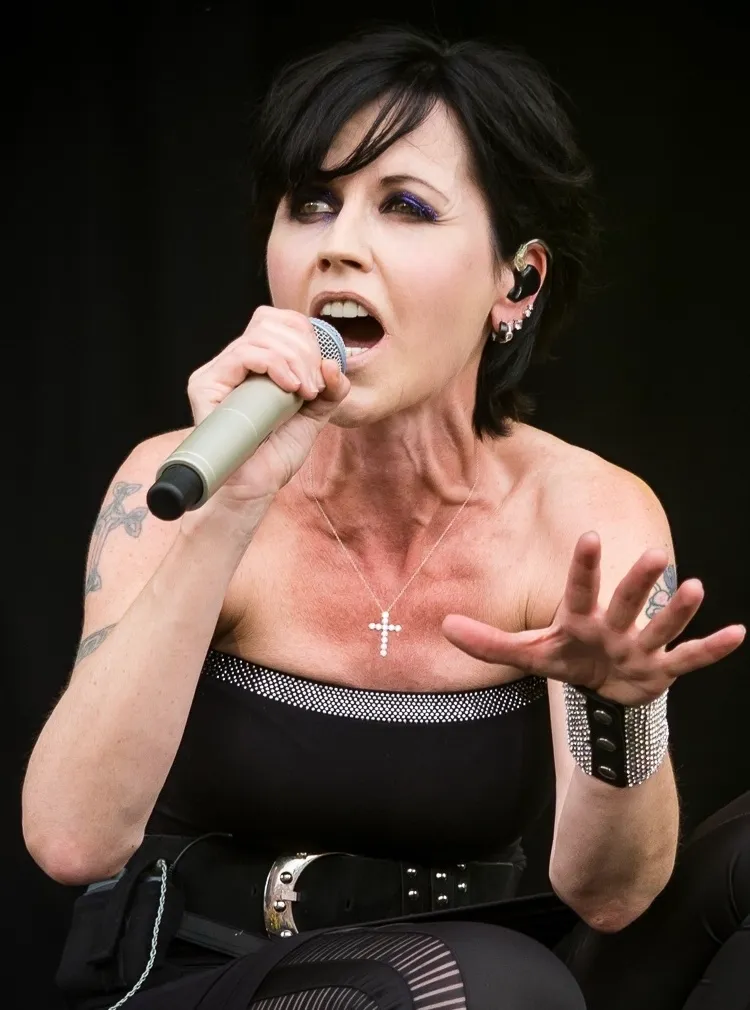
Photo by Bart Notermans from Rotterdam, The Netherlands , licensed under CC BY-SA 2.0 · Wikimedia Commons
Rank #184
Dolores O'Riordan
From Wikipedia
Dolores Mary Eileen O'Riordan was an Irish musician who achieved international fame as the lead vocalist of the rock band the Cranberries. O'Riordan was the principal songwriter of the band and also played acoustic and electric guitars. She became one of the most recognisable voices in alternative rock and was known for her lilting mezzo-soprano voice, signature yodel, use of keening, and strong Limerick accent.
Discography & Previews
Browse through and click an album to open and play 30-second previews streamed from Apple Music.


No Baggage
2009 · 14 tracks
- 1 Switch Off the Moment ↗ 3:18
- 2 Skeleton ↗ 3:25
- 3 It's You ↗ 4:11
- 4 The Journey ↗ 3:53
- 5 Stupid ↗ 4:46
- 6 Be Careful ↗ 4:20
- 7 Apple of My Eye ↗ 4:47
- 8 Throw Your Arms Around Me ↗ 4:26
- 9 Fly Through ↗ 3:54
- 10 Lunatic ↗ 4:29
- 11 Tranquilizer ↗ 3:51
- 12 You Set Me on Fire ↗ 4:22
- 13 Loser ↗ 2:59
- 14 I Want You ↗ 3:15
-
 Are You Listening?Dolores O'Riordan200712 tracks
 -
 No BaggageDolores O'Riordan200914 tracks
Deep Dive
Overview
Dolores Mary Eileen O’Riordan was an Irish musician whose voice became one of the most recognisable in alternative rock during the 1990s and beyond. She achieved international fame as the lead vocalist, principal songwriter, and guitarist of the rock band the Cranberries, a group that emerged from Limerick in the late 1980s and rose to prominence as the alternative rock boom of the early 1990s gathered force. O’Riordan’s contribution to rock music extended far beyond her role as frontwoman; she was a capable and creative instrumentalist whose songwriting shaped the Cranberries’ distinctive sound and established the band’s singular place within the broader landscape of dream pop, indie rock, and alternative rock.
Formation Story
Dolores O’Riordan was born in Limerick, Ireland in 1971, coming of age in a city with a rich musical heritage and a thriving local scene. She grew up in an environment where traditional Irish music and contemporary rock coexisted, influences that would eventually shape her approach to songwriting and performance. Her path to becoming a rock musician began in her teenage years, when she joined the Cranberries in the late 1980s. The band’s emergence from Limerick coincided with a broader moment in Irish rock—a time when the country’s indie and alternative acts were gaining international attention. As the lead vocalist and principal songwriter, O’Riordan became the creative driving force of the Cranberries, her distinctive voice and songwriting establishing the band’s identity from the outset.
Breakthrough Moment
The Cranberries’ debut album, Everybody Else Is Doing It, So Why Can’t We? (1993), marked O’Riordan’s breakthrough to a global audience. The record featured songs that showcased her lilting mezzo-soprano voice, her signature yodel, and the keening vocal techniques rooted in Irish tradition. The album’s success established O’Riordan as a major figure in 1990s alternative rock and brought the Cranberries international touring and radio play. Her vocal performance on tracks from this period displayed a rare combination of restraint and emotional intensity, delivered through lyrics that often addressed personal and social themes with poetic precision.
Peak Era
The mid-to-late 1990s represented the creative and commercial peak of O’Riordan’s career with the Cranberries. During this period, the band released successive albums that solidified their position in mainstream rock and alternative radio. Her songwriting matured across records like No Need to Argue (1994) and To the Faithful Departed (1996), which demonstrated her growing command of both lyrical substance and melodic architecture. O’Riordan’s vocal delivery became more nuanced, and her guitar work—both acoustic and electric—evolved to complement the band’s increasingly sophisticated arrangements. These years saw the Cranberries performing major festival slots and selling out venues worldwide, with O’Riordan’s distinctive presence becoming synonymous with the band’s brand of alternative rock.
Musical Style
Dolores O’Riordan’s musical identity was built on several distinctive and interrelated elements. Her mezzo-soprano voice possessed a naturally lyrical quality that set her apart from many of her contemporaries in alternative and indie rock. She employed a signature yodel—a vocal flourish that recalled traditional Irish keening and folk techniques—which became a recognisable trademark across her recordings. Her strong Limerick accent infused her vocal delivery with regional character and authenticity, refusing the flattened American-influenced diction that dominated mainstream rock radio. As a guitarist, she contributed both acoustic and electric parts to the Cranberries’ arrangements, often handling songwriting responsibilities that shaped the band’s harmonic and melodic foundation. The broader sonic palette of her work encompassed dream pop’s ethereal production sensibility, the jangle pop lineage of 1980s indie rock, and post-grunge’s emotional directness, resulting in music that occupied a distinctive space between Celtic rock tradition and contemporary alternative idioms.
Major Albums
Are You Listening? (2007)
O’Riordan’s first solo album marked a shift toward independent artistic expression outside the Cranberries framework. Are You Listening? demonstrated her ability to work across different production contexts and sonic palettes, establishing her as a credible solo artist in her own right and showcasing new songwriting directions.
No Baggage (2009)
Released two years after Are You Listening?, No Baggage continued O’Riordan’s exploration of solo material. The album reflected her continued evolution as a songwriter and performer, maintaining her distinctive vocal character while experimenting with varied musical arrangements.
Signature Songs
- Her work with the Cranberries on Everybody Else Is Doing It, So Why Can’t We? established the vocal and songwriting template that would define her career.
- Her keening-influenced vocal delivery became instantly recognisable across alternative rock radio during the 1990s.
- Her mezzo-soprano and signature yodel combination created a vocal signature that few artists could replicate.
- Her songwriting addressed personal introspection and social observation with poetic economy.
Influence on Rock
Dolores O’Riordan’s impact on alternative rock extended beyond commercial success to influence the direction of the genre itself. Her voice and songwriting style demonstrated that dream pop and alternative rock could accommodate regional accent and traditional vocal techniques without sacrificing mainstream accessibility or artistic credibility. The Cranberries’ international success in the 1990s opened pathways for other Irish and British alternative bands, establishing that art-rock ambition and pop sensibility were not mutually exclusive. Her approach to songwriting—combining introspective lyricism with memorable melodic hooks—influenced subsequent generations of indie and alternative artists who sought to balance commercial appeal with artistic substance. O’Riordan’s presence as a female frontwoman, principal songwriter, and guitarist in a major rock band during the 1990s contributed to expanding the possibilities available to women in rock music during that decade.
Legacy
Dolores O’Riordan’s death in January 2018 marked the end of a career that had spanned nearly three decades and reshaped the landscape of alternative rock. Her recordings with the Cranberries remain in continuous rotation on alternative rock radio and streaming platforms, introducing her voice to new audiences continually. The distinctive character of her vocal performance—the mezzo-soprano timbre, the signature yodel, the keening techniques rooted in Irish tradition—established a template that remains instantly recognisable and widely celebrated. Her songwriting contributions to the Cranberries’ catalogue demonstrate the lasting power of melody and lyrical substance in alternative rock, with tracks from the 1990s continuing to resonate with listeners across generational lines. O’Riordan’s solo albums, while less commercially prominent than her work with the Cranberries, documented her artistic growth and willingness to pursue independent creative directions. Her legacy extends beyond the Cranberries to encompass her broader influence on Irish rock music and the international alternative rock movement of the 1990s.
Fun Facts
- O’Riordan’s signature yodel became so closely associated with her identity that it became an instantly recognisable element of the Cranberries’ songs across multiple albums.
- Her strong Limerick accent remained prominent in her vocal delivery throughout her career, resisting the homogenising tendency toward American-inflected diction in mainstream rock.
- She recorded two solo albums while the Cranberries were active, demonstrating her prolific songwriting output and willingness to explore artistic directions outside the band framework.