

Photo by Johan Moens , licensed under CC BY-SA 4.0 · Wikimedia Commons
Rank #383
Fad Gadget
From Wikipedia
Francis John Tovey, known also by his stage name Fad Gadget, was a British avant-garde electronic musician and vocalist. He was a proponent of both new wave and early industrial music, fusing pop-structured songs with mechanised experimentation.
Discography & Previews
Browse through and click an album to open and play 30-second previews streamed from Apple Music.


-
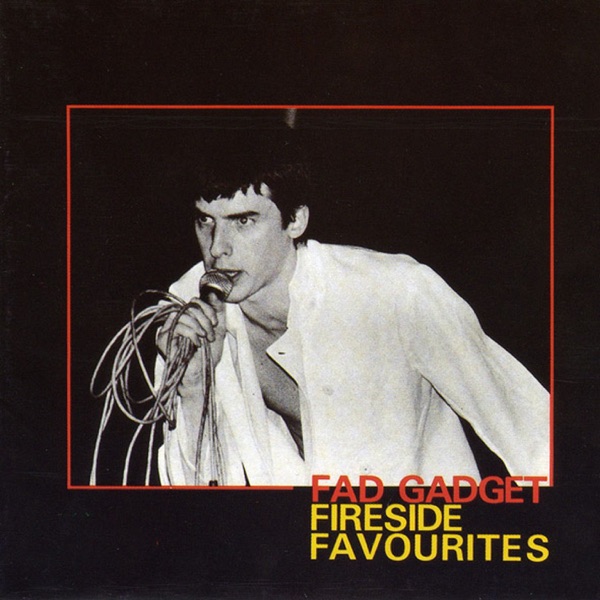
 Fireside FavouritesFad Gadget19809 tracks
 -
 IncontinentFad Gadget19819 tracks
 -
 Under the FlagFad Gadget198210 tracks
 -
 GagFad Gadget19849 tracks
Deep Dive
Overview
Fad Gadget was the stage name of Francis John Tovey, a British electronic musician and vocalist whose work straddled new wave pop and early industrial experimentation. Emerging in the late 1970s and early 1980s, Tovey distinguished himself by fusing pop-structured songs with mechanised sonic exploration, creating a body of work that challenged conventional approaches to both rock and electronic music. His output on Mute Records established him as a notable figure in the UK’s post-punk and electronic underground.
Formation Story
Francis John Tovey adopted the stage name Fad Gadget as he began his career as a solo electronic musician in the late 1970s. Working within the burgeoning new wave and electronic music scene, Tovey developed a distinctive approach by combining accessible pop songwriting with the kind of technological experimentation and unconventional production that was beginning to emerge from the UK underground. His decision to work primarily with electronic instruments and mechanised sound design placed him at the intersection of entertainment and avant-garde practice, a position that would define his artistic identity throughout his active years.
Breakthrough Moment
Fad Gadget’s commercial and critical breakthrough came with the release of his debut album Fireside Favourites in 1980. The record introduced audiences to his core formula: catchy, structured pop songs undercut with electronic textures, vocal processing, and industrial noise elements that subverted expectations. This approach resonated within the new wave community and on college radio, establishing Tovey as a serious innovator rather than a novelty act. The album’s title itself—Fireside Favourites—carried an ironic edge, suggesting that Tovey was repackaging domestic comfort and pop convention through a lens of technological alienation.
Peak Era
Fad Gadget’s most active and creatively prolific period spanned the early 1980s, from 1980 through 1984. During these four years, he released four studio albums on Mute Records: Fireside Favourites (1980), Incontinent (1981), Under the Flag (1982), and Gag (1984). This rapid output demonstrated an artist in full command of his vision, refining his synthesis of pop melody and electronic/industrial manipulation with each record. The albums arrived at a moment when the UK electronic scene was consolidating around figures like Depeche Mode, Duran Duran, and the burgeoning industrial movement, and Tovey’s work occupied a unique space that drew from both camps without fully committing to either.
Musical Style
Fad Gadget’s sound was defined by the collision of pop sensibility and electronic estrangement. He worked extensively with synthesisers, drum machines, and processed vocals, employing these tools not merely for textural novelty but as central compositional elements. His approach to the voice—often treated with distortion, pitch-shifting, or layering—aligned him with experimental electronic musicians while his reliance on verse-chorus structures and melodic hooks kept his work accessible to a pop audience. The mechanical quality of his productions was not a limitation but an aesthetic choice; the coldness of the electronic palette became the perfect vehicle for expressing the tension between human emotion and technological mediation that characterised much new wave discourse. Over his active period, Tovey experimented with varying degrees of accessibility, moving between more immediately catchy material and more abrasive, challenging compositions.
Major Albums
Fireside Favourites (1980)
The debut established Fad Gadget’s identity: pop songs filtered through electronic distortion and industrial sound design. Its ironic title masked genuine songwriting ambition and technical innovation.
Incontinent (1981)
The follow-up deepened his exploration of mechanised pop, pushing further into the collision between conventional song structure and avant-garde production techniques.
Under the Flag (1982)
This album refined Tovey’s balance between accessibility and experimentation, demonstrating his growing confidence in the commercial viability of his unconventional approach.
Gag (1984)
Fad Gadget’s fourth and final studio album of the decade, Gag represented the conclusion of his most intensive creative period and showcased a mature integration of his electronic and pop sensibilities.
Signature Songs
- “Rara Bourgeois” — A key track in establishing his fusion of pop structure and electronic estrangement.
- “Fashion” — Demonstrated his ability to make provocative social commentary through mechanised pop forms.
- “Pleasures of the Flesh” — Showcased his use of processed vocals and sexual ambiguity as artistic tools within electronic frameworks.
- “Lady Let It Lie” — Exemplified his gift for melody even when deployed through layers of electronic processing and industrial texture.
Influence on Rock
Fad Gadget’s synthesis of new wave pop accessibility with early industrial abrasiveness helped establish a template that would be explored by subsequent generations of electronic and alternative musicians. By proving that avant-garde production and pop songwriting could coexist within the same piece, Tovey opened conceptual space for artists who might otherwise have felt forced to choose between experimental credibility and commercial accessibility. His work on Mute Records—a label that would become synonymous with the integration of electronic sophistication and pop form—positioned him alongside other innovators who reshaped how rock music could be produced and distributed in the electronic age. The lineage from his mechanised pop approach traces through to later post-industrial and synth-pop movements that embraced both accessibility and formal experimentation.
Legacy
Fad Gadget’s active period as a recording artist concluded in the mid-1980s, though his influence continued to circulate through electronic and alternative music circles. His recordings on Mute Records remain accessible and have experienced renewed interest among collectors and students of electronic music history. Tovey maintained a digital presence through his official website, keeping his work and legacy in public view even as active recording and performance became less central to his practice. His reputation rests on having produced a distinctive and uncompromising body of work during a pivotal moment in rock and electronic music, one that demonstrated the artistic legitimacy of fusing pop accessibility with sonic experimentation and mechanical coldness.
Fun Facts
- Fad Gadget was signed to Mute Records, the influential independent label that would become a cornerstone of UK electronic and industrial music.
- His stage name reflected his conceptual approach: the “fad gadget” was simultaneously a commentary on consumer culture and a description of his own position as a technologically-driven artist.
- Francis John Tovey maintained creative control over his work and vision throughout his recording career, avoiding the kind of major-label compromise that affected many of his contemporaries.