
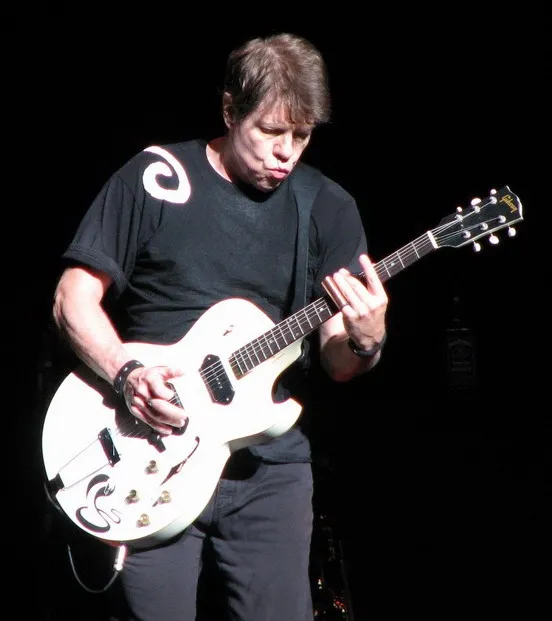
Photo by Piedmontstyle at English Wikipedia , licensed under CC BY 3.0 · Wikimedia Commons
Rank #496
George Thorogood
From Wikipedia
George Lawrence Thorogood is an American musician, singer and songwriter. His "high-energy boogie-blues" sound became a staple of 1980s US rock radio, with hits like his original songs "Bad to the Bone" and "I Drink Alone". He has also helped to popularize older songs by American icons, such as "Move It on Over", "Who Do You Love?", and "House Rent Blues/One Bourbon, One Scotch, One Beer".
Discography & Previews
Browse through and click an album to open and play 30-second previews streamed from Apple Music.

Party of One
2017 · 14 tracks
- 1 I’m a Steady Rollin’ Man ↗ 2:53
- 2 Soft Spot ↗ 1:45
- 3 Tallahassee Women ↗ 3:11
- 4 Wang Dang Doodle ↗ 2:43
- 5 Boogie Chillen ↗ 3:20
- 6 No Expectations ↗ 3:57
- 7 Bad News ↗ 3:04
- 8 Down the Highway ↗ 3:27
- 9 Got To Move ↗ 3:13
- 10 Born With the Blues ↗ 2:15
- 11 The Sky Is Crying ↗ 4:11
- 12 The Hookers (If You Miss ‘Im…I Got ‘Im) ↗ 3:03
- 13 Pictures From Life’s Other Side ↗ 2:48
- 14 One Bourbon, One Scotch, One Beer (Live From Rockline) ↗ 3:28
-
 Party of OneGeorge Thorogood201714 tracks
Deep Dive
Overview
George Thorogood is an American blues rock vocalist and guitarist whose “high-energy boogie-blues” sound became a defining fixture of 1980s US rock radio. Born in 1950, Thorogood emerged from a tradition of electric blues and roots rock, channeling the raw swagger of earlier blues legends into a contemporary idiom that proved both commercially potent and enduringly accessible. His catalog spans original compositions—most notably “Bad to the Bone” and “I Drink Alone”—alongside strategic reinterpretations of American blues standards, establishing him as a bridge between the classic blues tradition and mainstream rock audiences.
Formation Story
George Lawrence Thorogood was born in 1950 into an American cultural landscape already shaped by rock and roll and electric blues. His path to becoming a blues rock fixture came through a direct immersion in the blues idiom itself, drawing from the catalog of American icons whose music had defined the genre’s most primal and energetic dimensions. Rather than emerging from a band context, Thorogood developed his approach as a soloist, honing a performance style rooted in guitar-driven blues interpretations and original compositions that captured the spirit of the blues tradition while applying it to contemporary rock audiences.
Breakthrough Moment
Thorogood’s commercial breakthrough came during the early 1980s, when his original composition “Bad to the Bone” became a staple of rock radio and popular culture. The track’s instantly recognizable guitar riff and defiant lyrical swagger established him as a major figure in 1980s rock. This success was followed by “I Drink Alone,” another original that capitalized on his ability to craft memorable, attitude-laden songs that connected with mainstream listeners. These hits cemented Thorogood’s position not merely as a blues revivalist but as an artist capable of writing contemporary rock songs that felt rooted in blues tradition while addressing modern themes and sensibilities.
Peak Era
Thorogood’s peak commercial period aligned with the 1980s rock radio boom, when his high-energy performances and catchy hooks made him a regular on MTV and FM rock stations. His output during this decade established him as one of the decade’s defining blues rock voices, capable of delivering both original material and interpretations of classic blues songs with equal conviction. The combination of accessible songwriting and blues authenticity allowed him to maintain a presence across multiple decades, consistently drawing audiences who valued his straightforward, energetic approach to the blues-rock idiom.
Musical Style
Thorogood’s sound is defined by a straightforward, powerful approach to blues rock that emphasizes groove, guitar-driven arrangements, and direct vocal delivery. His “high-energy boogie-blues” aesthetic strips away complexity in favor of immediate impact: punchy, repetitive riffs that lodge themselves in listeners’ minds, rhythm sections that drive relentlessly forward, and lyrics centered on accessible themes of attitude, desire, and living hard. Vocally, Thorogood delivers with a rough-hewn confidence that prioritizes attitude over technical virtuosity, making his interpretations of blues standards feel contemporary and vital rather than archival. The instrumentation remains rooted in classic blues tradition—guitar, bass, drums—but executed with a rock radio sensibility that proved commercially effective throughout the 1980s and beyond.
Major Albums
Party of One (2017)
Thorogood’s 2017 album Party of One represents his continued output as a performer and songwriter, maintaining his blues rock approach well into his later career and demonstrating his enduring commitment to the idiom that defined his public identity.
Signature Songs
- “Bad to the Bone” — An original composition featuring the iconic, instantly recognizable guitar riff that became synonymous with 1980s rock radio and popular culture.
- “I Drink Alone” — A signature original that showcased Thorogood’s ability to write catchy, attitude-driven songs that resonated with mainstream audiences.
- “Move It on Over” — A cover of an American blues standard that Thorogood helped bring to wider audiences, demonstrating his role in popularizing older blues material.
- “Who Do You Love?” — An interpretation of a classic blues standard that became a staple of his live performances and recordings.
- “House Rent Blues/One Bourbon, One Scotch, One Beer” — A blues standard interpretation that exemplified Thorogood’s ability to make traditional blues material feel urgent and immediate.
Influence on Rock
Thorogood’s impact on rock music lies primarily in his successful translation of electric blues tradition into a form that appealed to mainstream 1980s rock audiences. At a time when punk and new wave dominated critical discourse, Thorogood demonstrated that straightforward, blues-based rock could achieve significant commercial success. His approach—emphasizing groove, catchiness, and attitude over technical complexity—influenced how blues rock was presented to FM radio audiences and established a template for contemporary blues rock that privileged accessibility without sacrificing authenticity. His cover versions of blues standards also contributed to a broader cultural awareness of American blues music among rock audiences who might not otherwise have encountered these foundational recordings.
Legacy
George Thorogood remains a fixture of classic rock radio and live touring circuits, with “Bad to the Bone” maintaining a presence in popular culture far beyond its 1980s heyday. The song’s use in films, television, and advertising campaigns has ensured its status as one of the era’s most recognizable guitar riffs. Thorogood’s career demonstrates the durability of blues-rock tradition when executed with directness and energy; his sustained touring activity and continued recording well into the 2010s attest to his appeal as a live performer and his ability to maintain relevance across generational shifts in rock audiences. His role in popularizing both original compositions and American blues standards established him as an important figure in the broader project of keeping blues tradition alive within rock music.
Fun Facts
- Thorogood’s “Bad to the Bone” has become so culturally embedded that it appears in countless films, television shows, and advertisements, functioning as shorthand for attitude and swagger in popular culture.
- His recording catalog has been released on multiple major labels, including Attic and EMI, reflecting his movement through different phases of the music industry.
- Thorogood maintained an active touring schedule throughout his career, establishing himself as a consistent draw on the live rock circuit rather than relying solely on radio hits for his commercial presence.