

Photo by Greg2600 , licensed under CC BY-SA 2.0 · Wikimedia Commons
Rank #87
Hilary Duff
From Wikipedia
Hilary Erhard Duff is an American actress, singer-songwriter, businesswoman, and author. Her accolades include a World Music Award, seven Kids' Choice Awards, four Teen Choice Awards, and two Young Artist Awards. In 2026, Time named her one of the 100 most influential people in the world.
Discography & Previews
Browse through and click an album to open and play 30-second previews streamed from Apple Music.

Santa Claus Lane
2002 · 11 tracks
- 1 What Christmas Should Be ↗ 3:11
- 2 Santa Claus Lane ↗ 2:43
- 3 Santa Claus Is Coming to Town ↗ 3:36
- 4 I Heard Santa on the Radio ↗ 4:02
- 5 Jingle Bell Rock ↗ 2:48
- 6 When the Snow Comes Down in Tinseltown ↗ 3:18
- 7 Sleigh Ride ↗ 3:04
- 8 Tell Me a Story (About the Night Before) ↗ 3:41
- 9 Last Christmas ↗ 4:12
- 10 Same Old Christmas (feat. Haylie Duff) ↗ 3:17
- 11 Wonderful Christmastime ↗ 2:54

Metamorphosis
2003 · 13 tracks

Hilary Duff
2004 · 17 tracks
- 1 Fly ↗ 3:44
- 2 Do You Want Me? ↗ 3:31
- 3 Weird ↗ 2:56
- 4 Hide Away ↗ 3:47
- 5 Mr. James Dean ↗ 3:29
- 6 Underneath This Smile ↗ 3:39
- 7 Dangerous To Know ↗ 3:34
- 8 Who's That Girl ↗ 3:27
- 9 Shine ↗ 3:29
- 10 I Am ↗ 3:44
- 11 The Getaway ↗ 3:37
- 12 Cry (Remix) ↗ 4:03
- 13 Haters ↗ 2:57
- 14 Rock This World ↗ 3:43
- 15 Someone's Watching Over Me ↗ 4:11
- 16 Jericho ↗ 3:53
- 17 The Last Song ↗ 1:25

Dignity
2007 · 14 tracks

Breathe In. Breathe Out.
2015 · 12 tracks

luck… or something
2026 · 11 tracks
-
 Santa Claus LaneHilary Duff200211 tracks
 -
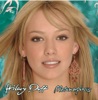 MetamorphosisHilary Duff200313 tracks
 -
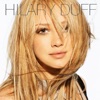 Hilary DuffHilary Duff200417 tracks
 -
 DignityHilary Duff200714 tracks
 -
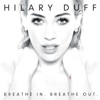 Breathe In. Breathe Out.Hilary Duff201512 tracks
 -
 luck… or somethingHilary Duff202611 tracks
Deep Dive
Overview
Hilary Erhard Duff emerged from the intersection of television stardom and pop music in the early 2000s, establishing herself not merely as an actress but as a recording artist and creative entrepreneur. A multi-hyphenate figure whose accolades span World Music Awards, Kids’ Choice Awards, Teen Choice Awards, and Young Artist Awards, Duff occupied a distinct position in pop rock history as a crossover act who maintained sustained creative output across multiple decades and mediums. Her trajectory from child actor to recording artist reflects broader shifts in early-2000s pop culture, where television visibility and music sales were increasingly intertwined.
Formation Story
Hilary Duff was born in 1987 and came of age during the late 1990s as a child performer. Before establishing herself as a recording artist, she built a substantial acting career that provided both a platform and an audience for her musical ambitions. Her entry into professional recording occurred through studio work and collaborations facilitated by her visibility in entertainment. The decision to pursue a recording career represented a natural extension of her existing media presence, allowing her to reach audiences already familiar with her from film and television. This pathway—leveraging an existing fan base rather than emerging from the live music circuit or garage band tradition—positioned her squarely within the pop music mainstream from her debut.
Breakthrough Moment
Duff’s recording debut came with Santa Claus Lane in 2002, a holiday-themed entry that capitalized on her prominence in popular culture. However, the true breakthrough arrived with Metamorphosis in 2003, an album that marked a significant shift in her artistic trajectory and commercial profile. Metamorphosis established her as a recording artist in her own right beyond her television and film work, demonstrating that her appeal extended meaningfully into the music market. The album’s reception confirmed her ability to sustain a music career parallel to her acting commitments, opening a dual-career path that would define much of her subsequent professional life.
Peak Era
The period from 2003 through 2007 represented Duff’s most concentrated music-making phase, during which she released four studio albums: Metamorphosis, the self-titled Hilary Duff in 2004, and Dignity in 2007. This era placed her squarely in the pop rock and new wave vernacular of the 2000s, a time when pop-oriented acts dominated commercial radio and youth culture. During this span, she balanced recording, touring, and acting commitments, maintaining visibility across multiple entertainment platforms. The albums from this period capture a particular moment in pop music when synthesizer-inflected production, dance beats, and guitar-driven arrangements coexisted readily within the mainstream commercial landscape.
Musical Style
Duff’s sound navigated the intersection of pop rock, new wave, and dance music throughout her recording career. Her production aesthetic drew from early-2000s pop sensibilities, blending uptempo rhythmic arrangements with vocal performances marked by clarity and accessibility. The instrumentation across her albums reflected the era’s production standards: synthesizers, drum machines, live drums, and guitar work configured for radio-friendly melodic hooks. Her songwriting approach emphasized relatable, youth-oriented subject matter rendered through straightforward melodic structures and verse-chorus forms. Early work tilted toward the dance-pop side of the spectrum, while later recordings explored broader pop rock territory, incorporating live instrumentation and more varied song structures. The voice itself—bright, youthful, technically secure without excessive ornamentation—remained her primary identifier across stylistic variations.
Major Albums
Metamorphosis (2003)
The album that established Duff as a standalone recording artist, moving beyond novelty or marketing exercise into genuine commercial and creative presence in the pop music marketplace.
Hilary Duff (2004)
A self-titled entry that consolidated her position as a recording artist and demonstrated her ability to sustain momentum through repeat album releases and sustained touring.
Dignity (2007)
Capturing the later phase of her intensive recording period, this album reflected evolving production approaches and shifting musical priorities as she matured as an artist.
This Heart (2014)
A return to recording after a seven-year gap, signaling renewed focus on music-making and indicating that her career remained active despite long stretches devoted to acting and business ventures.
Breathe In. Breathe Out. (2015)
Following closely on This Heart, this album demonstrated a sustained commitment to recording and showed continued evolution in her musical approach across her third decade of professional work.
Signature Songs
- From Metamorphosis — The album’s breakthrough single established her vocal identity and songwriting sensibility for audiences encountering her as a recording artist.
- From Hilary Duff — Standout tracks from the self-titled album reinforced her commercial radio presence and demonstrated range within the pop rock format.
- From Dignity — Selections showcasing her mature artistic voice and willingness to explore production and thematic territory beyond early-career pop formulas.
- From This Heart — Representative tracks from her 2014 return, indicating stylistic continuity and new creative directions after years focused primarily on acting.
Influence on Rock
While Duff operated primarily within pop and pop rock rather than in the experimental or guitar-forward traditions that define much of rock’s historical narrative, her career reflected important structural changes in early-2000s popular music. The successful integration of television fame with recording artist status—a model she exemplified—became increasingly standard in pop music’s industrial organization. Her work demonstrated that crossover appeal from visual media could sustain a genuine music career, influencing how entertainment conglomerates developed young talent across platforms. Within pop rock specifically, she represented the accessible, radio-friendly aesthetic that dominated the 2000s, a sound that contrasted with alternative and indie rock movements but occupied equal or greater commercial space.
Legacy
Hilary Duff’s lasting impact extends across entertainment and business rather than through a revolutionary musical contribution. Her sustained presence across multiple decades—from child actor through recording artist to businesswoman and author—positioned her as a cultural figure whose influence transcended any single medium. The 2026 Time designation as one of the 100 most influential people in the world reflects her accumulated cultural footprint across acting, music, business, and public presence. Her career demonstrated the viability of the multimedia entertainer model, in which an artist maintains parallel tracks in music and other mediums without diminishing returns to either. Streaming platforms have ensured her recorded catalog remains perpetually accessible, and her recent album luck… or something in 2026 confirmed her continued professional activity, indicating a career arc that extends across nearly three decades of recorded and performed work.
Fun Facts
- Duff’s recording career coincided with the height of the Disney Channel’s cultural influence, making her one of several young entertainers to leverage simultaneous success in television and music.
- Across her six studio albums, she has worked with multiple record labels including Hollywood Records, RCA Records, and Sony Music divisions, reflecting the corporate infrastructure supporting pop music careers.
- Her 2003 Metamorphosis album title served as both literal and figurative marker, distinguishing her recording identity from her established acting persona and signaling intentional artistic transformation.