
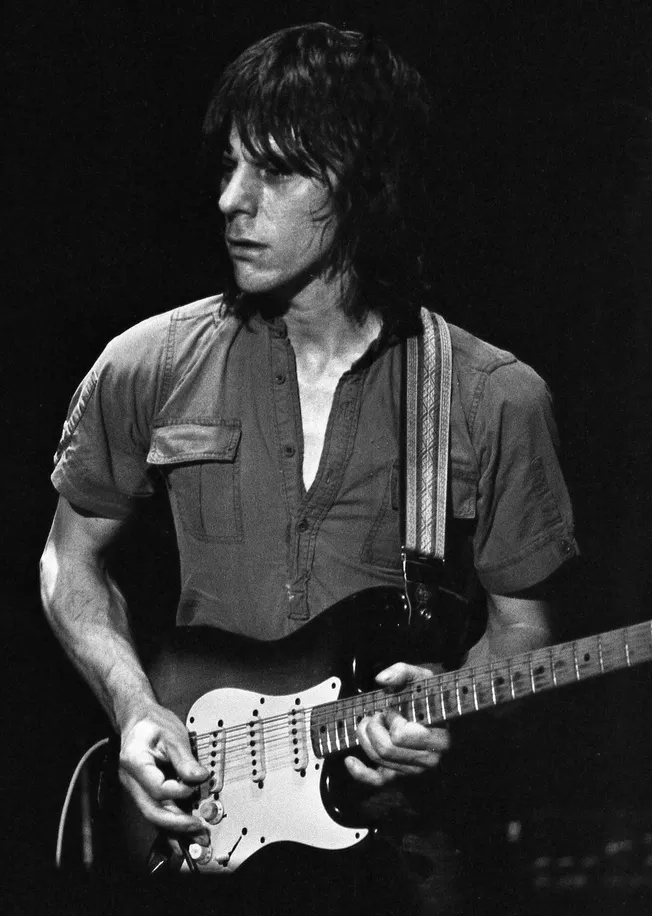
Photo by Chris Hakkens , licensed under CC BY-SA 2.0 · Wikimedia Commons
Rank #100
Jeff Beck
From Wikipedia
Geoffrey Arnold Beck was an English guitarist. He rose to prominence as a member of the rock band the Yardbirds, and afterwards founded and fronted the Jeff Beck Group and Beck, Bogert & Appice. In 1975, he switched to an instrumental style with focus on an innovative sound, and his releases spanned genres and styles ranging from blues rock, hard rock, jazz fusion and a blend of guitar-rock and electronica.
Discography & Previews
Browse through and click an album to open and play 30-second previews streamed from Apple Music.


Flash
1985 · 11 tracks
- 1 Ambitious ↗ 4:37
- 2 Gets Us All In the End ↗ 6:05
- 3 Escape ↗ 4:40
- 4 People Get Ready (with Rod Stewart) ↗ 4:53
- 5 Stop, Look and Listen ↗ 4:27
- 6 Get Workin' ↗ 3:34
- 7 Ecstasy ↗ 3:30
- 8 Night After Night ↗ 3:40
- 9 You Know, We Know ↗ 5:35
- 10 Nighthawks ↗ 4:47
- 11 Back On the Streets (with Karen Lawrence) ↗ 3:41

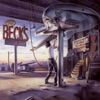
Jeff Beck’s Guitar Shop
1989 · 9 tracks
- 1 Guitar Shop (with Terry Bozzio & Tony Hymas) ↗ 5:00
- 2 Savoy (with Terry Bozzio & Tony Hymas) ↗ 3:52
- 3 Behind the Veil (with Terry Bozzio & Tony Hymas) ↗ 4:53
- 4 Big Block (with Terry Bozzio & Tony Hymas) ↗ 4:06
- 5 Where Were You (with Terry Bozzio & Tony Hymas) ↗ 3:15
- 6 Stand On It (with Terry Bozzio & Tony Hymas) ↗ 4:57
- 7 Day In the House (with Terry Bozzio & Tony Hymas) ↗ 5:04
- 8 Two Rivers (with Terry Bozzio & Tony Hymas) ↗ 5:22
- 9 Sling Shot (with Terry Bozzio & Tony Hymas) ↗ 3:06

Crazy Legs
1993 · 18 tracks
- 1 Race with the Devil ↗ 1:59
- 2 Cruisin' ↗ 2:20
- 3 Crazy Legs ↗ 2:03
- 4 Double Talkin' Baby ↗ 2:14
- 5 Woman Love ↗ 2:34
- 6 Lotta Lovin' ↗ 2:03
- 7 Catman ↗ 2:23
- 8 Pink Thunderbird ↗ 2:30
- 9 Baby Blue ↗ 2:35
- 10 You Better Believe ↗ 2:08
- 11 Who Slapped John? ↗ 1:54
- 12 Say Mama ↗ 2:11
- 13 Red Blue Jeans and a Pony Tail ↗ 2:16
- 14 Five Feet of Lovin' ↗ 2:10
- 15 B-I-Bickey-Bi-Bo-Bo-Go ↗ 2:12
- 16 Blues Stay Away from Me ↗ 2:22
- 17 Pretty Pretty Baby ↗ 2:25
- 18 Hold Me, Hug Me, Rock Me ↗ 2:15


Jeff
2003 · 13 tracks
- 1 So What ↗ 4:19
- 2 Plan B ↗ 4:49
- 3 Pork-U-Pine ↗ 4:06
- 4 Seasons ↗ 3:47
- 5 Trouble Man ↗ 3:34
- 6 Grease Monkey ↗ 3:34
- 7 Hot Rod Honeymoon ↗ 3:32
- 8 Line Dancing with Monkeys ↗ 5:16
- 9 JB's Blues ↗ 4:19
- 10 Pay Me No Mind (Jeff Beck Remix) ↗ 3:18
- 11 My Thing ↗ 4:10
- 12 Bulgaria ↗ 2:00
- 13 Why Lord Oh Why? ↗ 4:41
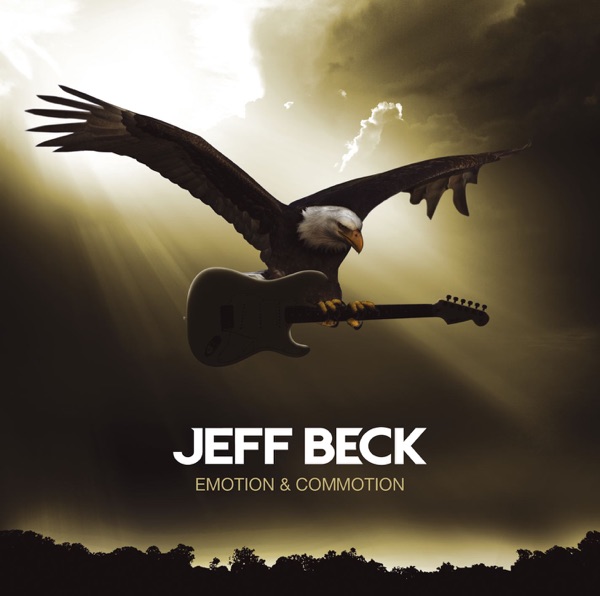
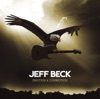
Emotion & Commotion
2010 · 10 tracks
- 1 Corpus Christi Carol ↗ 2:40
- 2 Hammerhead ↗ 4:15
- 3 Never Alone ↗ 4:23
- 4 Over the Rainbow ↗ 3:08
- 5 I Put a Spell On You (feat. Joss Stone) ↗ 3:02
- 6 Serene ↗ 6:06
- 7 Lilac Wine (feat. Imelda May) ↗ 4:44
- 8 Nessun Dorma ↗ 2:56
- 9 There's No Other Me (feat. Joss Stone) ↗ 4:02
- 10 Elegy for Dunkirk (feat. Olivia Safe) ↗ 5:08

Loud Hailer
2016 · 11 tracks

18
2022 · 13 tracks
- 1 Midnight Walker ↗ 3:05
- 2 The Death and Resurrection Show ↗ 5:30
- 3 Time ↗ 3:38
- 4 Sad M**********n' Parade ↗ 3:32
- 5 Don't Talk (Put Your Head On My Shoulder) ↗ 3:11
- 6 This Is a Song for Miss Hedy Lamarr ↗ 4:30
- 7 Caroline, No ↗ 2:24
- 8 Ooo Baby Baby ↗ 3:38
- 9 What's Going On ↗ 4:25
- 10 Venus In Furs ↗ 4:53
- 11 Let It Be Me ↗ 4:42
- 12 Stars ↗ 6:35
- 13 Isolation ↗ 5:15
-
 Blow by BlowJeff Beck19759 tracks
 -
 WiredJeff Beck19768 tracks
 -
 There and BackJeff Beck19808 tracks
 -
 FlashJeff Beck198511 tracks
 -
 Jeff Beck’s Guitar ShopJeff Beck19899 tracks
 -
 Crazy LegsJeff Beck199318 tracks
 -
 Who Else!Jeff Beck199911 tracks
 -
 You Had It ComingJeff Beck200010 tracks
 -
 JeffJeff Beck200313 tracks
 -
 Emotion & CommotionJeff Beck201010 tracks
 -
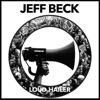 Loud HailerJeff Beck201611 tracks
 -
 18Jeff Beck202213 tracks
Deep Dive
Overview
Jeff Beck stands as one of rock music’s most restless and technically uncompromising guitarists. Rising to prominence during the 1960s as a member of the Yardbirds, he spent decades expanding the boundaries of what the electric guitar could express—first through blues-rock invention, then through a wholesale shift into instrumental jazz fusion and genre-blending experimentation. Beck’s refusal to remain confined to a single sound or commercial formula made him a musician’s musician; his influence rippled through generations of players long after his mainstream visibility had waned.
Formation Story
Geoffrey Arnold Beck was born in 1944 in Surrey, England, during a period of cultural reconstruction. He came of age during the early 1960s British blues boom, when American blues records and the electric guitar itself had begun to reshape the sound of British rock. Beck’s path into music was driven by an almost compulsive need to master and reinvent his instrument. Unlike many of his contemporaries who emerged from regional pub circuits, Beck’s trajectory was marked by an early restlessness and a drive toward technical mastery that would eventually lead him beyond traditional rock structures altogether.
Breakthrough Moment
Beck’s initial breakthrough came as a member of the Yardbirds, the London-based blues band that also produced Eric Clapton and later Jimmy Page. Within that group, Beck developed his reputation as a guitarist willing to push into noise, feedback, and unconventional tones—a stance that set him apart even within an era of adventurous playing. After leaving the Yardbirds in the mid-1960s, he briefly formed the Jeff Beck Group, a vehicle for blues-rock and hard-rock material fronted by vocalist Rod Stewart, establishing him as a bandleader rather than sideman. However, it was his decision in 1975 to abandon vocals entirely and pursue an instrumental direction that proved to be his true artistic turning point.
Peak Era
From 1975 onward, Beck entered what amounted to a continuous reinvention. The album Blow by Blow (1975) introduced listeners to his new vocabulary: a fusion-inflected approach built on precisely controlled technique, complex harmony, and studio production that treated the guitar as one voice among many rather than as rock’s traditional lead instrument. He followed this with Wired (1976), consolidating the sound and exploring jazz fusion more overtly. The period from the mid-1970s through the 1980s represented Beck at his most prolific and commercially visible in this new mode, with albums including There and Back (1980) and Flash (1985). These records demonstrated a guitarist in complete command of his instrument and unafraid to work with producers and collaborators who shared his expansionist sensibility.
Musical Style
Beck’s playing was characterized by several technical hallmarks that remained consistent across decades: precise finger dexterity, a strong command of harmonic theory, and an almost obsessive exploration of tone through effects processing and studio manipulation. His early blues-rock work showcased a fuzz-driven, heavily distorted tone that made the Yardbirds’ records crackle with unpredictability. As he moved into instrumental fusion, that rawness was channeled into cleaner, more articulate voicings, though he never abandoned his taste for textural experimentation. His rhythm-playing was as noteworthy as his soloing; he approached the guitar as a complete instrument rather than a vehicle for lead breaks alone. Stylistically, his work post-1975 inhabited the intersection of jazz fusion, hard rock, and progressive rock—genres that shared an emphasis on instrumental sophistication and studio innovation. Later in his career, Beck showed willingness to venture into electronica and other contemporary production techniques, ensuring that his music remained engaged with the present rather than locked into nostalgia.
Major Albums
Blow by Blow (1975)
Beck’s debut as a full-time instrumentalist, produced by George Martin. This album established the template for his fusion work: composed songs with developed chord progressions, precise session playing, and a clean but technologically sophisticated production aesthetic.
Wired (1976)
Following the success of Blow by Blow, Beck deepened his fusion vocabulary with this album, working again with producer George Martin and collaborator Max Middleton. The record showcased his ability to sustain thematic development across extended instrumental passages.
There and Back (1980)
A showcase for Beck’s continued evolution in fusion and his collaborations with session players. The album demonstrated his range across different tempos and moods while maintaining his signature precision and production clarity.
Jeff Beck’s Guitar Shop (1989)
A later entry that found Beck refreshing his approach and revisiting some of his blues-rock roots while maintaining his instrumental orientation, proving his durability as a creative force in an era when fusion had moved to the margins of commercial rock.
Emotion & Commotion (2010)
This album marked a recalibration, incorporating more melodic elements and broader production textures. Released in Beck’s mid-60s, it demonstrated an artist still seeking new avenues for expression and capable of engaging with contemporary production methods.
Signature Songs
- “Hi Ho Silver Lining” — His 1960s hit single with the Jeff Beck Group, a brassy, energetic blues-rock number that typified his pre-fusion commercial work.
- “Cause We’ve Ended as Lovers” — A signature instrumental from Blow by Blow, an accessible, melodic piece that became his calling card in the fusion era.
- “Beck’s Bolero” — A Yardbirds-era composition that showcased his inventive approach to feedback and tonal manipulation.
- “Scatterbrain” — From Wired, demonstrating his fusion-era compositional sophistication and his mastery of rhythmically complex material.
Influence on Rock
Beck’s influence operated on several levels. First, as a member of the Yardbirds, he helped establish the template for late-1960s blues-rock guitar heroism—the idea that the guitarist was the band’s central creative voice. Second, and more significantly, his wholesale move into instrumental jazz fusion in 1975 provided one of the key bridges between rock and jazz traditions at a moment when those worlds were becoming more separate. His technical mastery and his refusal to compromise that mastery for commercial accessibility set a standard for instrumental rock that influenced generations of progressive and fusion musicians. Furthermore, his willingness to incorporate electronics and production techniques into his sound—treating the recording studio itself as an instrument—made him a figure of significance to producers and engineers. Late-career musicians working in ambient, electronica, and hybrid genres would find in Beck’s trajectory permission to move beyond strict genre boundaries.
Legacy
Beck’s career trajectory—from blues-rock journeyman to fusion pioneer to genre-agnostic experimenter—marks him as a musician of genuine artistic consequence. While he never achieved the household-name status of some of his contemporaries from the Yardbirds era, his influence among musicians remained substantial and durable. His catalog across five decades of recordings served as a masterclass in instrumental technique and studio innovation. The consistency with which he released albums into his late career, often employing contemporary production techniques, ensured that his work remained relevant rather than reverential. Beck’s unwillingness to sentimentalize his own past or retreat into nostalgia tours kept him engaged with the present, earning him respect across multiple generations of players and producers.
Fun Facts
- Beck was one of the first rock guitarists to work extensively with George Martin, the legendary producer of the Beatles, bringing him into the fusion genre at a formative moment for both artist and producer.
- His technical virtuosity and perfectionism were legendary in session circles; many of his albums were made with meticulously assembled groups of session musicians hand-picked for specific projects rather than a stable backing band.
- Despite his instrumental focus from 1975 onward, Beck occasionally collaborated with vocalists on specific projects, maintaining a connection to song-based rock even as his primary output remained instrumental.
- Beck’s career spanned from the analog recording era of the 1960s through the digital and electronica-influenced production of the 2010s and 2020s, making him a rare figure who engaged seriously with each technological shift in music production.