
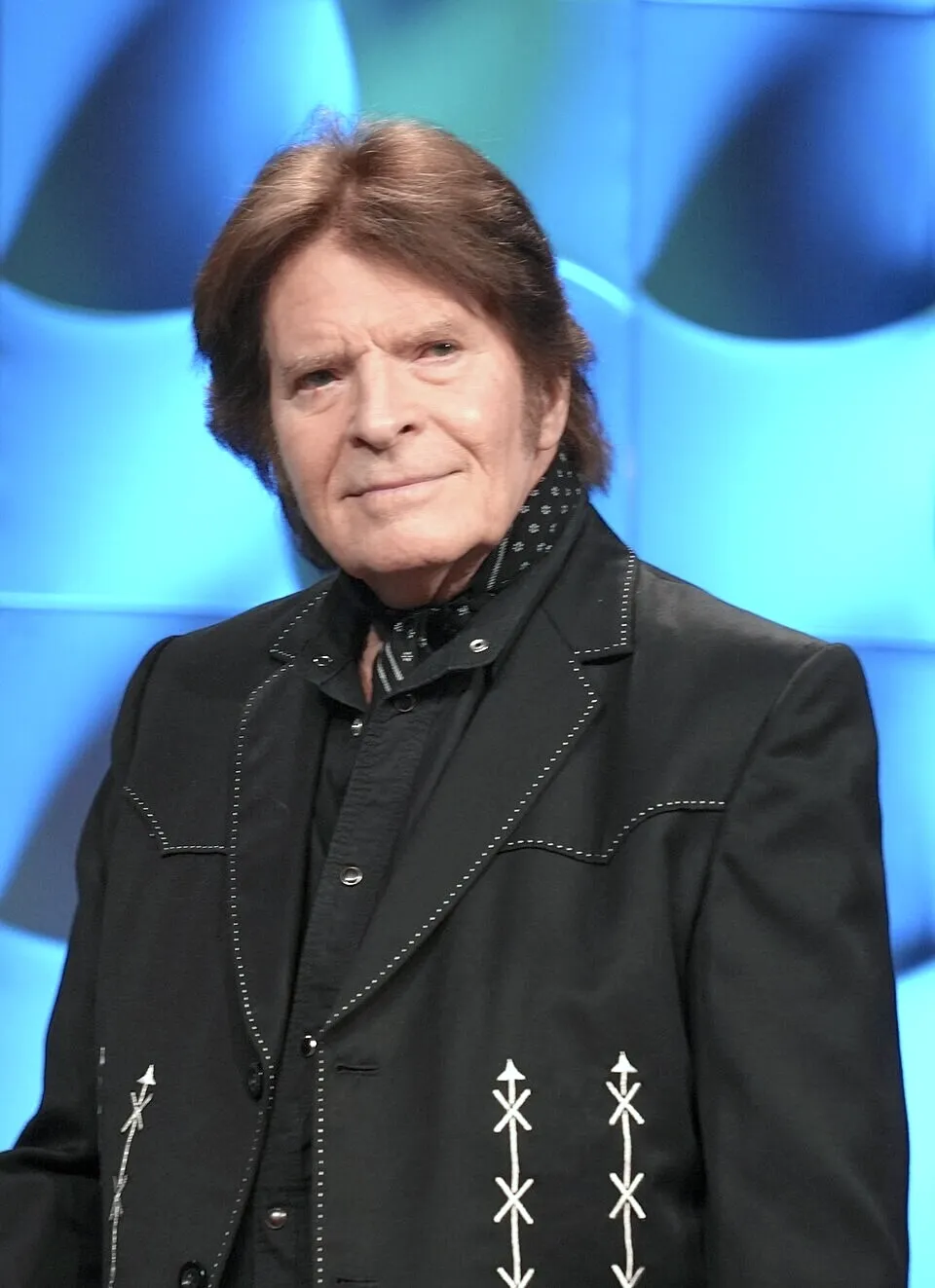
Photo by Rosiestep , licensed under CC BY-SA 4.0 · Wikimedia Commons
Rank #172
John Fogerty
From Wikipedia
John Cameron Fogerty is an American musician. Together with Doug Clifford, Stu Cook, and his brother Tom Fogerty, he founded the swamp rock band Creedence Clearwater Revival (CCR), for which he was the lead singer, lead guitarist, and principal songwriter. CCR had nine top-10 singles and eight gold albums between 1968 and 1972, and was inducted into the Rock and Roll Hall of Fame in 1993.
Discography & Previews
Browse through and click an album to open and play 30-second previews streamed from Apple Music.

The Blue Ridge Rangers
1973 · 12 tracks
- 1 Blue Ridge Mountain Blues ↗ 2:32
- 2 Somewhere Listening (For My Name) ↗ 2:41
- 3 You're The Reason ↗ 3:15
- 4 Jambalaya (On The Bayou) ↗ 3:18
- 5 She Thinks I Still Care ↗ 3:01
- 6 California Blues (Blue Yodel #4) ↗ 3:07
- 7 Workin' On A Building ↗ 4:39
- 8 Please Help Me, I'm Falling ↗ 2:53
- 9 Have Thine Own Way, Lord ↗ 3:01
- 10 I Ain't Never ↗ 2:53
- 11 Hearts Of Stone ↗ 2:14
- 12 Today I Started Loving You Again ↗ 3:13


Centerfield
1985 · 11 tracks


Blue Moon Swamp
1997 · 14 tracks
- 1 Southern Streamline ↗ 3:56
- 2 Hot Rod Heart ↗ 3:29
- 3 Blueboy ↗ 4:04
- 4 A Hundred And Ten In The Shade ↗ 4:19
- 5 Rattlesnake Highway ↗ 4:17
- 6 Bring It Down To Jelly Roll ↗ 2:37
- 7 Walking In A Hurricane ↗ 3:41
- 8 Swamp River Days ↗ 3:37
- 9 Rambunctious Boy ↗ 3:54
- 10 Joy Of My Life ↗ 3:52
- 11 Blue Moon Nights ↗ 2:33
- 12 Bad Bad Boy ↗ 4:27
- 13 Just Pickin' ↗ 2:08
- 14 Endless Sleep ↗ 2:36

Revival
2007 · 12 tracks
- 1 Don't You Wish It Was True ↗ 4:11
- 2 Gunslinger ↗ 3:31
- 3 Creedence Song ↗ 3:49
- 4 Broken Down Cowboy ↗ 3:52
- 5 River Is Waiting ↗ 3:23
- 6 Long Dark Night ↗ 3:08
- 7 Summer Of Love ↗ 3:20
- 8 Natural Thing ↗ 4:00
- 9 It Ain't Right ↗ 1:50
- 10 I Can't Take It No More ↗ 1:39
- 11 Somebody Help Me ↗ 4:28
- 12 Longshot ↗ 3:38

The Blue Ridge Rangers Rides Again
2009 · 12 tracks
- 1 Paradise ↗ 3:51
- 2 Never Ending Song Of Love ↗ 3:01
- 3 Garden Party (feat. Don Henley & Timothy B. Schmit) ↗ 3:51
- 4 I Don't Care (Just As Long As You Love Me) ↗ 2:27
- 5 Back Home Again ↗ 4:26
- 6 I'll Be There (If You Ever Want Me) ↗ 2:57
- 7 Change In The Weather ↗ 4:03
- 8 Moody River ↗ 3:10
- 9 Heaven's Just A Sin Away ↗ 2:33
- 10 Fallin' Fallin' Fallin' ↗ 2:30
- 11 Haunted House ↗ 4:36
- 12 When Will I Be Loved (feat. Bruce Springsteen) ↗ 2:37

Wrote a Song for Everyone
2013 · 14 tracks
- 1 Fortunate Son (feat. Foo Fighters) ↗ 3:31
- 2 Almost Saturday Night (feat. Keith Urban) ↗ 3:18
- 3 Lodi (feat. Shane Fogerty & Tyler Fogerty) ↗ 4:20
- 4 Mystic Highway ↗ 6:05
- 5 Wrote a Song for Everyone (feat. Miranda Lambert & Tom Morello) ↗ 4:01
- 6 Bad Moon Rising (feat. Zac Brown Band) ↗ 2:55
- 7 Long as I Can See the Light (feat. My Morning Jacket) ↗ 4:49
- 8 Born on the Bayou (feat. Kid Rock) ↗ 4:46
- 9 Train of Fools ↗ 4:42
- 10 Someday Never Comes (feat. Dawes) ↗ 5:17
- 11 Who'll Stop the Rain (feat. Bob Seger & The Silver Bullet Band) ↗ 3:13
- 12 Hot Rod Heart (feat. Brad Paisley) ↗ 5:00
- 13 Have You Ever Seen the Rain (feat. Alan Jackson) ↗ 3:18
- 14 Proud Mary (feat. Jennifer Hudson, Allen Toussaint & Rebirth Brass Band) ↗ 4:26

Fogerty’s Factory
2020 · 7 tracks
- 1 Centerfield (Dodger Stadium Version) ↗ 3:54
- 2 Have You Ever Seen The Rain? (Fogerty's Factory Version) ↗ 2:37
- 3 Long As I Can See The Light (Fogerty's Factory Version) ↗ 2:56
- 4 Down On The Corner (Fogerty's Factory Version) ↗ 2:40
- 5 Bad Moon Rising (Fogerty's Factory Version) ↗ 2:27
- 6 Fortunate Son (Fogerty's Factory Version) ↗ 2:35
- 7 Proud Mary (Fogerty's Factory Version) ↗ 2:27
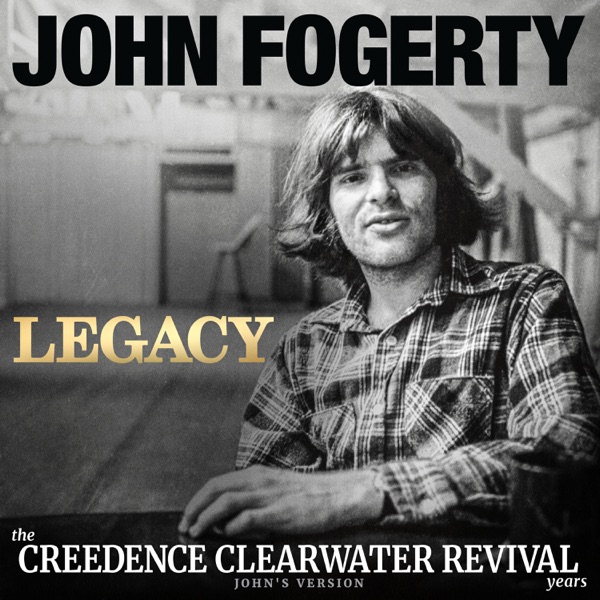
Legacy: The Creedence Clearwater Revival Years (John’s version)
2025 · 20 tracks
- 1 Up Around The Bend (John's Version) ↗ 2:44
- 2 Who'll Stop The Rain (John's Version) ↗ 2:29
- 3 Proud Mary (John's Version) ↗ 3:06
- 4 Have You Ever Seen The Rain (John's Version) ↗ 2:42
- 5 Lookin' Out My Back Door (John's Version) ↗ 2:34
- 6 Born On The Bayou (John's Version) ↗ 5:12
- 7 Run Through The Jungle (John's Version) ↗ 3:04
- 8 Someday Never Comes (John's Version) ↗ 4:03
- 9 Porterville (John's Version) ↗ 2:21
- 10 Hey Tonight (John's Version) ↗ 2:39
- 11 Lodi (John's Version) ↗ 3:13
- 12 Wrote A Song For Everyone (John's Version) ↗ 4:52
- 13 Bootleg (John's Version) ↗ 3:04
- 14 Don't Look Now (John's Version) ↗ 2:11
- 15 Long As I Can See The Light (John's Version) ↗ 3:32
- 16 Down On The Corner (John's Version) ↗ 2:45
- 17 Bad Moon Rising (John's Version) ↗ 2:22
- 18 Travelin' Band (John's Version) ↗ 2:09
- 19 Green River (John's Version) ↗ 2:33
- 20 Fortunate Son (John's Version) ↗ 2:18
-
 The Blue Ridge RangersJohn Fogerty197312 tracks
 -
 John FogertyJohn Fogerty197510 tracks
 -
 CenterfieldJohn Fogerty198511 tracks
 -
 Eye of the ZombieJohn Fogerty19869 tracks
 -
 Blue Moon SwampJohn Fogerty199714 tracks
 -
 RevivalJohn Fogerty200712 tracks
 -
 The Blue Ridge Rangers Rides AgainJohn Fogerty200912 tracks
 -
 Wrote a Song for EveryoneJohn Fogerty201314 tracks
 -
 Fogerty’s FactoryJohn Fogerty20207 tracks
 -
 Legacy: The Creedence Clearwater Revival Years (John’s version)John Fogerty202520 tracks
Deep Dive
Overview
John Cameron Fogerty stands as one of rock music’s most consequential and prolific songwriters, best known as the lead singer, lead guitarist, and principal songwriter of Creedence Clearwater Revival, the swamp rock phenomenon that dominated American radio between 1968 and 1972. With nine top-10 singles and eight gold albums during that five-year span, CCR established itself as one of the era’s defining bands before Fogerty embarked on a solo career that would span five decades and yield a catalog of studio albums reflecting his restless musical curiosity and undiminished creative drive.
Formation Story
Born in 1945, John Fogerty grew up in El Sobrante, California, during an era when rock and roll was still being defined by its pioneers. He came of age alongside his brother Tom Fogerty, and together with schoolmates Doug Clifford and Stu Cook, the four musicians formed Creedence Clearwater Revival in the late 1960s. Operating out of the San Francisco Bay Area at a moment when the region’s psychedelic and folk-rock scenes dominated underground radio, CCR charted a different course entirely—one rooted in the swamp rock and country traditions of the American South, filtered through a distinctly Californian sensibility. Fogerty’s songwriting voice crystallized quickly, establishing him as the band’s creative engine and the architect of their sound.
Breakthrough Moment
Creedence Clearwater Revival’s ascent was swift and sustained. Between 1968 and 1972, the band placed an extraordinary number of singles in the Top 10, with Fogerty’s songwriting and vocal delivery at the center of their appeal. The band’s albums sold in gold quantities repeatedly, and their reach extended across generational and demographic lines in a way that few rock acts could match. By the early 1970s, CCR had become one of America’s biggest rock bands, yet internal tensions—rooted partly in contractual and publishing disputes—led to the group’s breakup in 1972, leaving Fogerty at a crossroads just as his commercial and creative peak seemed assured.
Peak Era
Following CCR’s dissolution, Fogerty entered a period of relative silence before re-emerging as a solo artist in 1973 with The Blue Ridge Rangers, an album that signaled his willingness to explore territory beyond swamp rock. After a gap of two years, he released his self-titled John Fogerty in 1975, establishing the template for his solo work: a musician unafraid to draw from country, rock, and roots traditions while maintaining the craft and melodic sensibility he had honed in his previous life. The 1980s saw Fogerty return to the studio with renewed energy, releasing Centerfield (1985), Hoodoo (1985), and Eye of the Zombie (1986)—a stretch that demonstrated his continued relevance and willingness to engage with contemporary production values while preserving the core of his musical identity.
Musical Style
Fogerty’s sound is rooted in the swamp rock vernacular that CCR pioneered: a fusion of country music’s narrative traditions, rock and roll’s rhythmic drive, and the blues-inflected guitar work that animates both genres. His voice is lean and direct, built more for clarity and emotional directness than technical display. As a guitarist, Fogerty favors economical phrasing over flashiness, allowing melody and rhythm to carry the song. His songwriting tendency—whether in the CCR era or afterward—is toward the specific detail, the character-driven narrative, and the hook that lodges itself in memory through repetition and simplicity rather than complexity. Over his solo career, he has moved across various registers of country, rock, and Americana without abandoning the foundational swamp rock sensibility that remains his signature.
Major Albums
The Blue Ridge Rangers (1973)
Fogerty’s solo debut marked a deliberate pivot toward country and bluegrass traditions, establishing his post-CCR identity as a musician comfortable in multiple genres and uninterested in simply retreading his previous success.
John Fogerty (1975)
His self-titled second album consolidated the solo direction begun with The Blue Ridge Rangers, presenting a mature songwriter at ease with both rock and country idioms and willing to draw from a broad reservoir of American musical traditions.
Centerfield (1985)
Released a decade after his previous studio work, Centerfield marked Fogerty’s return to the commercial mainstream and demonstrated that his songwriting and vocal gift remained undiminished, featuring production that engaged with the contemporary sound of mid-1980s rock.
Blue Moon Swamp (1997)
Fogerty’s 1997 release showed his continued creative engagement with the swamp rock and blues-rock idiom that had defined his most celebrated work, proving that his musical identity remained vital and coherent across nearly three decades of solo recording.
Signature Songs
- “Proud Mary”—One of CCR’s most recognizable compositions, a driving rock-and-country hybrid that became a cross-generational standard.
- “Bad Moon Rising”—A folk-influenced rock song that showcased Fogerty’s ability to craft radio-friendly material with both melodic and lyrical depth.
- “Fortunate Son”—An anti-war rock song that captured the era’s social tensions and became an enduring anthem of the Vietnam War years.
- “Centerfield”—The title track from his 1985 return album, a jubilant celebration of baseball and American childhood that reestablished his solo presence.
Influence on Rock
John Fogerty’s principal influence on rock music flows through Creedence Clearwater Revival’s resurrection and mainstreaming of swamp rock as a viable commercial and artistic idiom during the late 1960s and early 1970s. His approach to melody, production clarity, and lyrical specificity helped establish a template for roots-rock and Americana music that artists across subsequent decades would draw upon. His solo career, spanning more than fifty years with consistent output across multiple record labels, has served as a model for artists seeking to maintain creative independence and explore genre boundaries without sacrificing the core identity that first made them known.
Legacy
Creedence Clearwater Revival’s induction into the Rock and Roll Hall of Fame in 1993 confirmed what the band’s commercial performance and cultural reach had long suggested: that CCR represented one of rock music’s most significant achievements, and that Fogerty’s songwriting and musicianship were central to that status. His solo career, unfolding across five decades, has sustained his presence in rock music and kept his compositional voice alive for audiences old and new. Recent albums including Fogerty’s Factory (2020) and Legacy: The Creedence Clearwater Revival Years (2025) demonstrate his continued engagement with performance and recording, ensuring that his influence extends beyond historical significance into the ongoing present of rock music.
Fun Facts
- Fogerty’s solo career began with The Blue Ridge Rangers in 1973, an album that found him exploring country and bluegrass influences outside the swamp rock framework of his CCR years.
- His 1985 album Centerfield came a full ten years after his previous studio album, marking a significant return to recording and commercial engagement after an extended period away from the studio.
- Fogerty has recorded across multiple record labels throughout his solo career, including Fantasy, Asylum Records, Geffen Records, and Warner Music Group, reflecting the changing landscape of the music industry across five decades.
- His 2020 album Fogerty’s Factory showcased him collaborating with family members in a home-studio setting, bringing his creative circle closer to the recording process itself.