
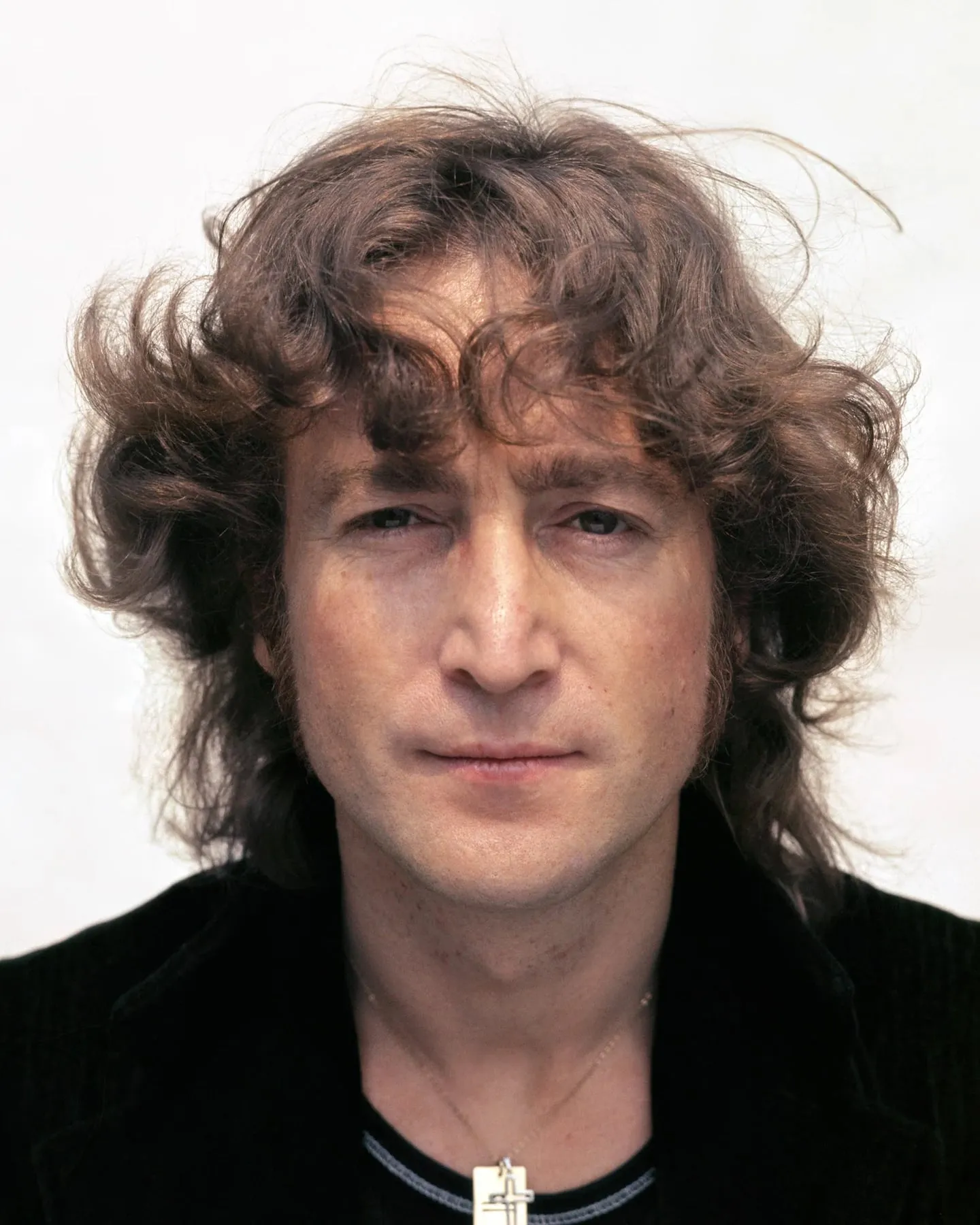
Photo by Bob Gruen; Distributed by Capitol Records , licensed under Public domain · Wikimedia Commons
Rank #8
John Lennon
From Wikipedia
John Winston Ono Lennon was an English musician, songwriter and activist. He gained global fame as the founder, co-lead vocalist and rhythm guitarist of the Beatles. Lennon's songwriting partnership with Paul McCartney remains the most successful in history.
Discography & Previews
Browse through and click an album to open and play 30-second previews streamed from Apple Music.

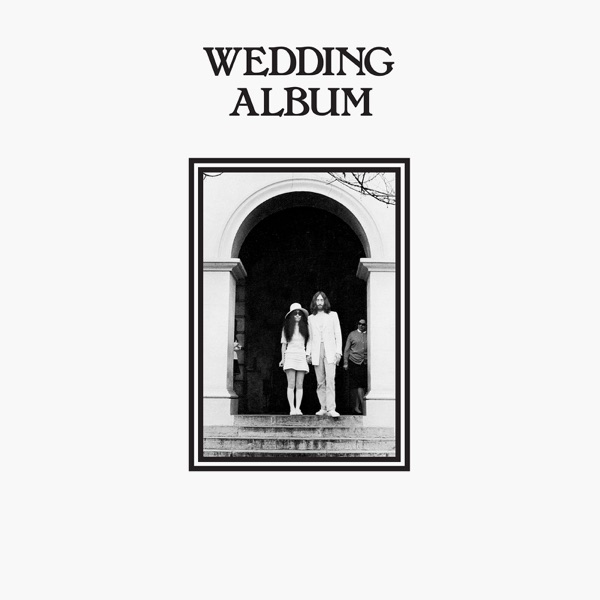
Wedding Album
1969 · 2 tracks
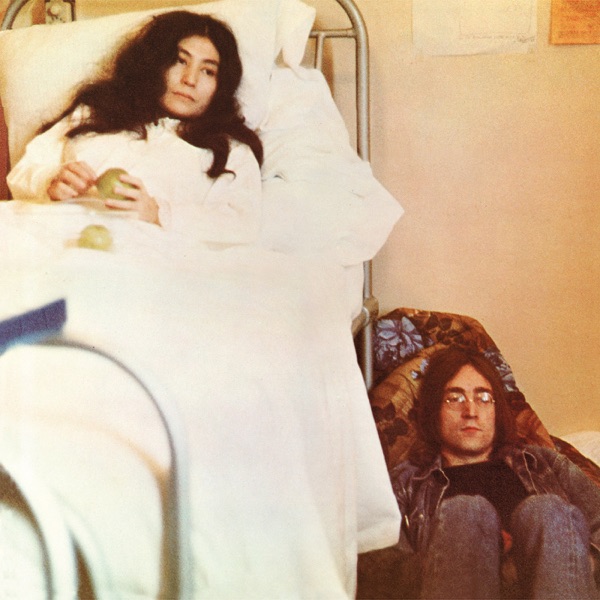


Some Time in New York City
1972 · 16 tracks
- 1 Woman Is the N****r of the World ↗ 5:18
- 1 Cold Turkey (Live) ↗ 8:35
- 2 Sisters, O Sisters ↗ 3:49
- 2 Don't Worry Kyoko (Live) ↗ 16:06
- 3 Attica State ↗ 2:57
- 3 Well (Baby Please Don't Go) [Live] ↗ 4:41
- 4 Born In a Prison ↗ 4:03
- 4 Jamrag (Live) ↗ 5:36
- 5 New York City ↗ 4:40
- 5 Scumbag (Live) ↗ 4:27
- 6 Sunday Bloody Sunday ↗ 5:03
- 6 Au (Live) ↗ 8:08
- 7 The Luck of the Irish ↗ 2:57
- 8 John Sinclair ↗ 3:34
- 9 Angela ↗ 4:05
- 10 We're All Water ↗ 7:14

Mind Games
1973 · 12 tracks
- 1 Mind Games ↗ 4:12
- 2 Tight A$ ↗ 3:39
- 3 Aisumasen (I'm Sorry) ↗ 4:45
- 4 One Day (At a Time) ↗ 3:11
- 5 Bring On the Lucie (Freda Peeple) ↗ 4:12
- 6 Nutopian International Anthem ↗ 0:04
- 7 Intuition ↗ 3:11
- 8 Out the Blue ↗ 3:23
- 9 Only People ↗ 3:29
- 10 I Know (I Know) ↗ 3:51
- 11 You Are Here ↗ 4:13
- 12 Meat City ↗ 2:52
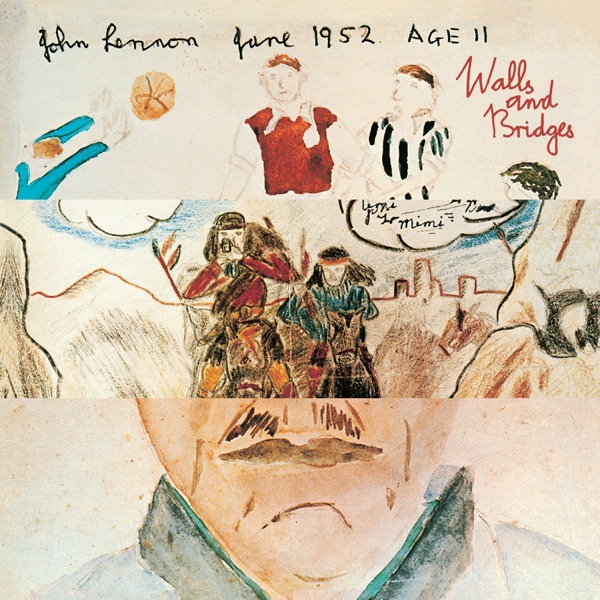
Walls and Bridges
1974 · 12 tracks
- 1 Going Down On Love ↗ 3:56
- 2 Whatever Gets You Thru the Night ↗ 3:28
- 3 Old Dirt Road ↗ 4:13
- 4 What You Got ↗ 3:09
- 5 Bless You ↗ 4:37
- 6 Scared ↗ 4:41
- 7 #9 Dream ↗ 4:47
- 8 Surprise, Surprise (Sweet Bird of Paradox) ↗ 2:57
- 9 Steel and Glass ↗ 4:40
- 10 Beef Jerky ↗ 3:31
- 11 Nobody Loves You (When You're Down and Out) ↗ 5:13
- 12 Ya Ya ↗ 1:08

Rock ’n’ Roll
1975 · 13 tracks
- 1 Be-Bop-A-Lula ↗ 2:37
- 2 Stand By Me ↗ 3:31
- 3 Rip It Up / Ready Teddy ↗ 1:35
- 4 You Can't Catch Me ↗ 4:54
- 5 Ain't That a Shame ↗ 2:34
- 6 Do You Want to Dance? ↗ 2:54
- 7 Sweet Little Sixteen ↗ 3:04
- 8 Slippin' and Slidin' ↗ 2:18
- 9 Peggy Sue ↗ 2:05
- 10 Bring It On Home to Me / Send Me Some Lovin' ↗ 3:42
- 11 Bony Moronie ↗ 3:51
- 12 Ya Ya ↗ 2:18
- 13 Just Because ↗ 4:26

Double Fantasy
1980 · 14 tracks
- 1 (Just Like) Starting Over ↗ 3:57
- 2 Kiss Kiss Kiss ↗ 2:42
- 3 Cleanup Time ↗ 2:59
- 4 Give Me Something ↗ 1:35
- 5 I'm Losing You ↗ 3:58
- 6 I'm Moving On ↗ 2:21
- 7 Beautiful Boy (Darling Boy) ↗ 4:06
- 8 Watching The Wheels ↗ 4:00
- 9 Yes, I'm Your Angel ↗ 3:10
- 10 Woman (Remastered 2010) ↗ 3:33
- 11 Beautiful Boys ↗ 2:55
- 12 Dear Yoko ↗ 2:35
- 13 Every Man Has A Woman Who Loves Him ↗ 4:02
- 14 Hard Times Are Over ↗ 3:20
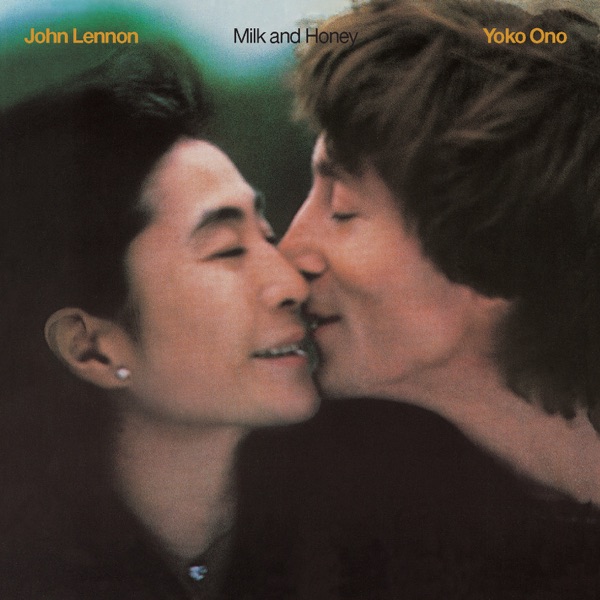
Milk and Honey
1984 · 12 tracks
- 1 I'm Stepping Out ↗ 4:06
- 2 Sleepless Night ↗ 2:34
- 3 I Don't Wanna Face It ↗ 3:22
- 4 Don't Be Scared ↗ 2:45
- 5 Nobody Told Me ↗ 3:34
- 6 O'Sanity ↗ 1:07
- 7 Borrowed Time ↗ 4:29
- 8 Your Hands ↗ 3:04
- 9 (Forgive Me) My Little Flower Princess ↗ 2:28
- 10 Let Me Count the Ways ↗ 2:17
- 11 Grow Old With Me ↗ 3:09
- 12 You're the One ↗ 3:55
-
 Unfinished Music No. 1: Two VirginsJohn Lennon19683 tracks
 -
 Wedding AlbumJohn Lennon19692 tracks
 -
 Unfinished Music No. 2: Life With the LionsJohn Lennon19697 tracks
 -
 John Lennon/Plastic Ono BandJohn Lennon197011 tracks
 -
 ImagineJohn Lennon197110 tracks
 -
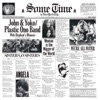 Some Time in New York CityJohn Lennon197216 tracks
 -
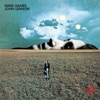 Mind GamesJohn Lennon197312 tracks
 -
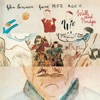 Walls and BridgesJohn Lennon197412 tracks
 -
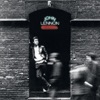 Rock ’n’ RollJohn Lennon197513 tracks
 -
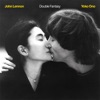 Double FantasyJohn Lennon198014 tracks
 -
 Milk and HoneyJohn Lennon198412 tracks
Deep Dive
Overview
John Winston Ono Lennon stands as one of the most consequential figures in rock music history, first as the founder, co-lead vocalist, and rhythm guitarist of the Beatles, then as a solo artist who reshaped the landscape of popular music. Between his global fame earned through the Beatles and his prolific solo work spanning the 1960s and 1970s, Lennon established himself as both a master craftsman of pop melody and an uncompromising artistic experimentalist. His songwriting partnership with Paul McCartney remains the most successful in recorded music history, while his post-Beatles career revealed an artist equally committed to avant-garde sound, political activism, and intimate domestic storytelling.
Formation Story
John Lennon was born in Liverpool, England, in 1940, emerging from a city whose port culture and American radio broadcasts created a unique crucible for rock and roll passion. He came of age during the beat music boom of the 1950s and early 1960s, when Liverpool bands synthesized American rhythm and blues, rock and roll, and skiffle into their own idiom. The Beatles themselves grew out of this scene, with Lennon as the group’s catalyst and creative force alongside McCartney. From the band’s inception through their four-year surge of studio innovation (1963–1967), Lennon proved himself a songwriter of startling range—capable of crafting spare, affecting ballads as well as exploratory studio experiments that pushed the boundaries of what rock music could express.
Breakthrough Moment
Lennon’s breakthrough as a solo artist came paradoxically while the Beatles were still active. His experimental collaboration with artist Yoko Ono produced Unfinished Music No. 1: Two Virgins in 1968, a provocative statement that signaled his intention to pursue art beyond the confines of the band. Though controversial—its album cover alone sparked outrage—the record announced that Lennon would not be constrained by commercial expectation. In the years immediately following the Beatles’ dissolution in 1970, Lennon released John Lennon/Plastic Ono Band, a raw, psychologically searching album that demonstrated his capacity to move beyond pop into deeply personal territory. That same trajectory accelerated with Imagine in 1971, which delivered a more accessible yet philosophically ambitious vision of his artistic ambitions, becoming his most widely recognized solo work.
Peak Era
Lennon’s solo peak stretched across the early-to-mid 1970s, a period of remarkable creativity and commercial success. Imagine (1971) and Some Time in New York City (1972) established him as a solo force, while Mind Games (1973) and Walls and Bridges (1974) sustained that momentum. He also released a rock and roll covers album, Rock ‘n’ Roll (1975), demonstrating his reverence for the American musical traditions that had shaped him as a youth. By the mid-1970s, Lennon had stepped back from the public eye, focusing on family life before returning to recording with Double Fantasy in 1980—his final studio album before his death that year. During this peak period, Lennon balanced commercial ambition with artistic fearlessness, producing work that ranged from intimate songwriting to political manifestos to deliberate explorations of sound and form.
Musical Style
Lennon’s sound as a solo artist diverged sharply from the polished pop craftsmanship that defined much of his Beatles work. Where McCartney often moved toward orchestral sophistication, Lennon embraced rawness—both in his vocal approach and in his production choices. John Lennon/Plastic Ono Band paired his voice and acoustic guitar with minimal accompaniment, emphasizing vulnerability and emotional directness. Other records incorporated experimental techniques: layers of voice, unconventional instrumentation, and studio manipulation that reflected his fascination with avant-garde art and his partnership with Yoko Ono. Even on more traditionally structured pop songs like those on Imagine, Lennon’s delivery carried an intensity and occasional abrasiveness absent from his earlier work. Across genres spanning pop rock, art rock, experimental music, and hard rock, Lennon’s solo catalogue resisted easy categorization—a reflection of an artist determined to evolve beyond any fixed identity.
Major Albums
John Lennon/Plastic Ono Band (1970)
Lennon’s solo debut, stripped of production excess and defined by stark arrangements and unflinching emotional honesty, it established the tone for his solo period and contained some of his most psychologically penetrating songwriting.
Imagine (1971)
His most commercially successful solo record, balancing philosophical ambition with melodic directness; the title track became an anthem of idealism and remains his most enduring solo composition.
Some Time in New York City (1972)
A overtly political statement, marrying personal and activist concerns, it proved that Lennon’s solo work could be as socially engaged as it was artistically innovative.
Walls and Bridges (1974)
A mid-period statement that reasserted his gift for pure songcraft, showcasing both vulnerability and musical sophistication amid a period of personal turbulence.
Double Fantasy (1980)
Lennon’s final studio album, released after a five-year recording hiatus, marked a return to domestic contentment and collaboration with producer Jack Douglas, blending retrospection with renewed creative energy.
Signature Songs
- “Instant Karma!” — A defiant, musically propulsive statement of artistic resilience and existential immediacy.
- “Jealous Guy” — A starkly vulnerable acoustic composition exploring emotional insecurity with disarming candor.
- “Working Class Hero” — A politicized acoustic statement of class consciousness and individual defiance.
- “Beautiful Boy (Darling Boy)” — An intimate paean to domesticity and fatherhood, recorded during his retreat from public life.
- “(Just Like) Starting Over” — His final single, released in 1980, reasserting his presence in the musical mainstream after years away from recording.
Influence on Rock
Lennon’s solo work established a model for the rock artist as uncompromising experimentalist willing to abandon commercial safety for personal or artistic truth. His embrace of avant-garde collaboration, political songwriting, and studio innovation influenced generations of artists across rock, pop, and alternative music. The notion of the rock star as activist—using fame as a platform for philosophical or political engagement—owes much to Lennon’s example. His willingness to be vulnerable and introspective on record, to privilege authenticity over polish, contributed to the emergence of singer-songwriter traditions and indie rock’s ethical framework. Furthermore, his treatment of the recording studio as an instrument in itself anticipated much of experimental rock and electronic music’s later development.
Legacy
John Lennon’s death in 1980 cast an immediate pall over his legacy, transforming Double Fantasy into a farewell album and giving his body of work an elegiac weight. Subsequent posthumous releases—including Milk and Honey (1984), drawn from the Double Fantasy sessions, and the extensive Lost Lennon Tapes series beginning in 1988—sustained his presence in the cultural imagination. His extensive archive of demos, alternate takes, and unreleased material continues to be excavated and reissued, testament to his prolific output and the lasting interest in his creative process. The streaming era has only strengthened his position: Imagine remains one of the most-streamed songs of the pre-Beatles era, while his Beatles catalog and solo work together constitute one of the most frequently consumed bodies of music in the world. Lennon’s influence extends beyond music into visual art, activism, and philosophy—areas he pursued throughout his life with the same intensity he brought to songwriting. His voice, presence, and ideas remain central to any understanding of rock music and twentieth-century popular culture.