
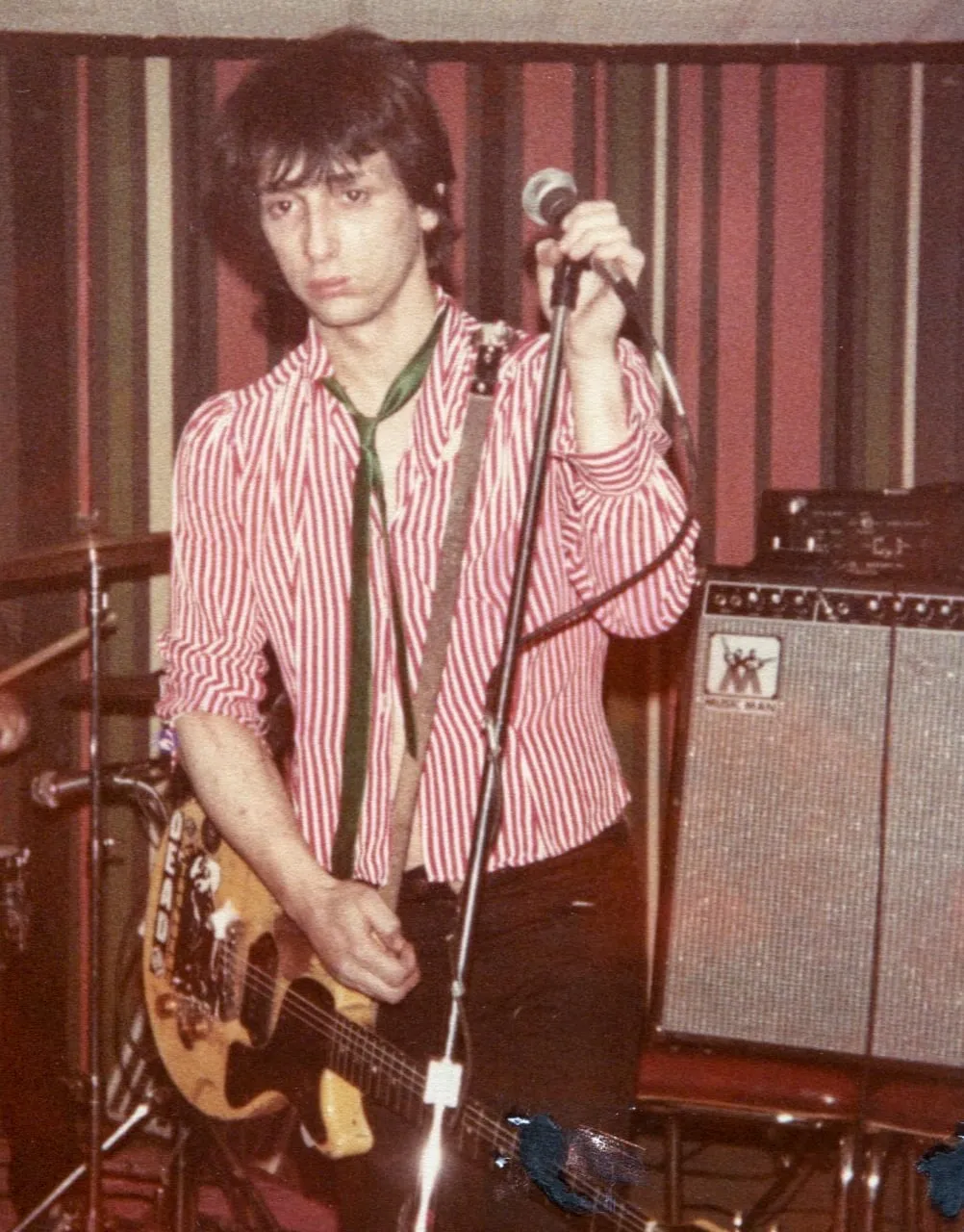
Photo by Thomas Good , licensed under CC BY-SA 4.0 · Wikimedia Commons
Rank #294
Johnny Thunders
From Wikipedia
John Anthony Genzale, known professionally as Johnny Thunders, was an American guitarist, singer, and songwriter. He came to prominence in the early 1970s as a member of New York Dolls. He later formed the Heartbreakers and played as a solo artist.
Discography & Previews
Browse through and click an album to open and play 30-second previews streamed from Apple Music.
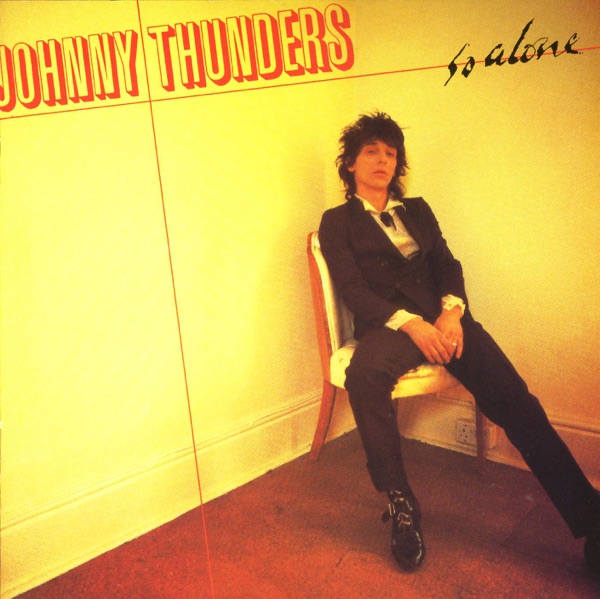
So Alone
1978 · 14 tracks
- 1 Pipeline ↗ 2:23
- 2 You Can't Put Your Arms Round a Memory ↗ 3:46
- 3 Great Big Kiss ↗ 3:24
- 4 Ask Me No Questions ↗ 3:34
- 5 Leave Me Alone ↗ 2:48
- 6 Daddy Rollin' Stone ↗ 3:20
- 7 London Boys ↗ 2:50
- 8 (She's So) Untouchable ↗ 2:54
- 9 Subway Train ↗ 4:11
- 10 Downtown ↗ 3:14
- 11 Dead or Alive ↗ 3:13
- 12 Hurtin' ↗ 3:06
- 13 So Alone ↗ 4:54
- 14 The Wizard ↗ 3:23
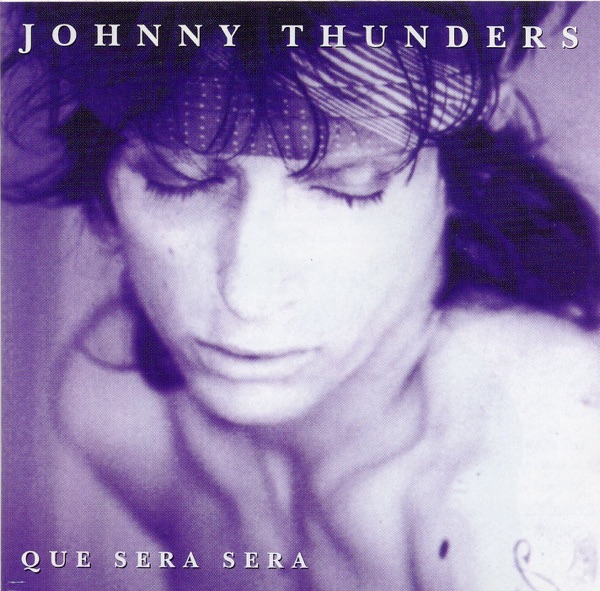
Que Será, Será
1985 · 13 tracks
- 1 Short Lives (Johnny's Remix) ↗ 3:09
- 2 M.I.A. ↗ 2:02
- 3 I Only Wrote This Song for You ↗ 2:33
- 4 Little Bit of Whore ↗ 3:00
- 5 Cool Operator ↗ 6:16
- 6 Blame It On Mom ↗ 3:00
- 7 Tie Me Up ↗ 3:12
- 8 Alone In a Crowd ↗ 2:40
- 9 Billy Boy ↗ 2:52
- 10 Endless Party ↗ 2:43
- 11 Que Sera Sera (Whatever Will Be Will Be) ↗ 3:41
- 12 Short Lives (Original Mix) ↗ 3:16
- 13 Cool Operator (Black Cat Remix) ↗ 5:49
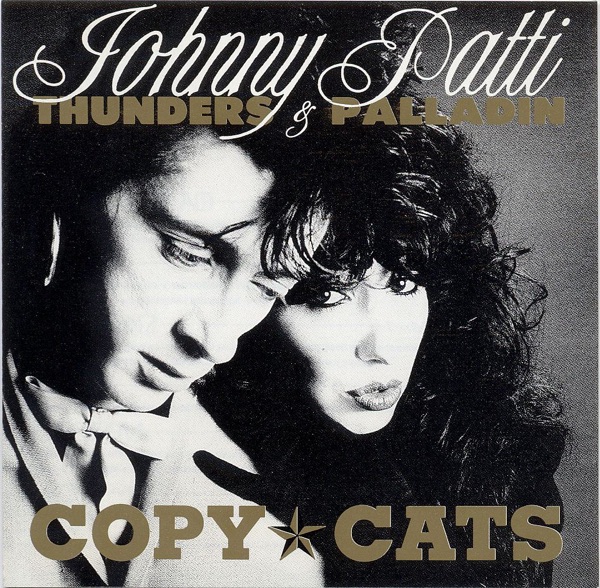
Copy Cats
1988 · 12 tracks
- 1 Can't Seem to Make You Mine ↗ 4:10
- 2 Baby It's You ↗ 3:05
- 3 She Wants to Mambo ↗ 3:07
- 4 Treat Her Right ↗ 2:13
- 5 Uptown to Harlem ↗ 2:51
- 6 Crawfish ↗ 3:26
- 7 Alligator Wine ↗ 3:40
- 8 Two Time Loser ↗ 3:01
- 9 Love Is Strange ↗ 3:22
- 10 I Was Born to Cry ↗ 2:21
- 11 He Cried ↗ 3:53
- 12 Let Me Entertain You (Parts 1 and 2) ↗ 4:13
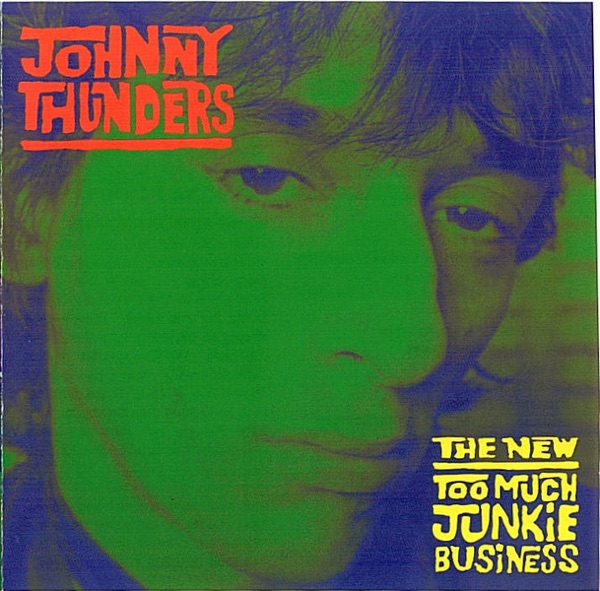
The New Too Much Junkie Business
1990 · 14 tracks
- 1 Who Do Voodoo ↗ 2:48
- 2 In Cold Blood ↗ 2:32
- 3 Just Another Girl ↗ 4:23
- 4 Sad Vacation (Live) ↗ 4:23
- 5 Diary of a Lover ↗ 2:44
- 6 Get Off the Phone (Live) ↗ 2:00
- 7 Who Needs Girls? (Live) ↗ 2:46
- 8 Too Much Junkie Business (Live) ↗ 2:44
- 9 King of the Gypsies ↗ 1:57
- 10 So Alone (Live) ↗ 4:36
- 11 I Love You (Live) ↗ 2:34
- 12 Great Big Kiss (Live) ↗ 6:15
- 13 Let Go (Live) ↗ 2:42
- 14 Jet Boy (Live) ↗ 1:08
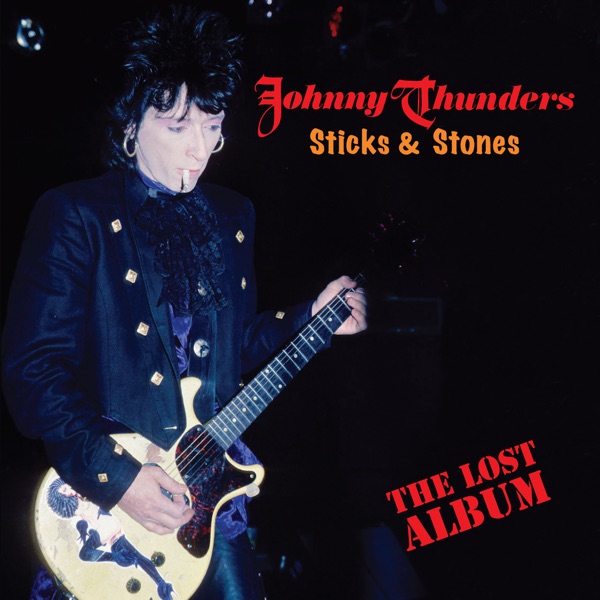
Sticks & Stones: The Lost Album
2010 · 23 tracks
- 1 Help the Homeless (Studio 1990) ↗ 3:11
- 2 Disappointed In You (Studio 1990) ↗ 4:31
- 3 Children Are People (Studio 1990) ↗ 4:02
- 4 Night Lives (Studio 1990) ↗ 3:09
- 5 Glory, Glory (Studio 1990) ↗ 4:06
- 6 Familiarity Breeds Contempt (Studio 1990) ↗ 3:15
- 7 Some Hearts (Studio 1990) ↗ 4:23
- 8 Tell the Truth (Studio 1990) ↗ 3:30
- 9 You Can't Put Your Arms Around a Memory (Acoustic 1982) ↗ 2:54
- 10 (She’s So) Untouchable (Acoustic 1982) ↗ 2:34
- 11 Hurt Me (Acoustic 1982) ↗ 2:24
- 12 Are You Living? (Acoustic 1982) ↗ 2:26
- 13 Intro: Ask Me No Questions / the Wizard (Live) ↗ 2:13
- 14 Pipeline (Live) ↗ 2:15
- 15 (I’m Not) Your Stepping Stone (Live) ↗ 3:33
- 16 Great Big Kiss (Live) ↗ 3:20
- 17 The 10 Commandments of Love (Live) ↗ 4:56
- 18 These Boots Are Made for Walking (Live) ↗ 3:21
- 19 Like a Rolling Stone (Live) ↗ 4:45
- 20 Endless Party (Live) ↗ 3:04
- 21 Pills (Live) ↗ 3:37
- 22 (I'm Your) Hoochie Coochie Man (Live) ↗ 5:50
- 23 Personality Crisis (Live) ↗ 2:00
Que Sera, Sera (Resurrected)
2019 · 13 tracks
- 1 Short Lives (Johnny's Remix) ↗ 3:09
- 2 M.I.A. ↗ 2:02
- 3 I Only Wrote This Song for You ↗ 2:33
- 4 Little Bit of Whore ↗ 3:00
- 5 Cool Operator ↗ 6:16
- 6 Blame It On Mom ↗ 3:00
- 7 Tie Me Up ↗ 3:12
- 8 Alone In a Crowd ↗ 2:40
- 9 Billy Boy ↗ 2:52
- 10 Endless Party ↗ 2:43
- 11 Que Sera Sera (Whatever Will Be Will Be) ↗ 3:41
- 12 Short Lives (Original Mix) ↗ 3:16
- 13 Cool Operator (Black Cat Remix) ↗ 5:49
-
 So AloneJohnny Thunders197814 tracks
 -
 Que Será, SeráJohnny Thunders198513 tracks
 -
 Copy CatsJohnny Thunders198812 tracks
 -
 The New Too Much Junkie BusinessJohnny Thunders199014 tracks
 -
 Sticks & Stones: The Lost AlbumJohnny Thunders201023 tracks
 - Que Sera, Sera (Resurrected)Johnny Thunders201913 tracks
Deep Dive
Overview
Johnny Thunders, born John Anthony Genzale, was an American rock guitarist, singer, and songwriter whose career spanned nearly four decades. Though he is best remembered as a founding member of the New York Dolls—one of the most influential proto-punk bands of the early 1970s—Thunders also pursued a prolific solo career and led the Heartbreakers, cementing his place as a foundational figure in the genealogy of punk, glam rock, and rock and roll attitude. His fingerprints appear across the DNA of multiple rock subgenres, from the raw theatricality of glam to the stripped-down urgency of punk.
Formation Story
Johnny Thunders grew up in the United States during the postwar rock and roll boom, coming of age amid the guitar-driven ethos that defined American popular music in the 1950s and 1960s. He learned to channel that inheritance into a personal style that blended showmanship, technical grit, and songwriting ambition. In the early 1970s, Thunders found his audience in New York City, where he became a central figure in one of rock’s most consequential bands. His path as a solo artist began in earnest in 1978, launching a second career that would run parallel to his work with the Heartbreakers and would produce a catalog of studio recordings across more than four decades.
Breakthrough Moment
Thunders’ initial prominence came through the New York Dolls in the early 1970s, a period that established his reputation as a guitarist capable of delivering both vulnerability and raw power. His transition to solo work began with the release of So Alone in 1978, an album that marked his arrival as a solo artist with his own voice and songwriting identity. The solo records that followed—Hurt Me (1983), Que Será, Será (1985), and Copy Cats (1988)—documented his evolution as a performer and his ability to sustain a solo career independent of his band affiliations. These releases, issued primarily on the ROIR label, expanded his audience beyond those familiar with his earlier work and demonstrated his resilience as a recording artist.
Peak Era
The period from the late 1970s through the late 1980s represented Thunders’ most active stretch as a solo recording artist. During this window, he released four studio albums—So Alone (1978), Hurt Me (1983), Que Será, Será (1985), and Copy Cats (1988)—each of which added depth to his catalog and showcased his range as a songwriter and performer. Concurrently, his work with the Heartbreakers kept him visible on the live circuit and in the consciousness of punk and rock audiences who valued authenticity and historical connection to rock’s foundational traditions. By the late 1980s, Thunders had established himself as a seasoned artist with a loyal following among collectors, critics, and musicians who recognized his influence on the post-punk landscape.
Musical Style
Johnny Thunders’ guitar work was rooted in classic rock and roll, tempered by the swagger and attitude of glam rock and hardened by the ethos of punk. His playing style blended blues-inflected lead work with a sensibility for arrangement and atmosphere; he was as comfortable delivering a biting solo as he was crafting a moody, introspective passage. As a vocalist, Thunders brought a rough-edged, street-level authenticity to his delivery, without pretension or artifice. His songwriting often drew from personal experience and the social landscape of urban rock life, themes that resonated with audiences in the punk and post-punk communities. The production of his solo records reflected the era in which they were made—leaner and more direct than mainstream rock, but informed by a lifetime spent absorbing and reinterpreting the language of rock and roll.
Major Albums
So Alone (1978)
Thunders’ debut solo album, a foundational statement of intent that introduced audiences to his solo vision. The record established the template for his subsequent work: direct songwriting, guitar-driven arrangements, and a willingness to explore both hard rock and more tender material.
Hurt Me (1983)
Released five years after So Alone, this album demonstrated Thunders’ continued evolution as a solo artist and his ability to maintain relevance in the post-punk landscape of the early 1980s. The album reinforced his reputation for unvarnished rock and roll authenticity.
Que Será, Será (1985)
Thunders’ third studio album captured him at a mature point in his solo career, balancing his rock and roll foundation with a broader emotional palette. The title’s invocation of the Spanish phrase—and its famous association with the popular standard—suggested a philosophy of acceptance and forward motion.
Copy Cats (1988)
Released in the latter part of the 1980s, Copy Cats maintained Thunders’ commitment to direct, unpolished rock music during an era when such aesthetics were increasingly sidelined by the mainstream music industry.
Signature Songs
- “So Alone” — The title track from his debut solo album, capturing the emotional isolation and rock and roll defiance that defined Thunders’ artistic persona.
- “You Can’t Put Your Arms Around a Memory” — A deeply personal ballad that became one of his most enduring compositions, showcasing his ability to write vulnerability alongside the raw edge of his guitar work.
- “Born to Lose” — A blues-inflected rock number that expressed the existential resignation and street-level wisdom that pervaded his songwriting.
Influence on Rock
Johnny Thunders’ influence radiates through multiple strands of rock music history. His work with the New York Dolls was foundational to the proto-punk aesthetic that would shape punk rock in the mid-to-late 1970s. As a solo artist, Thunders demonstrated that a guitarist could sustain an independent career while maintaining credibility and artistic integrity, a model followed by countless rock musicians. His guitar tone—a blend of classic rock and roll tradition filtered through punk rock’s philosophy of raw emotion over technical perfection—became a touchstone for generations of guitarists. His approach to songwriting, which married personal narrative to archetypal rock themes, influenced writers across punk, post-punk, and alternative rock movements. Musicians who came of age in the punk and new wave eras drew directly from Thunders’ example of an artist who refused to compromise or chase trends.
Legacy
Johnny Thunders’ death in 1991 marked the end of an era, but his work has only grown in estimation since. His solo catalog—originally released on ROIR and other independent labels—has been revisited, remastered, and in some cases reissued, introducing new generations to his music. Albums like The New Too Much Junkie Business (1990), released near the end of his life, and posthumous collections including Street Fighting (2000), Sticks & Stones: The Lost Album (2010), and newly remastered editions of Que Será, Será (2019), have ensured that his work remains in circulation. Thunders stands as a crucial bridge between the raw rock and roll of the 1950s and 1960s and the punk and post-punk movements of the 1970s and 1980s. His influence on rock guitar playing, songwriting, and the ethos of artistic independence remains undiminished, recognized by musicians and critics as essential to understanding rock music’s evolution across multiple decades.
Fun Facts
- Thunders released multiple albums titled Hurt Me across different years (1983, 1986, 2013), suggesting either thematic recurrence or the reissue of previously recorded material under the same title.
- His solo discography spans more than three decades of recording, from So Alone in 1978 through posthumous releases continuing into the 2010s and 2020s.
- The official Johnny Thunders website (thunders.ca) maintains his legacy and provides access to information about his recordings and career across all phases of his work.
- Sticks & Stones: The Lost Album (2010) and other posthumous releases suggest the existence of unreleased or previously archived material that continued to surface after his death.