
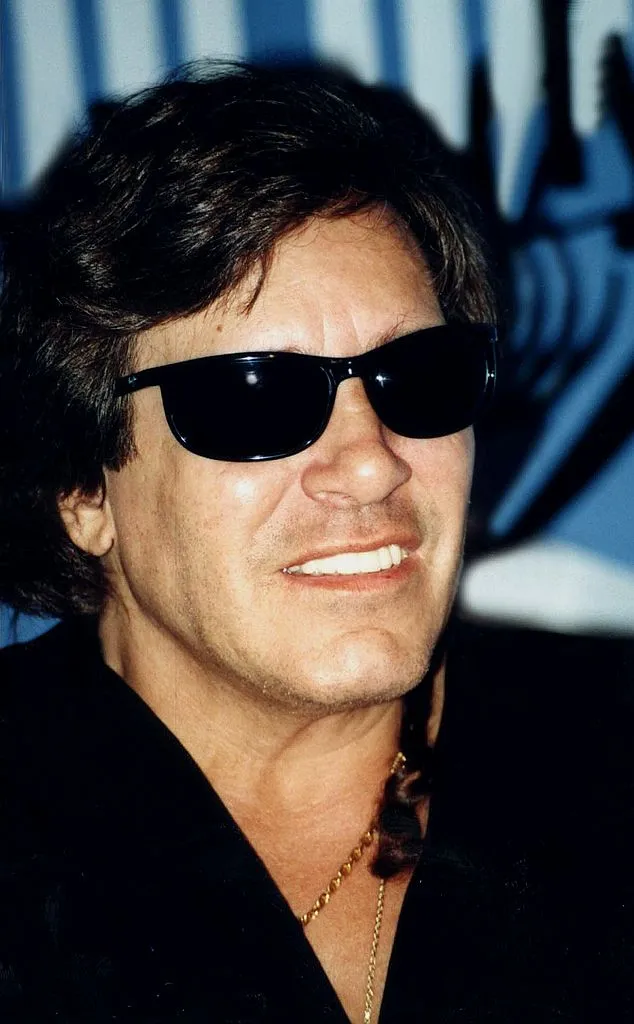
Photo by Kingkongphoto & www.celebrity-photos.com from Laurel Maryland, USA , licensed under CC BY-SA 2.0 · Wikimedia Commons
Rank #338
José Feliciano
From Wikipedia
José Montserrate Feliciano García is a Puerto Rican musician. He recorded many international hits, including his rendition of the Doors' "Light My Fire" and his self-penned Christmas song "Feliz Navidad". Music genres he explores consist of a fusion of many styles, such as Latin, blues, jazz, soul and rock music, created primarily with the help of his signature acoustic guitar sound.
Discography & Previews
Browse through and click an album to open and play 30-second previews streamed from Apple Music.

The Voice and Guitar of José Feliciano
1965 · 12 tracks
- 1 Hi-Heel Sneakers ↗ 2:22
- 2 Mule Skinner Blues ↗ 2:35
- 3 Dos Cruces ↗ 3:34
- 4 Duelin' Banjo ↗ 1:43
- 5 I Got a Woman ↗ 2:54
- 6 Manhã de Carnaval ↗ 3:10
- 7 Walk Right In ↗ 2:48
- 8 Since I Met You Baby ↗ 3:21
- 9 Son De La Loma ↗ 2:00
- 10 Don't Think Twice, It's All Right ↗ 4:40
- 11 Flight of the Bumble Bee ↗ 2:00
- 12 Chinita ↗ 4:36

Fantastic Feliciano (The Voice And Guitar Of José Feliciano)
1966 · 12 tracks
- 1 (I Love You) For Sentimental Reasons ↗ 2:31
- 2 Someday (You'll Want Me to Want You) ↗ 2:42
- 3 (I'm Afraid) The Masquerade Is Over ↗ 3:34
- 4 You Know You Don't Want Me (So Why Don't You Leave Me Alone?) ↗ 2:09
- 5 Goody Goody ↗ 2:16
- 6 Nature Boy ↗ 2:51
- 7 To Each His Own ↗ 2:48
- 8 Quit While You're Ahead ↗ 2:06
- 9 I Wish You Love (Remastered) ↗ 3:07
- 10 Somebody Else Is Taking My Place ↗ 2:03
- 11 I Miss You So ↗ 2:36
- 12 Bye Bye Blackbird ↗ 3:27
José Feliciano
1966 · 12 tracks
- 1 Hi-Heel Sneakers ↗ 2:22
- 2 Mule Skinner Blues ↗ 2:35
- 3 Dos Cruces ↗ 3:34
- 4 Duelin' Banjo ↗ 1:43
- 5 I Got a Woman ↗ 2:54
- 6 Manhã de Carnaval ↗ 3:10
- 7 Walk Right In ↗ 2:48
- 8 Since I Met You Baby ↗ 3:21
- 9 Son De La Loma ↗ 2:00
- 10 Don't Think Twice, It's All Right ↗ 4:40
- 11 Flight of the Bumble Bee ↗ 2:00
- 12 Chinita ↗ 4:36

A Bag Full of Soul: Folk, Rock and Blues
1966 · 12 tracks
- 1 If I Really Bug You, Then You Don't Love Me ↗ 2:18
- 2 You're Takin' Hold of Me ↗ 2:27
- 3 Help! ↗ 3:21
- 4 A Woman, a Lover, a Friend ↗ 2:29
- 5 A Happy Guy ↗ 2:17
- 6 Masters of War ↗ 4:45
- 7 Go On Your Way ↗ 2:13
- 8 Spoonful ↗ 2:41
- 9 Goin' to Chicago Blues ↗ 5:24
- 10 Work Song ↗ 3:03
- 11 That's the Way It's Gonna Be ↗ 2:08
- 12 Where I'm Goin' ↗ 2:18

Souled
1968 · 11 tracks
- 1 Younger Generation ↗ 4:03
- 2 I'll Be Your Baby Tonight ↗ 3:02
- 3 Sleep Late, My Lady Friend ↗ 2:29
- 4 And the Sun Will Shine ↗ 3:42
- 5 She's Too Good to Me ↗ 3:01
- 6 Hey! Baby ↗ 2:46
- 7 Hitchcock Railway ↗ 3:17
- 8 My World Is Empty Without You ↗ 3:17
- 9 You've Got a Lot of Style ↗ 4:30
- 10 The Sad Gypsy ↗ 3:49
- 11 Hi-Heel Sneakers ↗ 3:43
Feliciano!
1968 · 12 tracks
- 1 (I Love You) For Sentimental Reasons ↗ 2:31
- 2 Someday (You'll Want Me to Want You) ↗ 2:42
- 3 (I'm Afraid) The Masquerade Is Over ↗ 3:34
- 4 You Know You Don't Want Me (So Why Don't You Leave Me Alone?) ↗ 2:09
- 5 Goody Goody ↗ 2:16
- 6 Nature Boy ↗ 2:51
- 7 To Each His Own ↗ 2:48
- 8 Quit While You're Ahead ↗ 2:06
- 9 I Wish You Love (Remastered) ↗ 3:07
- 10 Somebody Else Is Taking My Place ↗ 2:03
- 11 I Miss You So ↗ 2:36
- 12 Bye Bye Blackbird ↗ 3:27
10 to 23
1969 · 11 tracks
- 1 Amor Jibaro ↗ 1:46
- 2 First of May ↗ 3:58
- 3 The Windmills of Your Mind ↗ 3:53
- 4 By the Time I Get to Phoenix ↗ 3:14
- 5 Miss Otis Regrets ↗ 3:49
- 6 Little Red Rooster ↗ 5:26
- 7 She's a Woman ↗ 5:14
- 8 Lady Madonna (Instrumental) ↗ 1:46
- 9 Rain ↗ 2:26
- 10 Gotta Get a Message to You ↗ 3:11
- 11 Hey Jude ↗ 8:10


Fireworks
1970 · 11 tracks
- 1 Fireworks (From Handel's "Fireworks Suite") ↗ 2:08
- 2 Destiny ↗ 2:27
- 3 (I Can't Get No) Satisfaction ↗ 3:19
- 4 Norwegian Wood ↗ 4:31
- 5 She Came In Through the Bathroom Window ↗ 3:18
- 6 Pegao ↗ 2:44
- 7 Once There Was a Love ↗ 3:22
- 8 Blackbird ↗ 2:21
- 9 Susie Q ↗ 5:08
- 10 Yesterday ↗ 2:54
- 11 Let It Be ↗ 4:04


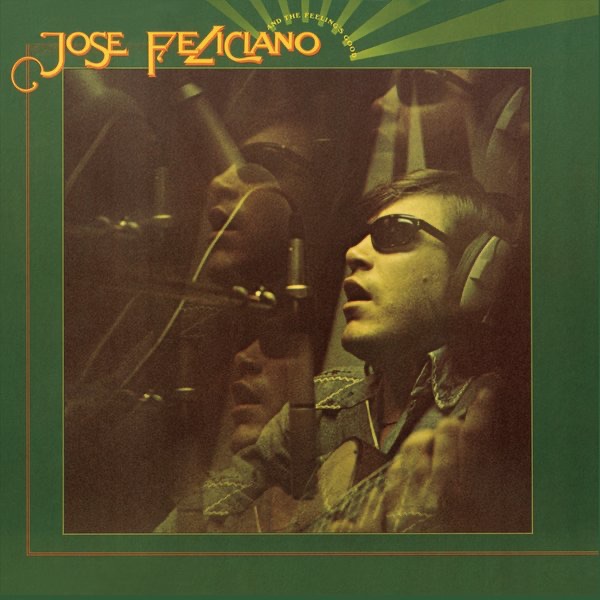
And the Feeling’s Good
1974 · 10 tracks


Just Wanna Rock 'n' Roll
1975 · 11 tracks

Sweet Soul Music
1976 · 10 tracks

Escenas de amor
1982 · 10 tracks

Me enamoré
1983 · 10 tracks

Niña
1990 · 10 tracks
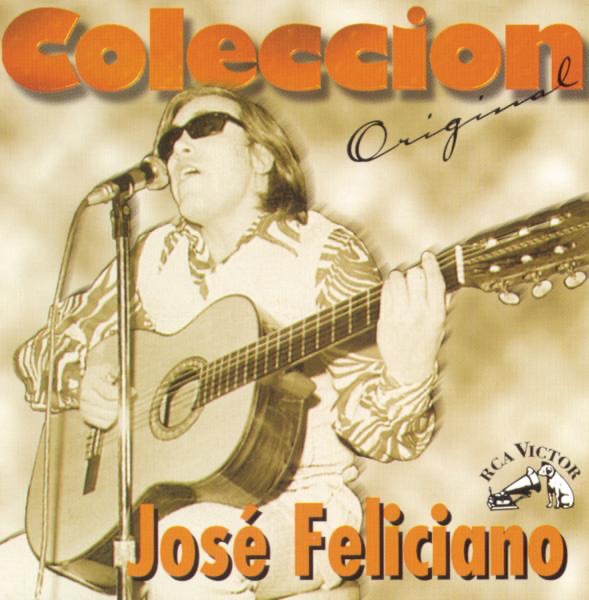
José Feliciano
1997 · 15 tracks
- 1 Toda una Vída ↗ 2:54
- 2 Por Ella (A Duo Con José José) [with José José] ↗ 3:37
- 3 La Copa Rota ↗ 2:38
- 4 Lágrimas Negras ↗ 3:31
- 5 Nuestro Juramento ↗ 3:04
- 6 Salud ↗ 2:39
- 7 Obsesión ↗ 2:41
- 8 Nosotros ↗ 3:28
- 9 Noche de Angustia ↗ 3:01
- 10 Amor Gitaño ↗ 2:48
- 11 Odíame ↗ 2:08
- 12 Poquita Fe (Sin Fe) ↗ 3:03
- 13 Quédate Con Tu Dinero ↗ 3:05
- 14 Vanas Promesas ↗ 2:37
- 15 Usted ↗ 3:08
Señor bolero
1998 · 12 tracks
- 1 Lo Que Yo Tuve Contigo ↗ 4:00
- 2 Otra Igual Que Tu ↗ 3:21
- 3 Ropa Vieja ↗ 3:59
- 4 No Digas Nada ↗ 3:59
- 5 Y Que Creias ↗ 4:20
- 6 Sentimientos ↗ 3:52
- 7 Cuanto Rollo ↗ 3:13
- 8 Corazon de Hotel ↗ 3:53
- 9 Te Propongo Volver ↗ 4:48
- 10 Para Que Volver ↗ 3:36
- 11 Eres Para Mi ↗ 4:23
- 12 Un Ciego No Vive en la Oscuridad ↗ 4:36
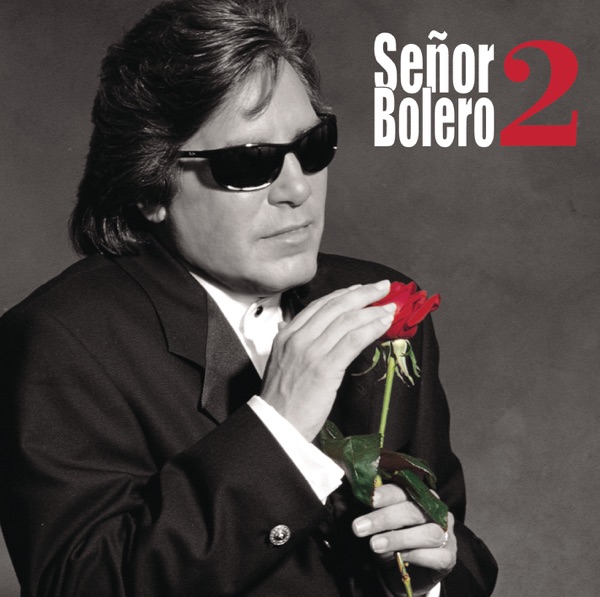
Señor Bolero 2
2003 · 12 tracks
- 1 Lo Que Yo Tuve Contigo ↗ 4:00
- 2 Otra Igual Que Tu ↗ 3:21
- 3 Ropa Vieja ↗ 3:59
- 4 No Digas Nada ↗ 3:59
- 5 Y Que Creias ↗ 4:20
- 6 Sentimientos ↗ 3:52
- 7 Cuanto Rollo ↗ 3:13
- 8 Corazon de Hotel ↗ 3:53
- 9 Te Propongo Volver ↗ 4:48
- 10 Para Que Volver ↗ 3:36
- 11 Eres Para Mi ↗ 4:23
- 12 Un Ciego No Vive en la Oscuridad ↗ 4:36

A México con amor
2004 · 12 tracks
- 1 Ella ↗ 3:19
- 2 Cucurrucucú Paloma ↗ 4:16
- 3 Corazón Corazón ↗ 3:00
- 4 Mi Viejo San Juan ↗ 3:10
- 5 El Jinete ↗ 3:24
- 6 Échame a Mi la Culpa ↗ 3:22
- 7 Tu y las Nubes ↗ 3:29
- 8 Cien Años (Traditional Version) ↗ 2:54
- 9 Malaguena ↗ 4:08
- 10 Tu Recuerdo y Yo ↗ 3:07
- 11 De Cigarro en Cigarro ↗ 3:26
- 12 México Lindo y Querido ↗ 3:20
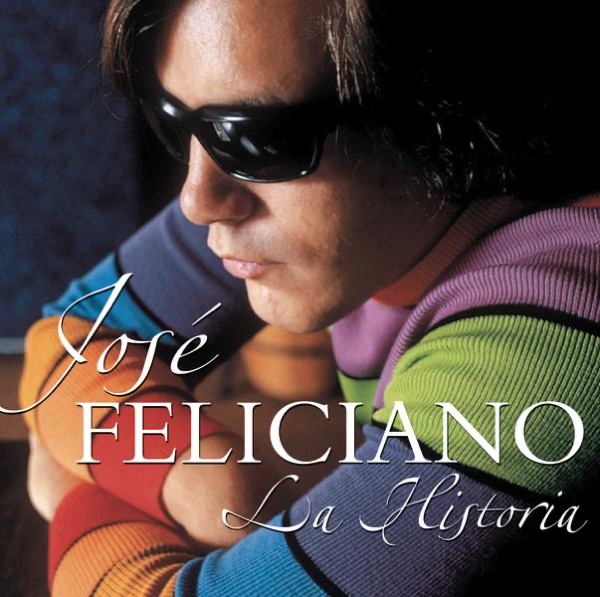
La historia
2006 · 14 tracks
- 1 Tú Me Haces Falta ↗ 2:50
- 2 Contigo en la Distancia ↗ 2:58
- 4 Lágrimas Negras ↗ 3:31
- 5 Toda una Vída ↗ 2:55
- 6 Miénteme ↗ 2:44
- 7 La Barca ↗ 2:47
- 9 Sabor a Mí ↗ 2:30
- 10 Luz y Sombra ↗ 3:22
- 11 Noche de Ronda ↗ 3:11
- 12 Usted ↗ 3:08
- 13 Nuestro Juramento ↗ 3:04
- 14 La Copa Rota ↗ 2:38
- 15 Regálame Esta Noche ↗ 2:34
- 16 Poquita Fe (Sin Fe) ↗ 3:03

The Soundtrax of My Life
2007 · 17 tracks
- 1 She's In My Blood ↗ 4:41
- 2 I Don't Wanna Lose You ↗ 4:24
- 3 That Summer ↗ 5:09
- 4 I'm Sorry ↗ 4:32
- 5 Face the Music ↗ 5:08
- 6 One Never Knows ↗ 3:38
- 7 Dancin' and Romancin' ↗ 4:52
- 8 Give It to Me ↗ 3:45
- 9 Just Dad ↗ 3:57
- 10 While You Sleep ↗ 3:53
- 11 Sad Feeling ↗ 3:57
- 12 I Never Told You ↗ 5:30
- 13 Queen of My Heart ↗ 4:55
- 14 You're the Girl I Love ↗ 4:41
- 15 Baker's Thing ↗ 4:13
- 16 I Know ↗ 4:50
- 17 Killing's Not the Answer ↗ 5:57
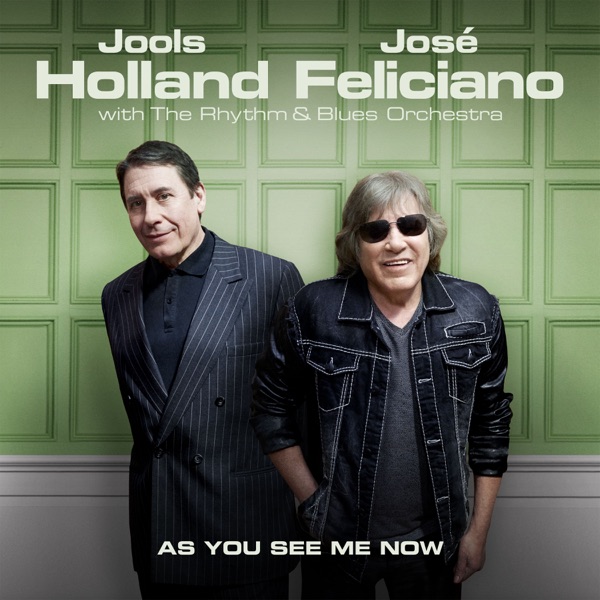
As You See Me Now
2017 · 14 tracks
- 1 As You See Me Now ↗ 3:28
- 2 Treat Myself ↗ 4:39
- 3 Just To Be Home With You ↗ 3:12
- 4 Honeysuckle Rose ↗ 4:56
- 5 One More Drink ↗ 3:10
- 6 Midnight Special ↗ 3:18
- 7 Hit the Road Jack (feat. Ruby Turner) ↗ 3:03
- 8 In My Life ↗ 3:41
- 9 Let's Find Each Other Tonight ↗ 3:32
- 10 You're So Cold (feat. Rita Wilson) ↗ 3:28
- 11 Baby Can I Hold You ↗ 3:37
- 12 Believe Me When I Tell You ↗ 3:58
- 13 Feliz Navidad ↗ 3:01
- 14 Happy New Year ↗ 2:56


Feliz Navidad
— · 15 tracks
- 1 Feliz Navidad ↗ 3:02
- 2 Jingle Bells ↗ 3:00
- 3 The Christmas Song ↗ 3:22
- 4 The First Noel ↗ 3:02
- 5 The Cherry Tree Carol ↗ 3:45
- 6 The Little Drummer Boy ↗ 4:03
- 7 White Christmas ↗ 3:59
- 8 We Three Kings Of Orient Are ↗ 2:14
- 9 Mary's Little Boy Child ↗ 4:46
- 10 It Came Upon A Midnight Clear ↗ 1:53
- 11 Silent Night ↗ 3:59
- 12 Hark, The Herald Angels Sing ↗ 1:42
- 13 Las Posadas (Previously Unreleased) ↗ 4:08
- 14 Santa Claus Is Coming To Town ↗ 4:15
- 15 O Come All Ye Faithful (Previously Unreleased) ↗ 1:43
-
 The Voice and Guitar of José FelicianoJosé Feliciano196512 tracks
 -
 Fantastic Feliciano (The Voice And Guitar Of José Feliciano)José Feliciano196612 tracks
 - José FelicianoJosé Feliciano196612 tracks
-
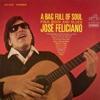 A Bag Full of Soul: Folk, Rock and BluesJosé Feliciano196612 tracks
 -
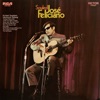 SouledJosé Feliciano196811 tracks
 - Feliciano!José Feliciano196812 tracks
-
 10 to 23José Feliciano196911 tracks
 -
 José FelicianoJosé Feliciano19708 tracks
 -
 FireworksJosé Feliciano197011 tracks
 -
 That the Spirit NeedsJosé Feliciano197111 tracks
 -
 Memphis MenuJosé Feliciano197210 tracks
 -
 CompartmentsJosé Feliciano197311 tracks
 -
 And the Feeling’s GoodJosé Feliciano197410 tracks
 -
 for my Love... Mother MusicJosé Feliciano197410 tracks
 -
 Just Wanna Rock 'n' RollJosé Feliciano197511 tracks
 -
 Sweet Soul MusicJosé Feliciano197610 tracks
 - Jose FelicianoJosé Feliciano19818 tracks
-
 Escenas de amorJosé Feliciano198210 tracks
 -
 Me enamoréJosé Feliciano198310 tracks
 -
 NiñaJosé Feliciano199010 tracks
 -
 José FelicianoJosé Feliciano199715 tracks
 -
 Señor boleroJosé Feliciano199812 tracks
 - Señor Bolero 2José Feliciano200312 tracks
-
 A México con amorJosé Feliciano200412 tracks
 -
 La historiaJosé Feliciano200614 tracks
 -
 The Soundtrax of My LifeJosé Feliciano200717 tracks
 -
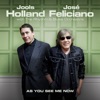 As You See Me NowJosé Feliciano201714 tracks
 -
 Behind This GuitarJosé Feliciano20208 tracks
 -
 Love & ChristmasJosé Feliciano20227 tracks
 -
 Feliz NavidadJosé Feliciano20231 track
 - José FelicianoJosé Feliciano—8 tracks
-
 Feliz NavidadJosé Feliciano—15 tracks
Deep Dive
Overview
José Montserrate Feliciano García stands as one of the most versatile and prolific guitarists in rock music history. Born in Puerto Rico in 1945, Feliciano crafted a career spanning decades by synthesizing Latin, blues, jazz, soul, and rock into a signature acoustic guitar sound that transcended genre boundaries. His 1968 cover of the Doors’ “Light My Fire” became an international hit, while his self-penned Christmas composition “Feliz Navidad” achieved enduring cultural resonance. Feliciano’s output—spanning bolero, soft rock, and Latin pop—demonstrates an artist committed to exploring the full spectrum of popular music rather than confining himself to a single idiom.
Formation Story
José Feliciano was born in Puerto Rico in 1945 and grew up in a cultural environment steeped in Latin music and Caribbean traditions. He emerged as a musician during an era when the fusion of rock and roll with non-Anglo musical traditions remained uncommon in mainstream popular music. His early recordings, beginning with The Voice and Guitar of José Feliciano in 1965, established him as a vocalist and instrumentalist with a distinctive approach to the acoustic guitar. Working initially with RCA Victor, Feliciano released a series of albums throughout the mid-1960s—Fantastic Feliciano, José Feliciano, and A Bag Full of Soul: Folk, Rock and Blues (all 1966)—that showcased his willingness to move fluidly between folk, rock, and soul material. These early recordings positioned him as an artist unafraid to cross stylistic borders at a time when genre segregation remained strong in the commercial music industry.
Breakthrough Moment
Feliciano’s breakthrough came in 1968 with Feliciano!, an album that included his rendition of the Doors’ “Light My Fire.” This version transformed the psychedelic rock original into a Latin-inflected, rhythmically sophisticated arrangement anchored by his acoustic guitar and warm vocal delivery. The recording became an international hit and established Feliciano as a major commercial artist. The success of “Light My Fire” opened significant doors, bringing his work to audiences far beyond those already familiar with Latin music or singer-songwriter traditions. Following this breakthrough, 10 to 23 arrived in 1969, further consolidating his position as a crossover artist capable of reaching multiple markets simultaneously.
Peak Era
The period from 1968 through the mid-1970s constituted Feliciano’s peak era in terms of both commercial success and stylistic range. During these years, he released Souled (1968), 10 to 23 (1969), El fantastico! (1970), Fireworks (1970), and albums like That the Spirit Needs and In Latin Mood (both 1971). He continued to record prolifically throughout the 1970s with titles including Memphis Menu (1972), Compartments (1973), And the Feeling’s Good (1974), for my Love… Mother Music (1974), Just Wanna Rock ‘n’ Roll (1975), and Sweet Soul Music (1976). His self-penned “Feliz Navidad,” released during this era, emerged as a seasonal standard that would remain in global circulation for decades. This decade-spanning run demonstrated his ability to move between soul, rock, Latin music, and festive material without losing artistic coherence or commercial traction.
Musical Style
Feliciano’s sound rested fundamentally on his signature acoustic guitar work—fingerstyle playing that drew from both classical and folk traditions while integrating Latin rhythmic elements and blues tonality. His vocal approach, warm and emotionally direct, rarely relied on vocal pyrotechnics; instead, he emphasized phrasing and melodic clarity. The instrumental foundation of his records—clean, percussive acoustic guitar lines often layered with strings, horns, or subtle rhythm section accompaniment—created an intimate production aesthetic that stood apart from both the heavy rock and synthetic production trends of the era. His genre-spanning approach incorporated bolero, a Latin song form emphasizing romantic sentiment; Latin pop’s accessibility and melodic directness; and soft rock’s emphasis on emotional delivery over aggressive instrumentation. This fusion, built track by track from his distinctive acoustic foundation, allowed him to record jazz-inflected pieces, soul covers, rock reinterpretations, and traditional Latin material without stylistic contradiction.
Major Albums
Feliciano! (1968)
This album introduced “Light My Fire” to global audiences and established Feliciano as a major crossover artist capable of reimagining rock standards through a Latin-acoustic lens.
10 to 23 (1969)
Following his breakthrough, this album consolidated his commercial position and further demonstrated his range across soul, rock, and Latin material.
In Latin Mood (1971)
This recording emphasized the Latin and bolero dimensions of his artistry, showcasing his command of traditional Spanish-language forms.
Compartments (1973)
Released during his peak commercial period, this album reflected his continued ability to move between genres and maintain recording momentum.
Che Sarà (1971)
This album exemplified Feliciano’s willingness to record in Italian and explore European song traditions, extending his geographical and cultural reach.
Signature Songs
- “Light My Fire” — His 1968 Latin-acoustic rendition of the Doors’ psychedelic rock classic became an international hit and his signature statement, demonstrating the power of genre reimagining.
- “Feliz Navidad” — His self-penned bilingual Christmas song achieved enduring status as a seasonal standard, recorded in the early 1970s.
- “Souled” — A soul-influenced recording that showcased his vocal warmth and his command of soul idioms.
- “That the Spirit Needs” — Recorded in 1971, this track exemplified his ability to blend spiritual and musical contemplation.
Influence on Rock
Feliciano’s career demonstrated to mainstream audiences that rock and popular music could authentically incorporate Latin musical traditions without dilution or exoticization. His success with “Light My Fire” legitimized acoustic reimaginings of rock standards and showed that a Latin-influenced artist could achieve crossover stardom without abandoning his musical identity. He operated during an era when Latin music and rock music inhabited largely separate commercial and cultural spaces; his decade-long run of hits helped bridge those divides. His approach—rooting arrangements in acoustic guitar virtuosity and blending multiple traditions from a single artistic foundation—influenced subsequent generations of crossover artists and demonstrated that technical mastery of acoustic guitar could anchor ambitious genre-spanning work.
Legacy
José Feliciano’s recording career, spanning from 1965 through the 2020s, established him as one of rock music’s most prolific and stylistically restless artists. His catalog—encompassing bolero, soft rock, Latin pop, soul, and rock reinterpretations—testifies to an artist who refused confinement within genre boundaries. “Feliz Navidad” achieved permanent placement in global seasonal music culture, recorded and heard by audiences far beyond those familiar with his broader discography. His continued recording activity, including releases through 2023, maintains his presence in the contemporary music landscape. Feliciano’s achievement lies not in a single album or moment but in a sustained demonstration that acoustic guitar-centered music could synthesize diverse traditions and reach international audiences across decades.
Fun Facts
- Feliciano recorded a tribute album to the Beatles in 1992, extending his history of reinterpreting canonical rock material.
- His output includes recordings in multiple languages, reflecting his Puerto Rican heritage and his ambition to reach audiences across geographic and linguistic boundaries.
- The title “Guitarra mía” references his foundational instrument and his identity as a guitarist-first artist, central to his musical approach across all genres and decades.