

Photo by DavidPMaynard , licensed under CC BY-SA 4.0 · Wikimedia Commons
Rank #464
Julian Lennon
From Wikipedia
Julian Charles John Lennon is an English musician, photographer, author, and philanthropist. He is the son of Beatles member John Lennon and his first wife Cynthia; Julian is named after his paternal grandmother Julia. Julian inspired three Beatles songs: "Lucy in the Sky with Diamonds" (1967), "Hey Jude" (1968), and "Good Night" (1968).
Discography & Previews
Browse through and click an album to open and play 30-second previews streamed from Apple Music.


The Secret Value of Daydreaming
1986 · 10 tracks

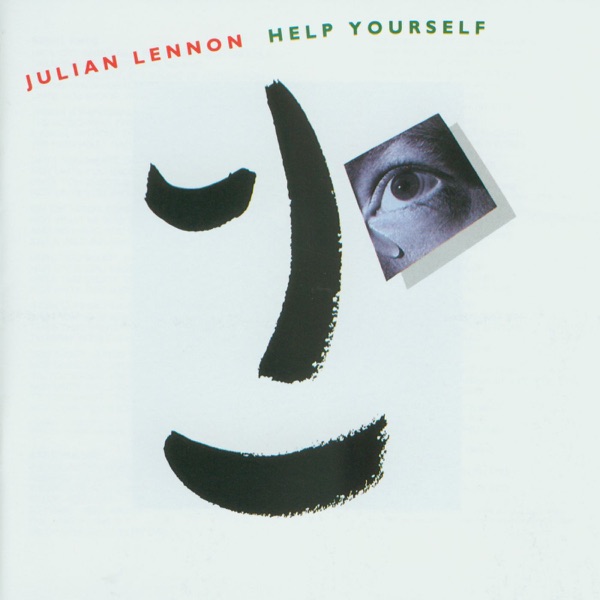
Help Yourself
1991 · 12 tracks

Photograph Smile
1998 · 14 tracks
- 1 Day After Day ↗ 4:22
- 2 Cold ↗ 4:42
- 3 I Should Have Known ↗ 4:18
- 4 How Many Times ↗ 5:54
- 5 I Don't Wanna Know ↗ 4:06
- 6 Crucified ↗ 5:13
- 7 Walls ↗ 4:49
- 8 Believe ↗ 4:54
- 9 Good to Be Lonely ↗ 4:25
- 10 Kiss Beyond the Catcher ↗ 4:01
- 11 And She Cries ↗ 3:52
- 12 Photograph Smile ↗ 4:36
- 13 Faithful ↗ 3:43
- 14 Way to Your Heart ↗ 5:40

Everything Changes
2011 · 14 tracks
- 1 Everything Changes (Acoustic Version) ↗ 4:06
- 2 Someday (Acoustic Version) ↗ 4:22
- 3 Lookin' 4 Luv (Acoustic Version) ↗ 4:06
- 4 Hold On (Acoustic Version) ↗ 4:43
- 5 Touch the Sky (Acoustic Version) ↗ 4:18
- 6 Invisible (Acoustic Version) ↗ 4:35
- 7 Just for You (Acoustic Version) ↗ 4:34
- 8 Always (Acoustic Version) ↗ 5:39
- 9 Disconnected (Acoustic Version) ↗ 6:10
- 10 Never Let You Go (Acoustic Version) ↗ 3:45
- 11 Guess It Was Me (Acoustic Version) ↗ 3:46
- 12 In Between (Acoustic Version) ↗ 3:50
- 13 Don't Wake Me Up (Acoustic Version) ↗ 5:09
- 14 Beautiful (Acoustic Version) ↗ 4:49

Jude
2022 · 11 tracks
-
 ValotteJulian Lennon198410 tracks
 -
 The Secret Value of DaydreamingJulian Lennon198610 tracks
 -
 Mr. JordanJulian Lennon198910 tracks
 -
 Help YourselfJulian Lennon199112 tracks
 -
 Photograph SmileJulian Lennon199814 tracks
 -
 Everything ChangesJulian Lennon201114 tracks
 -
 JudeJulian Lennon202211 tracks
Deep Dive
Overview
Julian Charles John Lennon is an English musician, photographer, author, and philanthropist born in 1963. As the son of Beatles member John Lennon and his first wife Cynthia, Julian inherited a surname laden with cultural weight—yet forged a distinct identity as a solo rock artist beginning in the mid-1980s. Beyond his music career, he has established himself as a visual artist and advocate for humanitarian causes, maintaining a public presence across multiple creative disciplines. Julian’s early life intersected directly with one of rock’s most pivotal chapters: he inspired three songs on Beatles recordings, a biographical accident that would define his relationship to his father’s legacy for decades to come.
Formation Story
Julian was born in Liverpool, England, in 1963, the son of John Lennon and Cynthia Powell. His name honors his paternal grandmother Julia, who died when John was a teenager. Growing up as the child of a Beatle during the band’s most turbulent and creatively prolific era meant Julian’s early years were marked by the chaos and intensity of the 1960s counterculture. Three of his father’s compositions explicitly drew on his existence: “Lucy in the Sky with Diamonds” (1967) from Sgt. Pepper’s Lonely Hearts Club Band, “Hey Jude” (1968), and “Good Night” (1968) from The White Album. The boy became woven into the fabric of rock history before he could speak, his presence inspiring some of the decade’s most enduring recordings. This unusual entry point—being a muse to one of rock’s defining figures—shaped Julian’s path as much as any conventional apprenticeship in music might have. By his late teens, with the Beatles disbanded and his father’s public life consumed by his partnership with Yoko Ono, Julian began developing his own musical voice, distinct from the shadow of Beatlemania yet inseparable from it.
Breakthrough Moment
Julian’s first album, Valotte, arrived in 1984 on Atlantic Records, marking his official entry into the recording industry at age twenty-one. The album introduced a soft rock sensibility inflected with pop polish and introspective songwriting—a departure from the experimental and avant-garde approaches that had defined his father’s later solo work. Valotte found an audience on contemporary rock radio and established Julian as a credible artist in his own right rather than merely a footnote to Beatles mythology. The record demonstrated that he possessed both technical competence as a musician and the capacity to connect with listeners through accessible, emotionally direct compositions. Its commercial success and critical reception provided the platform for subsequent releases and proved that the Lennon name alone was not sufficient to sustain a career; Julian had to deliver substantive work. This debut remains the threshold moment when he transitioned from being the subject of rock history to an active participant in it.
Peak Era
The latter half of the 1980s and early 1990s represented Julian’s most commercially sustained period, bookended by The Secret Value of Daydreaming (1986) and Help Yourself (1991). These three albums—Valotte, The Secret Value of Daydreaming, and Help Yourself—constituted his most concentrated period of recording and touring. During this span, Julian refined a mature approach to rock music that balanced introspection with production sophistication. The early 1990s, in particular, saw him working at a steady pace, releasing Mr. Jordan in 1989 as an intermediate offering. This era coincided with a broader cultural moment in which the children of 1960s icons began stepping into their own legacies, and Julian’s output positioned him as a serious artist rather than a curiosity. His consistency in releasing albums across a seven-year window demonstrated commitment to his craft and allowed him to build a core audience independent of his parentage.
Musical Style
Julian Lennon’s rock sound draws from the melodic and production-conscious tradition established during the 1970s and 1980s, prioritizing accessible songwriting and polished studio arrangements over experimental or abrasive approaches. His vocal delivery tends toward the warm and conversational, lacking the distinctive edge or mannerism that might dominate a track; instead, his voice serves the song’s emotional content. The instrumentation across his albums emphasizes keyboards, acoustic and electric guitars, and clean production values—a sonic palette consistent with contemporary adult contemporary and soft rock radio of the period. Lyrically, Julian has drawn on themes of introspection, relationships, and personal identity, occasionally addressing the unique circumstances of his biography without making it the sole subject of his work. His arrangements typically avoid the sparseness of singer-songwriter tradition and the density of progressive rock, instead occupying a middle ground where production clarity and melodic directness reinforce one another. There is no signature guitar riff or distinctive production quirk that immediately identifies a Julian Lennon recording; rather, his identity resides in consistency of approach and a commitment to songs that communicate clearly.
Major Albums
Valotte (1984)
Julian’s debut established the template for his subsequent work: polished rock production, introspective songwriting, and accessible melodic sensibility. Its commercial performance demonstrated that he could attract listeners beyond those curious about his parentage.
The Secret Value of Daydreaming (1986)
The follow-up refined the formula of Valotte and consolidated his position as an active recording artist. It affirmed that his debut was not a one-off effort.
Mr. Jordan (1989)
Released midway through his most productive period, Mr. Jordan maintained continuity with his established style while exploring additional sonic territory. It represented his third release in five years.
Help Yourself (1991)
The final album of his initial sustained run, Help Yourself demonstrated the full maturity of his approach to rock songwriting and production after nearly a decade as a recording artist.
Photograph Smile (1998)
After a gap in releases, this album marked a return to recording and signaled his ongoing commitment to music despite the long intervals between projects.
Everything Changes (2011)
Released over two decades into his career, this album indicated his continued creative engagement and willingness to record new material despite the changing landscape of the music industry.
Signature Songs
- “Valotte” — The title track of his debut album, establishing his melodic approach and introducing him to audiences as a solo artist.
- “Saltwater” — A composition demonstrating his capability for emotionally direct songwriting that transcended his biographical circumstances.
- “Now You’re in Heaven” — Representative of his ability to craft introspective rock compositions with accessible production and clear vocal presentation.
Influence on Rock
Julian Lennon’s primary influence on rock music has been cultural rather than strictly musical: he embodied the phenomenon of second-generation rock artists attempting to establish independent careers while carrying the weight of parental legacy. His success—modest but genuine—demonstrated that such a path was possible without either cynically trading on the family name or attempting to deny it entirely. While his music itself did not pioneer new sonic territory or fundamentally reshape rock aesthetics, his existence as a recording artist during the 1980s and 1990s contributed to a broader conversation about succession, inheritance, and artistic identity in rock culture. Subsequent artists born into famous families looked to his model of pursuing music seriously while maintaining a distinct public persona separate from their parents’ achievements. His work validated the possibility of a middle path: neither exploiting the name for unearned credibility nor rejecting it entirely as a contaminating force.
Legacy
Julian Lennon’s enduring legacy rests on his dual role as both a product of rock history and an active participant in it. As a musician, he created a discrete body of work across four decades that demonstrates consistent craftsmanship and emotional sincerity. As a public figure, he navigated the peculiar burden of being simultaneously inseparable from and distinct from one of rock’s most consequential legacies. Beyond his recording career, his work as a photographer and author expanded his creative footprint beyond music, establishing him as a multidisciplinary artist. His philanthropic activities have positioned him as a cultural figure with interests beyond entertainment. The arc of his career—from celebrated debut in the mid-1980s through periods of relative quietness and periodic returns to recording—reflects the changed economics and cultural position of rock music across three decades. While he did not achieve the superstardom that his name alone might suggest, Julian Lennon maintained a professional creative life on his own terms, neither retreating entirely from public view nor attempting to ride his father’s fame indefinitely. This measured, sustainable approach to a lifetime in the public eye constitutes perhaps his most significant contribution beyond the songs themselves.
Fun Facts
- Julian Lennon is named after his paternal grandmother Julia, who died in 1958 when his father was seventeen; the Beatle memorialized her in the song “Julia” (1968).
- Three Beatles songs were directly inspired by Julian’s existence: “Lucy in the Sky with Diamonds” (named after a drawing by Julian), “Hey Jude,” and “Good Night,” spanning the band’s later years from 1967 to 1968.
- In addition to his recording career, Julian Lennon has established himself as a professional photographer and author, diversifying his creative output beyond music.