
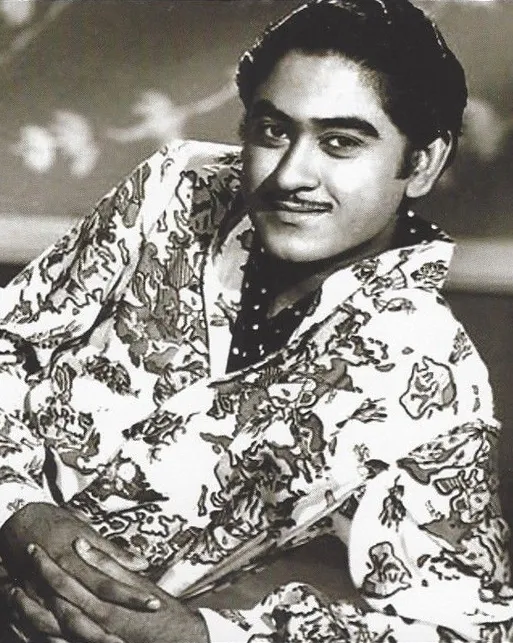
Photo by India Post, Government of India , licensed under GODL-India · Wikimedia Commons
Rank #322
Kishore Kumar
From Wikipedia
Kishore Kumar was an Indian playback singer, musician and actor. He is widely regarded as one of the greatest, most influential and dynamic singers in the history of Indian music. Kumar was one of the most popular singers in the Indian subcontinent, notable for his yodelling and ability to sing songs in different voices. He used to sing in different genres but some of his rare compositions, considered classics, were lost in time. In 2013, Kumar was voted "The Most Popular Male Playback Singer" in a poll conducted by the Filmfare magazine.
Discography & Previews
Browse through and click an album to open and play 30-second previews streamed from Apple Music.


Kishore Kumar Hits
2016 · 15 tracks
- 1 Ae Haseeno Nazneeno ↗ 5:30
- 2 Ban Ke Gulgule ↗ 3:37
- 3 Chup Ho Ja ↗ 3:55
- 4 Dekhnewalo Tham Lo Dil Ko ↗ 5:15
- 5 Des Chhudaye Bhes Chhudaye ↗ 7:11
- 6 Ek Roz Hamaari Bhi Daal Galegi ↗ 4:22
- 7 Gana Na Aaya ↗ 4:19
- 8 Hey Jhoome Re Jhoome Re ↗ 3:12
- 9 Khol De Khol De Khidki ↗ 3:28
- 10 Koi Hum Dum Na Raha ↗ 3:29
- 11 Lo Ji Bujh Gai Bijli Pyar Ki ↗ 2:38
- 12 Thandi Hawa Yeh Chandni Suhani ↗ 3:37
- 13 Tum Jahan Jahan Hum Wahan Wahan ↗ 4:17
- 14 Yeh Hai Jeevan Ki Rail ↗ 4:38
- 15 Zindagi Yeh Usi Ki Hai ↗ 3:29
-
 Bedonar Baluchare Sentimental HitsKishore Kumar20067 tracks
 -
 Kishore Kumar HitsKishore Kumar201615 tracks
Deep Dive
Overview
Kishore Kumar stands as one of the most influential vocalists in Indian music history. Over a career spanning nearly six decades, from the late 1920s through the 1980s, Kumar became synonymous with playback singing in Indian cinema while simultaneously establishing himself as a respected actor and musician. His technical command—particularly his legendary yodeling and ability to perform convincingly across multiple vocal registers and languages—set him apart from his contemporaries and defined the sound of Indian film music during its golden age.
Formation Story
Kishore Kumar was born into a musical family in India and came of age during the formative years of Indian cinema and recorded music. By the early 1930s, the technology of synchronized sound had transformed film production in India, creating unprecedented demand for singers who could lend their voices to on-screen actors. Kumar entered this emerging field of playback singing—the Indian film industry practice of dubbing professional singers’ voices over actors’ lip-synced performances—during a period when the craft itself was still being defined. His early career coincided with the rise of sound cinema in the Indian subcontinent, allowing him to develop his craft alongside the medium itself. Kumar’s versatility across multiple genres—classical Hindustani music, ghazals, folk forms, and emerging rock and roll influences—made him invaluable to filmmakers seeking singers who could move seamlessly between dramatic registers and emotional registers.
Breakthrough Moment
Kishore Kumar’s ascent to stardom accelerated through the 1950s as Indian cinema expanded and the playback system became fully entrenched. His distinctive vocal personality—characterized by his ability to deliver romantic passages with tenderness, comic numbers with impeccable timing, and dramatic sequences with raw emotional power—made him the go-to vocalist for leading actors across the industry. His willingness to experiment with unconventional vocal techniques, including his trademark yodeling passages, set his recordings apart on radio and in theaters. By the early 1960s, Kumar had become not merely a session singer but a recognized artist in his own right, with audiences attending films partly to hear his vocal performances.
Peak Era
The 1950s and 1960s represented Kumar’s creative and commercial peak. During this period, he recorded prolifically for Indian cinema, becoming the most sought-after playback singer for major films and acclaimed directors. His popularity extended across linguistic and geographic boundaries within the Indian subcontinent, reflecting both his technical mastery and his intuitive understanding of emotional storytelling through song. Kumar’s ability to shift between styles—performing classical compositions, light film music, and more experimental pieces—demonstrated a range that few singers of any era have matched. His work during these decades established templates for playback singing that influenced generations of singers who followed.
Musical Style
Kishore Kumar’s sound combined technical virtuosity with emotional directness. His vocal approach drew from Hindustani classical music training, evident in his phrasing, ornamentation, and understanding of raga systems, yet he applied these classical principles to popular film contexts. His yodeling—borrowed from Western vocal traditions—became his most recognizable signature, deployed strategically in upbeat numbers and comedic sequences. Kumar possessed an unusual ability to modulate his voice across an exceptionally wide range, allowing him to sing male solo numbers, duets with contrasting vocal partners, and even occasional female voice characterizations. His interpretive approach emphasized clarity of lyrical delivery alongside technical display; he understood that in film music, emotional communication to the audience took precedence over virtuosity for its own sake. Over time, his style absorbed influences from rock and roll and Western popular music, reflecting both his cosmopolitan sensibility and the changing landscape of Indian popular music.
Major Albums
রবীন্দ্র-সংগীত (1981)
A collection of compositions by Rabindranath Tagore, India’s most celebrated poet-composer, this album showcased Kumar’s interpretation of classical Bengali art songs and demonstrated his continuing engagement with India’s literary and musical heritage.
The Inimitable Kishore Kumar (1994)
Released after Kumar’s death, this collection brought together some of his most recognizable playback recordings, cementing his status as a defining voice of Indian cinema’s classical period.
Bedonar Baluchare Sentimental Hits (2006)
This later compilation reflected the enduring appeal of Kumar’s romantic and sentimental interpretations, highlighting material that had remained popular with audiences decades after initial release.
Rare Kishore, Vol. 2 & Vol. 3 (2012)
These volumes represented efforts to recover and reissue lesser-known recordings from Kumar’s vast catalog, preserving performances that had risked being forgotten in the pre-digital era.
Signature Songs
- His yodeling passages became instantly recognizable across Indian cinema, deployed in upbeat and comedic film sequences.
- His romantic duets established vocal partnership standards that defined Indian film music’s love-song conventions.
- His comic numbers showcased his timing and willingness to use his voice as a comedic instrument.
- His classical interpretations demonstrated the depth of his training in Hindustani music traditions.
Influence on Rock
While Kishore Kumar worked primarily within Indian classical, ghazal, and film music frameworks, his incorporation of rock and roll elements and Western vocal techniques into Indian popular music helped establish pathways through which global influences entered Indian music. His technical mastery and willingness to experiment across genre boundaries influenced subsequent generations of Indian musicians who would more explicitly blend rock, pop, and traditional Indian music. His legacy extends beyond playback singing into the broader conversation about how non-Western musical traditions have incorporated and synthesized global influences while maintaining their cultural specificity.
Legacy
Kishore Kumar’s death in 1987 marked the end of an era, yet his influence has only deepened with time. A 2013 Filmfare magazine poll voted him “The Most Popular Male Playback Singer,” affirming his standing decades after his career had ended. His recordings remain foundational to Indian cinema music history and continue to be streamed, reissued, and studied by musicians and historians. The recovery and reissue of his rare recordings—particularly the Rare Kishore compilations released in 2012 and subsequent collections—reflects ongoing scholarly and popular interest in preserving his complete output. His technical innovations in playback singing, his demonstration that a singer could be both commercially successful and artistically respected, and his fearless genre-crossing established standards that continue to influence Indian music across multiple domains.
Fun Facts
- Kumar’s ability to yodel became so associated with his persona that filmmakers would specifically request yodeling passages in compositions written for him.
- His versatility extended to his willingness to perform across multiple Indian languages and regional film industries, making him genuinely pan-Indian during an era when cinema was still developing regional strongholds.
- His late-career turn toward classical Rabindranath Tagore compositions demonstrated an artistic commitment to preserving and reinterpreting India’s literary-musical heritage alongside his commercial film work.
- The continued reissue of his recordings, particularly decades after his death, speaks to the durability and emotional resonance of his interpretations—a rarity in popular music contexts where styles and tastes shift rapidly.