

Photo by Mandy Hall , licensed under CC BY 2.0 · Wikimedia Commons
Rank #346
Les Claypool
From Wikipedia
Leslie Edward Claypool is an American musician, best known as the founder, lead singer, bassist, and primary songwriter of Primus. Ranked as one of the greatest bassists of all time by Rolling Stone, his unique playing style mixes tapping, flamenco-like strumming, whammy bar bends, and slapping and popping.
Discography & Previews
Browse through and click an album to open and play 30-second previews streamed from Apple Music.

Of Whales and Woe
2006 · 12 tracks
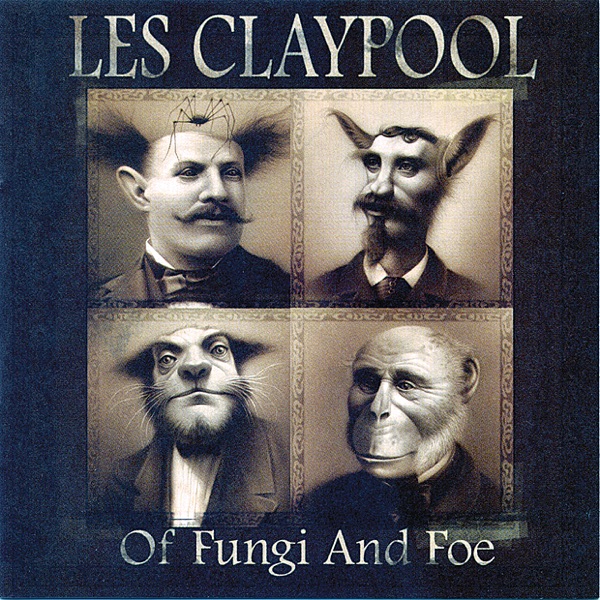
Of Fungi and Foe
2009 · 12 tracks
- 1 Mushroom Men ↗ 3:13
- 2 Amanitas ↗ 4:27
- 3 Red State Girl ↗ 3:05
- 4 Booneville Stomp ↗ 4:57
- 5 What Would Sir George Martin Do ↗ 5:47
- 6 You Can't Tell Errol Anything ↗ 3:55
- 7 Bite Out of Life ↗ 4:31
- 8 Kazoo ↗ 4:12
- 9 Primed By 29 ↗ 3:26
- 10 Pretty Little Song ↗ 4:06
- 11 Of Fungi and Foe ↗ 1:52
- 12 Ol' Rosco ↗ 5:58
-
 Of Whales and WoeLes Claypool200612 tracks
 -
 Of Fungi and FoeLes Claypool200912 tracks
Deep Dive
Overview
Les Claypool is an American musician born in 1963 who has spent over four decades establishing himself as one of the most technically accomplished and unorthodox bassists in rock music. Best known as the founder, lead singer, and primary songwriter of Primus, Claypool’s approach to the bass guitar redefined what the instrument could express within rock and progressive contexts. His playing style—rooted in tapping, flamenco-inspired strumming, whammy bar effects, and slap-and-pop technique—set him apart from peers and influenced a generation of musicians seeking alternatives to traditional rock bass roles.
Formation Story
Claypools roots in rock music emerged during the 1980s San Francisco Bay Area scene, a region known for breeding eclectic and boundary-pushing musicians. Born in 1963, he came of age during a time when punk, new wave, and metal were reshaping rock’s foundation, yet he found his voice by drawing from an entirely idiosyncratic palette of influences and techniques. Rather than follow the established grammar of rock bass—locked into the pocket behind drums and rhythm guitar—Claypool pursued the bass as a lead melodic and rhythmic instrument capable of complex counterpoint and textural variation. This approach crystallized when he formed Primus in the late 1980s, establishing himself not just as a sidekick but as the creative engine of a band that would become influential on progressive and alternative rock.
Breakthrough Moment
Primus’s emergence onto the national stage in the early 1990s marked Claypool’s breakthrough as both a bandleader and technical innovator. The band’s debut album Frizzle Fry (1990) and follow-up Sailing the Seas of Cheese (1991) showcased Claypool’s compositional range and his bass work as the gravitational center of Primus’s sound—unconventional, propulsive, and impossible to ignore. By the mid-1990s, Primus had built a substantial following through relentless touring and a series of increasingly ambitious studio albums. Claypool’s visibility grew further through festival appearances and MTV exposure, establishing him as a recognizable figure in rock culture and a working model of how a bassist could be the focal point of a rock band rather than merely its foundation.
Peak Era
The 1990s and early 2000s represented Claypool’s peak years of creative output and cultural prominence. During this period, Primus released several critically acclaimed albums that experimented with funk, metal, jazz fusion, and avant-garde rock idioms. Claypool’s role as frontman—singing, writing, and leading arrangements—set Primus apart from traditional rock bands and cemented his reputation as a musician willing to challenge genre conventions. His bass work during this era became increasingly sophisticated, layering complex rhythmic and melodic ideas that rewarded repeated listening. Parallel to his work with Primus, Claypool began pursuing solo recording projects, which allowed him further creative freedom and permitted him to explore musical directions that might not fit within Primus’s collective aesthetic.
Musical Style
Les Claypool’s bass playing synthesizes multiple technical approaches into a coherent and immediately recognizable voice. Tapping—playing notes by striking the fretboard directly rather than plucking strings—became a signature element of his vocabulary, allowing him to execute fast melodic passages and create textural variety within a single instrument. His use of flamenco-like strumming brought percussive and rhythmic dimensionality to bass lines, while whammy bar bends—using a tremolo system to bend pitch—added expressive vocal-like qualities to his playing. Slap bass and popping techniques, borrowed from funk and R&B traditions, gave his work percussive snap and attack. Collectively, these techniques were deployed not as mere showmanship but as integral components of his compositional approach, allowing the bass to move in and out of harmonic and rhythmic focus within a song structure. His singing voice—idiosyncratic and theatrical—complemented his instrumental approach, giving Primus and his solo work a distinctive personality that resisted easy categorization within existing rock subgenres.
Major Albums
5 Gallons of Diesel (2005)
Claypools debut solo album marked a significant foray into independent recording, blending his characteristic bass virtuosity with song-oriented structures and studio experimentation.
Be Careful What You Wish for… (2005)
Released the same year as 5 Gallons of Diesel, this album demonstrated Claypool’s prolific creative output and willingness to explore multiple musical directions simultaneously in his solo work.
Of Whales and Woe (2006)
This solo release continued Claypool’s exploration of instrumental and compositional territories distinct from his Primus responsibilities, showcasing his range as both bassist and bandleader.
Of Fungi and Foe (2009)
Claypools fourth solo album represented his continued commitment to solo recording as a vehicle for experimental material that expanded beyond the Primus catalog.
Signature Songs
- “Jerry Was a Race Car Driver” (Primus) — A funk-metal showcase for Claypool’s slap bass technique and his ability to serve as the song’s melodic anchor.
- “My Name Is Mud” (Primus) — Built around a driving bass line that demonstrates Claypool’s gift for crafting memorable, complex riffs that drive entire compositions.
- “Wynona’s Big Brown Beaver” (Primus) — One of Claypool’s most widely recognized songs, notable for its unusual subject matter and propulsive bass-driven arrangement.
- “Too Many Puppies” (Primus) — Features some of Claypool’s most technically demanding bass work, layering multiple rhythmic and melodic ideas.
Influence on Rock
Les Claypool fundamentally altered rock music’s relationship with the bass guitar. In an era when most rock bands treated the bass as rhythm section accompaniment, Claypool demonstrated that the instrument could be a primary creative and compositional force while still serving harmonic and rhythmic functions. His influence extended across progressive rock, metal, alternative rock, and funk communities, inspiring bassists to pursue technical proficiency and stylistic eclecticism. By fronting Primus and achieving mainstream recognition while refusing to simplify or mainstream his approach, Claypool showed that audiences would embrace experimental rock presented with conviction and craft. His legacy reshaped expectations for what a rock bassist could do and be within the wider ecosystem of rock music.
Legacy
As of the early 2020s, Les Claypool remains active as a musician and performer, continuing to tour and record with both Primus and various solo and collaborative projects. His ranking among the greatest bassists in rock history reflects both technical mastery and creative innovation—he is recognized not simply as a skilled instrumentalist but as a musician who expanded the bass guitar’s expressive and structural possibilities within rock contexts. Primus’s ongoing touring schedule and streaming presence ensure that new and established audiences continue to encounter Claypool’s work, while his solo recordings provide a secondary catalog for listeners interested in exploring his individual creative vision beyond the band’s collective identity.
Fun Facts
- Claypool’s use of the whammy bar on bass guitar was innovative enough to become one of his signature techniques, creating pitch-bending effects rarely heard on the instrument in rock contexts.
- His prolific solo output began in 2005 with the release of two separate albums in the same calendar year, demonstrating his commitment to exploring multiple musical directions simultaneously.
- Les Claypool has remained based in the San Francisco Bay Area throughout his career, maintaining deep roots in the region that spawned his musical voice.