
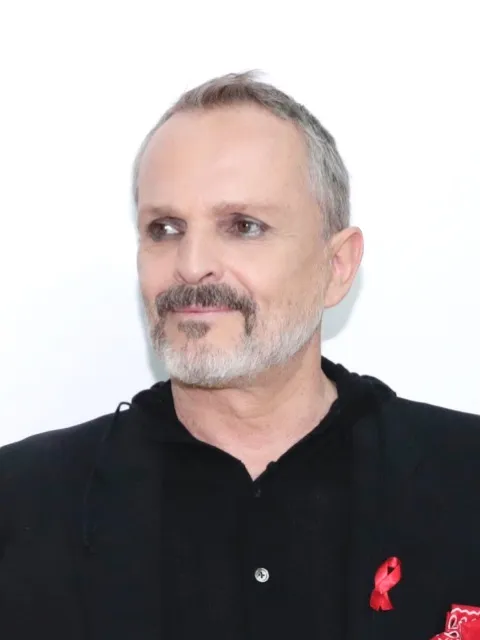
Photo by cristina cifuentes , licensed under CC BY 2.0 · Wikimedia Commons
Rank #414
Miguel Bosé
From Wikipedia
Luis Miguel Luchino Dominguín Bosé, known professionally as Miguel Bosé, is a Spanish and Italian pop singer and actor.
Discography & Previews
Browse through and click an album to open and play 30-second previews streamed from Apple Music.
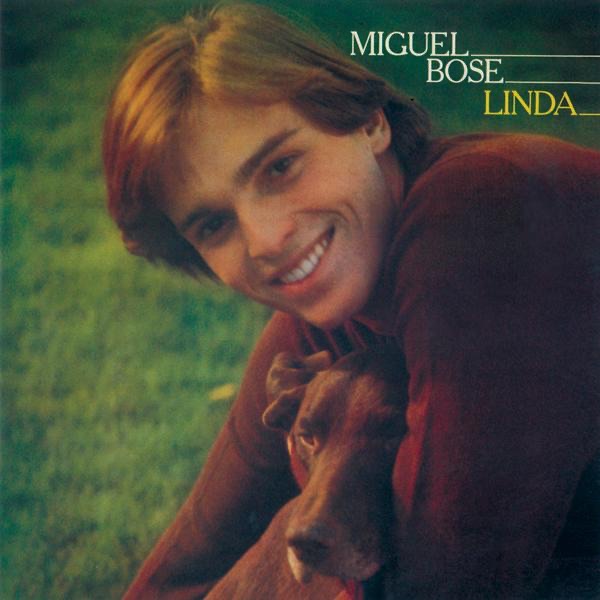
Linda
1977 · 10 tracks
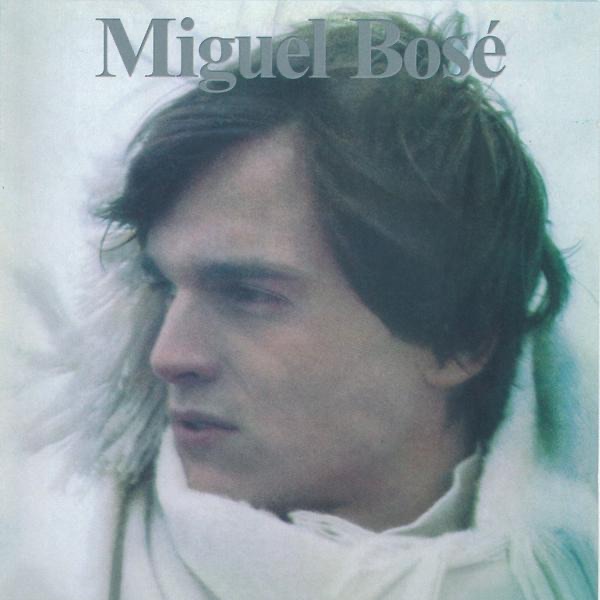
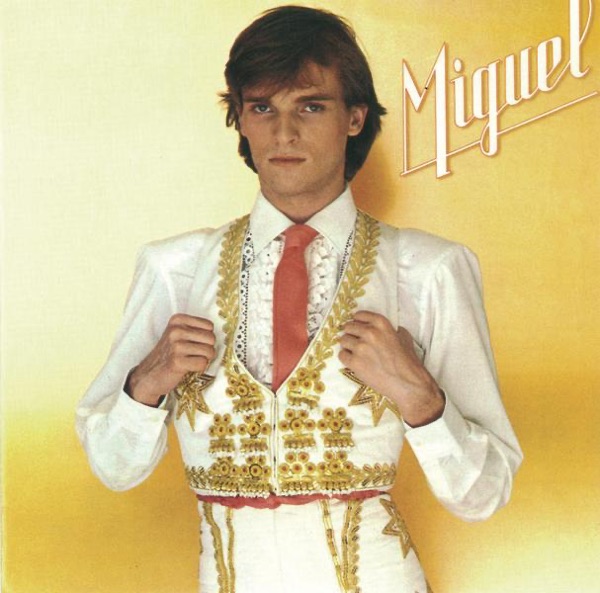

Madrid
1981 · 10 tracks
- 1 A Che Serve La Notte (Remasterizado 2024) ↗ 3:34
- 2 Dei (Remasterizado 2024) ↗ 4:42
- 3 Concerto (Remasterizado 2024) ↗ 3:27
- 4 LETTERE (Remasterizado 2024) ↗ 3:52
- 5 Angeli Caduti (Remasterizado 2024) ↗ 4:17
- 6 Io, Te E Tutti Gli Amici (Remasterizado 2024) ↗ 3:05
- 7 Non Siamo Soli (Remasterizado 2024) ↗ 3:55
- 8 IN CAPO AL MONDO (Remasterizado 2024) ↗ 2:57
- 9 VOGLIA MATTA (Remasterizado 2024) ↗ 4:21
- 10 Gente Come Noi (Remasterizado 2024) ↗ 4:46

Singolo
1981 · 10 tracks
- 1 Ce La Fai (Remasterizado) ↗ 2:52
- 2 If It Takes Me All Night (Remasterizado) ↗ 3:18
- 3 Metropoli (Remasterizado) ↗ 3:56
- 4 You Can't Stay The Night (Remasterizado) ↗ 4:02
- 5 Ragazzo Del Mondo (Remasterizado) ↗ 4:05
- 6 What Do Ya Say (Remasterizado) ↗ 3:58
- 7 Al Di La' (Remasterizado) ↗ 3:45
- 8 Piu' Sexy (Remasterizado) ↗ 3:28
- 9 If You Break My Heart (Remasterizado) ↗ 3:30
- 10 I'll Keep Holding On (Remasterizado) ↗ 3:47
Milano-Madrid
1983 · 10 tracks
- 1 A Che Serve La Notte (Remasterizado 2024) ↗ 3:34
- 2 Dei (Remasterizado 2024) ↗ 4:42
- 3 Concerto (Remasterizado 2024) ↗ 3:27
- 4 LETTERE (Remasterizado 2024) ↗ 3:52
- 5 Angeli Caduti (Remasterizado 2024) ↗ 4:17
- 6 Io, Te E Tutti Gli Amici (Remasterizado 2024) ↗ 3:05
- 7 Non Siamo Soli (Remasterizado 2024) ↗ 3:55
- 8 IN CAPO AL MONDO (Remasterizado 2024) ↗ 2:57
- 9 VOGLIA MATTA (Remasterizado 2024) ↗ 4:21
- 10 Gente Come Noi (Remasterizado 2024) ↗ 4:46



Los chicos no lloran
1990 · 12 tracks

Directo
1991 · 16 tracks
- 1 Introducción ↗ 1:07
- 2 Senza Di Te ↗ 4:39
- 3 Nena ↗ 5:07
- 4 Salamandra ↗ 3:59
- 5 Si Te Cuentan Que Cai ↗ 5:12
- 6 Como un Lobo ↗ 4:39
- 7 Amante Bandido ↗ 6:19
- 8 Sevilla ↗ 5:04
- 9 Los Chicos No Lloran ↗ 3:44
- 10 Bambú ↗ 5:02
- 11 Aire Soy ↗ 4:20
- 12 Manos Vacias ↗ 4:29
- 13 Te Amare ↗ 3:29
- 14 Hojas Secas ↗ 4:00
- 15 Duende ↗ 4:48
- 16 Partisano ↗ 8:08
Directo'90
1991 · 16 tracks
- 1 Introducción ↗ 1:07
- 2 Senza Di Te ↗ 4:39
- 3 Nena ↗ 5:07
- 4 Salamandra ↗ 3:59
- 5 Si Te Cuentan Que Cai ↗ 5:12
- 6 Como un Lobo ↗ 4:39
- 7 Amante Bandido ↗ 6:19
- 8 Sevilla ↗ 5:04
- 9 Los Chicos No Lloran ↗ 3:44
- 10 Bambú ↗ 5:02
- 11 Aire Soy ↗ 4:20
- 12 Manos Vacias ↗ 4:29
- 13 Te Amare ↗ 3:29
- 14 Hojas Secas ↗ 4:00
- 15 Duende ↗ 4:48
- 16 Partisano ↗ 8:08

Laberinto
1995 · 13 tracks
- 1 Este Mundo Va ↗ 4:28
- 2 Agua Clara ↗ 4:22
- 3 Tesoro (Pudo Ser Tu Nombre) ↗ 4:48
- 4 No Encuentro un Momento Pa' Olvidar ↗ 4:45
- 5 Corazón Tocao ↗ 7:12
- 6 Amor Entero ↗ 4:13
- 7 Azul de Louie ↗ 6:51
- 8 Un Día Después la Historia Sigue Igual ↗ 8:06
- 9 Te Buscaré ↗ 4:44
- 10 La Auto-Radio Canta ↗ 4:17
- 11 ¡Ay! ↗ 6:43
- 12 Sequía ↗ 6:30
- 13 Nunca Sabré ↗ 4:12
11 maneras de ponerse un sombrero
1998 · 2 tracks
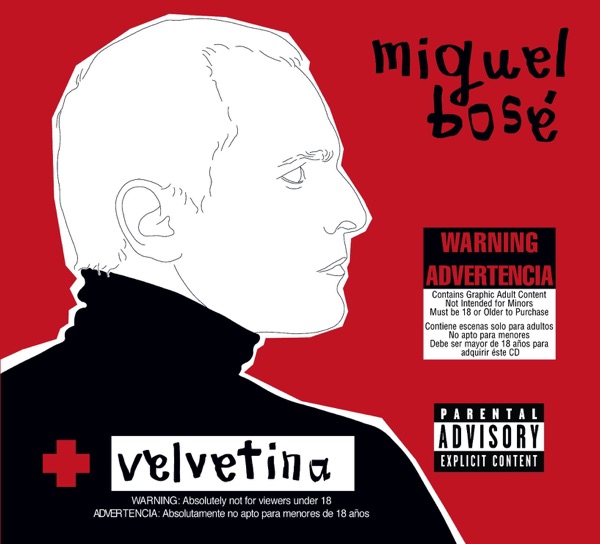
Velvetina
2005 · 14 tracks
- 1 Ojala Ojala ↗ 4:43
- 2 Aun Más ↗ 4:54
- 3 No Se Trata de ↗ 4:47
- 4 Hey Max ↗ 4:39
- 5 Celeste Amor ↗ 4:22
- 6 Ella Dijo No ↗ 4:42
- 7 De la Mano de Dios ↗ 4:03
- 8 La Tropa del Rey ↗ 4:52
- 9 Verde Canalla ↗ 4:48
- 10 Paro el Horizonte ↗ 3:40
- 11 Down With Love ↗ 4:33
- 12 Tu Mano Dira ↗ 4:42
- 13 May Day ↗ 4:35
- 14 Remix (Ella Dijo No) ↗ 7:49

Papito
2007 · 3 tracks
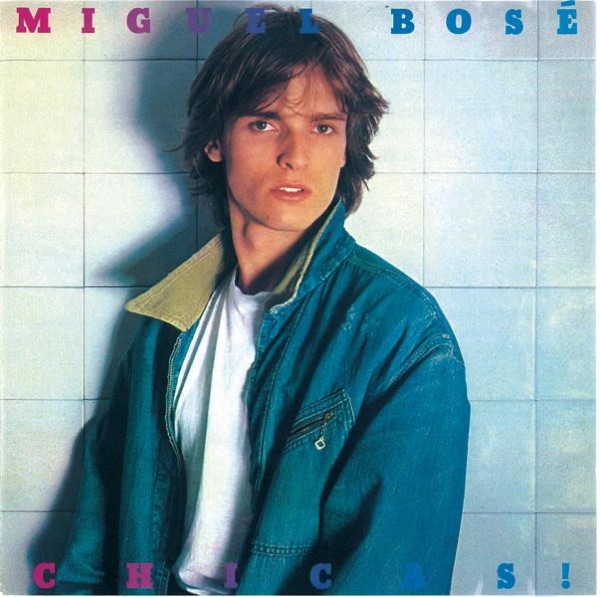
Chicas!
2008 · 11 tracks

Mas allá
2008 · 10 tracks
- 1 Quand Ça Va Mal (Remasterizado 2023) ↗ 3:57
- 2 Le Temps D'Aimer (Remasterizado 2023) ↗ 3:27
- 3 Aidez-Moi (Remasterizado 2023) ↗ 2:48
- 4 Reponds Moi (Remasterizado 2023) ↗ 2:48
- 5 Métropolis (Remasterizado 2023) ↗ 3:42
- 6 Si Je Vous Parle Encore D'Elle (Remasterizado 2023) ↗ 3:46
- 7 Paradis (Remasterizado 2023) ↗ 2:47
- 8 La Dame De cœur (Remasterizado 2023) ↗ 4:03
- 9 Tout Doucement (Remasterizado 2023) ↗ 2:47
- 10 Y'A Tout D'Casse (Remasterizado 2023) ↗ 3:58
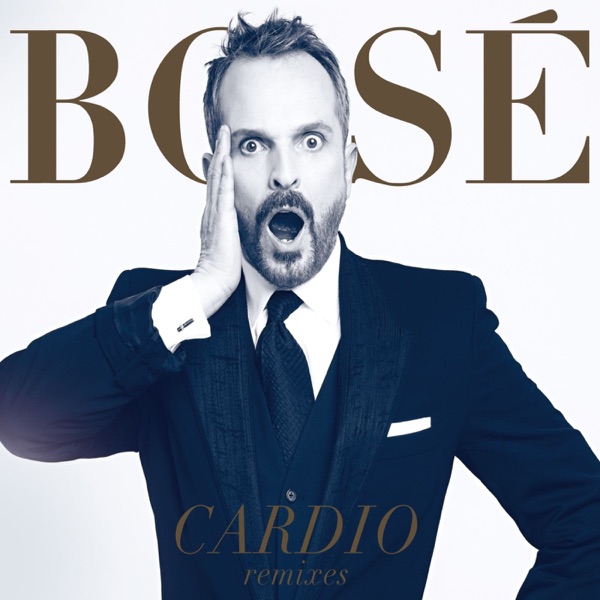
Cardio
2010 · 9 tracks
- 1 Estuve a punto de.. (Brian Cross Deep Love Remix) ↗ 6:09
- 2 Ayurvedico (Carl Cox Ragga Mix) ↗ 6:25
- 3 Cardio (Roger Sanchez Release Yourself Remix) ↗ 7:40
- 4 El perro (Wally Lopez Remix) ↗ 5:12
- 5 Eso no (Ferry Corsten Remix) ↗ 6:56
- 6 Por ti (Above & Beyond Remix) ↗ 8:32
- 7 Jurame (Armin Van Buuren Remix) ↗ 6:44
- 8 Dame argumentos (Tiesto Remix) ↗ 6:45
- 9 Por ti (Brubaker XL Remix) ↗ 7:12

-
 LindaMiguel Bosé197710 tracks
 -
 Miguel BoséMiguel Bosé19789 tracks
 -
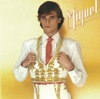 MiguelMiguel Bosé198011 tracks
 -
 MadridMiguel Bosé198110 tracks
 -
 SingoloMiguel Bosé198110 tracks
 - Miguel BoséMiguel Bosé19819 tracks
- Milano-MadridMiguel Bosé198310 tracks
-
 BandidoMiguel Bosé198410 tracks
 -
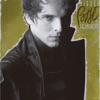 SalamandraMiguel Bosé19869 tracks
 -
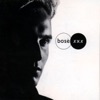 XXXMiguel Bosé198710 tracks
 -
 Los chicos no lloranMiguel Bosé199012 tracks
 -
 DirectoMiguel Bosé199116 tracks
 - Directo'90Miguel Bosé199116 tracks
-
 Under the Sign of CainMiguel Bosé199410 tracks
 -
 LaberintoMiguel Bosé199513 tracks
 -
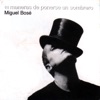 11 maneras de ponerse un sombreroMiguel Bosé19982 tracks
 -
 Por vos mueroMiguel Bosé200410 tracks
 -
 VelvetinaMiguel Bosé200514 tracks
 -
 PapitoMiguel Bosé20073 tracks
 -
 Chicas!Miguel Bosé200811 tracks
 -
 Mas alláMiguel Bosé200810 tracks
 -
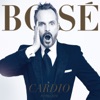 CardioMiguel Bosé20109 tracks
 -
 AmoMiguel Bosé201412 tracks
Deep Dive
Overview
Miguel Bosé is a Spanish and Italian pop and rock singer and actor whose career has spanned from the late 1970s to the present day. Born Luis Miguel Luchino Dominguín Bosé, he emerged as a distinctive voice in European pop during an era when stylistic boundaries between pop and rock remained more fluid than they would later become. His work straddles pop sensibility with rock instrumentation and attitude, establishing him as a crossover figure in Spanish-language and European markets across five decades.
Formation Story
Bosé was born in Panama in 1956 and came of age during a period of significant cultural transition in Europe. He emerged as a recording artist in the mid-1970s, a moment when Spanish and Italian pop scenes were developing distinct identities separate from Anglo-American rock orthodoxy. His early career positioned him at the intersection of these European pop traditions and the broader rock movement, allowing him to draw from multiple musical lineages while maintaining a singular artistic voice rooted in his Spanish and Italian heritage.
Breakthrough Moment
Bosé’s recording career began in earnest with his debut album Linda in 1977, followed immediately by his self-titled Miguel Bosé in 1978. These early records established the foundation for his popularity in European markets, particularly in Spain and Italy. The rapid succession of releases across 1980 and 1981—including Cosas de niños, Miguel, Madrid, Singolo, and Stay the Night—demonstrated both his prolific output and growing momentum. By the early 1980s, Bosé had solidified himself as a substantial presence in continental European pop, with particular strength in Spanish-speaking territories and the Italian market.
Peak Era
The decade from 1983 to 1998 represented Bosé’s most consistent and creatively ambitious period. Albums including Milano-Madrid (1983), Bandido (1984), Salamandra (1986), and XXX (1987) showcased his willingness to experiment with production and sonic direction while maintaining his core identity. The release of Los chicos no lloran in 1990 marked a conceptual milestone, followed by live recordings Directo and Directo’90 (1991) that captured his theatrical presence in performance. Subsequent studio efforts including Laberinto (1995), Labirinto (1996), Mordre dans ton coeur (1997), and 11 maneras de ponerse un sombrero (1998) continued to establish him as a serious, genre-straddling artist across multiple European and Latin American markets.
Musical Style
Bosé’s sound is characterized by a blend of pop accessibility and rock attitude, employing both electronic and traditional rock instrumentation. His vocal approach carries a theatrical quality, marked by expressive phrasing and a willingness to deploy drama in service of emotional communication. Throughout his career, he has demonstrated comfort working across uptempo dance-oriented material and slower, more introspective balladic work. His arrangements frequently reflect European production sensibilities—particularly Spanish and Italian influences—while maintaining connections to broader pop-rock traditions. The evolution from the more straightforward pop of his 1977–1981 period toward the more layered and conceptually ambitious work of the 1980s and 1990s shows an artist continuously refining his approach while maintaining stylistic consistency.
Major Albums
Linda (1977)
Bosé’s debut album, marking his arrival as a recording artist and establishing the pop-rock foundation that would define his early career.
Bandido (1984)
A landmark mid-career statement that cemented his artistic identity and demonstrated his ability to sustain popularity across the European and Latin American markets.
XXX (1987)
An album showcasing Bosé’s more experimental production choices while maintaining the emotional core that defined his work.
Los chicos no lloran (1990)
A significant late-period album whose title reflects Bosé’s theatrical sensibility and his engagement with emotional and psychological themes in rock songwriting.
Laberinto (1995)
Representing Bosé’s work in the mid-1990s, demonstrating sustained creative engagement and continued artistic ambition.
Influence on Rock
While not a foundational figure in rock music’s core narrative, Bosé’s career illustrates the vitality of European pop-rock as a distinct tradition operating parallel to Anglo-American rock dominance. His work demonstrated that sustained, serious artistic practice in Spanish and Italian pop markets could support a lengthy career without requiring assimilation into English-language rock forms. He influenced subsequent Spanish and Italian artists who similarly worked across pop and rock boundaries, establishing that such hybridity was not a limitation but a legitimate artistic position. His theatrical approach to performance and arrangement contributed to European rock’s development of more visually and sonically elaborate styles.
Legacy
Miguel Bosé’s career stands as testament to the durability of European pop-rock as a viable artistic framework. From his 1977 debut through the early 2010s—including later albums such as Sereno (2001), Por vos muero (2004), Velvetina (2005), Papito (2007), Chicas! and Mas allá (2008), Cardio (2010), Papitwo (2012), and Amo (2014)—he maintained a recording and performing presence across four decades. His work remains part of the broader conversation around Spanish and Italian rock and pop, and his career path demonstrates that sustained artistic longevity outside the English-language rock mainstream remained possible for serious artists working with vision and consistency.
Fun Facts
- Bosé has worked extensively as an actor alongside his music career, diversifying his artistic output across multiple entertainment mediums.
- His album Milano-Madrid (1983) directly references the two cities that formed the geographic and cultural anchors of his artistic identity.
- The 1994 release of Under the Sign of Cain appears to be an English-language version of 1993’s Bajo el signo de Caín, demonstrating his efforts to reach broader international audiences.
- His prolific output during 1980 and 1981—five albums released in two years—represents one of the most intensive recording periods of his career.