

Photo by Belisa Giorgis , licensed under CC BY 2.0 · Wikimedia Commons
Rank #464
Nando Reis
From Wikipedia
Nando Reis is a Brazilian musician and producer, best known as the former bassist and one of the lead singers of Brazilian rock band Titãs and for his successful solo career, with his own band called Nando Reis & Os Infernais. He has also produced a few albums, including some related to Cássia Eller, who has made several significant partnerships with him, and Marisa Monte. In 2012, Nando Reis was listed among the top ten Brazilian artists at the ECAD list of artists who earned the most from copyright in the first semester of that year. In 2016, he was at the 15th position, besides being 6th in the ranking of earnings from live performances and topped the ranking of earnings from music played in public places.
Discography & Previews
Browse through and click an album to open and play 30-second previews streamed from Apple Music.
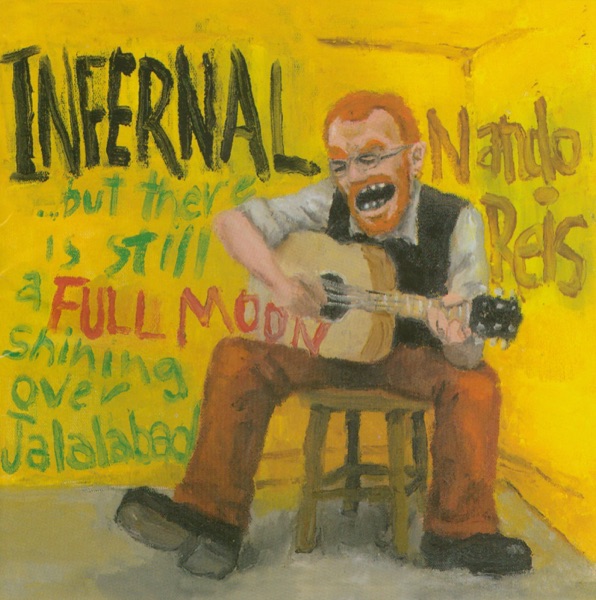
Infernal
2001 · 14 tracks
- 1 Infernal ↗ 5:22
- 2 E.C.T ↗ 5:07
- 3 A Minha Gratidão É Uma Pessoa ↗ 4:46
- 4 Eu e Ela ↗ 4:43
- 5 O Segundo Sol ↗ 4:00
- 6 Sua Impossível Chance ↗ 4:03
- 7 A Fila ↗ 3:36
- 8 My Pledge of Love ↗ 3:16
- 9 Cegos Do Castelo ↗ 4:18
- 10 Resposta ↗ 4:10
- 11 Onde Você Mora? ↗ 4:24
- 12 Fiz O Que Pude ↗ 4:01
- 13 Me Diga ↗ 4:15
- 14 Marvin - Patches ↗ 4:40


Sei
2012 · 15 tracks
- 1 Pré-Sal ↗ 7:03
- 2 Sei ↗ 3:18
- 3 Back in Vânia ↗ 4:35
- 4 Pra Quem Não Vem (feat. Marisa Monte) ↗ 4:14
- 5 Declaração de Amor ↗ 5:00
- 6 Eu & A Bispa ↗ 1:41
- 7 Coração Vago ↗ 6:26
- 8 Pers X Pectiva ↗ 4:48
- 9 Ternura & Afeto ↗ 2:37
- 10 Luz Antiga ↗ 4:09
- 11 Praça da Árvore ↗ 4:07
- 12 O Que Eu Só Vejo em Você ↗ 3:31
- 13 Sem Arrefecer ↗ 2:01
- 14 Zero Muito ↗ 4:18
- 15 Lamento Realengo ↗ 4:22

Jardim - Pomar
2016 · 13 tracks
- 1 Infinito Oito ↗ 4:44
- 2 Deus Meu ↗ 3:21
- 3 Inimitável ↗ 3:55
- 4 4 de Março ↗ 5:37
- 5 Só Posso Dizer (São Paulo) ↗ 3:19
- 6 Concórdia ↗ 4:28
- 7 Azul de Presunto ↗ 6:16
- 8 Lobo Preso em Renda ↗ 3:43
- 9 Pra Onde Foi? ↗ 6:39
- 10 Como Somos ↗ 5:46
- 11 Água Viva ↗ 3:07
- 12 Pra Musa ↗ 4:12
- 13 Só Posso Dizer (Seattle) ↗ 3:58

Não Sou Nenhum Roberto, Mas as Vezes Chego Perto
2019 · 12 tracks
- 1 Alô ↗ 5:42
- 2 De Tanto Amor ↗ 3:31
- 3 Me Conte a Sua História ↗ 4:08
- 4 Amada Amante ↗ 4:25
- 5 Abandono ↗ 3:00
- 6 Vivendo por Viver ↗ 5:29
- 7 Nosso Amor ↗ 4:57
- 8 Todos Estão Surdos ↗ 3:59
- 9 Nossa Senhora ↗ 3:22
- 10 Você em Minha Vida ↗ 4:55
- 11 Procura-se ↗ 6:01
- 12 A Guerra dos Meninos (feat. Jorge Mautner) ↗ 6:23

Nando Hits
2023 · 9 tracks
- 1 Na Estrada ↗ 3:20
- 2 N ↗ 3:34
- 3 Onde Você Mora (feat. Melim) ↗ 3:57
- 4 Um Tiro no Coração ↗ 5:00
- 5 Vou Te Encontrar (feat. Péricles) ↗ 4:24
- 6 Sim (feat. Jão) ↗ 3:50
- 7 Pra Você Guardei o Amor (feat. Colomy) ↗ 4:53
- 8 Não Vou Me Adaptar (feat. Arnaldo Antunes) ↗ 4:37
- 9 Sutilmente (feat. Samuel Rosa) ↗ 4:04


Uma Estrela Misteriosa
2024 · 24 tracks
- 1 A Chave ↗ 4:27
- 1 Estrela Misteriosa ↗ 7:07
- 1 O Muro ↗ 3:47
- 2 A Tulha ↗ 5:19
- 2 Composição ↗ 5:49
- 2 Ginger e Red ↗ 4:41
- 3 Azul Febril ↗ 2:59
- 3 Pedra Fundamental ↗ 4:14
- 3 Na Lagoa ↗ 5:36
- 4 Terra em Flor ↗ 4:41
- 4 Rio Creme ↗ 5:15
- 4 Enfim ↗ 2:59
- 5 Em Si, Tais Quais ↗ 3:35
- 5 Tentação ↗ 5:23
- 5 Diz pra Mim (feat. Sebastião Reis & Pedro Lipa) ↗ 5:08
- 6 Coragem É Poder Mostrar ↗ 4:22
- 6 Estuário ↗ 3:21
- 6 Macapá ↗ 5:48
- 7 Dois Réveillons ↗ 3:52
- 7 Daqui por Diante ↗ 5:01
- 7 Tudo Está Aqui Dentro ↗ 3:41
- 8 Des-Mente ↗ 4:32
- 8 Tome o Seu Lugar ↗ 4:00
- 9 Inverso ↗ 2:50

Uma Estrela Misteriosa Revelará o Segredo
2024 · 30 tracks
- 1 A Chave ↗ 4:27
- 2 A Tulha ↗ 5:19
- 3 Azul Febril ↗ 2:59
- 4 Terra em Flor ↗ 4:41
- 5 Em Si, Tais Quais ↗ 3:35
- 6 Coragem É Poder Mostrar ↗ 4:22
- 7 Dois Réveillons ↗ 3:52
- 8 Des-Mente ↗ 4:32
- 9 Inverso ↗ 2:50
- 10 Estrela Misteriosa ↗ 7:07
- 11 Composição ↗ 5:49
- 12 Pedra Fundamental ↗ 4:14
- 13 Rio Creme ↗ 5:15
- 14 Tentação ↗ 5:23
- 15 Estuário ↗ 3:21
- 16 Daqui por Diante ↗ 5:01
- 17 O Muro ↗ 3:47
- 18 Ginger e Red ↗ 4:41
- 19 Na Lagoa ↗ 5:36
- 20 Enfim ↗ 2:59
- 21 Diz pra Mim (feat. Sebastião Reis & Pedro Lipa) ↗ 5:08
- 22 Macapá ↗ 5:48
- 23 Tudo Está Aqui Dentro ↗ 3:41
- 24 Tome o Seu Lugar ↗ 4:00
- 25 Corpo e Colo ↗ 4:19
- 26 Rhipsalis ↗ 4:31
- 27 Aparição ↗ 3:25
- 28 Depois de Amanhã ↗ 4:33
- 29 Firmamento ↗ 4:22
- 30 Para Voar ↗ 3:11
-
 InfernalNando Reis200114 tracks
 -
 Sim e nãoNando Reis200512 tracks
 -
 SeiNando Reis201215 tracks
 -
 Jardim - PomarNando Reis201613 tracks
 -
 Não Sou Nenhum Roberto, Mas as Vezes Chego PertoNando Reis201912 tracks
 -
 Nando HitsNando Reis20239 tracks
 -
 UmaNando Reis20249 tracks
 -
 Uma Estrela MisteriosaNando Reis202424 tracks
 -
 Uma Estrela Misteriosa Revelará o SegredoNando Reis202430 tracks
Deep Dive
Overview
Nando Reis stands as one of Brazil’s most significant rock musicians, a bassist and vocalist who shaped the sound of Titãs, one of Latin America’s most influential rock bands, before launching a sustained solo career that has kept him at the center of Brazilian popular music for three decades. Born in 1963, Reis emerged from Brazil’s rock scene during a period when the country was developing its own distinctive approach to rock music, neither slavishly imitating Anglo-American models nor retreating into purely national idioms. His work—both as a band member and as a solo artist leading Nando Reis & Os Infernais—has established him as a versatile performer, songwriter, and producer whose reach extends far beyond performing.
Formation Story
Nando Reis was born in 1963 into Brazil’s growing rock culture. Rather than arriving at rock through family tradition or a single transformative moment, Reis was shaped by the broader currents of Brazilian popular music and the emergence of a native rock scene that began flowering in the 1960s and 1970s. He came of age as a musician during a time when Brazilian rock was finding its voice, and he would become instrumental in that process. His early path led him to Titãs, where he took on the role of bassist and one of the band’s lead singers, helping to define their sound and identity. This dual role—as both rhythm engine and frontman—would remain central to his artistic identity throughout his career.
Breakthrough Moment
Reis’s initial prominence came through his work with Titãs, a band that became one of the most celebrated rock acts in Brazilian history. However, his breakthrough as a solo artist came with the release of his debut album, 12 de janeiro, in 1994. This record established him as a capable bandleader and songwriter in his own right, launching what would become a parallel and increasingly dominant career to his work in Titãs. The album introduced the project Nando Reis & Os Infernais, a vehicle for his solo vision that would release albums consistently over the following decades and establish him as a mainstay of Brazilian rock beyond his role as a band member.
Peak Era
The 2000s and 2010s represented Reis’s most prolific period as a solo artist. Between 2000 and 2012, he released a series of well-received albums including Para Quando o Arco-Íris Encontrar o Pote de Ouro (2000), Infernal (2001), A: A letra a (2003), Sim e não (2005), Drês (2009), and Sei (2012). This era cemented his status as a major figure in Brazilian rock, with his work garnering significant commercial success. In 2012, Reis was recognized among the top ten Brazilian artists on the ECAD list—a measure of copyright earnings—testament to the widespread reach his music had achieved across multiple revenue streams. By 2016, he ranked 15th on that same list while simultaneously placing 6th in the ranking of earnings from live performances and topping the ranking for earnings from music played in public places, indicating a career that was thriving across recording, touring, and broadcast media simultaneously.
Musical Style
Nando Reis’s music is grounded in rock but is notably eclectic in its influences and instrumentation. As a bassist, he brings a harmonic sensibility to songwriting that reflects his instrumental training, often constructing songs around strong melodic bass lines rather than purely rhythmic foundations. His vocal delivery across his solo work tends toward clarity and emotional directness, free from excessive ornamentation. The music associated with Nando Reis & Os Infernals blends elements of classic rock with Brazilian musical sensibilities—a combination that avoids rigid genre classification and instead suggests a musician comfortable working across multiple modes. His work as a producer—notably with artists including Cássia Eller and Marisa Monte—reveals an understanding of arrangement and production aesthetics that extends beyond his own albums. This producer’s mindset has informed his solo work, which generally features carefully considered arrangements rather than loose or experimental production approaches.
Major Albums
12 de janeiro (1994)
Reis’s debut solo album established him as a creative force independent of Titãs, introducing the ensemble that would become Nando Reis & Os Infernals and signaling his intention to maintain a parallel solo career.
Para Quando o Arco-Íris Encontrar o Pote de Ouro (2000)
This album consolidated his solo position and launched the most productive period of his career, demonstrating his ability to sustain interest in a solo project across multiple releases and years.
Infernal (2001)
Following closely on Para Quando, this record reinforced the commercial viability of Nando Reis & Os Infernals as a distinct project within the broader landscape of Brazilian rock.
Sim e não (2005)
Released during a period of consistent output, this album exemplified Reis’s maturity as a songwriter and bandleader, reaching audiences across Brazil’s diverse rock and popular music markets.
Drês (2009)
This album appeared midway through Reis’s most prolific decade, representing his work during a period of sustained creative engagement with his solo material and touring.
Jardim - Pomar (2016)
Reis continued releasing new material well into his sixth decade of life, with this album appearing during a time when his live performances and broadcast presence remained commercially significant by measurable industry standards.
Signature Songs
- Songs from his solo albums became fixtures of Brazilian rock radio and live performance venues, though specific track-level details remain outside the supplied data.
- His work as a vocalist in both Titãs and his solo project established him across multiple listener demographics in Brazil.
- His production work with Cássia Eller created significant partnerships that expanded his influence beyond his own recording output.
Influence on Rock
Nando Reis represents a strain of Brazilian rock that rejected the notion that rock music must be imported wholesale from English-speaking countries. His dual career—as member of one of Brazil’s most important bands and as a prolific solo artist—helped establish that rock could be a legitimate vehicle for Brazilian musicians to achieve both critical respect and commercial success. His work as a producer, particularly his collaborations with major Brazilian artists like Cássia Eller and Marisa Monte, extended his influence beyond his own recordings and into the production ecosystem of Brazilian popular music. By demonstrating that a rock musician could thrive across multiple projects simultaneously, Reis provided a template for other Brazilian artists navigating the relationship between band work and solo careers.
Legacy
By the mid-2020s, Nando Reis remained active as a recording and touring artist, with new albums appearing in 2023 and 2024, including Nando Hits, Uma, and Uma Estrela Misteriosa Revelará o Segredo. This sustained output over three decades reflects both an artist’s commitment to his craft and an audience’s willingness to follow him across multiple albums and projects. His position in 2016 as a top earner from live performances and public performance royalties indicates that Reis had transcended the arc of a single-hit artist or novelty act to become a structural part of Brazilian popular music’s economic and cultural ecosystem. His work continues to demonstrate that longevity in rock music, particularly for an artist from outside the Anglo-American mainstream, requires versatility, sustained output, and the ability to work across multiple formats—recording, live performance, and production.
Fun Facts
- In 2012, Nando Reis ranked among Brazil’s top ten artists by copyright earnings, a measure encompassing all forms of musical revenue and indicating the breadth of his career’s reach.
- Reis topped the ECAD ranking for earnings from music played in public places as of 2016, reflecting his omnipresence on Brazilian radio, streaming platforms, and venues.
- His production work extended to major figures in Brazilian music, positioning him as a facilitator of other artists’ work and not solely focused on his own career.