
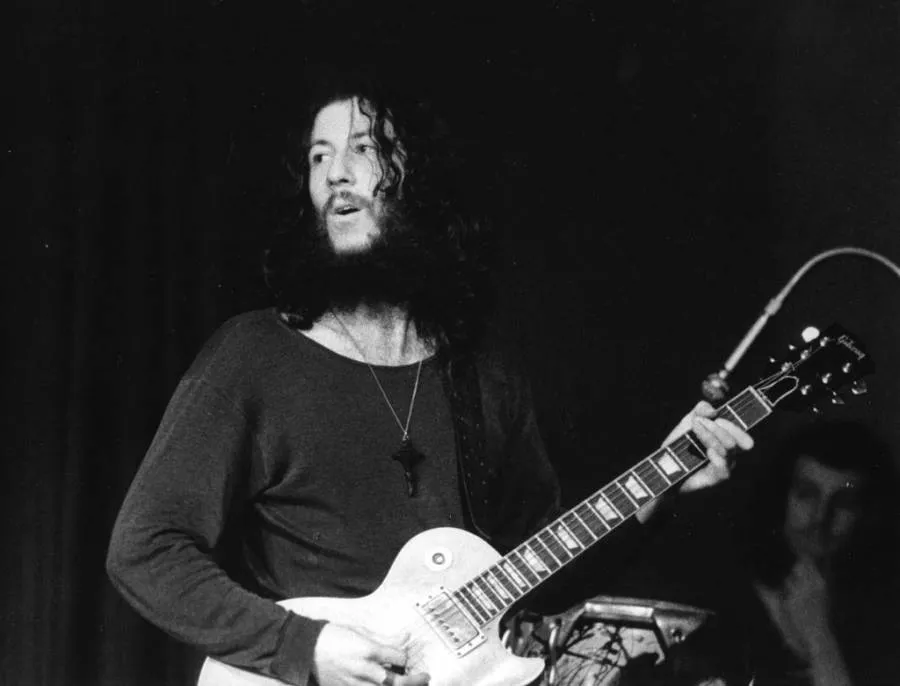
Photo by Nick contador , licensed under CC BY-SA 4.0 · Wikimedia Commons
Rank #359
Peter Green
From Wikipedia
Peter Allen Greenbaum, known professionally as Peter Green, was an English blues rock singer-songwriter and guitarist who was the founder and original leader of the band Fleetwood Mac. Green formed the group in 1967 after a stint in John Mayall's Bluesbreakers and quickly established the new band as a popular live act in addition to a successful recording act, before departing in 1970. Green's songs, such as "Albatross", "Black Magic Woman", "Oh Well", "The Green Manalishi " and "Man of the World", appeared on singles charts and several have been adapted by a variety of musicians.
Discography & Previews
Browse through and click an album to open and play 30-second previews streamed from Apple Music.


Whatcha Gonna Do?
1981 · 12 tracks
- 1 Gotta See Her Tonight ↗ 5:47
- 2 Promised Land ↗ 3:30
- 3 Bullet In the Sky ↗ 3:21
- 4 Give Me Back My Freedom ↗ 5:37
- 5 Last Train to San Antone ↗ 5:30
- 6 To Break Your Heart ↗ 3:54
- 7 Bizzy Lizzy ↗ 3:26
- 8 Lost My Love ↗ 5:23
- 9 Like a Hot Tomato ↗ 3:06
- 10 Trying to Hit My Head Against the Wall ↗ 3:45
- 11 Woman Don't ↗ 5:01
- 12 Whatcha Gonna Do? ↗ 3:48

White Sky
1982 · 15 tracks
- 1 Time for Me to Go (2005 - Remaster) ↗ 3:52
- 2 Shining Star (2005 - Remaster) ↗ 3:09
- 3 The Clown (2005 - Remaster) ↗ 6:02
- 4 White Sky (Love That Evil Woman) [2005 - Remaster] ↗ 8:49
- 5 Funky Jam (2005 - Remaster) ↗ 8:13
- 6 It's Gonna Be Me (2005 - Remaster) ↗ 3:36
- 7 Born On the Wild Side (2005 - Remaster) ↗ 3:01
- 8 Fallin' Apart (2005 - Remaster) ↗ 3:49
- 9 Indian Lover (2005 - Remaster) ↗ 3:32
- 10 Just Another Guy (Instrumental Version) [2005 - Remaster] ↗ 6:06
- 11 Touch My Spirit ↗ 3:46
- 12 Big Boy Now ↗ 5:54
- 13 Corners of My Mind (2005 - Remaster) ↗ 3:46
- 14 Carry My Love (2005 - Remaster) ↗ 5:00
- 15 Just Another Guy (2005 - Remaster) ↗ 5:53

Kolors
1983 · 15 tracks
- 1 Black Woman (2005 - Remaster) ↗ 3:58
- 2 Bandit (2005 - Remaster) ↗ 3:04
- 3 What Am I Doing Here? (2005 - Remaster) ↗ 3:30
- 4 Bad Bad Feeling (2005 - Remaster) ↗ 3:38
- 5 Same Old Blues (2005 - Remaster) ↗ 3:44
- 6 Liquor and You (2005 - Remaster) ↗ 3:49
- 7 Gotta Do It With Me (2005 - Remaster) ↗ 4:02
- 8 Big Boy Now ↗ 5:54
- 9 Funky Jam (2005 - Remaster) ↗ 8:13
- 10 Apostle (Single Version) [2005 - Remaster] ↗ 3:52
- 11 Whatcha Gonna Do? (2005 - Remaster) ↗ 4:30
- 12 Rubbing My Eyes (2005 - Remaster) ↗ 4:21
- 13 Long Way from Home (2005 - Remaster) ↗ 3:44
- 14 Six String Guitar (2005 - Remaster) ↗ 4:32
- 15 You Won't See Me Anymore (2005 - Remaster) ↗ 3:39
-
 The End of the GamePeter Green197010 tracks
 -
 In the SkiesPeter Green19799 tracks
 -
 Little DreamerPeter Green19809 tracks
 -
 Whatcha Gonna Do?Peter Green198112 tracks
 -
 White SkyPeter Green198215 tracks
 -
 KolorsPeter Green198315 tracks
Deep Dive
Overview
Peter Green was an English blues rock guitarist, singer, and songwriter whose influence on rock music extended far beyond his time as the founder and original leader of Fleetwood Mac. Though he departed the band in 1970 at the height of its popularity, Green’s compositional legacy—anchored by songs such as “Black Magic Woman,” “Albatross,” “Oh Well,” “The Green Manalishi,” and “Man of the World”—established him as a singular voice in the blues rock lineage. His guitar style and songwriting sensibility defined Fleetwood Mac’s early sound and shaped the broader trajectory of British blues rock in the late 1960s.
Formation Story
Peter Allen Greenbaum was born in 1946 in England during the post-war blues awakening that would define his musical life. He came of age in the late 1950s and early 1960s as British rock musicians began studying American blues records with scholarly intensity, importing that tradition back into their own idiom. Green’s path crystallized through his apprenticeship with John Mayall’s Bluesbreakers, the touring university of British blues where he absorbed the craft of blues guitar and band dynamics. That formative stint provided both the musical foundation and the credibility he would carry into his own ventures.
Breakthrough Moment
In 1967, Green founded Fleetwood Mac alongside drummer Mick Fleetwood and bassist Jeremy Spencer (later replaced by other members), immediately establishing the group as a potent live act and recording ensemble. The band’s early singles and albums capitalized on Green’s compositional gifts and his ability to channel American blues tradition through a distinctly British sensibility. Songs like “Black Magic Woman” and “Albatross” charted successfully and became blueprints for how blues-rock compositions could achieve both commercial reach and artistic depth. Within a few years, Fleetwood Mac had become one of the most successful British blues acts, a trajectory that validated Green’s vision but also intensified the pressures that would lead to his departure.
Peak Era
Green’s most creatively dominant period spanned the late 1960s through his final years with Fleetwood Mac in 1970. During this window, he wrote and performed the songs that would define not only his own career but the early identity of Fleetwood Mac itself. His guitar work combined technical precision with emotional restraint, a quality that set his blues interpretations apart from louder or more pyrotechnic contemporaries. Green departed Fleetwood Mac in 1970, leaving behind a catalog of compositions that the band and other artists would continue to record and perform for decades.
Musical Style
Green’s approach to blues rock was marked by a clarity of tone and economy of expression. His guitar playing emphasized sustain and phrasing over speed, drawing on the vocabulary of American electric blues while maintaining a melodic, almost pop-influenced sensibility in his songwriting. He wrote vocal melodies that were singable and memorable, a trait that allowed his compositions to cross between specialist blues audiences and mainstream listeners. His songs often featured clean, bright production that contrasted with heavier or more distortion-laden blues rock of the era, giving them a timeless quality. Green’s blues was rooted in the American tradition—Muddy Waters, Howlin’ Wolf, and the Chicago school—but filtered through a British pop awareness that made his work immediately distinctive.
Major Albums
The End of the Game (1970)
Green’s debut solo album, released in 1970 as he was departing Fleetwood Mac, captured him at a transitional moment, carrying forward the blues sensibility he had refined with the band into a new context.
In the Skies (1979)
After a nine-year gap, Green returned to recording with this album, signaling a renewal of his musical activity and a continued engagement with blues and blues rock idioms.
Little Dreamer (1980)
Released a year after his return, this album consolidated his solo direction and demonstrated his ongoing compositional and performance capabilities.
Whatcha Gonna Do? (1981)
This album further established Green’s solo career trajectory in the early 1980s, maintaining his commitment to blues rock during a period when the genre was shifting around him.
Signature Songs
- “Black Magic Woman” — A blues rock staple that became one of Green’s most enduring compositions, covered widely and adapted by numerous musicians across genres.
- “Albatross” — An instrumental showcase of Green’s guitar voice, establishing his ability to move beyond vocal-driven blues into more experimental territory.
- “Oh Well” — A sophisticated composition that merged blues phrasing with song craft, demonstrating Green’s range as a writer.
- “The Green Manalishi” — A darker, more psychedelic blues composition that revealed Green’s experimental sensibility.
- “Man of the World” — A chart-appearing single that captured Green’s ability to marry blues tradition with pop accessibility.
Influence on Rock
Green’s impact on rock music flows primarily through two channels: his foundational role in Fleetwood Mac’s early sound and his enduring influence as a songwriter and guitarist in the blues rock tradition. His compositions have been adapted and rerecorded by musicians across multiple genres and generations, a testament to their melodic strength and archetypal power. The clarity and restraint of his blues approach influenced countless guitarists who sought an alternative to more theatricalized or heavy-handed blues rock. His departure from Fleetwood Mac at its peak, though costly to his commercial prospects, underscored the psychological and creative toll of the music industry, a narrative that resonates through rock history.
Legacy
Peter Green’s legacy rests on his songwriting canon and his pioneering role in British blues rock during its most vital period. He lived until 2020, observing decades of coverage and reinterpretation of his work, including continued streaming presence and radio play of his most famous compositions. His songs remain part of the standard blues rock repertoire, taught to new generations of musicians and covered by artists across stylistic boundaries. The blues rock genre itself, while diminished from its 1960s prominence, carries his fingerprints in its emphasis on melodic composition and emotional clarity over technical excess.
Fun Facts
- Green’s stage name was adopted from his surname Greenbaum, shortened to a more marketable professional identity that would define his entire career.
- “Black Magic Woman” became a major hit for Santana in 1970, introducing Green’s composition to a global audience and establishing the song as a cross-genre standard.
- Green recorded for multiple record labels across his career, including Reprise Records, Epic Records, and Creole Records, reflecting both his commercial reach and the fragmented nature of his recording history.
- His nine-year gap between The End of the Game and In the Skies reflected the personal and psychological challenges that characterized his life after Fleetwood Mac, issues that would inform his later recordings and public narrative.