

Photo by Søren Solkær Starbird , licensed under CC BY 3.0 · Wikimedia Commons
Rank #77
Regina Spektor
From Wikipedia
Regina Ilyinichna Spektor is a Russian-born American singer, songwriter, and pianist.
Discography & Previews
Browse through and click an album to open and play 30-second previews streamed from Apple Music.

11:11
2001 · 33 tracks
- 1 Love Affair ↗ 2:23
- 2 Rejazz ↗ 3:37
- 3 Back of a Truck ↗ 5:55
- 4 Buildings ↗ 4:38
- 5 Marry Ann ↗ 2:57
- 6 Flyin' ↗ 1:59
- 7 Wasteside ↗ 2:23
- 8 Pavlov's Daughter ↗ 7:40
- 9 2.99¢ Blues ↗ 3:34
- 10 Braille ↗ 4:50
- 11 I Want to Sing ↗ 3:57
- 12 Sunshine ↗ 2:21
- 13 Back of a Truck (Papa's Bootlegs, Live in New York) ↗ 5:35
- 14 Love Affair (Papa's Bootlegs, Live in New York) ↗ 2:16
- 15 Trigger Happy (Papa's Bootlegs, Live in New York) ↗ 4:58
- 16 Wasteside (Papa's Bootlegs, Live in New York) ↗ 3:23
- 17 Cyclone (Papa's Bootlegs, Live in New York) ↗ 4:11
- 18 Pavlov's Daughter (Papa's Bootlegs, Live in New York) ↗ 6:50
- 19 Mocking Bird (Papa's Bootlegs, Live in New York) ↗ 3:57
- 20 Train Ballad (Papa's Bootlegs, Live in New York) ↗ 4:47
- 21 Rejazz (Papa's Bootlegs, Live in New York) ↗ 3:41
- 22 Quarters (Papa's Bootlegs, Live in New York) ↗ 3:05
- 23 Cradle (Papa's Bootlegs, Live in New York) ↗ 3:24
- 24 Little Girls (Papa's Bootlegs, Live in New York) ↗ 2:26
- 25 Mustard Musketeers (Papa's Bootlegs, Live in New York) ↗ 3:20
- 26 Amplifiers (Papa's Bootlegs, Live in New York) ↗ 2:50
- 27 Sunshine (Papa's Bootlegs, Live in New York) ↗ 2:14
- 28 False Intro to Braille (Papa's Bootlegs, Live in New York) ↗ 1:03
- 29 Braille (Papa's Bootlegs, Live in New York) ↗ 3:33
- 30 Marry Ann (Papa's Bootlegs, Live in New York) ↗ 3:03
- 31 Long Brown Hair (Papa's Bootlegs, Live in New York) ↗ 6:21
- 32 Flyin' (Papa's Bootlegs, Live in New York) ↗ 2:22
- 33 Down by the River (Papa's Bootlegs, Live in New York) ↗ 6:15


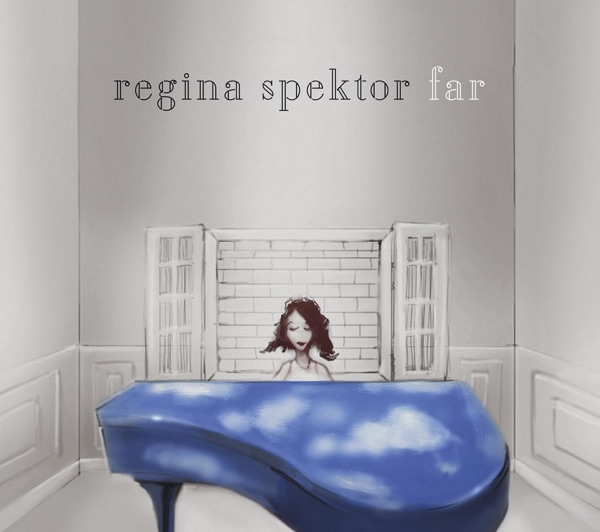
Far
2009 · 12 tracks

What We Saw From the Cheap Seats
2012 · 11 tracks


-
 11:11Regina Spektor200133 tracks
 -
 SongsRegina Spektor200212 tracks
 -
 Soviet KitschRegina Spektor200311 tracks
 -
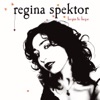 Begin to HopeRegina Spektor200612 tracks
 -
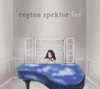 FarRegina Spektor200912 tracks
 -
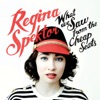 What We Saw From the Cheap SeatsRegina Spektor201211 tracks
 -
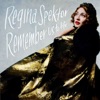 Remember Us to LifeRegina Spektor201611 tracks
 -
 Home, before and afterRegina Spektor202210 tracks
Deep Dive
Overview
Regina Spektor is a Russian-born American singer, songwriter, and pianist whose work spans indie pop, anti-folk, jazz fusion, and rock music. Born in the Soviet Union in 1980, Spektor emerged as a distinctive voice in the early 2000s, known for her unconventional song structures, playful vocal delivery, and piano-driven arrangements. Her career traces a path from self-released recordings in the late 1990s through major-label releases beginning in 2001, establishing her as a singular figure in contemporary alternative music—neither quite pop nor strictly rock, but a hybrid form that blends cabaret sensibilities with modern indie sensibilities.
Formation Story
Regina Ilyinichna Spektor was born in Leningrad (now St. Petersburg) in 1980, during the final decade of the Soviet Union. She grew up in a musically inclined household and began piano lessons as a young child, absorbing both classical training and the eclectic musical culture of her native city. Her early exposure to European and Russian musical traditions—everything from classical composition to Soviet-era pop and folk—shaped her approach to songwriting and arrangement. In the early 1990s, as the Soviet Union dissolved and the geopolitical landscape shifted, Spektor’s family emigrated to the United States, settling in New York. There she pursued music seriously, developing her distinctive voice as a solo artist and gradually building a following through self-recorded and independently released material in the late 1990s before signing to a major label.
Breakthrough Moment
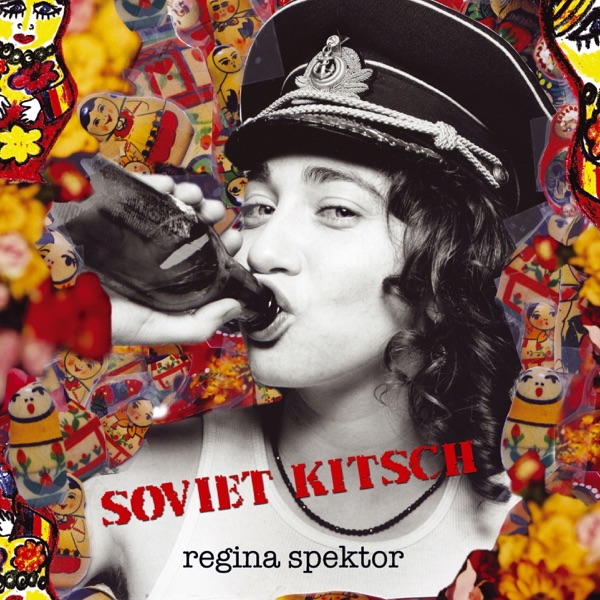
Spektor’s major-label debut, 11:11, arrived in 2001 on Sire Records, marking her official entry into the wider commercial market. The album introduced her trademark sound: intimate piano work, rhythmically complex melodies, and vocal performances that ranged from whispered vulnerability to theatrical flourish. She followed this with Songs in 2002 and Soviet Kitsch in 2003, albums that deepened her artistic identity and expanded her audience within indie and alternative circles. Her genuine breakthrough to broader recognition came with Begin to Hope in 2006, an album that refined her approach and introduced her to a significantly wider listenership, positioning her as a notable voice in 2000s alternative music.
Peak Era
The period from 2006 through 2012 marked Spektor’s most creatively assured and commercially successful phase. Begin to Hope (2006) established her on a larger stage, followed by Far (2009), an album that deepened her exploration of emotional complexity and sonic experimentation within her established framework. What We Saw From the Cheap Seats (2012) represented a continuation of that trajectory, showcasing her evolving approach to songwriting and production. During these years, Spektor toured extensively, built a devoted fanbase, and became recognized as a singular presence in rock and alternative music—an artist who defied easy categorization but whose work resonated with listeners across multiple genres and demographics.
Musical Style
Spektor’s sound is rooted in the piano, which serves as both her primary instrument and the emotional center of her compositions. Her vocals are deliberately unconventional: she shifts between registers, employs vocal stuttering and rhythmic precision, and treats her voice as an instrument in its own right rather than simply a vehicle for lyrics. Her songwriting draws on anti-folk and indie pop traditions while incorporating elements of jazz fusion and art-rock experimentation. She favors asymmetrical song structures that avoid predictable verse-chorus frameworks, instead building songs around unexpected melodic turns, rhythmic hiccups, and tonal shifts. Her Russian heritage surfaces throughout her work—not in any overtly ethnic sound, but in a sensibility that embraces dark humor, philosophical questioning, and a certain emotional distance from sentimentality. The production across her albums tends toward clarity and space, allowing her arrangements room to breathe while maintaining an intimate quality regardless of the number of accompanying musicians.
Major Albums
Begin to Hope (2006)
Special for Spektor’s wider breakthrough, this album distilled her artistic vision into its most accessible form while maintaining her artistic integrity, introducing her distinctive approach to a substantially larger audience.
Soviet Kitsch (2003)
An earlier milestone that solidified her identity as a songwriter unafraid of mixing humor, darkness, and musical complexity within tightly constructed pop songs.
Far (2009)
A deeper exploration of emotional and sonic terrain, demonstrating her growth as a composer and her ability to sustain complex ideas across a full album length.
What We Saw From the Cheap Seats (2012)
Capping her most confident creative period, this album represented Spektor at full command of her distinctive voice and artistic vision.
Remember Us to Life (2016)
A return to recording after a period of relative quiet, this album showed her continued engagement with songwriting and her willingness to evolve her sound.
Signature Songs
- “On the Radio” — A witty, rhythmically clever song that exemplifies Spektor’s ability to layer philosophical observation with pop sensibility and vocal playfulness.
- “Samson” — A reinterpretation of the biblical narrative that displays her gift for storytelling through song and her distinctive vocal approach.
- “You’ve Got Time” — A widely recognized composition that demonstrates her ability to craft memorable melodies with unexpected structural and emotional depth.
- “Two Birds” — A deceptively simple piano-voice composition that showcases her minimalist approach and emotional directness.
- “Eet” — A song that embodies her avant-garde sensibility and willingness to experiment with unconventional vocal techniques and production choices.
Influence on Rock
Spektor’s work opened space within contemporary rock and alternative music for a more deliberately theatrical, compositionally complex, and emotionally ambiguous approach to the singer-songwriter tradition. Her anti-folk sensibility—rooted in the idea that folk music need not be earnest or straightforward—influenced a generation of indie and alternative artists working in the 2000s and beyond. By refusing to fit neatly into existing categories and maintaining artistic control over her distinctive vision, she demonstrated that the rock and alternative landscape could accommodate voices that were simultaneously intellectual and emotional, playful and dark, experimental and accessible. Her success signaled to other artists that unconventional approaches to melody, rhythm, and vocal delivery could find an audience without compromise.
Legacy
Regina Spektor remains an active recording and performing artist, with Home, before and after arriving in 2022 to demonstrate her continued creative engagement. Her catalog from the 2000s and early 2010s continues to circulate widely on streaming platforms and has found audiences among listeners discovering alternative music retrospectively. She stands as a distinctive figure in contemporary rock music—an artist whose refusal to conform to genre expectations or mainstream expectations established her as a singular voice. Her influence extends across indie pop, anti-folk, and alternative music communities, where she is recognized as an important figure in demonstrating that technical sophistication, emotional complexity, and commercial viability need not be mutually exclusive. Her body of work serves as a sustained artistic statement from an uncompromising musician working within and around rock tradition.
Fun Facts
- Spektor’s early releases in the late 1990s were self-recorded and self-released, establishing her reputation through grassroots circulation before any major-label involvement.
- Her distinctive vocal techniques—including the stuttering, rhythmic precision, and register shifts that define her signature sound—were developed through classical piano training and experimentation rather than conventional vocal coaching.
- The title Soviet Kitsch directly references her Russian heritage while also commenting on the commercialization and commodification of Soviet imagery in Western culture during the 2000s.
- Spektor has maintained creative control throughout her career, including songwriting, production decisions, and artistic direction, a rarity among artists working at her level of commercial success.