
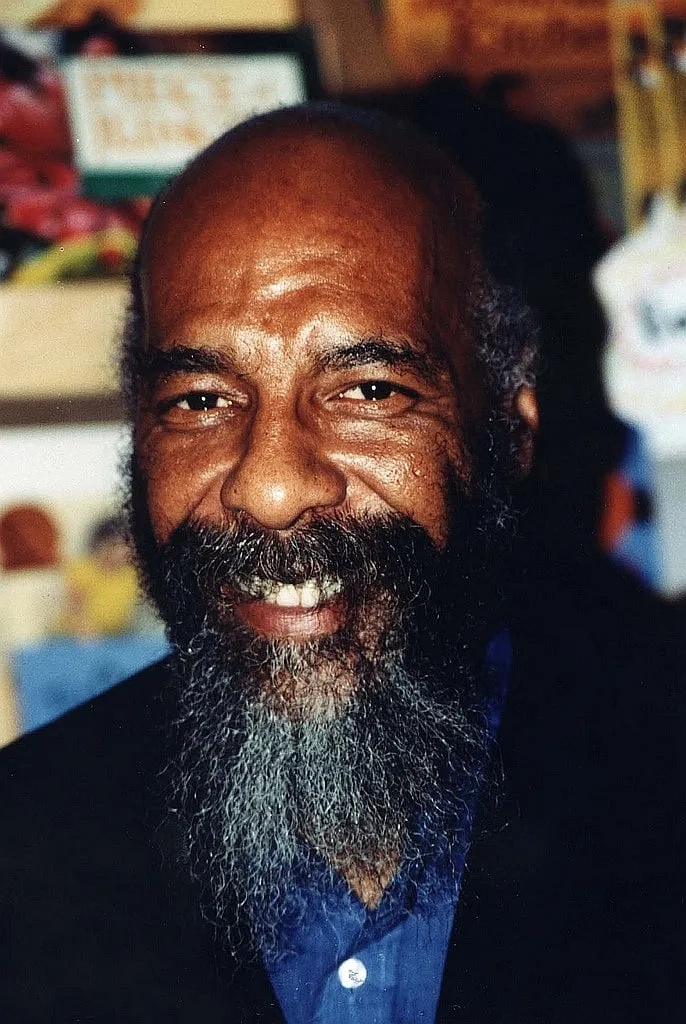
Photo by John Mathew Smith & www.celebrity-photos.com from Laurel Maryland, USA , licensed under CC BY-SA 2.0 · Wikimedia Commons
Rank #476
Richie Havens
From Wikipedia
Richard Pierce Havens was an American singer-songwriter and guitarist. His music encompassed elements of folk, soul, and rhythm and blues. He had a rhythmic guitar style. He was the opening act at Woodstock, sang many jingles for television commercials, and was also the voice of the GeoSafari toys.
Discography & Previews
Browse through and click an album to open and play 30-second previews streamed from Apple Music.


Richard P. Havens, 1983
1969 · 17 tracks
- 1 Stop Pulling And Pushing Me ↗ 1:48
- 2 For Haven's Sake ↗ 7:02
- 3 Strawberry Fields Forever ↗ 3:37
- 4 What More Can I Say John ↗ 4:37
- 5 I Pity The Poor Immigrant ↗ 3:09
- 6 Lady Madonna ↗ 1:56
- 7 Priests ↗ 5:15
- 8 Indian Rope Man ↗ 3:02
- 9 Cautiously ↗ 4:01
- 10 Just Above My Hobby Horse's Head ↗ 2:57
- 11 She's Leaving Home ↗ 4:05
- 12 Putting Out The Vibration And Hoping It Comes Home ↗ 2:53
- 13 The Parable Of Ramon ↗ 7:57
- 14 With A Little Help From My Friends (Live At The Santa Monica Civic Center/1968) ↗ 5:19
- 15 Wear Your Love Like Heaven (Live At The Santa Monica Civic Center/1968) ↗ 4:55
- 16 Run, Shaker Life (Live At The Santa Monica Civic Center/1968) ↗ 4:05
- 17 Do You Feel Good? (Live At The Santa Monica Civic Center/1968) ↗ 4:51

Stonehenge
1969 · 10 tracks
- 1 Open Our Eyes ↗ 2:56
- 2 Minstrel from Gaul ↗ 3:36
- 3 It Could Be the First Day ↗ 2:23
- 4 Ring Around the Moon ↗ 2:09
- 5 It's All Over Now, Baby Blue ↗ 5:01
- 6 There's a Hole In the Future ↗ 2:07
- 7 I Started a Joke ↗ 2:58
- 8 Prayer ↗ 2:56
- 9 Tiny Little Blues ↗ 2:09
- 10 Shouldn't All the World Be Dancing ↗ 8:04


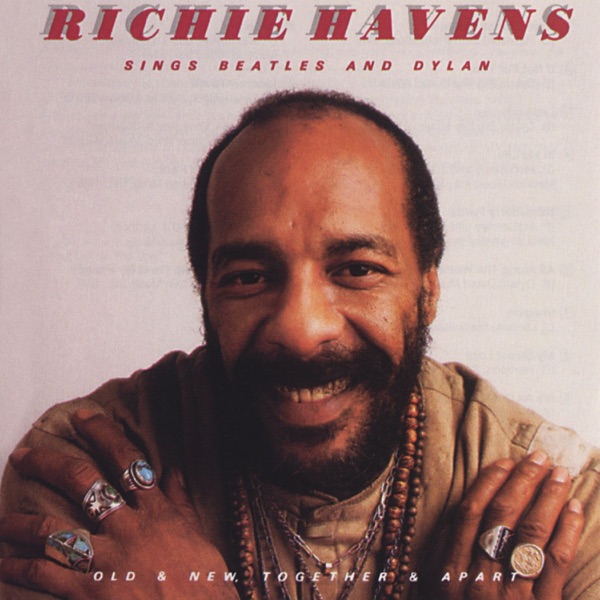
Richie Havens Sings Beatles and Dylan
1987 · 18 tracks
- 1 Here Comes the Sun ↗ 2:45
- 2 If Not for You ↗ 2:47
- 3 Lay Lady Lay ↗ 4:30
- 4 In My Life ↗ 5:15
- 5 Strawberry Fields ↗ 3:52
- 6 All Along the Watchtower ↗ 3:22
- 7 Imagine ↗ 5:11
- 8 My Sweet Lord ↗ 3:00
- 9 Its All Over Now Baby Blue ↗ 4:28
- 10 Eleanor Rigby ↗ 3:10
- 11 Just Like a Woman ↗ 5:17
- 12 The Long and Winding Road ↗ 3:29
- 13 Let It Be ↗ 4:32
- 14 License to Kill ↗ 4:49
- 15 The Times they Are a-Changin' ↗ 4:54
- 16 Working Class Hero ↗ 5:01
- 17 Rocky Raccoon ↗ 4:13
- 18 With a Little Help from My Friends ↗ 2:24

Now
1991 · 10 tracks

Cuts to the Chase
1994 · 13 tracks
- 1 Lives In the Balance ↗ 4:22
- 2 They Dance Alone ↗ 5:24
- 3 My Father's Shoes ↗ 2:46
- 4 Darkness, Darkness ↗ 4:26
- 5 The Hawk ↗ 4:38
- 6 Young Boy ↗ 3:25
- 7 The Times They Are a-Changin' ↗ 4:56
- 8 Fade To Blue ↗ 5:42
- 9 Intro / Old Love ↗ 6:26
- 10 How the Nights Can Fly ↗ 5:17
- 11 Comin' Back To Me ↗ 3:27
- 12 Don't Pass It Up ↗ 4:51
- 13 At a Glance ↗ 3:40


Nobody Left to Crown
2008 · 13 tracks
- 1 The Key ↗ 3:29
- 2 Say It Isn't So ↗ 2:43
- 3 Won't Get Fooled Again ↗ 5:47
- 4 Standing On the Water ↗ 3:01
- 5 Hurricane Waters ↗ 4:30
- 6 If I ↗ 4:01
- 7 Nobody Left To Crown ↗ 4:11
- 8 (Can't You Hear) Zeus's Anger Roar ↗ 3:14
- 9 Lives In the Balance ↗ 5:23
- 10 We All Know Now ↗ 3:07
- 11 Fates ↗ 3:53
- 12 The Great Mandala (The Wheel of Life) ↗ 6:59
- 13 One More Day ↗ 3:32

My Own Way
2012 · 14 tracks
- 1 CC Rider ↗ 3:22
- 2 Oxford Town ↗ 3:21
- 3 Norah's Dove ↗ 3:39
- 4 900 Miles from Home ↗ 3:46
- 5 Shadow Town ↗ 3:57
- 6 3: 10 to Yuma ↗ 3:20
- 7 The Bag I'm In ↗ 3:48
- 8 Drown in My Own Tears ↗ 4:22
- 9 Down in the Valley ↗ 4:05
- 10 Chain Gang ↗ 2:51
- 11 Babe, I'm Leaving ↗ 4:38
- 12 Daddy Roll 'em ↗ 2:42
- 13 Boots & Spanish Leather ↗ 5:40
- 14 My Own Way ↗ 2:11

Paris Live 1969
2015 · 14 tracks
- 1 Intro (Live) ↗ 0:40
- 2 High Flyin' Bird (Live) ↗ 4:39
- 3 Interlude 1 (Live) ↗ 0:46
- 4 Indian Rope Man (Live) ↗ 5:33
- 5 Interlude 2 (Live) ↗ 1:44
- 6 Handsome Johnny (Live) ↗ 5:08
- 7 Interlude 3 (Live) ↗ 1:49
- 8 Just Above My Hobby Horse's Head (Live) ↗ 3:42
- 9 Interlude 4 (Live) ↗ 1:57
- 10 With a Little Help from My Friends (Live) ↗ 3:40
- 11 Strawberry Fields Forever (Live) ↗ 7:21
- 12 There's a Hole in the Future (Live) ↗ 3:46
- 13 Freedom (Live) ↗ 5:47
- 14 Run, Shaker Life (Live) ↗ 2:03
-
 Mixed BagRichie Havens196711 tracks
 -
 Richard P. Havens, 1983Richie Havens196917 tracks
 -
 StonehengeRichie Havens196910 tracks
 -
 Alarm ClockRichie Havens19709 tracks
 -
 PortfolioRichie Havens19739 tracks
 -
 Mixed Bag IIRichie Havens19749 tracks
 -
 ConnectionsRichie Havens198010 tracks
 -
 Richie Havens Sings Beatles and DylanRichie Havens198718 tracks
 -
 NowRichie Havens199110 tracks
 -
 Cuts to the ChaseRichie Havens199413 tracks
 -
 TimeRichie Havens19997 tracks
 -
 Wishing WellRichie Havens200210 tracks
 -
 Grace of the SunRichie Havens200410 tracks
 -
 Nobody Left to CrownRichie Havens200813 tracks
 -
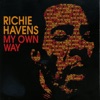 My Own WayRichie Havens201214 tracks
 -
 Paris Live 1969Richie Havens201514 tracks
Deep Dive
Overview
Richie Havens was an American singer-songwriter and guitarist who bridged folk, soul, and rhythm and blues into a distinctive voice that emerged during the folk-rock boom of the 1960s. His approach to the guitar—rhythmic, percussive, and deeply influenced by soul idioms—set him apart from his contemporaries and established a template for genre-crossing that would influence singer-songwriters for decades. Havens achieved broad cultural visibility not only through his music but also as a commercial voice in American media, lending himself to television jingles and toy sponsorships, an unusual dual presence that spoke to his versatility and accessibility.
His most enduring moment came on August 15, 1969, when he opened the Woodstock Music & Art Fair, his set becoming one of the festival’s defining performances. That appearance crystallized his status as a significant figure in rock music history, though his career arc—spanning from 1967 into the 2010s—reveals a musician more interested in steady creative output than chasing trends.
Formation Story
Richard Pierce Havens grew up in a cultural milieu that predated his emergence as a recording artist, drawing from African American musical traditions, urban folk scenes, and the soul singers he heard throughout his formative years. By the mid-1960s, when the folk-rock movement was consolidating—marked by electric guitars meeting acoustic roots—Havens was positioned to synthesize these influences into something personal. He began his professional recording career in 1967 with the album Mixed Bag, which introduced listeners to his fusion of folk guitar with soul-inflected vocals and the rhythmic, strumming-based approach that would become his signature sound. Rather than a sudden breakthrough, Havens’s entry into the broader rock landscape was the product of years spent absorbing multiple genres and developing a guitar technique that prioritized texture and rhythm over conventional folk or blues fingerpicking.
Breakthrough Moment
Although Havens released Mixed Bag in 1967 and followed it with three albums in 1968—Richie Havens’ Record, Electric Havens, and Somethin’ Else Again—his genuine breakthrough came through his appearance at Woodstock in August 1969. Selected as the opening act for the festival, he performed an extended set that showcased his ability to command an audience with minimal accompaniment and rhythmic intensity. That performance thrust him into national consciousness and coincided with the release of Richard P. Havens, 1983 later in 1969, an album that benefited enormously from the cultural momentum of Woodstock. The festival appearance established Havens as more than a session musician or background voice; it positioned him as a solo artist capable of holding a massive crowd’s attention, a visibility that would sustain his career through the 1970s and beyond.
Peak Era
Havens’s most creatively prolific and commercially visible period extended from 1969 through the mid-1970s. Between Richard P. Havens, 1983 (1969) and Stonehenge (1969), Alarm Clock (1970), The Great Blind Degree (1971), and Portfolio (1973), he maintained a steady release schedule while touring extensively. This period saw him firmly established across multiple record labels—A&M Records, Epic Records, and Verve Records—each release exploring variations on his core aesthetic: rhythm-driven guitar work, soulful vocals that ranged from tender to urgent, and an openness to instrumentation that reflected the album-oriented rock of the era. By the mid-1970s, even as the broader market shifted away from the singer-songwriter model that had defined the early 1970s, Havens continued to record and tour, demonstrating an uncommonly durable career trajectory.
Musical Style
Havens’s sound was defined by a rhythmic guitar approach that owed more to percussion and soul music than to traditional folk guitar technique. Rather than fingerpicking or strumming in conventional patterns, he used his instrument as a rhythmic engine, often employing syncopated, almost drumlike patterns that drove his songs forward with an insistent pulse. This technique became particularly effective in live settings, where his minimal accompaniment—often just voice and guitar—could fill space and command attention through sheer rhythmic momentum. His vocal delivery was warm, intimate, and deeply informed by soul music; he brought the emotional directness and improvisational feel of soul singers to folk and rock material, creating a hybrid approach that was distinctive among his peers. Lyrically and musically, Havens was a genre-crossing artist before such crossing became industry standard; his willingness to draw from folk, soul, rhythm and blues, and rock meant his albums often contained stylistically diverse tracks united by his distinctive instrumental and vocal presence rather than by a unifying sonic template.
Major Albums
Mixed Bag (1967)
Havens’s debut introduced his rhythmic guitar style and genre-blending sensibility, establishing the foundation for his later work and signaling a musician uninterested in rigid genre boundaries.
Richard P. Havens, 1983 (1969)
Released in the aftermath of Woodstock, this album capitalized on his festival breakthrough and stands as one of his most recognized works, showcasing his ability to sustain listener attention through intimate, rhythmically propulsive arrangements.
Alarm Clock (1970)
Continuing his prolific output, this album maintained the momentum of the Woodstock moment while exploring the soul and rock fusion that defined his peak era.
The Great Blind Degree (1971)
A mid-career statement that reflected the deepening maturity of his songwriting and his confidence in his distinctive approach to arrangement and production.
Portfolio (1973)
Among his later 1960s and 1970s releases, this album demonstrated Havens’s continued creative engagement even as the broader market for solo singer-songwriters was fragmenting.
Signature Songs
- “High Flying Bird” — A restrained, soulful interpretation that showcased his intimate vocal delivery and rhythmic guitar work.
- “Here Comes the Sun” — His reading of the Beatles composition exemplified his ability to reinterpret material through his distinctive rhythmic and soul-inflected lens.
- “Freedom” — An extended, improvisational piece that became a concert staple and demonstrated his ability to sustain listener engagement through rhythmic and emotional intensity.
Influence on Rock
Havens’s significance lies in his demonstration that folk-rock could incorporate soul and blues without abandoning its acoustic roots or singer-songwriter ethos. His rhythmic, percussive approach to guitar influenced subsequent generations of solo musicians who sought to expand the sonic vocabulary available to a single performer with a guitar. More broadly, his willingness to move between genres—recording jingles and commercial music while maintaining his credibility as an artist—challenged the rigid boundary between “commercial” and “artistic” work that governed much rock criticism. By treating the guitar as a rhythmic and textural instrument rather than a melodic one, Havens opened possibilities for folk and rock musicians to create denser, more propulsive arrangements without resort to full electric bands or extensive studio production.
Legacy
Richie Havens’s death in 2013 ended a recording and performing career that spanned nearly five decades. His association with Woodstock has ensured his place in rock history, but his broader legacy rests on his sustained output and his refusal to be confined by genre or market expectations. Late-career releases such as Simple Things (1987), Cuts to the Chase (1994), and My Own Way (2012) demonstrate an artist who continued to work and record into old age, maintaining creative engagement without chasing commercial relevance. His official website and the 2015 release of Paris Live 1969 keep his work in circulation for contemporary audiences. Havens remains a touchstone for musicians interested in genre fusion, rhythmic sophistication, and the possibilities of solo acoustic performance, his legacy shaped by both his Woodstock moment and his decades-long commitment to the craft of songwriting and guitar playing.
Fun Facts
- Havens was the opening act at Woodstock, the first performer on stage when the festival began on August 15, 1969, a position that gave him extraordinary visibility despite performing to an audience still arriving and settling in.
- In addition to his recording career, Havens lent his voice to television jingles and commercials, work that funded his musical career and demonstrated his commercial versatility.
- Havens was the voice of GeoSafari toys, extending his cultural reach beyond rock music audiences into children’s product marketing.
- His 1987 album Richie Havens Sings Beatles and Dylan showcased his interpretive approach, applying his distinctive rhythmic and soul-influenced style to the canonical works of rock’s two most influential songwriters.
- Over his career, Havens recorded for A&M Records, Epic Records, and Verve Records, working across multiple major labels and demonstrating his sustained marketability across decades.